

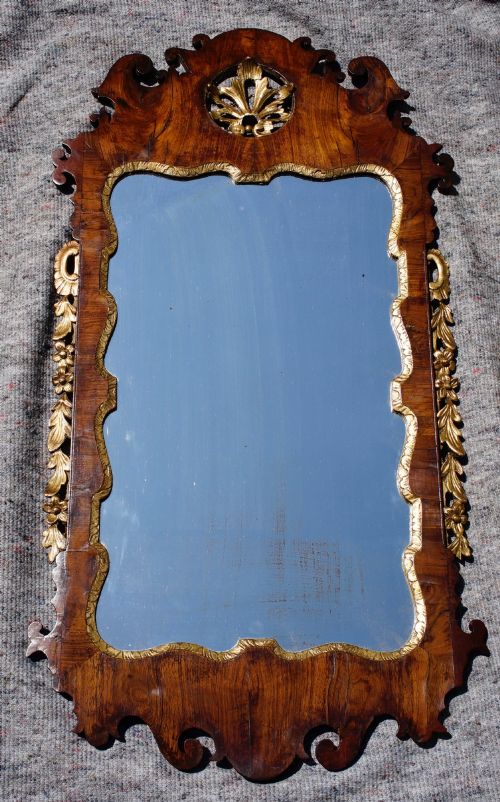
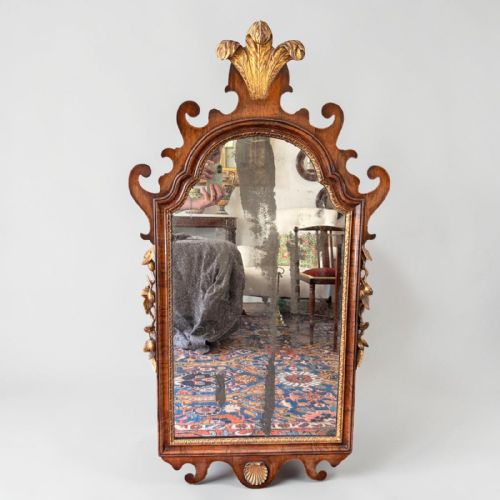
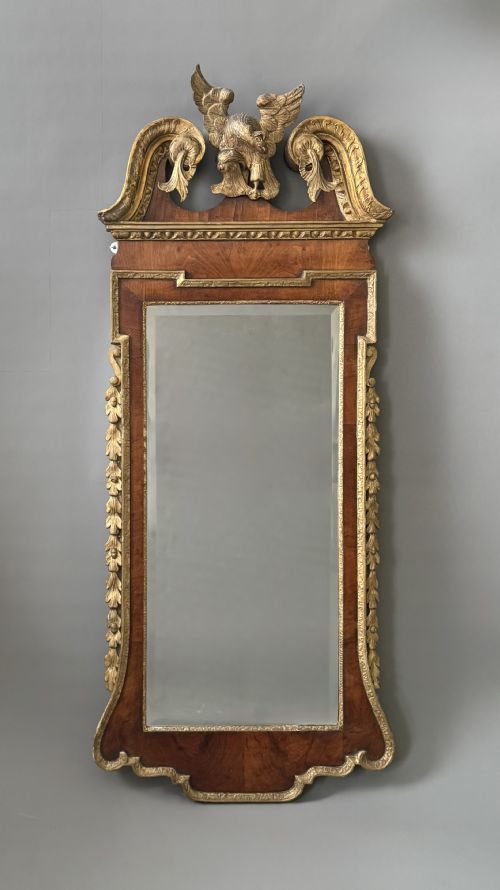


Chippendale Walnut Pier Mirror
A chippendale walnut pier mirror brings architectural depth and rich grain to a room, drawing the eye with its fretwork frame and historic presence.
Chippendale Walnut Pier Mirror
A chippendale walnut pier mirror is a wall-hanging glass panel framed in timber, designed to hang between windows or above a console table. The pieces found here span the eighteenth century and the nineteenth century, capturing both original Georgian craftsmanship and later revival interpretations.
Most examples rely on walnut veneer or solid timber framing, frequently enhanced with parcel gilt details and carved fretwork. Collectors encounter forms ranging from simple eighteenth century wall mirrors to elaborate George II and George III designs featuring traditional motifs.
The selection includes individual wall mirrors alongside matched pairs, representing both period pieces and later nineteenth century revivals like the Chippendale Revival. Each object reflects the enduring appeal of eighteenth century proportions adapted for domestic spaces.
Materials and construction
Carpenters built these frames using walnut timber and wood veneer over secondary woods, shaping the outlines with intricate fretwork saws. Giltwood and gilded wood accents highlight specific carved elements, creating a contrast between the dark grain of the walnut and the bright gold leaf.
Mirrors from the eighteenth century often utilise historic glass plates, such as Vauxhall plates, set securely within the timber rebate. Artisans applied parcel gilt sparingly to accentuate the carved ears, scrolls, and crestings typical of the style.
Chippendale Walnut Pier Mirror Retail Price Guide 2026
Typical asking prices for chippendale walnut pier mirror among the pieces listed under this phrase on Sellingantiques today, from the lower quarter to the upper quarter. They describe what is for sale here now, not the wider market.
Materials documented across the inventory include walnut timber, wood veneer, original glass, and gilded wood accents.
Distinctions in quality
The refinement of the fretwork carving dictates much of the distinction between standard examples and exceptional works. Crisp, deep undercut scrolling and well-proportioned architectural framing separate finely executed London pieces from simpler provincial interpretations.
The preservation of the original surfaces and the depth of the walnut figure heavily influence the character of each mirror. Retaining original glass plates and historic gilding adds significant authenticity to eighteenth century examples compared to those with later restorations.
The Chippendale Walnut Pier Mirror Glossary
- Parcel gilt
- Partially gilded with gold leaf, this technique highlights specific carved details against the dark walnut background.
- Fretwork
- Openwork patterns cut from thin boards using a fine scroll saw, forming the distinctive silhouette of these frames.
- Pier glass
- A tall wall mirror specifically scaled to hang on the narrow pier of wall space between two windows.
- Vauxhall plate
- A type of historic mirror glass characterised by a bevelled edge and subtle imperfections from early manufacturing methods.
- George II
- An architectural and decorative style period spanning the mid eighteenth century, known for robust classical symmetry and rich carving.
Chippendale Walnut Pier Mirror: Frequently Asked Questions
Where should I hang a pier mirror?
These mirrors work best hung between windows or above a low sideboard, reflecting natural light deeper into the room. Their vertical proportions are specifically designed to fill narrow wall spaces.
Ensure the wall fixings match the weight of the timber frame, using appropriate brackets to support the structure securely without stressing the antique joints.
How do I date a walnut mirror?
Dating relies on examining the construction methods, timber choice, and the backing boards behind the glass. Eighteenth century examples show hand-cut joinery and aged patination on the walnut veneer.
Revival pieces from the nineteenth century often feature machine-sawn elements and different secondary woods, even when mimicking earlier George II or George III styles.
Are original glass plates common?
Many surviving mirrors retain their early glass, which often displays minor foxing, distortion, and characteristic bevelled edges. These signs of age confirm the historical integrity of the piece.
Mirrors with completely clear, modern glass have usually undergone a replacement at some point in their history, which alters the visual depth.
How do I care for antique walnut?
Keep the wood away from direct sunlight and steady heat sources to prevent the walnut veneer from drying or lifting. Dust the carved fretwork gently with a dry, soft brush.
Avoid liquid polishes and chemical cleaners, as these can damage the historic wax finish and degrade the fragile parcel gilt highlights.