
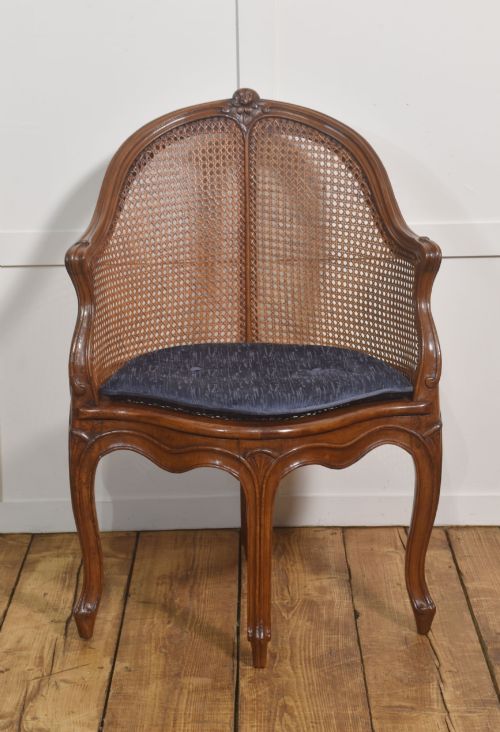
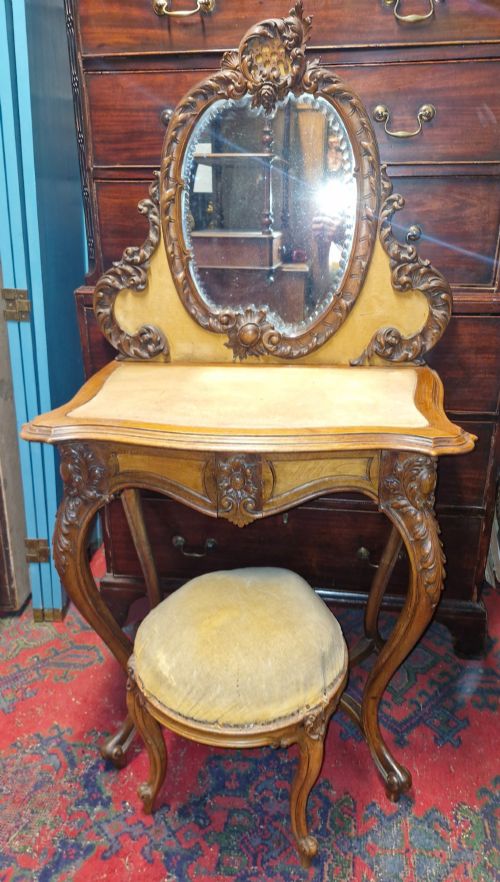
Antique French Walnut Desk
When you search for an antique french walnut desk, you enter a world of refined writing tables, bureau plats and bonheur-du-jour forms shaped by centuries of European cabinetmaking.
Antique French Walnut Desk
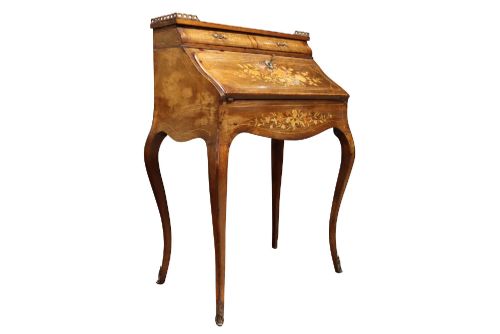
An antique french walnut desk encompasses several distinct writing forms, from the freestanding bureau plat to the compact lady's bonheur-du-jour and the drop-front secrétaire abattant. These pieces emerged across the eighteenth and nineteenth centuries, reflecting shifts in social correspondence and domestic study habits.
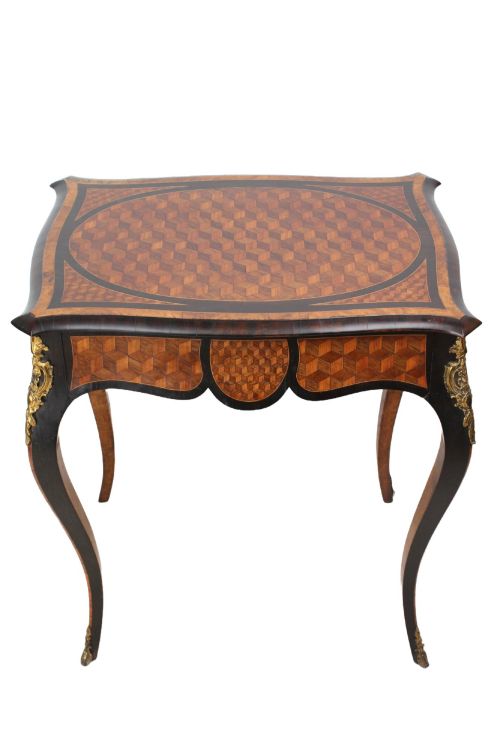
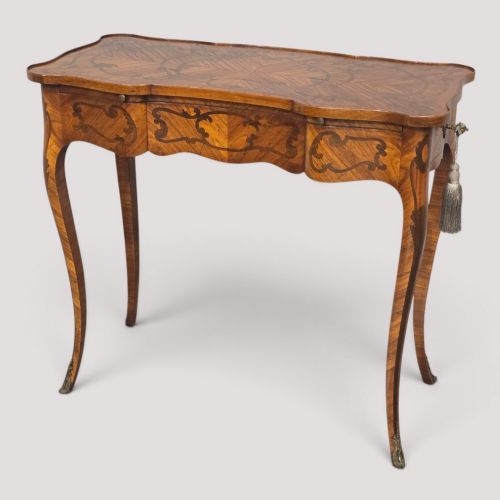
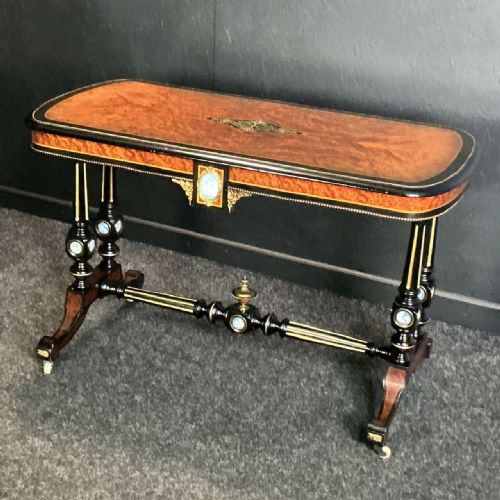
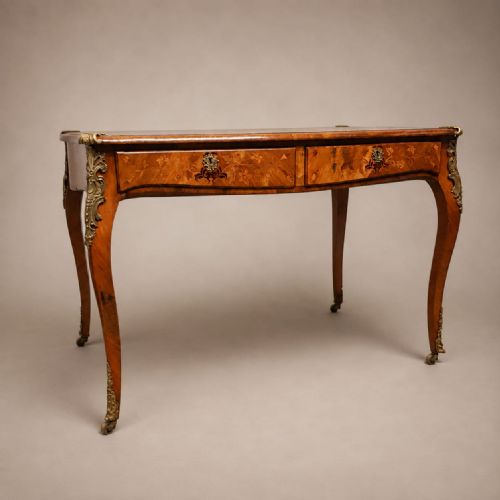
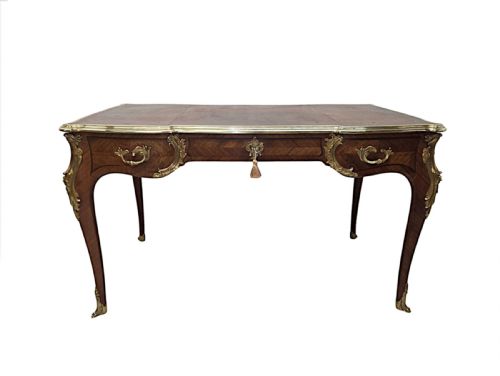
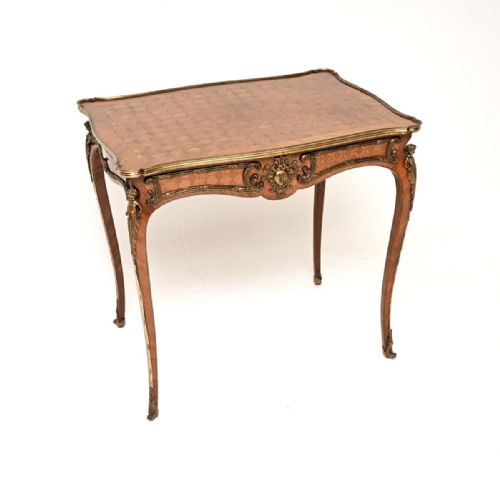
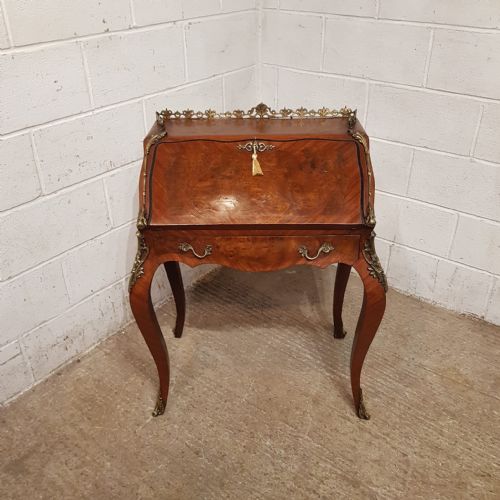
The version you are most likely to meet on this page is the nineteenth-century bureau plat or writing table, often touched with Louis XV revival curves and mounted in ormolu or brass. These walnut desks combine practical writing surfaces, frequently lined in leather, with restrained cabinetry designed for domestic display.
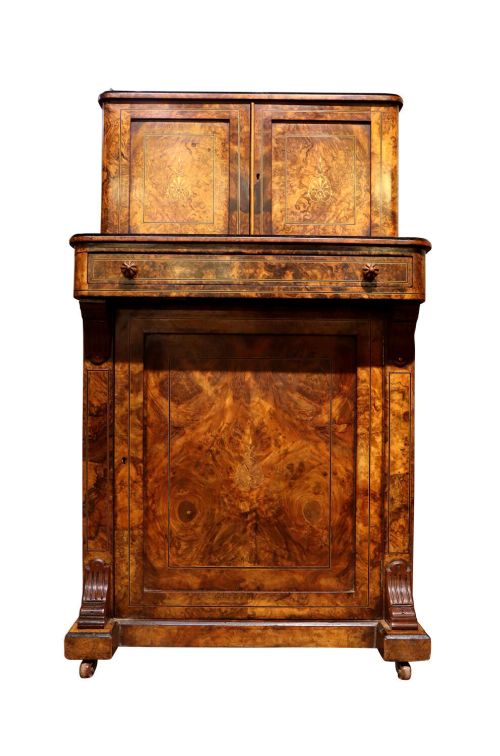
Makers utilised rich timber grains to elevate domestic furniture beyond simple utility, pairing walnut and burr walnut with contrasting fruitwood marquetry. The resulting desks bridge the gap between architectural grandeur and personal workspace, standing centrally in a room or against a panelled wall.
Materials and Construction
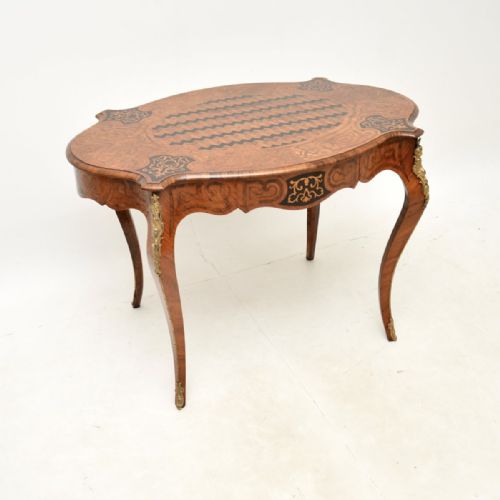
Cabinetmakers selected solid walnut and figured burr walnut for its warmth, stability and responsiveness to intricate cutting. Veneers and parquetry patterns were laid upon secondary timber carcasses, creating geometric or floral displays across desk tops and drawer fronts.
Metal mounts in brass and ormolu were cast and chased to protect vulnerable corners and accent structural lines, while tooled leather inserts provided a durable writing plane. Joinery relied on traditional dovetailing for drawers and mortise-and-tenon frames for legs, ensuring the structural integrity of cabriole and tapering supports.
Listings feature walnut, burr walnut, and kingwood timbers alongside brass and ormolu mounts across the nineteenth century.
Assessing Craftsmanship
The hierarchy of these desks rests upon the precision of the parquetry inlay and the depth of the walnut timber selection. Finer examples display continuous grain matching across drawer banks and meticulous hand-cut marquetry that integrates seamlessly into the surrounding wood.
Hardware and secondary details further separate ordinary production from superior work. Crisp casting on ormolu mounts, original tooled leather skivers, and smooth drawer action without timber binding signal the hand of an accomplished workshop.
JAS Shoolbred·Edward And Roberts·Walker and Hall
The Antique French Walnut Desk Glossary
- Bonheur-du-jour
- A light lady's writing desk featuring a small superstructure of drawers and pigeonholes above the main writing surface. It became popular during the Louis XV period and remained a staple of nineteenth-century revival design.
- Parquetry
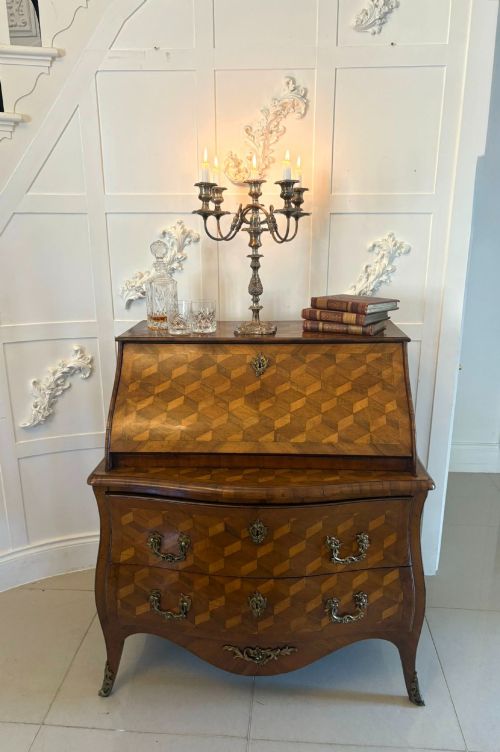
- Geometric mosaic woodwork formed by small veneer pieces laid down in repeating patterns such as cubes or chevrons. It showcases the natural colour variation within walnut and kingwood.
- Ormolu
- Gilt-bronze decorative mounts applied to furniture edges and corners. The technique involves coating cast bronze in a gold amalgam and firing it to achieve a lasting metallic lustre.
- Secrétaire abattant
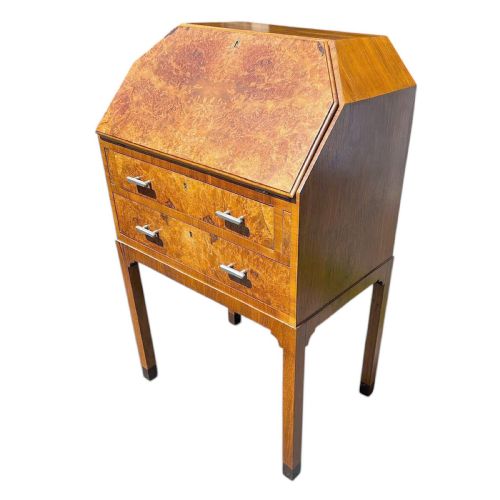
- A tall wall-mounted or freestanding cabinet with a drop-front writing flap that conceals inner compartments and small drawers. It hides utilitarian storage behind an architectural facade.
Antique French Walnut Desk: Frequently Asked Questions
What is the difference between a bureau plat and a writing table?
A bureau plat is a specific type of freestanding writing table featuring drawers beneath the top, designed to be viewed from all sides in the middle of a room.
While all bureau plats function as writing tables, simpler writing tables may lack drawers or follow domestic side table proportions without finished backs.
How do I care for the leather top on my desk?
Leather writing surfaces respond best to occasional dusting with a dry cloth and minimal exposure to direct sunlight or excessive moisture.
Applying a neutral leather cream helps maintain suppleness and prevents the vintage hide from cracking over time.
Are these desks suitable for modern laptop use?
Many nineteenth-century writing desks offer sufficient surface area and sturdy construction to support contemporary laptops and writing equipment.
Buyers should verify internal drawer clearances and kneehole heights against their seating requirements before daily use.
How do I distinguish 19th-century revival from 18th-century originals?
Eighteenth-century pieces typically exhibit hand-cut construction marks, subtle timber shrinkage, and simpler internal secondary woods consistent with period joinery.
Revival pieces from the Victorian era often utilise more uniform machine-cut elements while faithfully copying earlier Louis XV or Rococo forms.