

Antique French Urn Lighting
Antique french urn lighting transforms classical vessels and candelabra into functional illumination through centuries of continental craftsmanship.
Antique French Urn Lighting
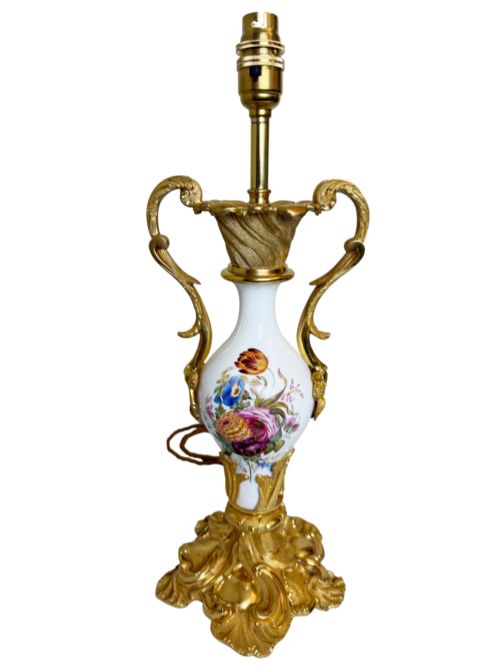
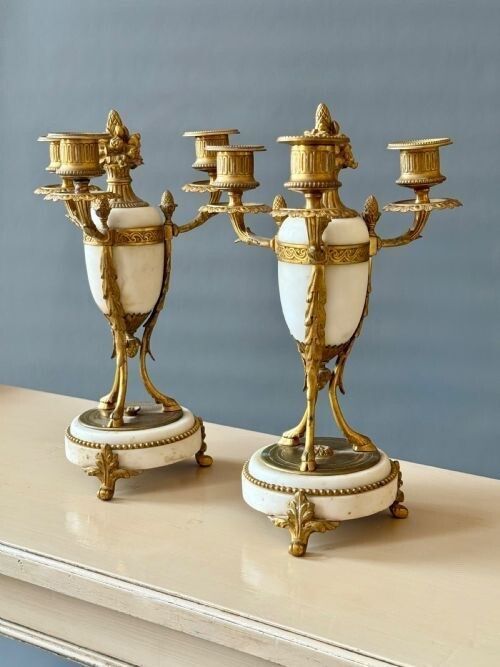
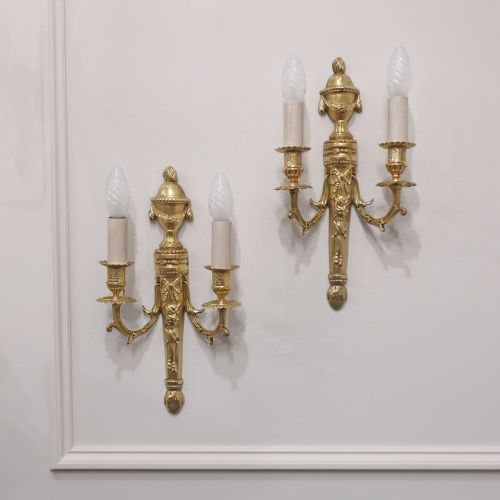
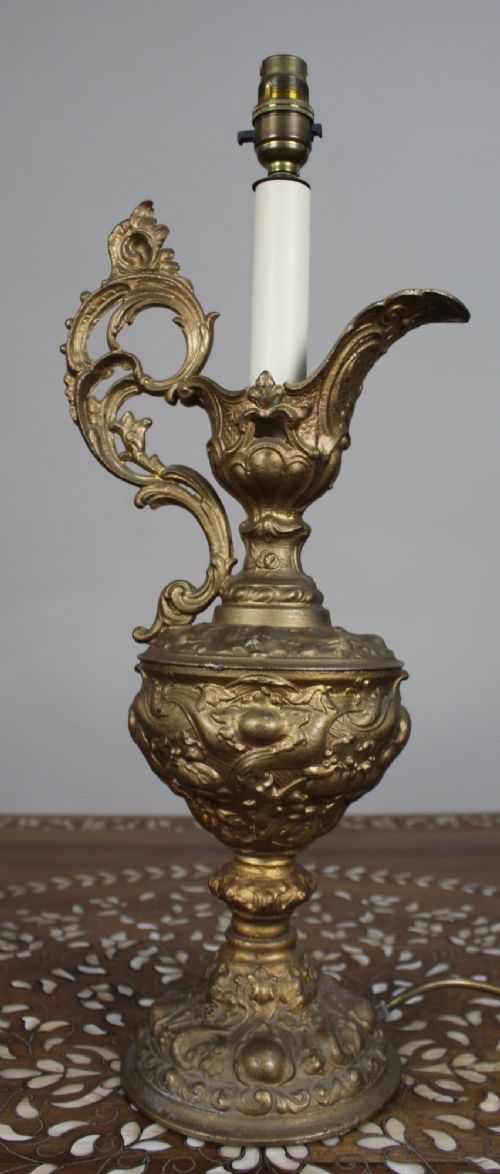
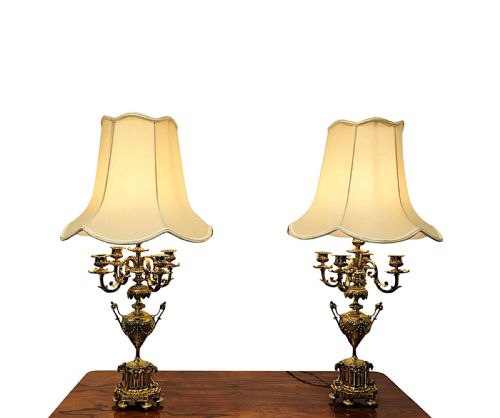
Antique french urn lighting comprises table lamps, wall sconces, and converted candelabra derived from classical vessel forms such as ewers, amphorae, and cassolettes. Pieces originate primarily across the nineteenth century, including specific dates from the 1860s through the 1930s, alongside earlier eighteenth-century influences.
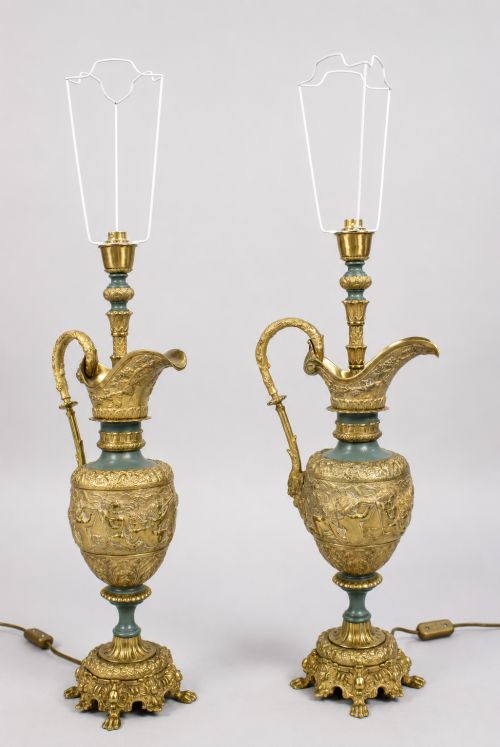
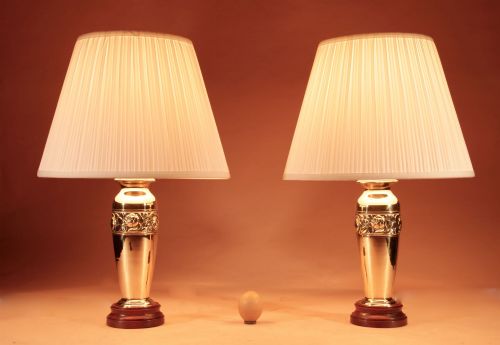
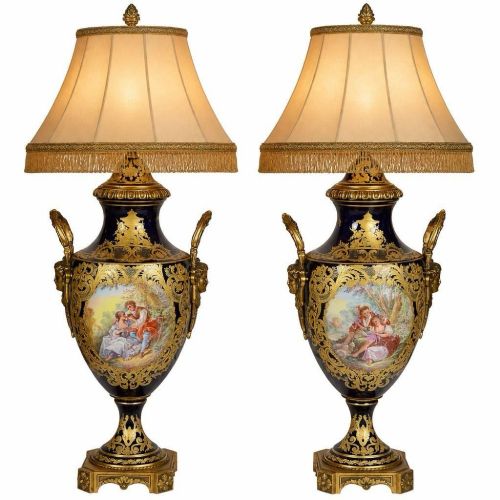
The dominant forms on this page include pairs of table lamps and wall lights rendered in the French Neoclassical, Louis XVI, and Rococo Revival styles. Makers and manufacturers adapted decorative urns, often mounting them with electrical fittings while retaining their sculptural bases and handles.
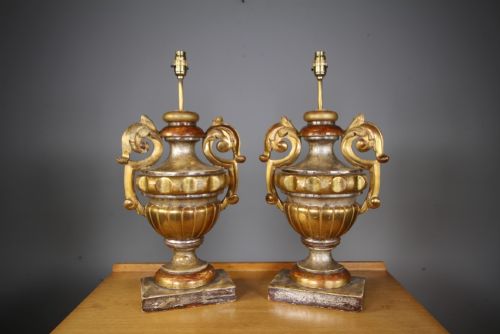
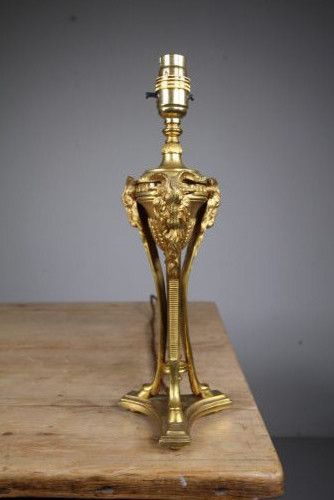
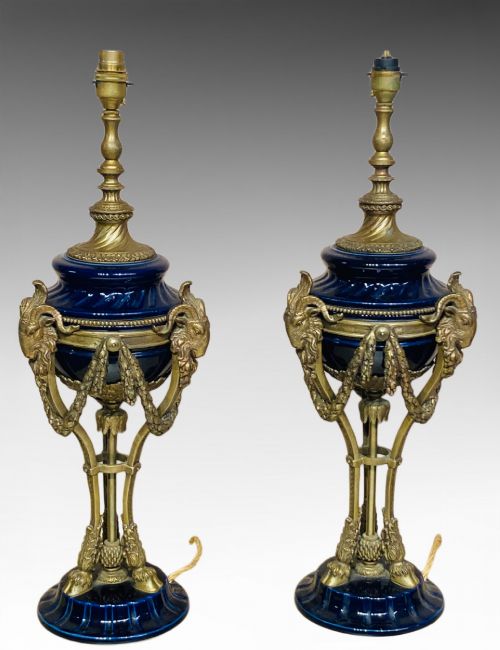
Vessels take the shape of lidded jars, classical vases, and columnar standards, frequently incorporating handles shaped as ram heads or foliage. These items serve as focal points in interiors, combining sculptural presence with ambient illumination.
Materials and construction methods
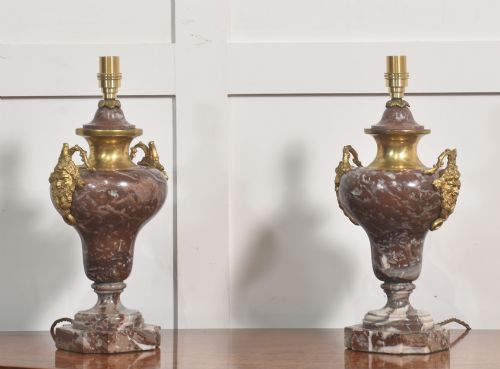
Foundations rely on cast metals such as brass, bronze, gilt bronze, ormolu, and gilt metal, paired with natural stones including rouge marble, white marble, and white onyx. Artisans shaped these rigid components through casting, carving, and turning before applying gilding or patination.
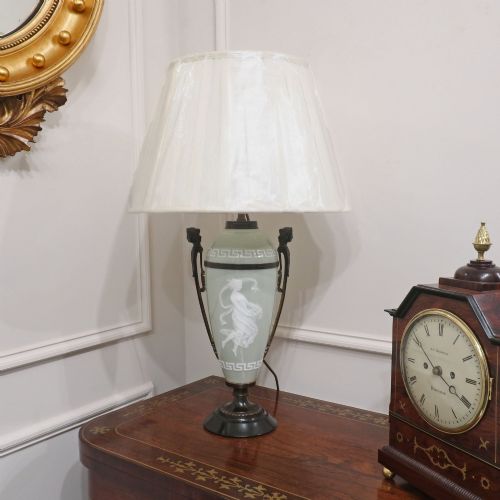
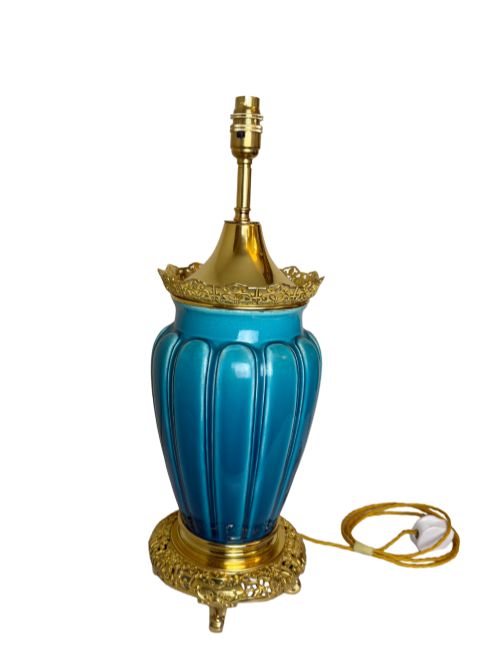
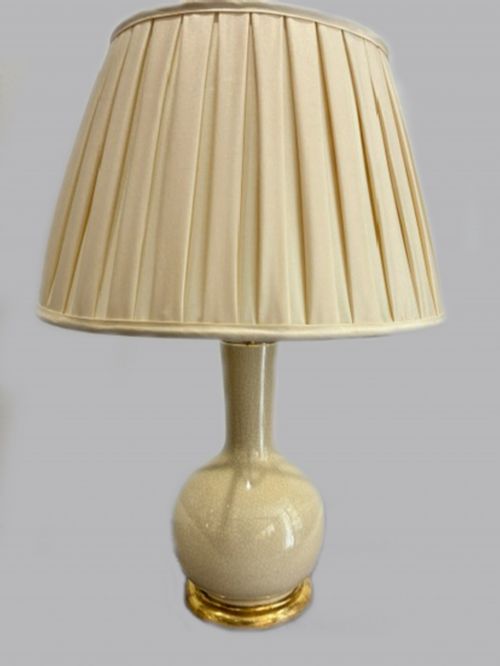
Ceramic bodies utilise porcelain, pate sur pate, crackle ware, and blue glazed earthenware, sometimes decorated with enamel or mounted in metal frames. Carved wood variants feature carved pine and giltwood with turned structural elements.
Lighting mechanisms integrate with the original artefact, adapting candelabra, candlesticks, and urns by wiring through the centre or attaching twin arms for fabric shades.
Several nineteenth-century urns feature fierce ram head masks glaring outward while patiently holding electrical wiring in their teeth.
Distinctions in quality and execution
Quality rests upon the crispness of the metal chasing, the depth of the gilt bronze or ormolu fire-gilding, and the density of the selected marble or onyx. Finer examples display sharply defined ram head masks, floral motifs, and paw feet cast with precision rather than soft detail.
The integration of the lighting components dictates the refinement of the piece, where original candelabra conversions preserve the structural integrity of the base. Material selection also elevates a piece, distinguishing solid carved giltwood or heavy natural stone from lighter metal alloys.
Casier
The Antique French Urn Lighting Glossary
- Ormolu
- A technique of applying finely ground high-carat gold to a bronze base using mercury. This mercury gilding produces a deep, durable lustre characteristic of high-end eighteenth and nineteenth-century French metalwork.
- Cassolette
- A decorative vase or urn designed with a reversible lid that functions either as a vessel or a candleholder. These often feature in neoclassical lighting designs.
- Ewer
- A large pitcher with a wide spout and elaborate handle. In lighting, ewer forms provide the slender, curved silhouette for table lamps.
- Pate sur pate
- A ceramic decorating method where successive layers of liquid clay slip are applied to a damp body before firing. This builds low-relief white designs against a coloured porcelain ground.
- Louis XVI Style
- A neoclassical design movement characterised by straight lines, symmetry, classical architectural motifs, and restrained ornamentation. It heavily influences nineteenth-century French lighting.
Antique French Urn Lighting: Frequently Asked Questions
What is antique french urn lighting?
Antique french urn lighting encompasses decorative lamps and wall sconces fashioned from classical vessels, vases, and ewers. These objects originate largely from nineteenth-century France and adapt historical forms for modern illumination.
Craftsmen utilised materials such as ormolu, marble, porcelain, and bronze to construct these decorative fixtures, frequently employing Louis XVI and Neoclassical design vocabularies.
How do you distinguish original antique lamps from conversions?
Original conversions typically retain structural elements of antique candelabra or candlesticks, where wiring has been discreetly integrated through the central axis or arms. Evidence of past use remains visible in the wear of the metalwork and the hand-finished details of the mountings.
Examination of the base and interior fittings often reveals how nineteenth-century or earlier components were adapted to accommodate electrical wiring without compromising the sculptural integrity.
Where should antique urn lights be placed?
These fixtures suit prominent surfaces such as sideboards, console tables, or mantels where their sculptural materials can be appreciated. Wall sconces function effectively in hallways or reception rooms to provide layered ambient light.
Their substantial weight and decorative presence make them ideal as focal points in traditional or eclectic interior schemes.
Which materials were commonly used?
Manufacturers relied heavily on cast metals including bronze, gilt bronze, brass, and ormolu for mounts and structural supports. These were frequently combined with natural stones like rouge marble and white onyx, or ceramic bodies including porcelain and crackle ware.
Wooden elements such as carved pine and giltwood also appear, particularly in pieces influenced by eighteenth-century decorative arts.