
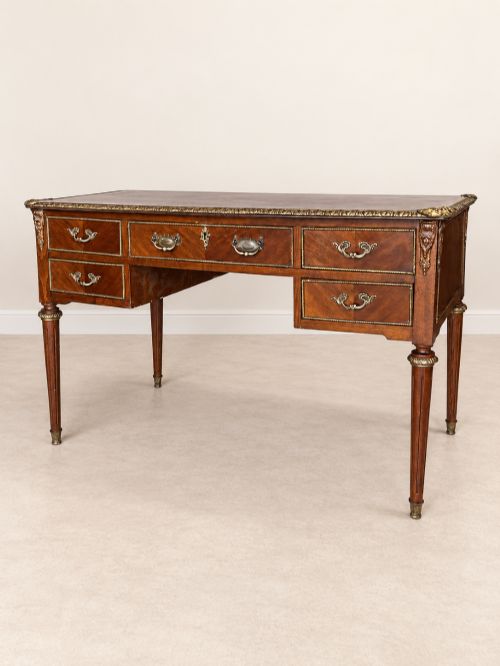
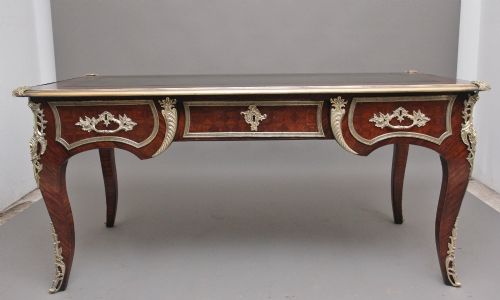
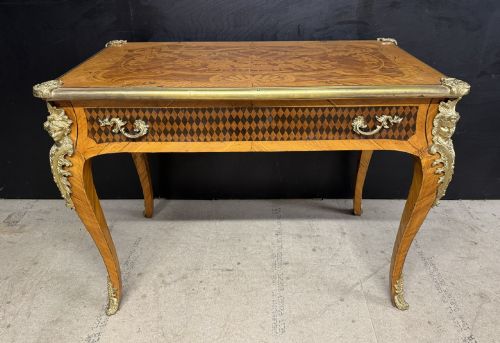
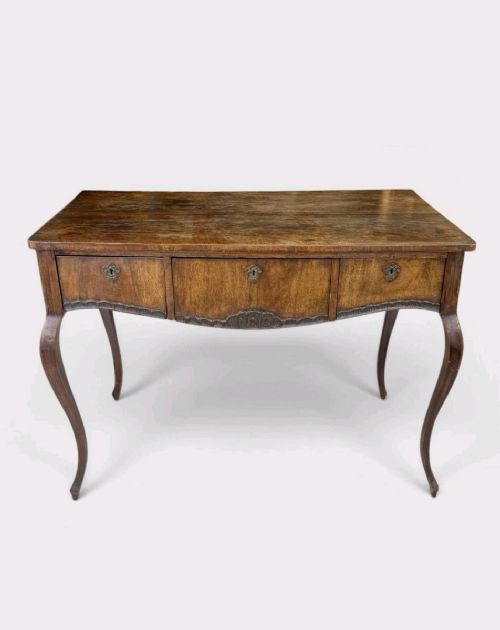

Antique French Study Table
An antique french study table brings refined writing surfaces and classical proportions to a room, offering both practical workspace and decorative elegance.
Antique French Study Table
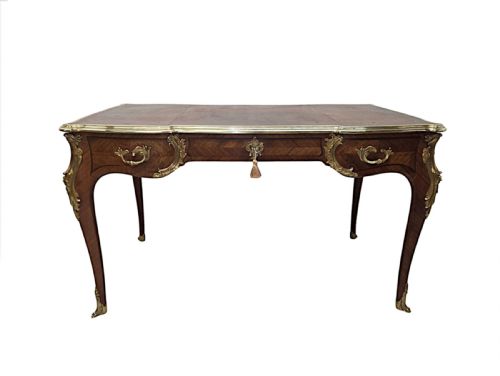
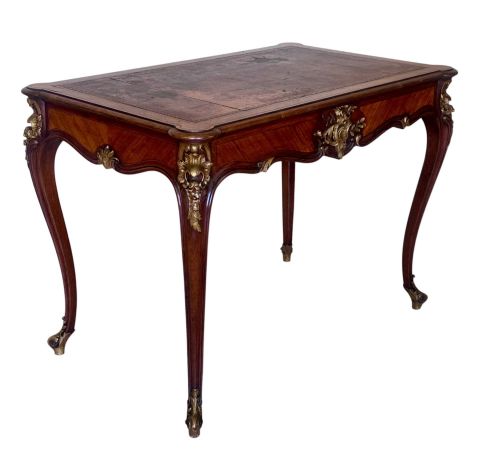
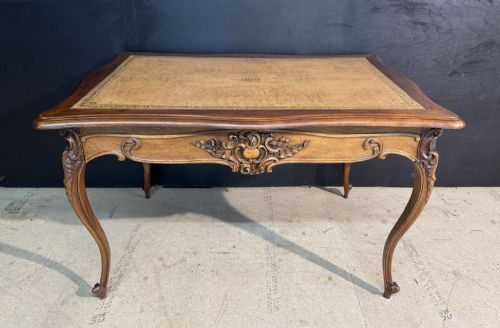
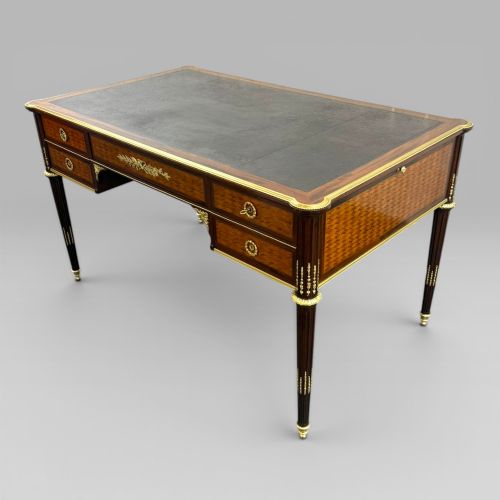
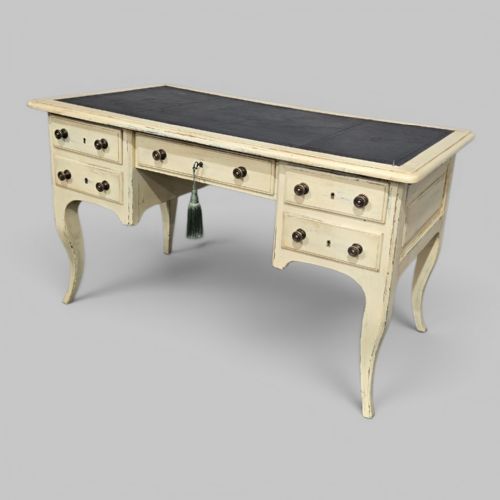
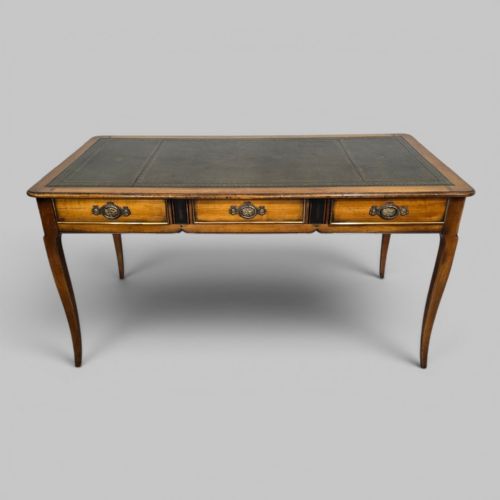
When you search for an antique french study table, you encounter freestanding writing desks, bureau plats, and library tables spanning the nineteenth and early twentieth centuries. These pieces typically feature leather or wood top surfaces supported by refined wooden frames.
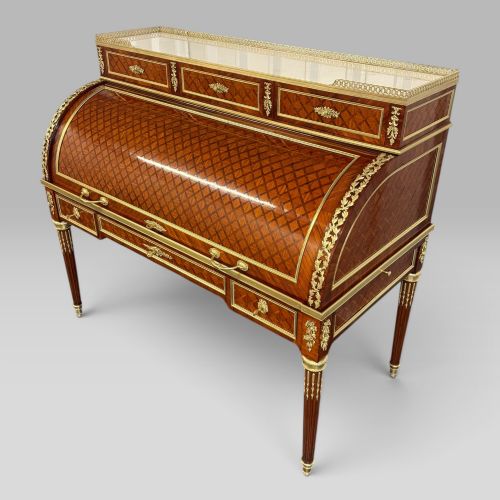
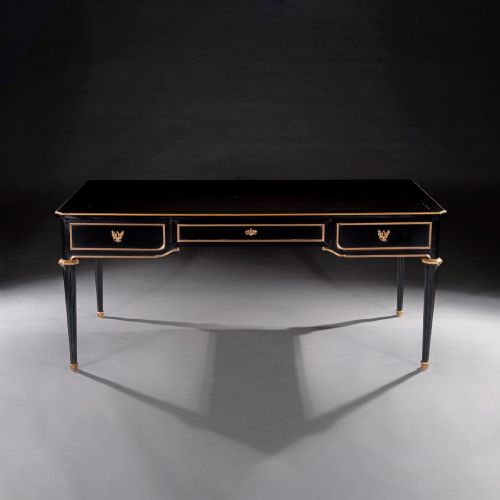
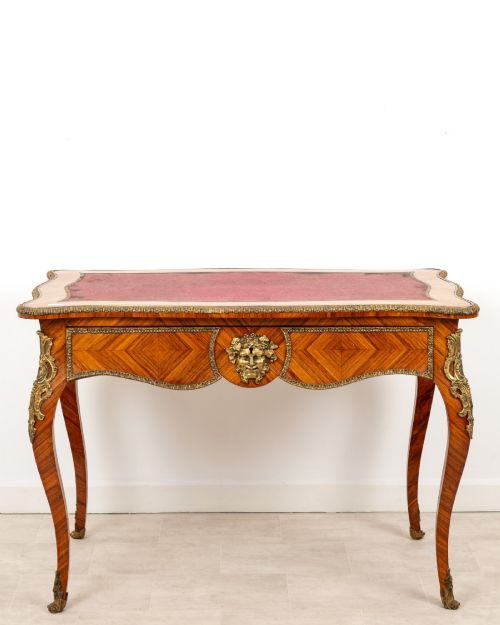
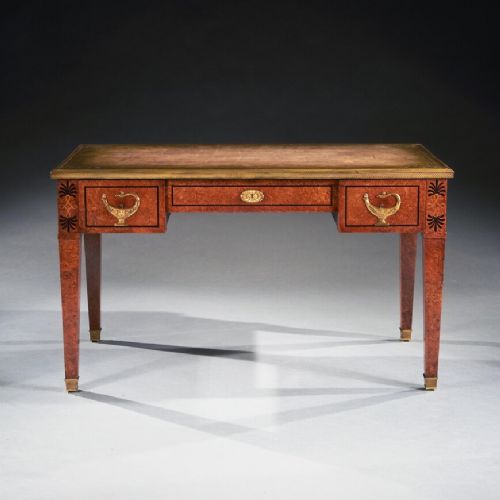
The selections on this page lean heavily towards bureau plat forms and writing desks decorated with marquetry, parquetry, and gilt bronze mounts. Maker-signed pieces and revival styles reflecting Louis XV and Louis XVI aesthetics appear frequently.
Makers such as François Linke and CH. Jeanselme & Co represent the higher tiers of cabinetmaking found within these records. Walnut, mahogany, kingwood, and burr walnut dominate the structural timbers.
How they were made
Cabinetmakers utilised hardwoods like mahogany, walnut, and kingwood as foundations for intricate marquetry and parquetry patterns. Surface decoration often incorporated brass, ormolu, and gilt bronze mounts cast in classical motifs.
Writing surfaces were frequently inset with leather panels tooled in gilt. Ebonised finishes and painted treatments also occur across nineteenth and twentieth-century examples.
Among the writing desks and lamps, a lone revolving globe terrestrial sits quietly ready to chart nineteenth-century worlds.
What varies in quality
The refinement of the ormolu mounts and the precision of the parquetry inlay separate standard workshop output from exceptional pieces by known makers. Crisp chasing on bronze elements and balanced proportions indicate higher craftsmanship.
The choice of timbers, such as figured kingwood or burr walnut veneers over solid carcases, dictates the visual depth of the furniture. Original leather writing inserts and signed maker plaques elevate the standing of an individual desk.
CH. Jeanselme & Co·François Linke·Donald Ross·Étienne Kohlmann·Maurice Dufrêne
The Antique French Study Table Glossary
- Bureau plat
- A freestanding writing table fitted with one or more drawers in the frieze. These desks were designed to sit away from the wall in the centre of a room.
- Ormolu
- Gilded bronze used for decorative mounts and feet on furniture. The technique involves applying a mercury and gold amalgam to shaped bronze.
- Parquetry
- Geometric patterns formed by fitting small pieces of wood veneer together. Cabinetmakers used contrasting timbers to create repeating floor-like designs.
- Marquetry
- Pictorial veneer work using various coloured woods to form floral or scrollwork scenes. This technique differs from geometric parquetry by depicting organic motifs.
- Bonheur du du jour
- A light lady's writing desk featuring a small cabinet or superstructure with shelves and drawers above the main surface.
Antique French Study Table: Frequently Asked Questions
What is a bureau plat?
A bureau plat is a freestanding writing table featuring a flat top, often inset with leather, and drawers fitted into the frieze below.
Unlike traditional wall desks, these tables were finished on all sides so they could occupy the centre of a study or library.
How do I identify Louis XVI style?
Louis XVI style furniture is characterised by straight fluted legs, neoclassical symmetry, and restrained geometric or classical bronze mounts.
This aesthetic contrasts with the curving asymmetry of earlier Louis XV rococo designs.
What timber was used most?
Mahogany, walnut, and kingwood form the primary structural and decorative woods found across these nineteenth and twentieth-century tables.
Veneers of burr walnut and satine were also employed to create decorative patterned surfaces.
Where should I place a study table?
Because many antique french study tables are finished on the reverse, they suit placement in the middle of a room rather than against a wall.
Ensure adequate natural light reaches the leather writing surface for daily use.