



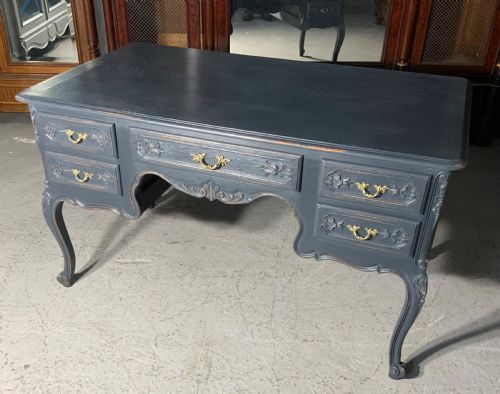


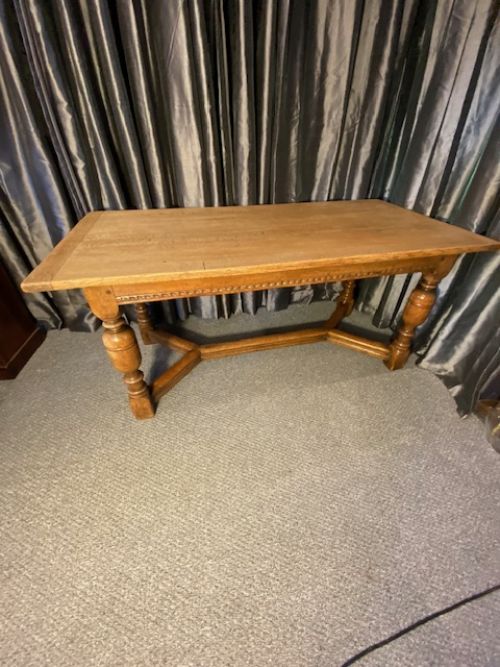
French Oak Writing Desk
A french oak writing desk brings solid construction and warm grain into a room, offering a practical workspace shaped by decades of use.
French Oak Writing Desk
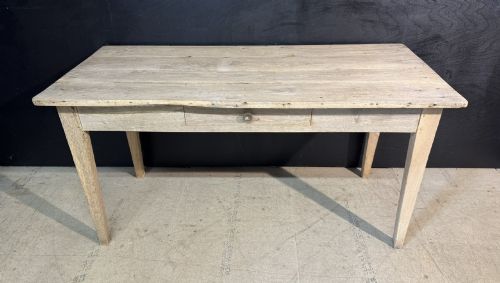
When you search for a french oak writing desk, you encounter pieces spanning the eighteenth century through the twentieth century. These furnishings range from provincial farmhouse tables adapted for writing to partner desks and small ladies' writing desks featuring stationary galleries or mirrors.
The most common examples on this page date from the nineteenth century, often reflecting French Provincial or Renaissance Revival styles. Many pieces combine functional drawers with generous writing surfaces, whilst others present simpler forms designed for occasional work or reception use.
Materials and construction
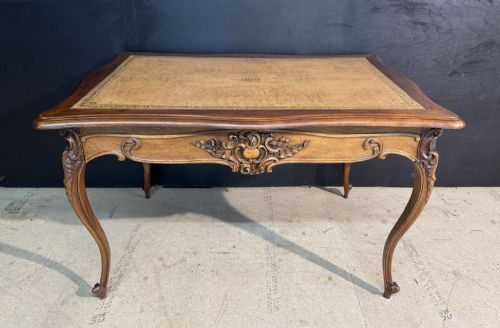
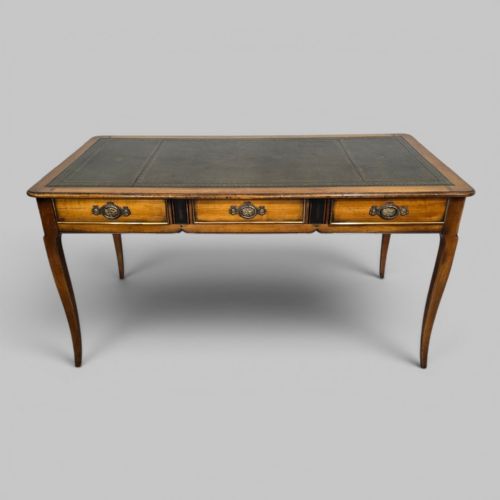
Construction relies primarily on solid oak, frequently paired with secondary timbers such as beech or walnut in internal or structural components. Metal fixings, brass handles, and leather inset writing surfaces appear regularly across the period pieces.
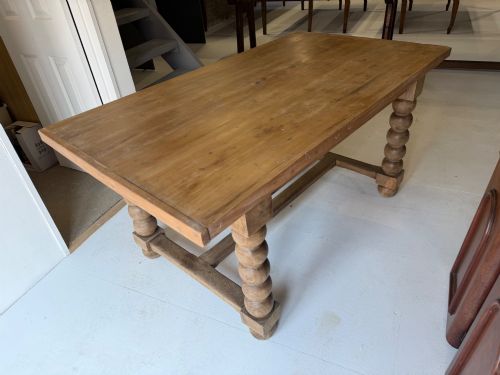
Surface treatments vary from natural waxed finishes and bleached oak to painted surfaces. Joinery techniques include hand-carved ornamentation, bobbin turning on legs, and specialised compartments built into desk backs.
French Oak Writing Desk Retail Price Guide 2026
Typical asking prices for french oak writing desk among the pieces listed under this phrase on Sellingantiques today, from the lower quarter to the upper quarter. They describe what is for sale here now, not the wider market.
The listings span from the eighteenth century to the twentieth century, incorporating oak, beech, brass, leather, and painted finishes.
Assessing quality and character
Quality reveals itself in the integrity of the timber selection and the precision of the carved details. Finer examples display harmonious proportions, substantial oak thickness, and well-executed joinery rather than purely decorative additions.
The degree of original hardware, the condition of inset leather writing surfaces, and the subtlety of period-specific carving distinguish standard provincial pieces from more ambitious cabinetmaking.
Étienne Kohlmann
The French Oak Writing Desk Glossary
- Partners desk
- A large double-sided desk designed for two people to work opposite each other, featuring drawers or cupboards on both sides.
- Bonheur de jour
- A small, light ladies' writing desk equipped with a raised tier of small drawers, shelves, or a mirror at the back.
- French Provincial
- A style originating from rural regions of France, characterised by unpretentious forms, local timbers, and restrained carved details.
- Bobbin turned
- A style of leg or stretcher shaped on a lathe to resemble a series of bobbins or spools strung together.
- Stationary gallery
- A raised rail or compartment structure fitted to the rear of a desk top to hold papers and writing equipment.
French Oak Writing Desk: Frequently Asked Questions
What is a French oak writing desk used for?
These pieces serve as functional home office desks, writing tables, or decorative centre tables in studies and living spaces.
Their sturdy construction makes them suitable for daily writing tasks while adding traditional character to an interior.
How do I date a French oak desk?
Dating relies on stylistic clues such as Renaissance Revival carving, Art Deco geometry, or provincial turned legs.
Construction methods and the presence of period hardware also help establish whether a piece belongs to the eighteenth, nineteenth, or early twentieth century.
Are these desks double-sided?
Some larger library and partners desks feature drawers and workspace on both sides, allowing them to sit freestanding in a room.
Smaller provincial writing tables and ladies' desks are typically designed to stand against a wall.
How should I care for antique oak?
Maintain the timber by keeping it away from direct heat sources and applying appropriate natural waxes periodically.
Avoid excessive moisture on both the wooden surfaces and any inset leather writing panels.