




Antique French Study Furniture
Antique French study furniture brings together desks, tables and chairs shaped by centuries of continental craftsmanship.
Antique French Study Furniture
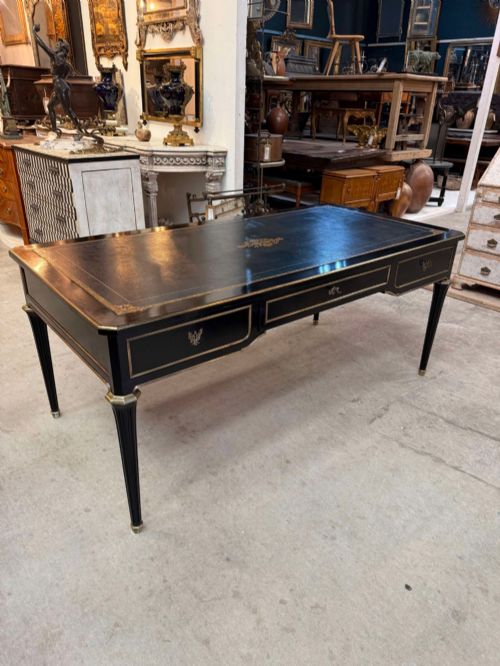
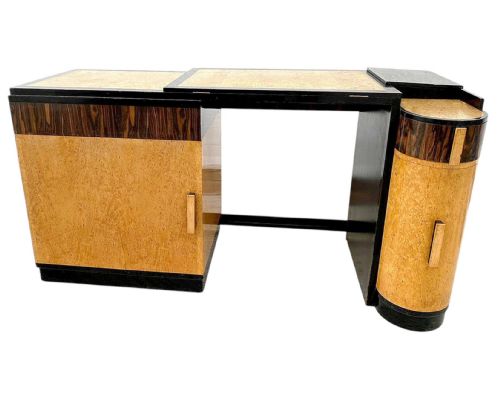
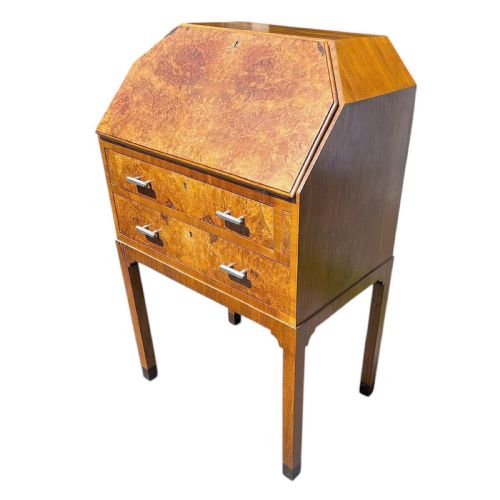
When sourcing antique french study furniture, buyers encounter writing tables, bureau plats, and cylinder desks originating from the nineteenth and early twentieth centuries. These pieces reflect the functional demands of private studies and grand libraries, spanning periods from the Victorian era through to Art Deco.
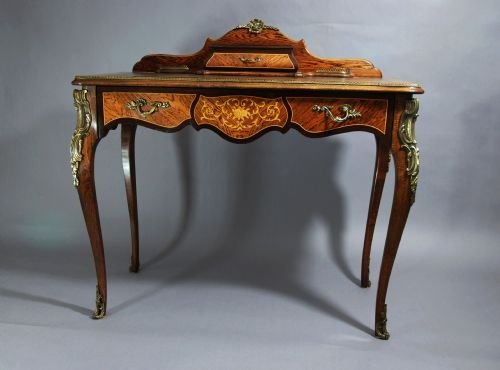
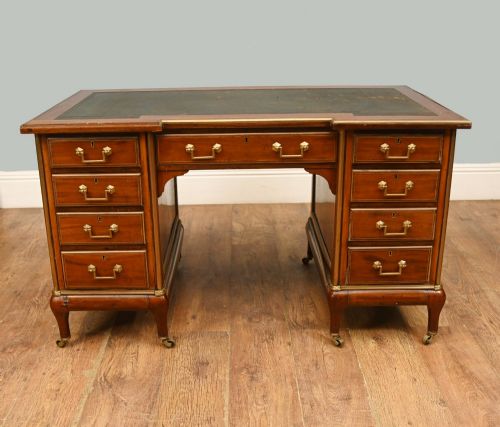
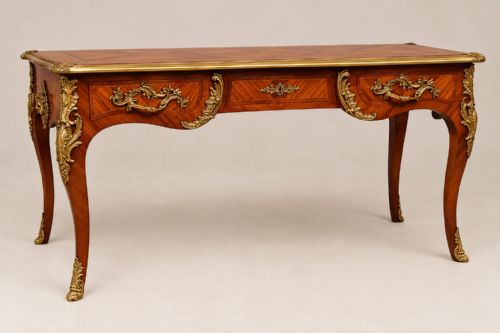
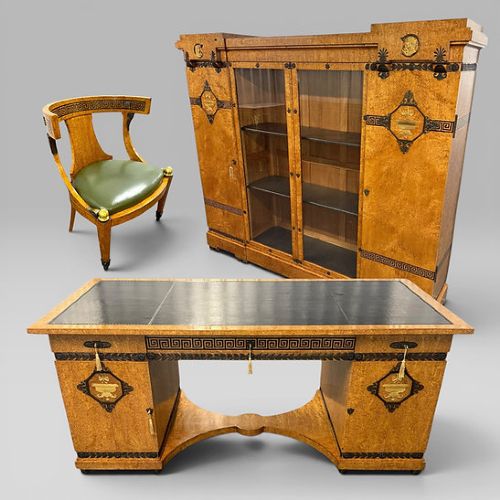
The selections on this page are predominantly writing desks and tables executed in revivalist designs, notably Louis XV and Louis XVI styles. Alongside standalone desks, collectors discover office sets and complementary seating that establish a cohesive scheme for a workspace.
Materials and construction
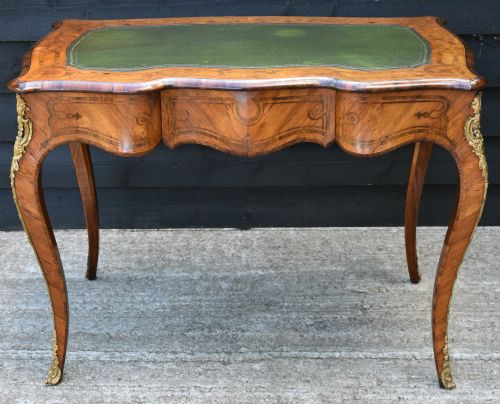
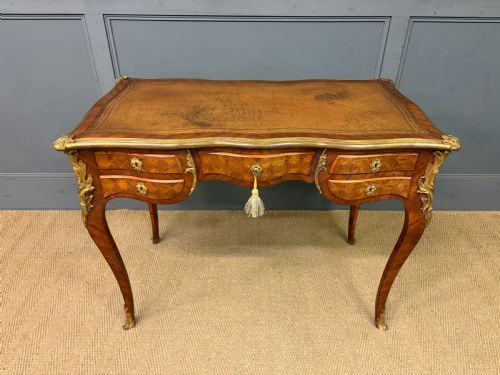
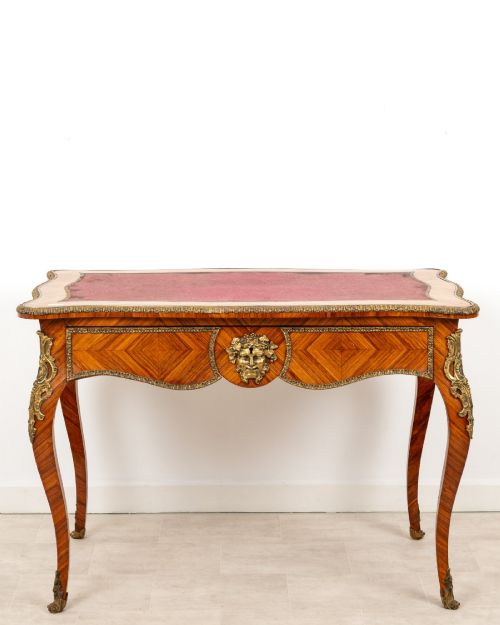
Cabinet makers utilised dense hardwoods including kingwood, rosewood, mahogany and satinwood as foundations for intricate parquetry and floral marquetry patterns. These wooden structures are frequently enriched with gilt bronze and ormolu mounts that highlight the structural contours of each desk.
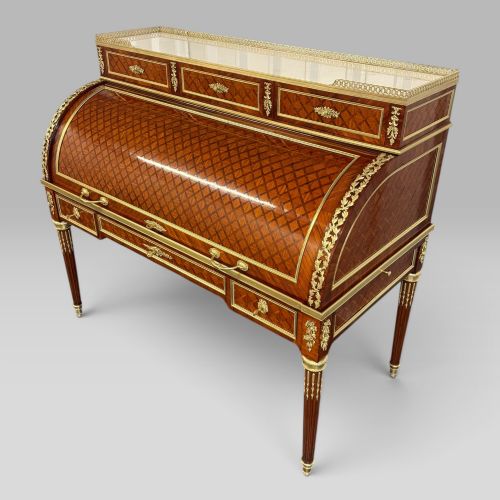
Writing surfaces are typically lined with tooled leather, providing a durable and traditional plane for correspondence. Advanced joinery techniques allow for serpentine curves and cylinder mechanisms, particularly visible in bureau plat and bureau du dame forms.
Antique French Study Furniture Retail Price Guide 2026
Typical asking prices for french study furniture among the pieces listed under this phrase on Sellingantiques today, from the lower quarter to the upper quarter. They describe what is for sale here now, not the wider market.
Periods represented span the Victorian era, the nineteenth century and the Art Deco movement of nineteen-thirty.
Assessing quality and execution
The calibre of a piece rests heavily on the crispness of its ormolu mounts and the precision of its wood veneers. Finer examples display hand-chiselled detailing in the bronze work and seamless geometric or floral inlay across curved surfaces.
Structural integrity and the retention of original leather writing inserts distinguish superior items from standard workshop output. Consistency in the timber grain and the smoothness of drawer mechanics reveal the original maker's investment of time and skill.
Mercier Frères·Maison Krieger·Donald Ross
The Antique French Study Furniture Glossary
- Bureau plat
- A freestanding writing table fitted with one or more drawers in the frieze. This form gained prominence during the eighteenth century and remained a staple of revivalist design.
- Ormolu
- Gilt bronze ornamentation applied to furniture mounts and borders. The process involves coating bronze with a finely ground mercury and gold amalgam before heating.
- Parquetry
- Geometric mosaic woodwork formed by small veneer pieces arranged in patterns. It creates a textured, decorative surface across desk tops and drawer fronts.
- Cylinder desk
- A writing desk featuring a quarter-cylinder rolling shutter that conceals the writing surface and interior compartments when closed.
Antique French Study Furniture: Frequently Asked Questions
How do I identify Louis XV revival pieces?
Louis XV revival furniture is characterised by asymmetrical curves, serpentine outlines, and floral marquetry. The legs usually sweep outward in a cabriole shape, avoiding straight lines wherever possible.
Ormolu mounts on these pieces often depict C-scrolls, foliage, and rocaille motifs. This style emphasises fluid grace over rigid symmetry.
Where should I place a partner's desk?
A partner's desk requires a central room placement to utilise the drawers and writing space accessible from both sides. It functions best in a spacious study or library with clearance all around.
Because these desks are finished on every side, they serve as a visual anchor in large rooms. Positioning them away from walls highlights the quality of the timber and ormolu mounts.
How do I care for leather desk inserts?
Leather writing surfaces benefit from periodic cleaning with a damp cloth followed by a suitable leather cream to prevent cracking. Avoiding direct sunlight preserves both the colour and the gold-tooled borders.
Treating the leather gently maintains its supple texture over decades of daily use. Ink stains should be addressed immediately with specialist conservation products.