


Antique French Showcase
An antique french showcase brings glazed elegance and finely cast ormolu mounts to a room, holding precious collections with understated grace.
Antique French Showcase
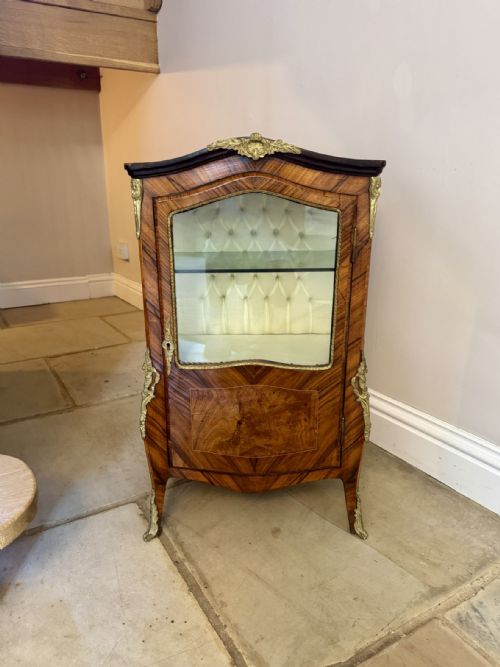
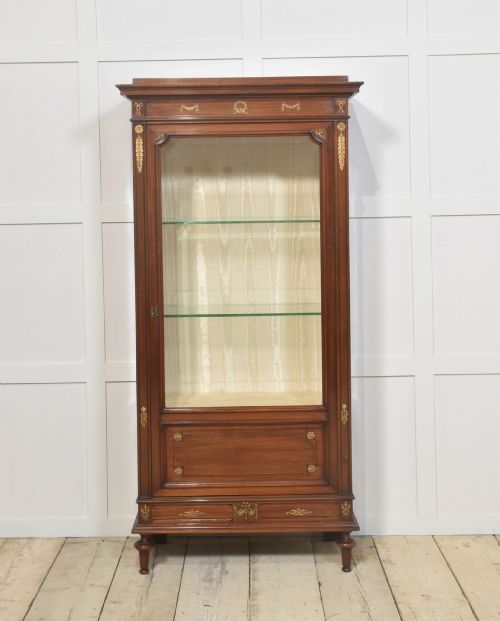
An antique french showcase encompasses a variety of glazed display furniture, including vitrines, china cabinets, and bijouterie tables designed to exhibit porcelain, small objects, and decorative pieces. Buyers frequently encounter examples from the nineteenth century up to the nineteen-twenties, spanning styles from Louis XV and Louis XVI revivals to French Empire.
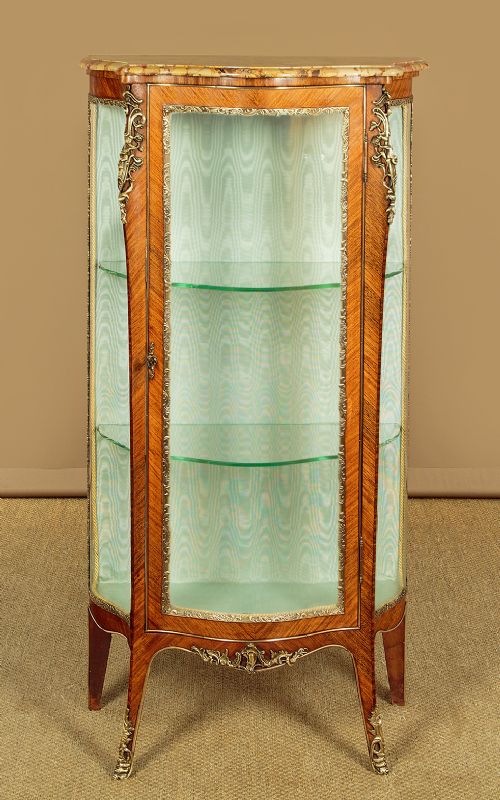
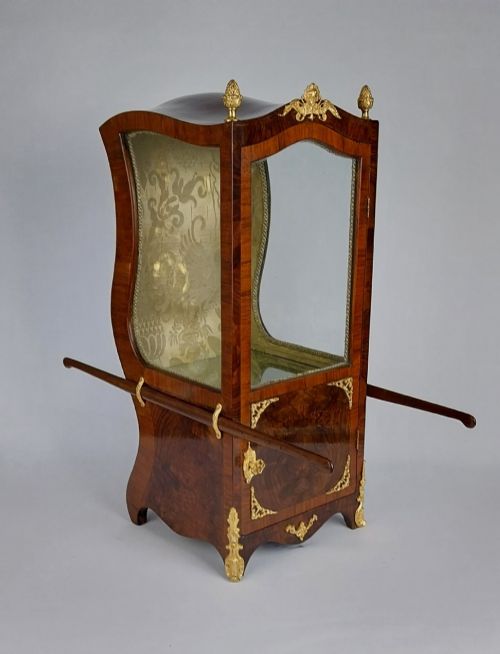
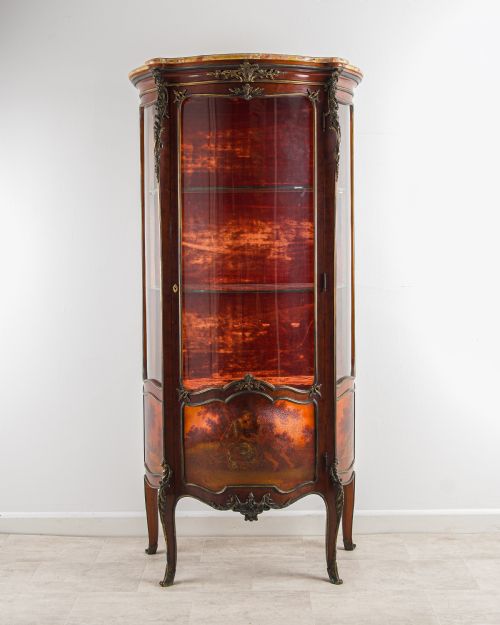
The primary forms on this page include freestanding vitrines, serpentine display cabinets, cylindrical pedestals, and tabletop glass cases. These pieces originate predominantly from the nineteenth century, utilising period aesthetics inspired by earlier royal courts while serving domestic display needs.
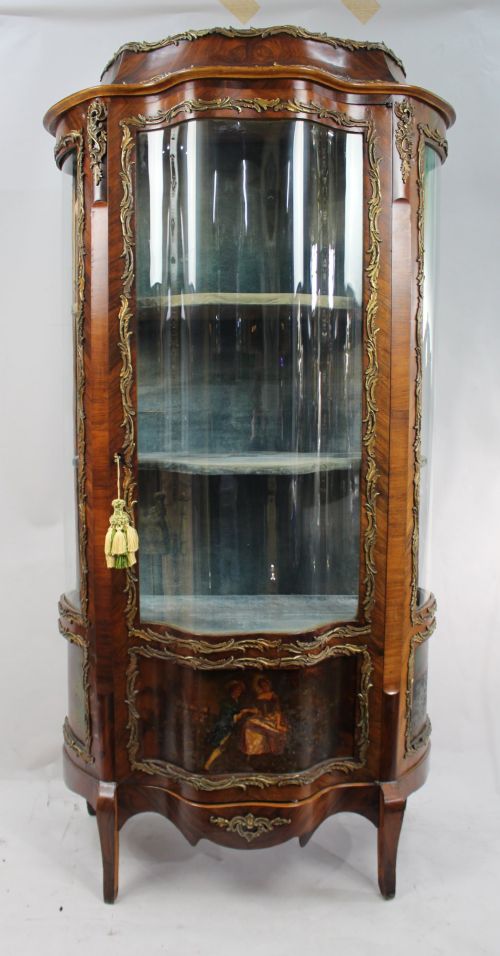
Makers and workshops of the period utilised specific regional vocabularies, visible in curved glass fronts, painted panels, and integrated fabric linings. Collectors select these cabinets for their balance of visible storage and ornamental hardware, positioning them within formal reception spaces.
Materials and construction methods
Cabinetmakers constructed the foundational carcass using hardwoods such as walnut, mahogany, oak, rosewood, and yew, frequently applying veneers of kingwood in parquetry patterns. These timber frames support extensive glass panels that allow light to enter the interior display chamber from multiple angles.
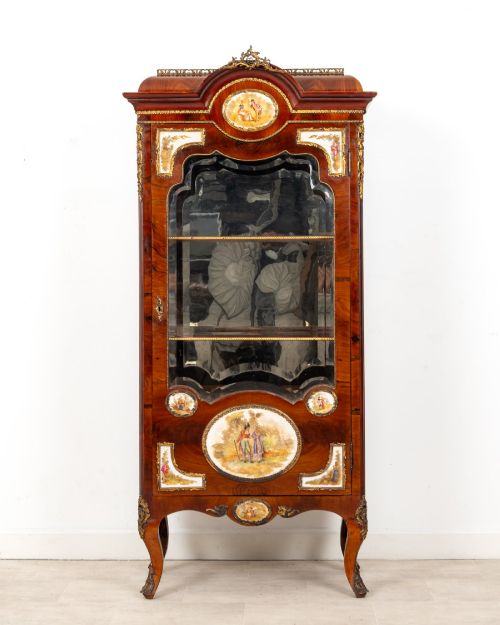
Gilt bronze, or brass ormolu mounts punctuate the exterior angles, framing doors and embellishing feet. Surface decoration often includes Vernis Martin painted panels depicting pastoral scenes, alongside marble tops that add weight and structural contrast to the timber.
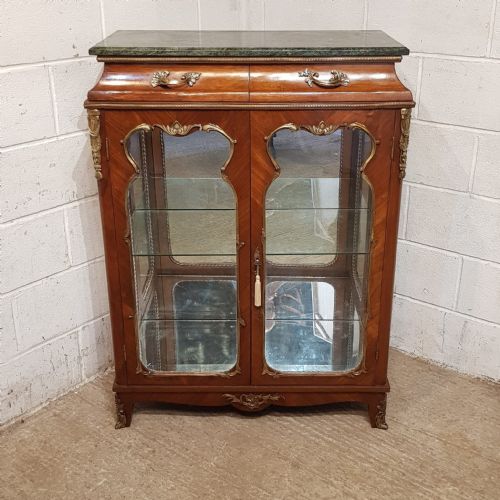
The listings show nineteenth-century antique french showcase examples utilising walnut, mahogany, and kingwood, frequently mounted with ormolu.
Distinguishing quality in display furniture
The refinement of the ormolu mounts dictates much of the visual hierarchy among these cabinets, where deeply chased, fire-gilded bronze stands apart from plain cast brass. Superior examples exhibit hand-chiselling on the metalwork, bringing crisp relief to acanthus leaves and scrolling motifs.
Timber selection and veneer matching similarly divide utilitarian pieces from masterworks, with quartersawn grain and intricate parquetry indicating dedicated workshop labour. Furthermore, the fluidity of curved glass and the precision of the door joints reveal the maker's underlying skill.
François Linke·Angela Kaufman·Siegel
The Antique French Showcase Glossary
- Vitrine
- A glass-fronted display cabinet intended for the presentation of porcelain, curiosities, and small decorative art objects. The term derives from the French word for glass.
- Ormolu
- Gilt bronze mounts applied to the exterior of furniture to accent corners, friezes, and feet. The technique involves applying a gold amalgam to heated bronze.
- Parquetry
- Geometric wood-mosaic work used for decorative veneer on cabinet surfaces. Craftsmen arrange contrasting grain patterns in repeating shapes like cubes or lozenges.
- Bijouterie table
- A glazed tabletop display case, often raised on slender legs, designed for viewing jewellery and small precious items from above. These are sometimes called showcase tables.
Antique French Showcase: Frequently Asked Questions
What is a vitrine?
A vitrine is a glazed cabinet designed specifically for displaying porcelain, glass, and decorative objects. The glass sides and doors allow light to illuminate the interior from multiple angles.
These pieces were traditionally placed in drawing rooms and salons to showcase a household's prized possessions. Today, they serve the same function for collectors housing small antiques.
How do I use a bijouterie table?
A bijouterie table functions as a waist-height display case with a glazed top, originally intended for laying out jewellery, medals, and miniatures. The hinged glass lid allows the owner to inspect small items closely without handling them directly.
In a modern interior, these tables sit well in studies or sitting rooms as accent pieces. They keep delicate items dust-free while remaining fully visible.
What is Vernis Martin?
Vernis Martin is a decorative lacquer technique created in France to imitate Asian lacquerware. It involves multiple layers of resin varnish applied over painted pastoral or mythological scenes.
Cabinets featuring this finish display distinctive glossy panels with subtle depth. The technique was widely revived during the nineteenth century for high-end display furniture.
How do I date an antique showcase?
Dating relies on examining the timber construction, the style of the ormolu mounts, and the manufacturing methods of the glass. Nineteenth-century pieces often display revival styles referencing Louis XV or Louis XVI designs.
Secondary woods inside the cabinet, screw types, and lock mechanisms also provide clues to the era of manufacture. Consulting the specific revival period helps narrow down the decade.