

Rococo Style Cabinet
These pieces built around the rococo style cabinet bring flowing curves and ornate mounts into a room, offering both display space and historic French flair.
Rococo Style Cabinet
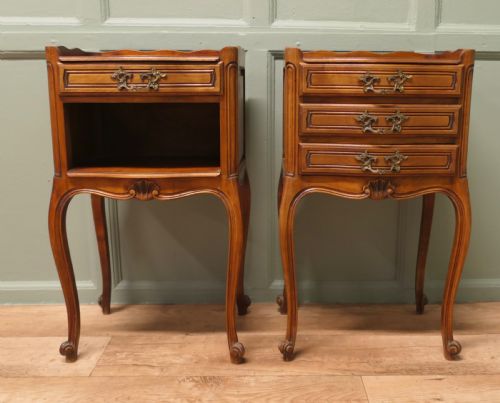
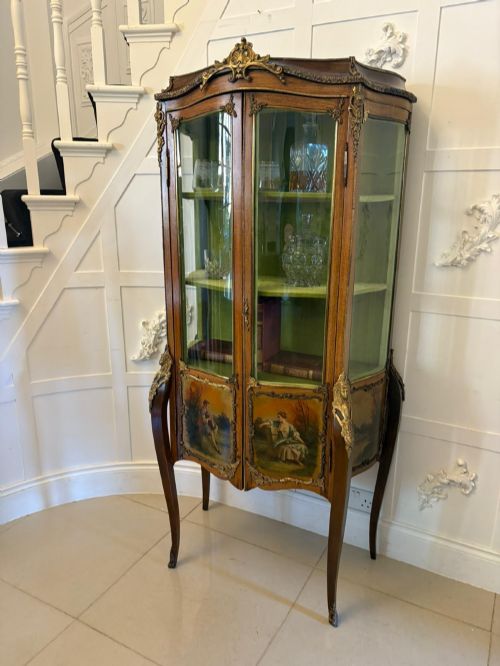
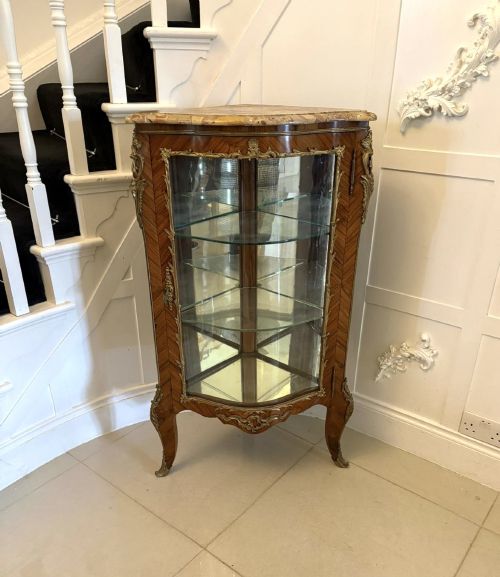
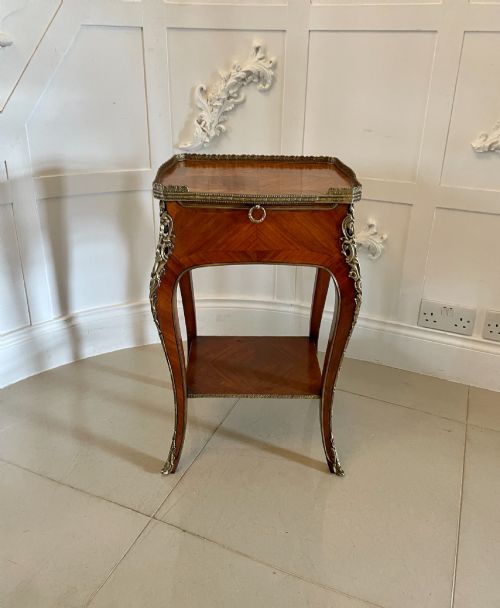
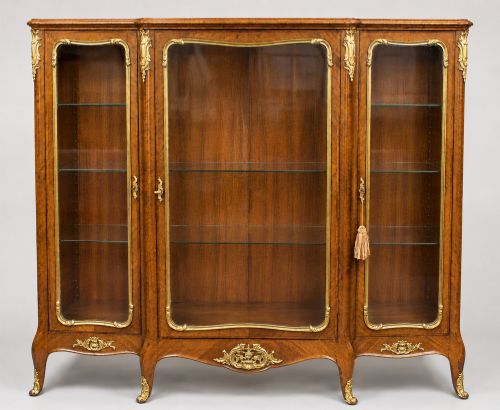
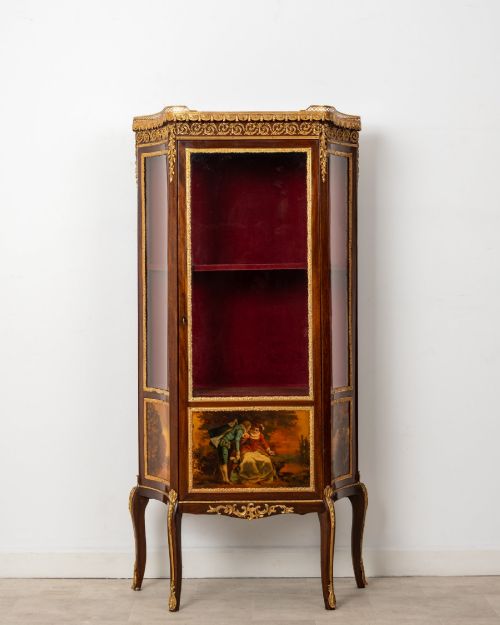
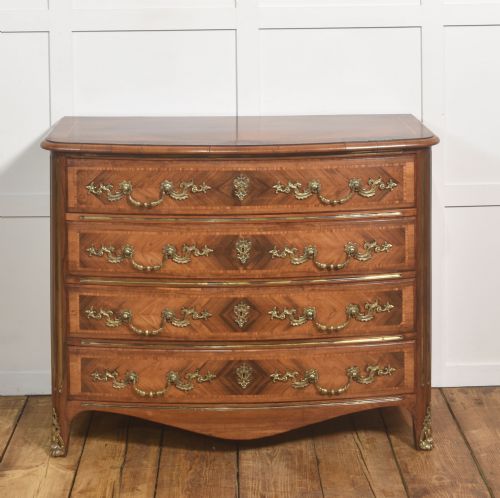
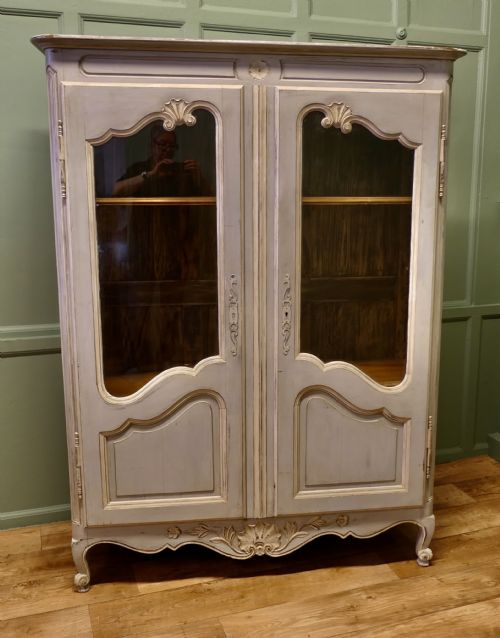
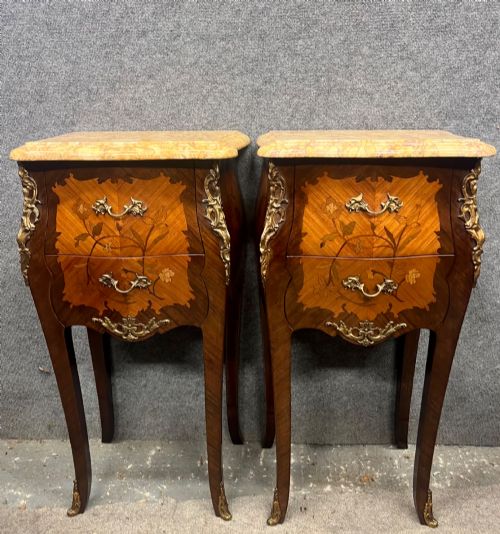
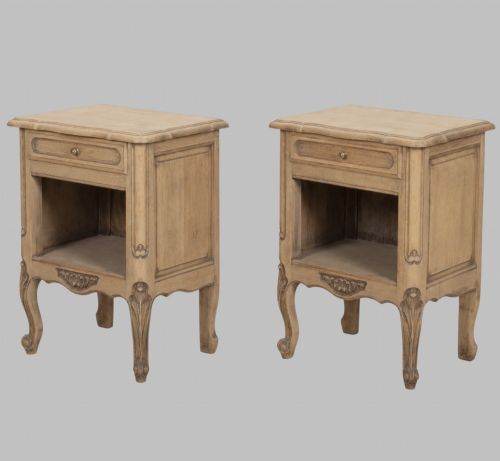
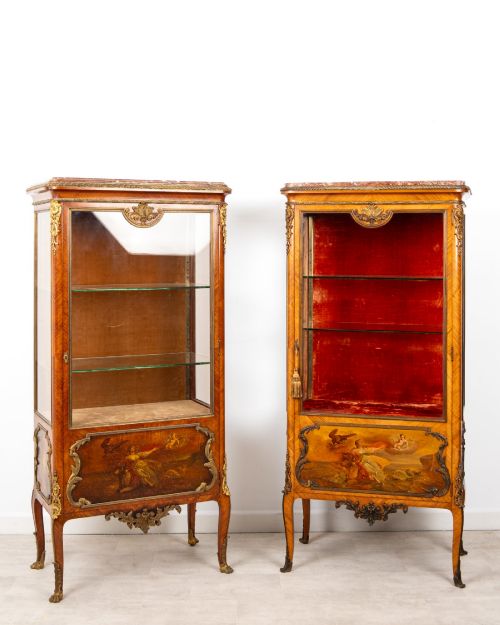
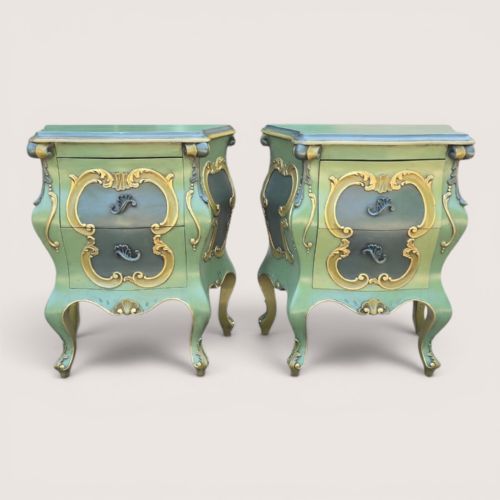
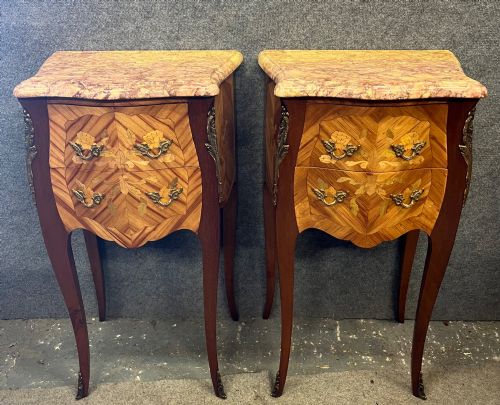
A rococo style cabinet takes many forms on this page, appearing most frequently as glazed vitrines, serpentine side cabinets, and marble-topped bedside tables. These items draw heavily on French Louis XV design traditions, channelling eighteenth-century aesthetics through nineteenth- and early-twentieth-century revival craftsmanship.
Buyers encounter display cabinets with glazed sides, bombé commodes, and writing cabinets designed to showcase porcelain and curated collections. The aesthetic relies on asymmetrical lines, sweeping curves, and decorative painted panels rather than rigid rectilinear geometry.
How They Were Made
Cabinet makers utilised foundational timbers such as mahogany, walnut, and oak, frequently overlaying them with kingwood veneers and intricate marquetry patterns. Carved frames receive decorative painted finishes, japanned lacquer, or giltwood treatments.
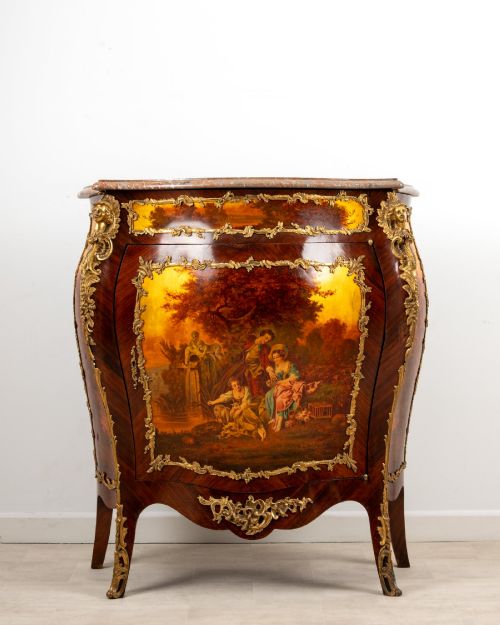
Gilt bronze and ormolu mounts punctuate the exterior alongside shaped marble tops and brass details. Vernis Martin panels add painted pictorial scenes to vitrine doors and bombé surfaces.
The listings show pieces spanning from the 1850s to the 1930s, utilising kingwood, marble, and gilt bronze within Louis XV revival styles.
What Varies in Quality
The refinement of the ormolu mounts separates standard production from exceptional pieces, with hand-chased bronze displaying sharper detail and smoother integration into the timber contours. Marquetry precision and the depth of the timber veneers further distinguish maker workshops.
Execution of the painted Vernis Martin panels dictates desirability, where layered pictorial depth outweighs simple surface decoration. The weight and veining of the fitted marble top also signal the standing of the piece.
François Linke
The Rococo Style Cabinet Glossary
- Ormolu
- Gilded bronze mounts applied to furniture. This technique creates metallic highlights that complement the rich tones of kingwood and mahogany.
- Vernis Martin
- A simulated Japanese lacquer developed in France. It produces translucent painted panels used on cabinets and vitrines.
- Marquetry
- Inlaid wood veneers forming decorative patterns. Craftsmen use contrasting timbers to create pictorial or geometric designs.
- Vitrine
- A glass-fronted display cabinet. These pieces allow porcelain and small objects to be viewed from multiple angles.
- Bombé
- Swelling or outward-curving furniture sides. This bulbous shape characterises commodes and specific cabinet forms.
Rococo Style Cabinet: Frequently Asked Questions
What is a rococo style cabinet used for?
These cabinets serve primarily to display porcelain, glassware, and decorative objects behind glazed doors or upon open shelves. They function as striking focal points in drawing rooms and reception spaces.
Smaller iterations, such as bedside chests and lamp tables, provide surface space and enclosed storage within bedrooms. Their decorative surfaces also allow them to stand freely as sculptural elements in an interior.
How do I identify a revival period piece?
Revival pieces are distinguished by construction methods, timber maturity, and hardware characteristics that align with nineteenth- and early-twentieth-century manufacturing. Cabinetmakers during this era reinterpreted Louis XV designs using contemporary joinery techniques alongside traditional hand-finishing.
Examining the interior linings, screw types, and backboards helps determine the exact manufacturing era. The presence of machine-cut components often points towards late-nineteenth or twentieth-century production rather than the eighteenth century.
How should I care for marble-topped cabinets?
Marble surfaces require gentle cleaning with mild, pH-neutral soap and warm water to avoid etching the stone. Acidic substances like citrus juice or wine should be wiped away immediately.
Applying a specialist stone sealer protects the surface from stains while preserving the natural polish. Timber sections benefit from occasional dusting and wax application suited to kingwood or mahogany.
Where do the design influences come from?
The aesthetic originates from the French court of Louis XV, where asymmetry, C-scrolls, and naturalistic motifs dominated decorative arts. Makers revived these flamboyant flourishes during the nineteenth century, particularly under Napoleon III.
Later interpretations in the Edwardian era and the 1920s incorporated these French curves into smaller domestic furniture. This continuous revival tradition keeps the style accessible for modern interiors.