


Ormolu Kingwood Vitrine
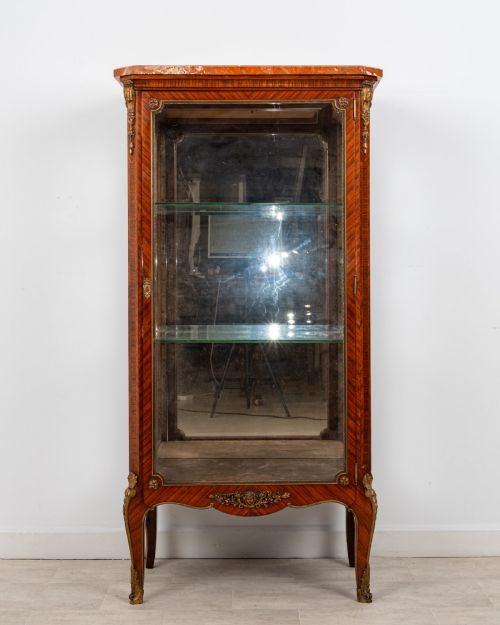
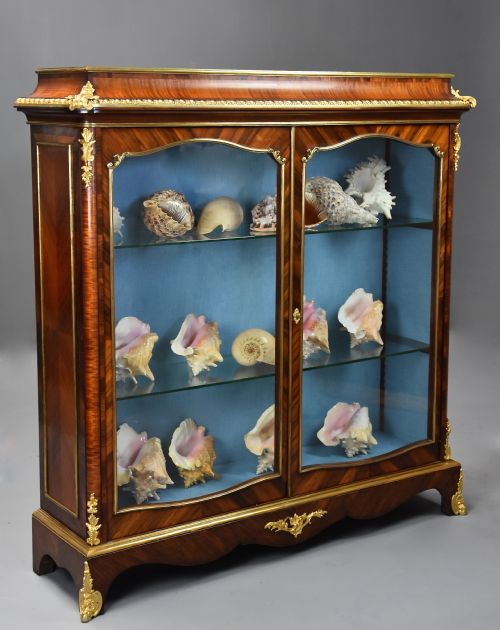
An ormolu kingwood vitrine brings French revival elegance into a room, offering glazed display space framed by gilt mounts and figured wood.
Ormolu Kingwood Vitrine
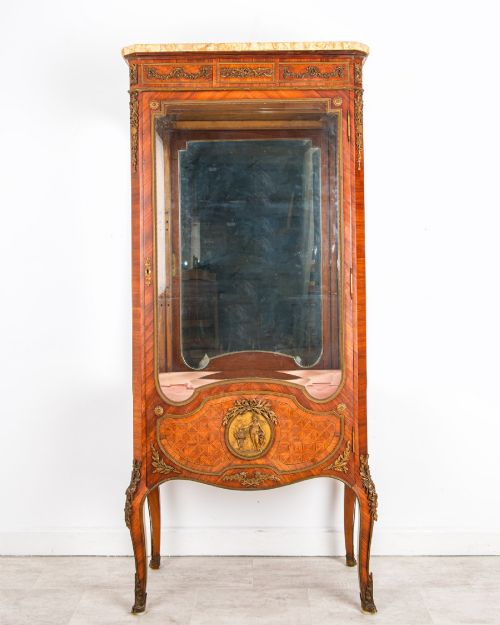
When searching for an ormolu kingwood vitrine, buyers encounter glazed display cabinets, bijouterie tables, and pier cabinets originating primarily from the nineteenth century. These pieces emerge predominantly within French Louis XV and Louis XVI revival styles, often featuring serpentine fronts, marble tops, and curved glass.
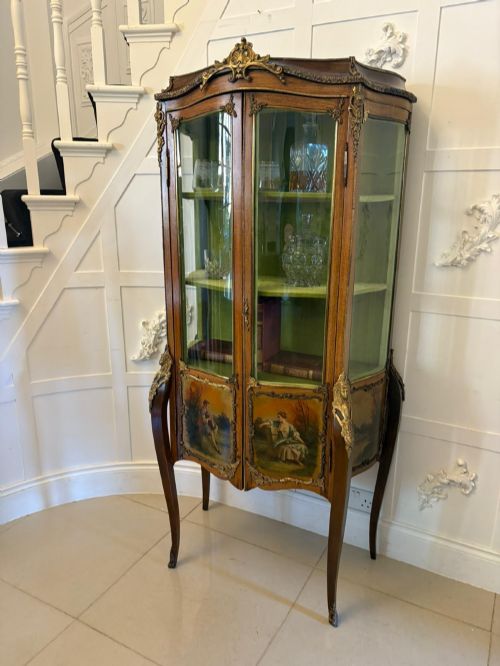
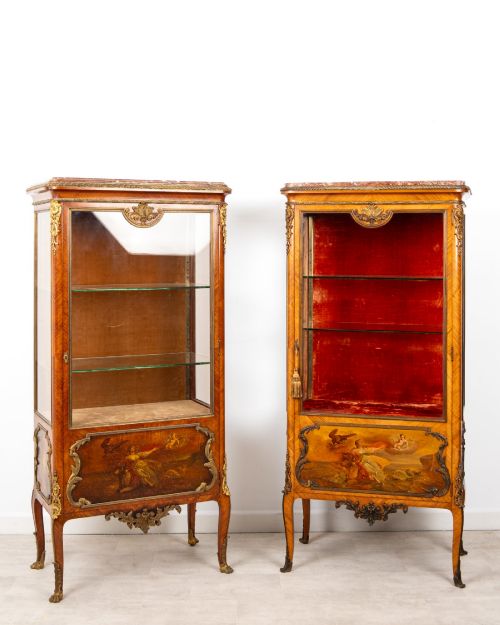
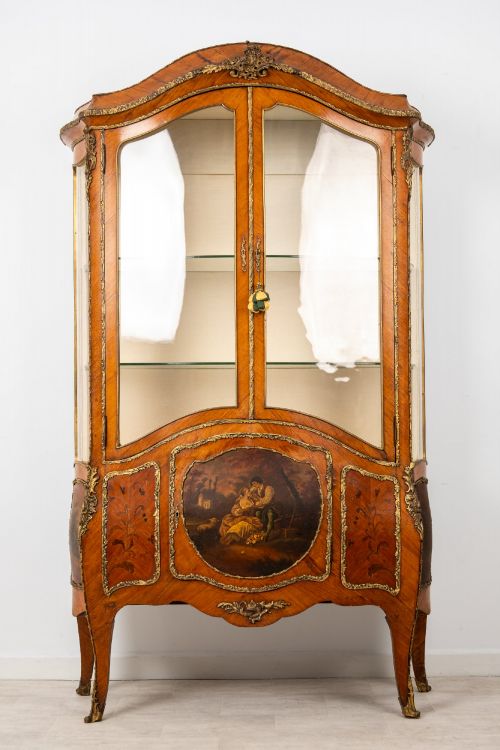
The most common variants on this page combine kingwood veneers with ormolu mounts and painted Vernis Martin lower panels. Makers constructed these cabinets to showcase porcelain, glassware, and small collectibles behind glass panes while anchoring formal rooms with rich timber and gilt bronze.
How they were made
Cabinet makers constructed these pieces using dense carcases of oak or walnut veneered with quarter-sawn kingwood, frequently arranged in geometric marquetry patterns. Craftsmen cast and chased gilt-bronze or ormolu mounts separately before fixing them meticulously to the corners, feet, and cornices of the cabinetry.
Glazing required curved or flat glass fitted carefully into rebated timber frames, while painted lower panels utilised traditional Vernis Martin lacquer techniques. Tops were finished with shaped slabs of white or coloured marble fitted flush to the wood.
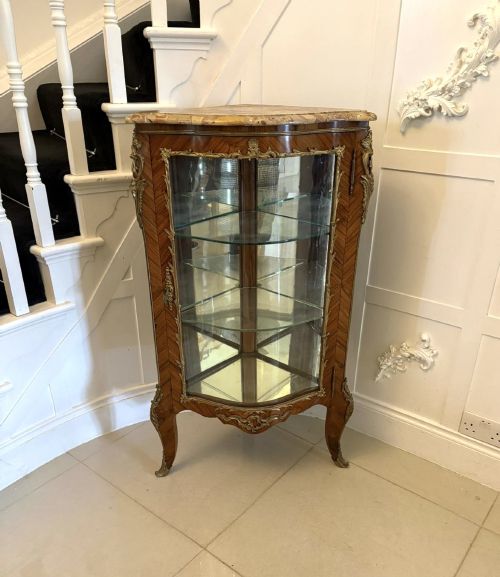
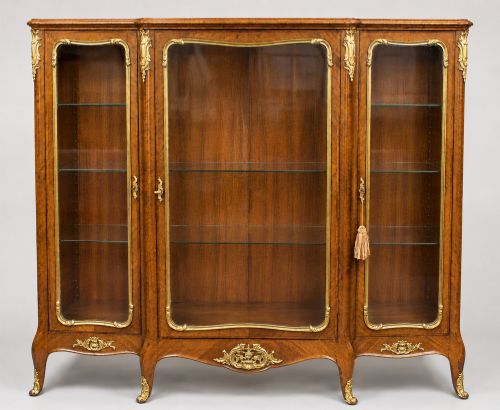
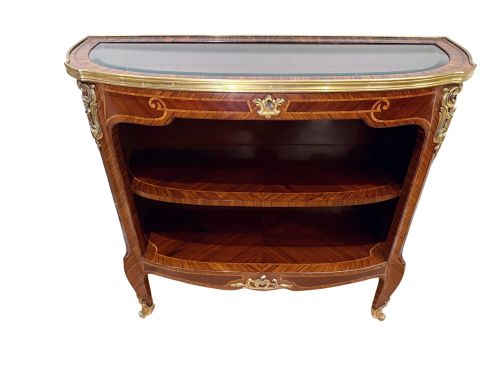
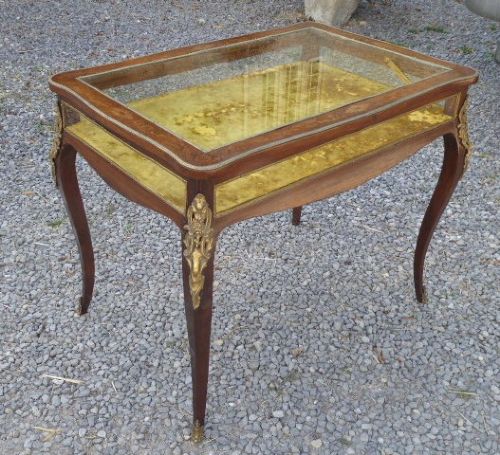
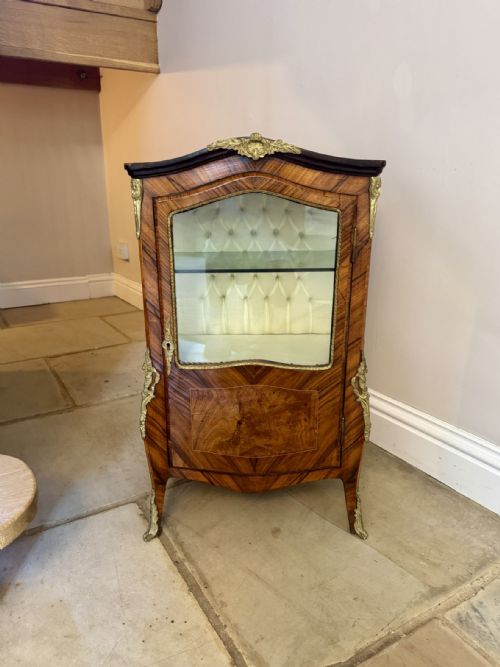
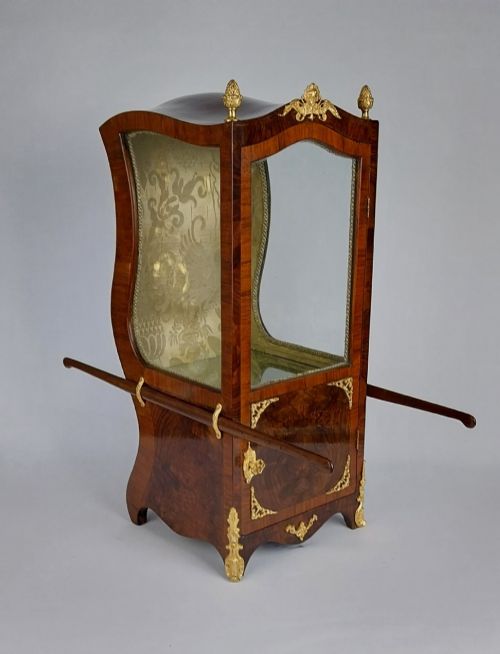
The inventory includes several variations ranging from tall display cabinets and corner units to low bijouterie tables and pier cabinets.
What varies in quality
Quality rests significantly in the crispness and weight of the ormolu mounts, where hand-chasing produces sharp definition in the acanthus leaves and scrollwork. Heavier, deeply sculpted gilt-bronze distinguishes superior workshop production from simpler stamped brass alternatives.
The precision of the kingwood marquetry and the fluidity of serpentine or bombe carcase construction further separate standard production from exhibition pieces. Finer cabinets exhibit seamless veneer matching across curved doors and integrated bronze mounts that follow the timber contours without gaps.
François Linke·G. Durand·Maison Mottheau·Victor Raulin
The Ormolu Kingwood Vitrine Glossary
- Ormolu
- Gilt bronze mounts applied to furniture, produced by coating cast bronze with a gold amalgam and firing it. This technique provides the bright golden ornamentation characteristic of French revival cabinetry.
- Kingwood
- A dense, richly figured Brazilian timber utilised extensively for veneering fine French cabinets. Its deep brown colour and contrasting pale streaks create striking grain patterns.
- Vitrine
- A glass-fronted display cabinet designed for exhibiting porcelain, curiosities, and precious objects. These pieces feature glazed doors and frequently glazed side panels for maximum light penetration.
- Vernis Martin
- A simulated Japanese lacquer developed in eighteenth-century France and revived in later furniture. The technique involves layered varnishes over painted pastoral or romantic scenes on cabinet panels.
- Bijouterie table
- A specialised display table featuring a glazed compartment set into the top for viewing small valuables and jewellery. They often share the kingwood and ormolu vocabulary of larger vitrines.
Ormolu Kingwood Vitrine: Frequently Asked Questions
How do I identify Louis XV style?
Louis XV style furniture is characterised by asymmetrical curves, cabriole legs, and naturalistic scrollwork without straight architectural lines. Cabinets in this aesthetic often feature serpentine fronts and elaborate ormolu mounts.
Makers adopted these flowing forms during the nineteenth-century revival periods to evoke eighteenth-century rococo luxury. The presence of bombe sides and floral marquetry further signals this design lineage.
Where were these cabinets placed?
These cabinets traditionally stood in formal drawing rooms, salons, and galleries to display prized collections of ceramics, miniatures, and glassware. Their glazed sides allowed light to enter from multiple angles, illuminating the contents.
Table versions, known as bijouterie tables, were positioned near seating areas for close inspection of smaller objects. Taller vitrines anchored wall spaces between windows or doorways.
How do I care for kingwood and ormolu?
Kingwood furniture requires a stable indoor environment away from direct sunlight and excessive heat to prevent veneer splitting and fading. Dusting should be performed gently with a dry, soft cloth without modern silicone polishes.
Ormolu mounts need minimal intervention, avoiding abrasive metal cleaners that strip the original gilding. A light dusting with a dry brush preserves the aged bronze surface safely.