
Antique French Round Table
An antique french round table brings sculptural elegance and historic utility to a room through circular timber frames and polished stone tops.
Antique French Round Table
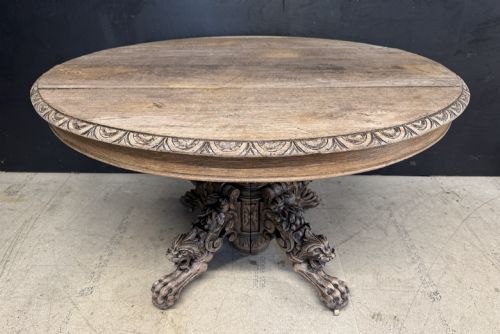
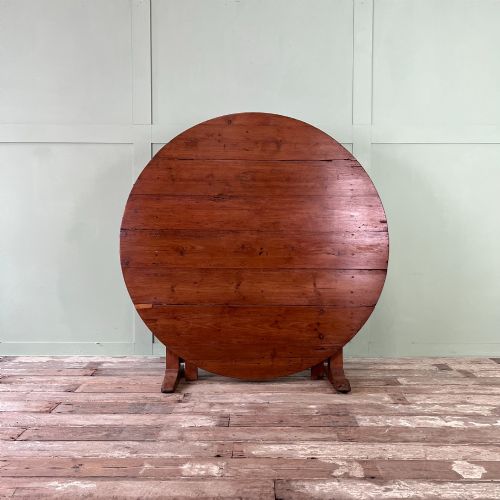
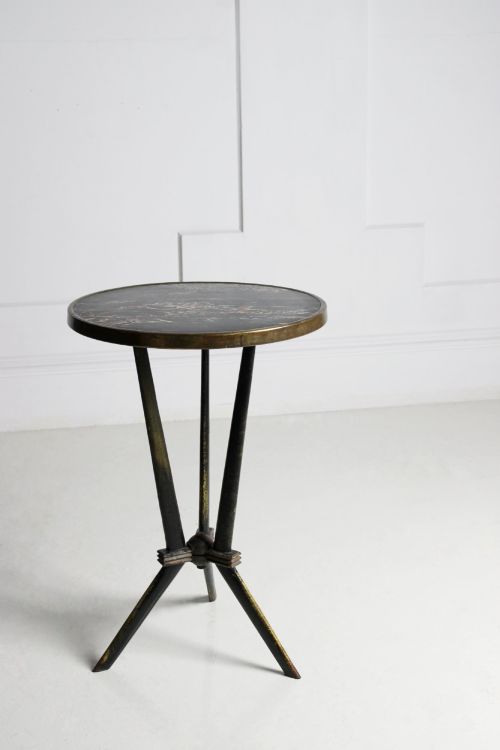
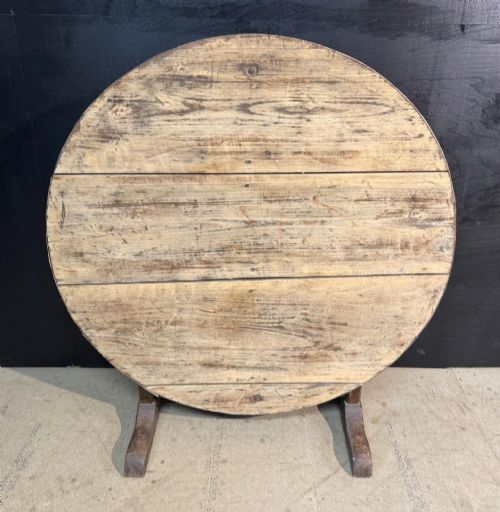
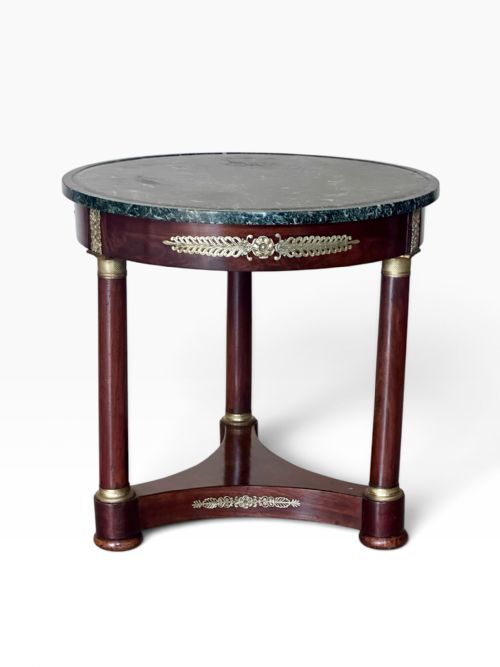
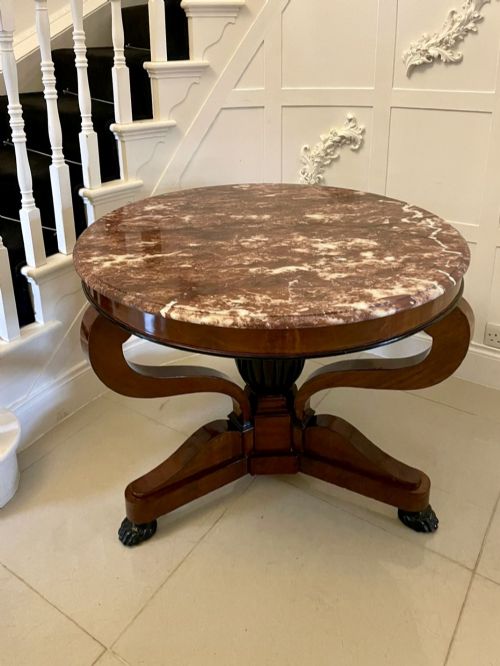
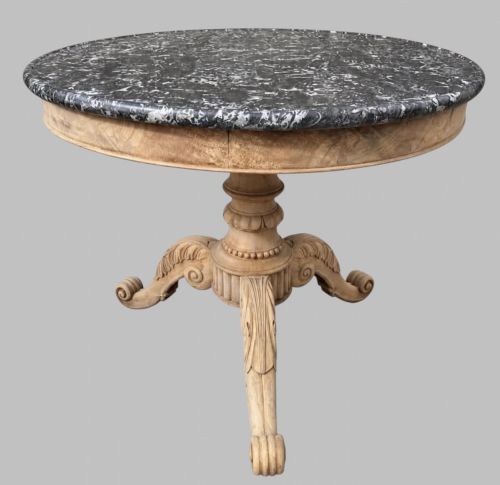
An antique french round table primarily manifests as the traditional guéridon, alongside centre tables, occasional tables, and occasional dining pieces originating from the nineteenth century and earlier decades. These circular items served various domestic functions, from central display surfaces in grand salons to practical cafe furnishings.
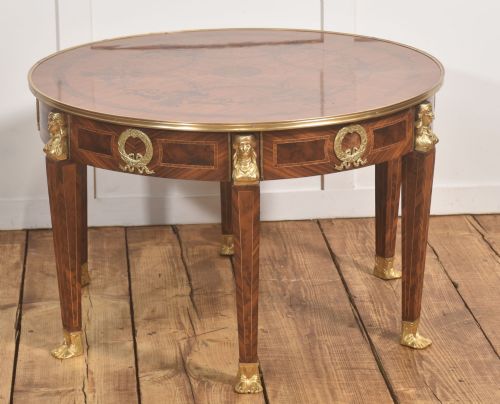
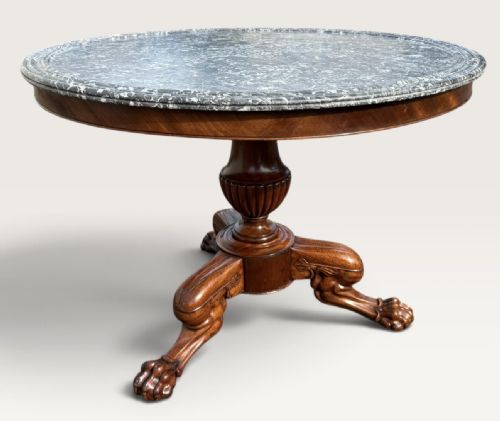
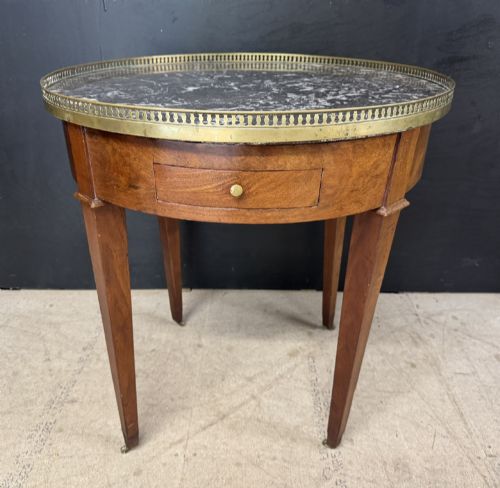
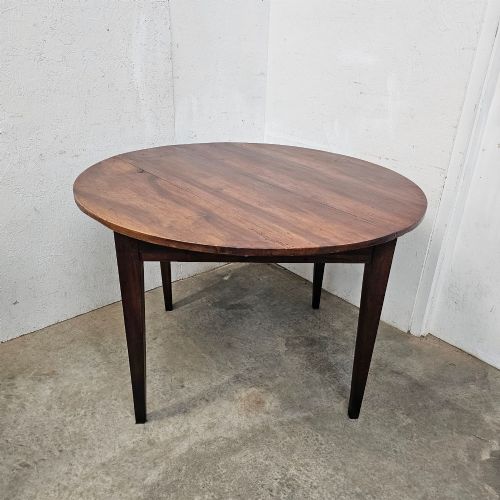
The most common version met on this page is the 19th-century mahogany or walnut guéridon, frequently featuring a heavy marble top encircled by a brass or gilt-metal gallery. Buyers also regularly encounter occasional and coffee tables shaped by specific regional styles such as French Provincial, Empire, and Louis Philippe.
Makers and designers historically produced these round tables to anchor a room's layout, utilising pedestal columns or tripod legs to maximise legroom around the circular perimeter. Their enduring appeal lies in this combination of compact circular geometry and decorative timber or stone surfaces.
Materials and Technique
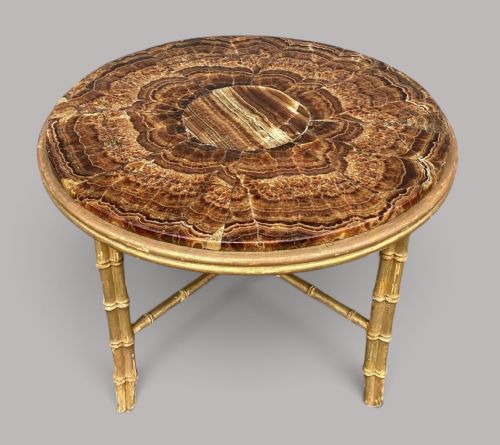
Cabinetmakers constructed these tables using dense timbers like mahogany, walnut, and kingwood, often applying intricate marquetry, parquetry, or flame veneers over secondary woods. Tops frequently incorporate heavy white or veined marble, secured by brass or ormolu mounts, galleries, and cast-bronze details.
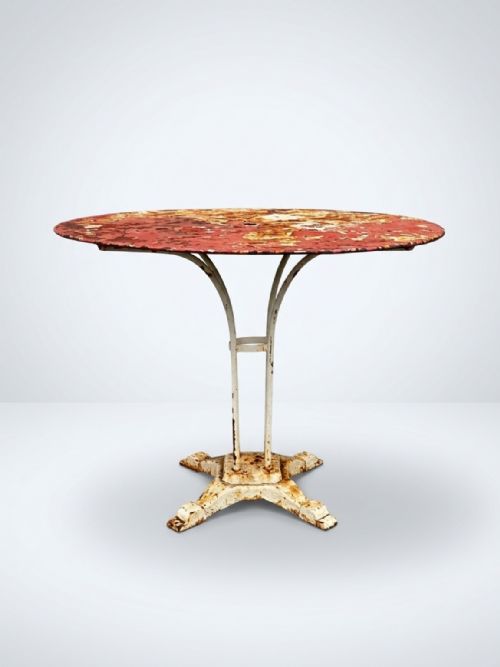
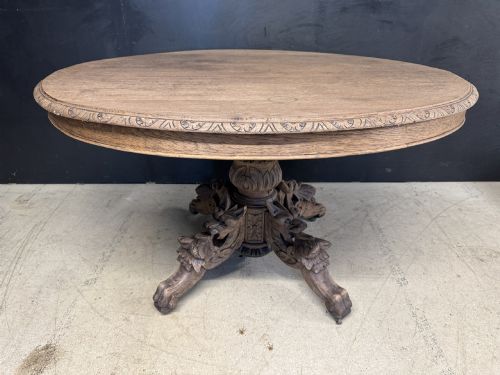
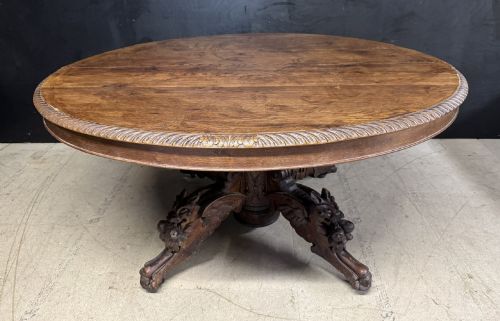
Structural integrity relied on solid central pedestals, sometimes supported by cast-iron tripod bases in garden or bistro contexts, or intricately carved wooden legs in provincial and chateau examples. Gilt-bronze ormolu mounts were cast and chased by hand to accent the structural lines of Empire and Louis-style pieces.
Listings feature pieces spanning the early nineteenth century through the Edwardian era, incorporating mahogany, walnut, marble, and cast iron.
Judging Quality
The standard of an antique french round table is determined by the crispness of its bronze ormolu mounts, the selection of figured veneers, and the integrity of the marble top. Superior examples display hand-chased metalwork and dense, well-matched timber grains that have aged with a deep, undisturbed patina.
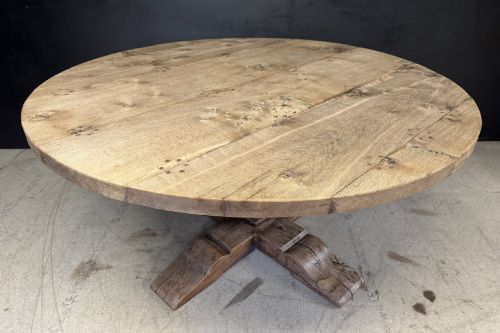
Lesser pieces often rely on simpler turned wooden pedestals with minimal hardware and plain timber finishes lacking depth. The weight and thickness of the marble slab, alongside the precision of the inlay work, likewise separate ordinary workshop output from finer cabinetmaking.
François Linke·Adam Weisweiler
The Antique French Round Table Glossary
- Guéridon
- A small round table on a central pillar or column, widely used in France since the seventeenth century. These tables frequently feature marble tops and wooden or metal pedestals.
- Ormolu
- Gilt bronze mounted onto furniture or decorative objects, created through an acid-gilding process. It provides bright metallic highlights against dark woods.
- Bouillotte table
- A small French neoclassical round table with a raised gallery edge, traditionally designed for card games. They often incorporate pull-out slides beneath the rim.
- Marquetry
- Decorative veneer patterns assembled from small pieces of wood, shell, or ivory to form pictorial or geometric designs. It is applied directly to the tabletop surface.
- Gallery
- A raised rim or pierced metal border fitted around the perimeter of a tabletop to prevent items from sliding off. Galleries are commonly made of brass or gilt metal.
Antique French Round Table: Frequently Asked Questions
What is a gueridon table?
A gueridon is a traditional French round table supported by a single central pillar or pedestal. These pieces were originally designed for holding light objects or serving drinks in formal rooms.
Over time, they evolved into versatile centre tables featuring marble tops and decorative wood veneers. Their compact circular footprint makes them particularly useful for placement in the middle of a room or beside seating.
How do I style a round table?
A round table works well as a focal point in the middle of a room, especially when topped with marble or marquetry. Placing a lamp, a bronze sculpture, or a collection of books in the centre creates a balanced display.
Because the table lacks corners, it softens the geometry of a room filled with rectangular furniture. Smaller occasional and coffee table variants fit easily beside armchairs or sofas for daily use.
Are marble tops original?
Most antique French marble-topped tables retain their original stone slabs, which were cut and polished to fit the specific wooden frame. White and veined grey marble are the most common stones found on nineteenth-century examples.
Inspect the underside of the table and the fit against the wooden rim to understand how the stone is secured. Replacements do occur due to historic breakages, but a tight fit and matching age indicators confirm originality.
How do I tell periods apart?
Empire and Louis Philippe pieces tend to feature heavy mahogany or kingwood timbers paired with classical ormolu mounts. Provincial and country models use simpler walnut or fruitwood with carved details rather than metal ornamentation.
Later nineteenth-century and Edwardian examples often introduce lighter woods, painted finishes, or cast-iron bases intended for bistro and garden use. Examining the construction joints and interior secondary woods helps confirm the era of manufacture.