
Antique French Glass
Antique french glass brings together opalescent vessels and cameo scenes from the early twentieth century, offering a tangible link to decades of refined design.

What antique french glass is
When you search for antique french glass, you encounter pieces spanning from the early nineteenth century through the Art Nouveau and Art Deco periods. The selection here leans heavily towards early twentieth century works, including vases, decorative plates, and jars.
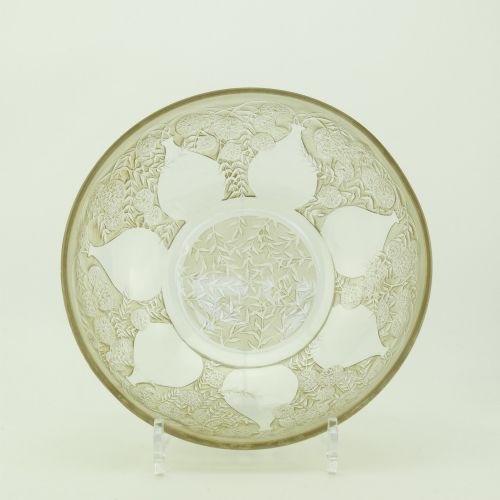
The objects take many forms, from moulded opalescent bowls and cameo vases to green pickling jars and cut glass tableware. These items reflect both everyday domestic use and elite artistic production originating in France.
What varies in quality
Quality differences lie in the depth and clarity of the execution, whether through the crispness of an acid-etched landscape or the subtle translucency of an opalescent press-moulded vessel. Pieces signed by established makers demonstrate greater control over form and colour than unmarked utilitarian wares.
The integration of secondary materials, such as solid silver mounts or finely cast gilt bronze frames, also separates standard production items from more ambitious decorative statements.
Retail Price Guide 2026
Typical UK retail prices for french glass, calculated from the Sellingantiques database of over a million retail prices indexed since 2003. This retail price guide relies exclusively on Sellingantiques data; no external sources or auction records are used, so the figures do not describe the wider market.
Listings feature items from the 1900, 1910, and 1920 periods, utilising opalescent, cameo, and pressed glass.
R Lalique·Daum Frerès·Gallé
The Antique French Glass Glossary
- Opalescent Glass
- Glass that displays a milky, translucent quality with iridescent highlights, often shifting in tone according to the light. This effect was heavily utilised during the Art Deco period.
- Cameo Glass
- Vessels formed with multiple layers of different coloured glass, then carved or acid-etched to create a raised design against a contrasting background. Daum Frères and Gallé utilised this technique.
- Acid-Etched Glass
- A method where hydrofluoric acid eats away at unprotected surfaces to produce frosted patterns or textured surface designs. It allows for intricate pictorial scenes on vases and plaques.
- Mercury Glass
- A double-walled blown glass filled with a silvering mixture through a pontil mark, creating a reflective mirror finish. It appears frequently in nineteenth-century French mirrors and decorative objects.
- Bocal
- A traditional French term for a glass jar or canister, often used for pickling or storage. These utility pieces appear in green glass.
Frequently Asked Questions
What periods do these pieces come from?
The available selection concentrates primarily on the early twentieth century, specifically around nineteen hundred to nineteen twenty.
Earlier nineteenth-century examples also appear, particularly among mirrors and mounted tableware.
How do I identify Art Deco glass?
Art Deco pieces often feature opalescent finishes, geometric or stylised natural motifs, and moulded reliefs.
Signatures from makers such as René Lalique frequently accompany these works.
What is cameo glass?
Cameo glass involves layering different coloured glass and carving away the top layer to reveal a contrasting design.
Artists used acid-etching to produce detailed landscapes and floral patterns.
How were green pickling jars used?
French pickling jars served practical storage functions in domestic settings for preserves and provisions.
Over time, these utilitarian objects transitioned into decorative interior pieces.