




Antique French Farm Table
An antique french farm table brings the honest utility and warm timber tones of rural provincial life directly into a modern dining space.
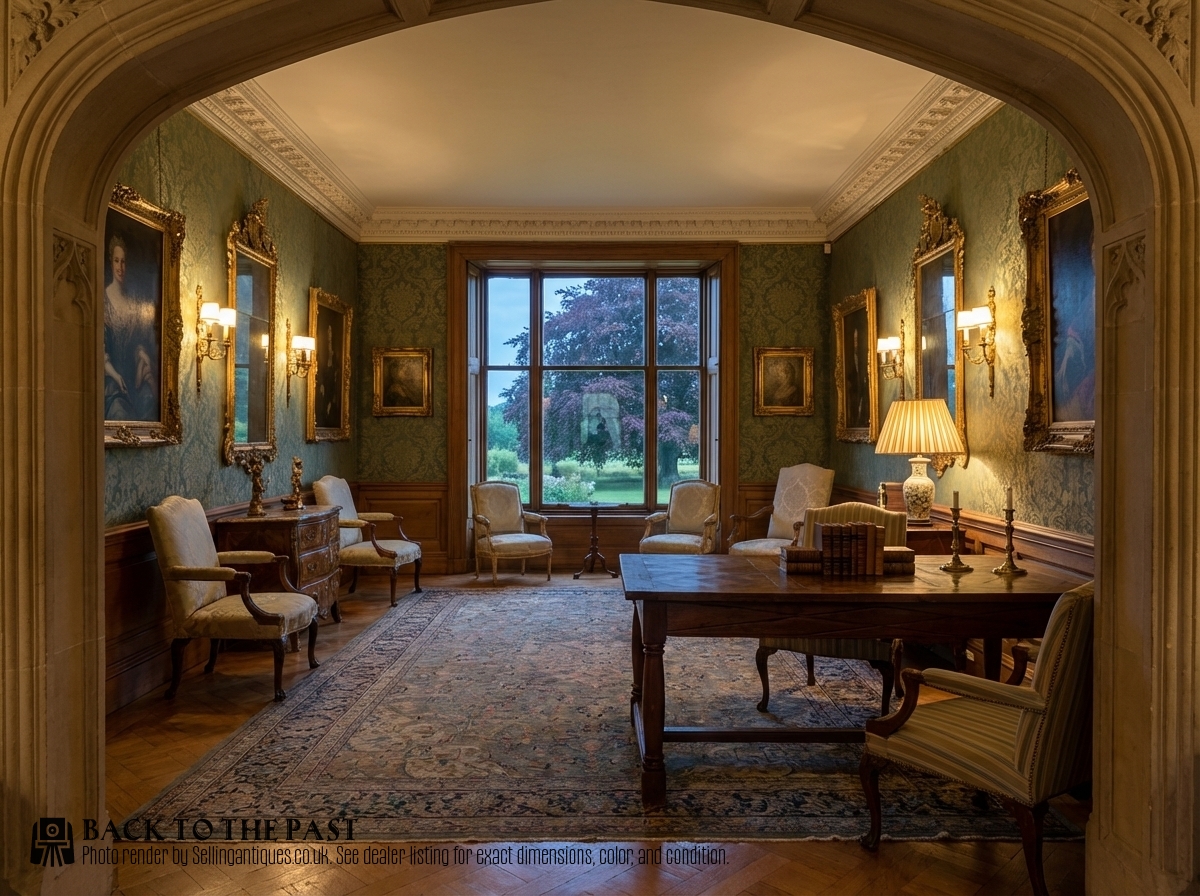
Antique French Farm Table
When searching for an antique french farm table, buyers encounter robust dining surfaces designed for daily rural life rather than formal salons. These pieces predominantly date from the nineteenth century, reflecting regional provincial craftsmanship across France.
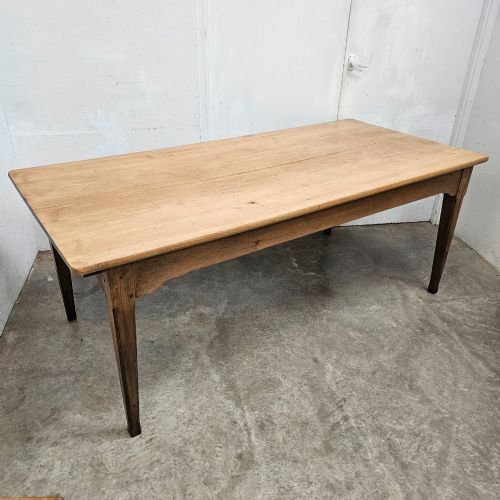
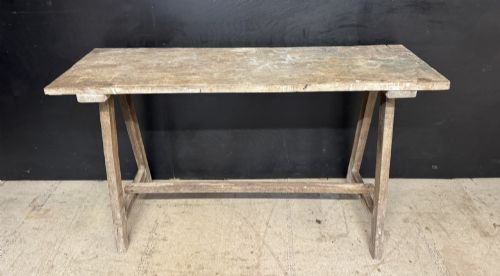
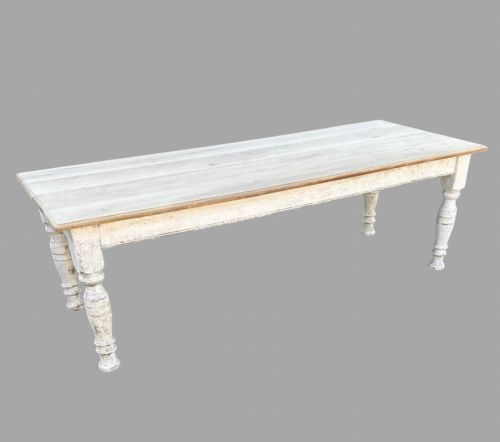
Regional variations appear in both wood selection and structural framing, from trestle bases to cabriole legs. Buyers frequently find scrubbed finishes and bleached surfaces that highlight the natural grain of the timber.
Materials and construction methods
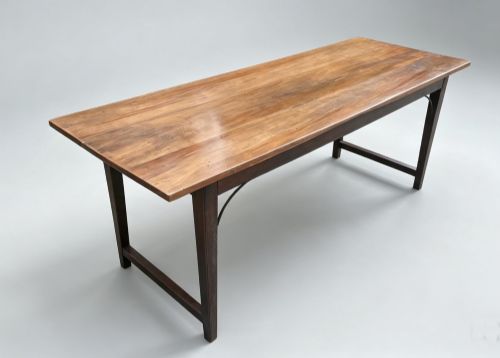
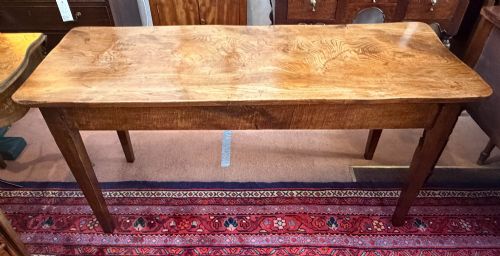
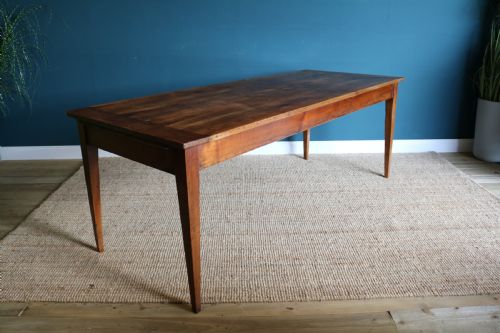
Makers utilised solid hardwoods available locally, primarily cherrywood, oak, fruitwood, elm, and sycamore. These heavy timbers provided the necessary durability for daily preparation and communal dining.
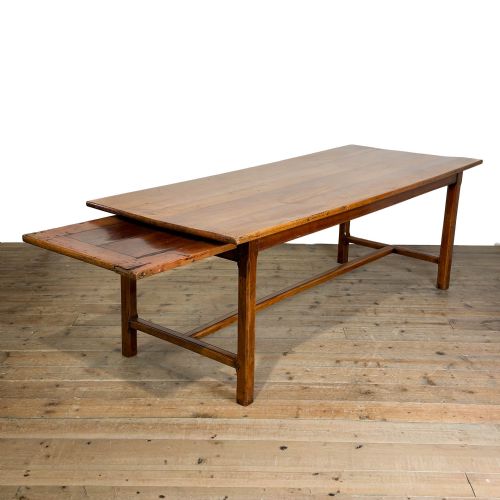
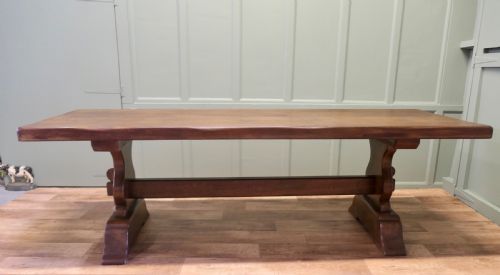
Joinery techniques focused on strength and stability, employing pegged mortise and tenon joints across trestle frames and refectory bases. Draw leaves and double extending mechanisms allowed surface areas to expand when required.
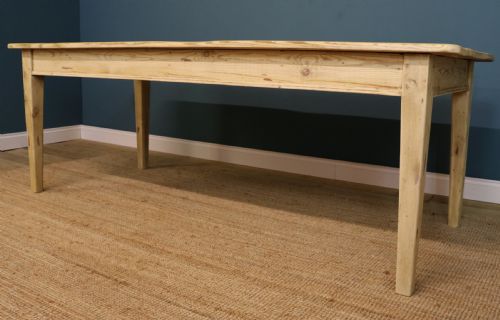
Surface treatments developed over decades of scrubbing and wear. Unpolished fruitwood and bleached pine developed distinctive patinas through generations of domestic use.
Antique French Farm Table Retail Price Guide 2026
Typical asking prices for french farm table among the pieces listed under this phrase on Sellingantiques today, from the lower quarter to the upper quarter. They describe what is for sale here now, not the wider market.
The archive records pieces spanning the eighteenth, nineteenth, and early twentieth centuries, highlighting enduring rural cabinetmaking traditions.
Distinguishing quality and proportion
Quality rests in the integrity of the original timber and the restraint of past interventions. Tables retaining their unblemished primary wood tops show greater consistency in historical character.
Proportion and leg clearance dictate how comfortably guests sit along the length. Finer examples maintain structural balance without excessive timber thinning from historical height adjustments.
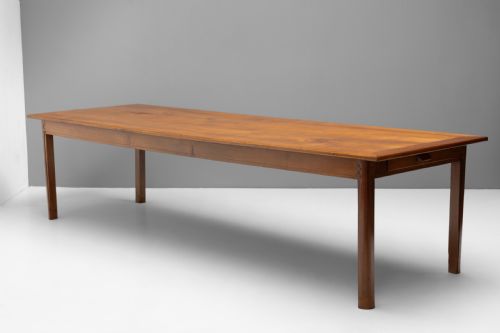
The presence of operational functional elements, such as sliding bread boards or drawers moving smoothly on original runners, separates standard utilitarian boards from superior provincial commissions.
The Antique French Farm Table Glossary
- Refectory table
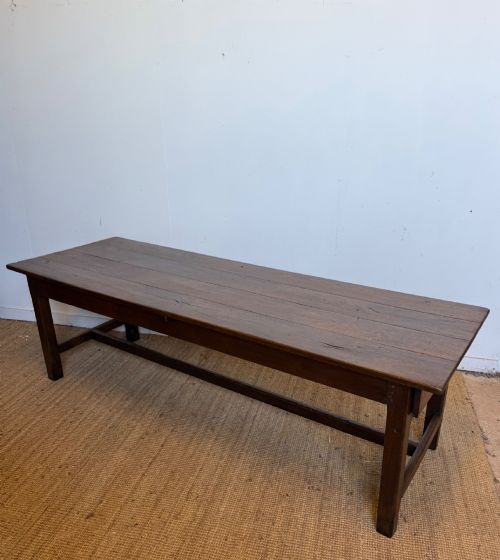
- A long narrow dining table traditionally used for communal meals. These forms provide ample length and robust central stretchers.
- Bread slide
- A pull-out wooden board located beneath the main tabletop. It historically provided extra surface area for cooling bread or food preparation.
- Trestle table
- A table featuring a horizontal beam supported by two vertical legs or feet at each end. This construction maximises legroom along the length.
- Parquetry
- Geometric wood mosaic work used for decorative surface patterns. It appears occasionally on top panels of provincial tables.
- Patina
- The surface sheen and colour depth developed through age, wax application, and regular use. This quality distinguishes genuine historical timber from modern finishes.
Antique French Farm Table: Frequently Asked Questions
How do I seat twelve people comfortably?
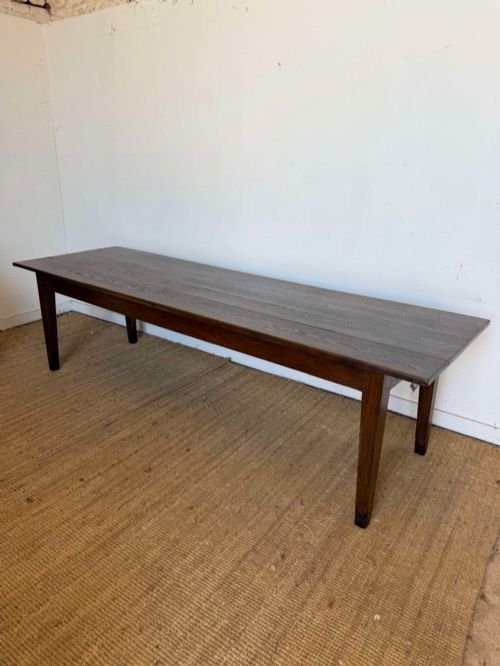
Look for refectory or harvest formats exceeding eight feet in length, which naturally accommodate guests along both sides without obstruction from corner legs.
Check the height from the floor to the underside of the frieze to ensure adequate knee clearance for standard dining chairs.
What is a bread slide used for?
The pull-out wooden panel historically provided an auxiliary surface for cooling loaves or preparing ingredients without cluttering the main dining board.
Today, it adds functional charm and confirms the domestic provenance of a kitchen table.
How do I care for scrubbed timber?
Clean unfinished or scrubbed surfaces with a damp cloth and mild soap, avoiding harsh chemical cleaners that strip the natural grain.
Periodically nourish dry woods with appropriate natural waxes to maintain the protective patina accumulated over generations.