

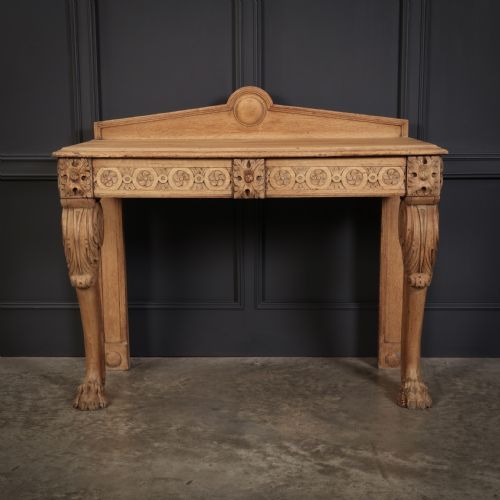

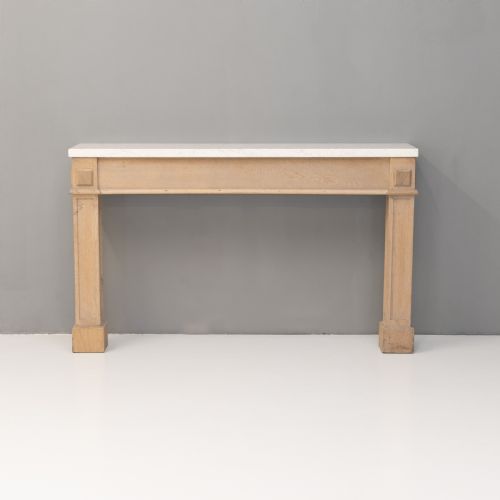


Antique French Entryway Table
An antique french entryway table brings classical European proportion to a hallway, offering a surface of veined marble carried on carved timber.
Antique French Entryway Table
When you search for an antique french entryway table, you are looking at narrow console tables, side tables, and hall pieces designed to sit flat against a wall. The selection ranges from eighteenth-century walnut examples to nineteenth-century Empire and Louis XVI style revivals, alongside twentieth-century variations.
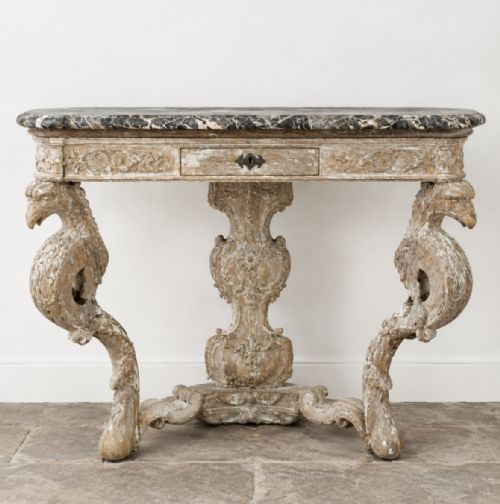
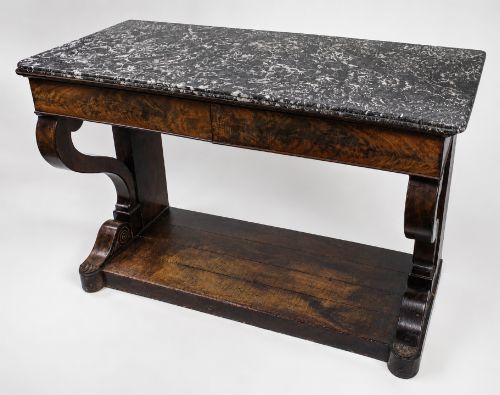
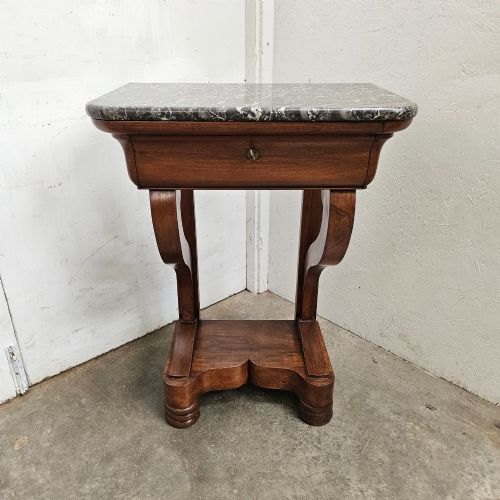
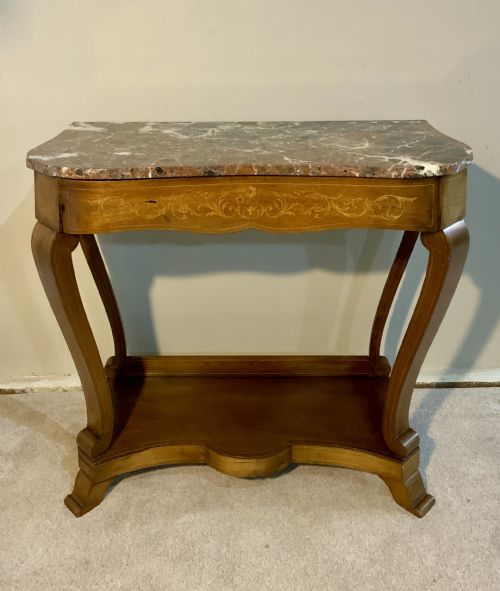
You are most likely to meet nineteenth-century console tables featuring fitted marble tops, carried on carved timber frames of walnut, mahogany, or giltwood. These pieces often take straight or serpentine outlines, occasionally paired with matching wall mirrors for the hallway.
Materials and Construction
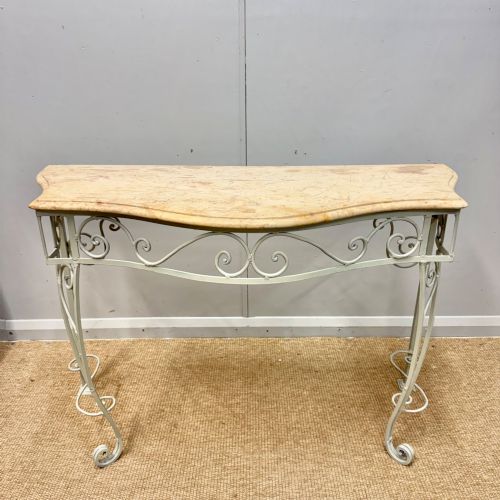
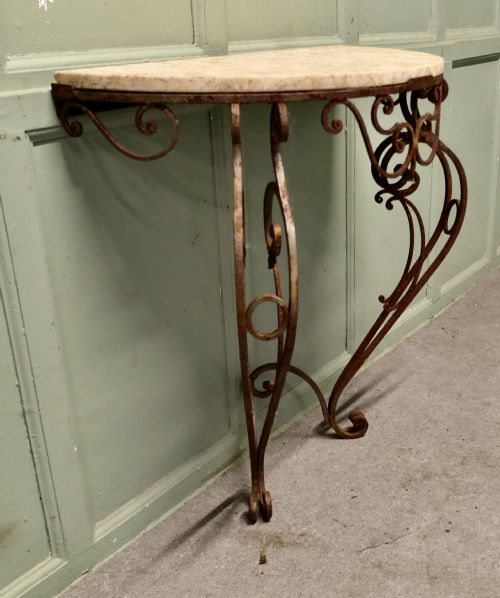
Cabinetmakers built these tables using dense timbers such as walnut, mahogany, and oak, frequently embellished with carved gesso, parcel gilding, or marquetry details. Wrought iron also appears in regional and rustic pieces from the period.
Heavy slabs of marble, fossil marble, or granite form the signature tabletops, resting directly on the wooden or giltwood framework to provide a cool, durable surface for the entrance hall.
Listings feature marble, walnut, mahogany, and giltwood materials across console tables, side tables, and trestle tables spanning the eighteenth to twentieth centuries.
Evaluating Quality
The distinction between ordinary and exceptional tables rests in the depth of hand-carving and the choice of materials. Finer examples display crisply articulated foliage, acanthus scrolls, or brass mounts rather than soft, flat mouldings.
The integration of the stone top also marks the tier of the piece. Superior consoles feature thick, high-grade marble or fossil stone shaped precisely to the serpentine or demi-lune contour of the timber base below.
The Antique French Entryway Table Glossary
- Console table
- A table designed to be fixed against a wall, traditionally supported by two front legs or brackets and secured to the masonry. They often feature narrow proportions suited to corridors and entryways.
- Demi-lune
- A half-moon shape used for tabletops and cabinet fronts. This curved profile allows the table to project minimally into a hallway while offering a wide surface.
- Giltwood
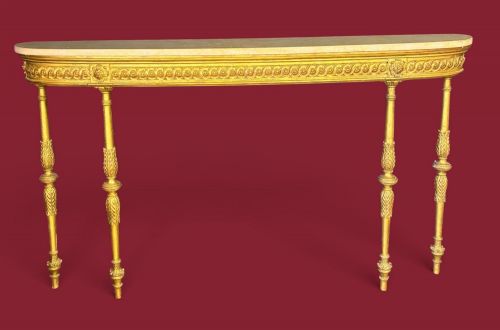
- Timber coated with a thin layer of gold leaf or gesso and gold paint. It reflects light in dim hallways and characterises formal reception rooms.
- Fossil marble
- Limestone containing ancient organic remains and shells, polished to a smooth finish. It provides a patterned, textured surface distinct from uniform white marble.
- French Empire
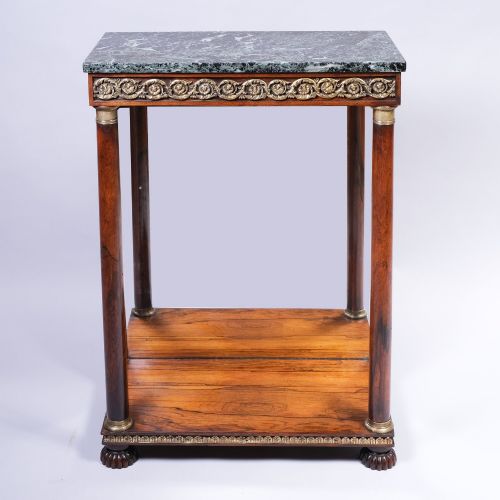
- A neoclassical design style spanning the early nineteenth century, distinguished by architectural symmetry, flame mahogany veneers, and classical brass mounts.
Antique French Entryway Table: Frequently Asked Questions
Where should I place a console table?
These narrow tables suit entrance halls, narrow corridors, and reception rooms where floor space is limited. Their shallow depth allows them to sit flat against a wall without obstructing passageways.
Pairs of tables or matching console and mirror sets work particularly well beneath hallway windows or flanking a main entryway door.
How do I care for the marble top?
Marble surfaces require gentle cleaning with warm water and a soft cloth to preserve the polish. Avoid acidic liquids like citrus or vinegar, which etch the stone.
Using coasters and placing protective pads under heavy decorative items will keep the antique stone free from scratches.
How do I identify an Empire style table?
Empire pieces draw on classical Roman and Greek motifs, featuring architectural lines and dark timbers such as flame mahogany or walnut. Look for symmetrical proportions and restrained geometric forms.
Mounts made of brass or bronze frequently accent the corners and legs of these nineteenth-century designs.
Can these tables hold heavy objects?
The heavy stone slabs provide a sturdy resting place for lamps, bronze figures, or large ceramic bowls. The weight of the marble top helps anchor the table firmly against the wall.
Wall-fixing brackets are often used with traditional console tables to ensure absolute stability in busy hallways.