



Antique French Column Mirror
An antique french column mirror brings architectural presence to a room, framing reflections with classical verticality.
Antique French Column Mirror
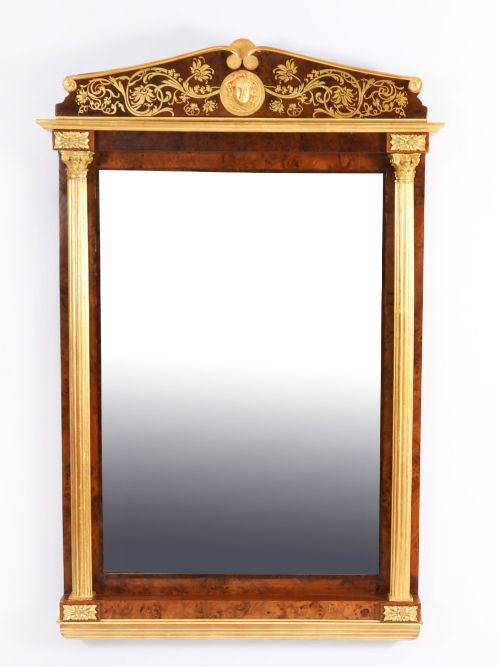
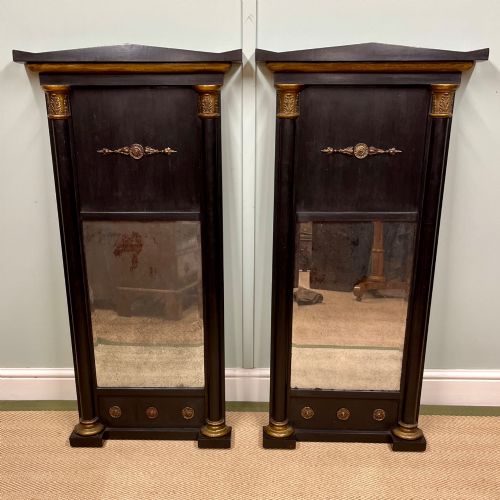
An antique french column mirror typically takes the form of a large wall hanging or an overmantel glass designed to draw the eye upward with structural pilasters. The pieces appearing most frequently here date from the nineteenth century, adopting styles from the French Empire and Neoclassical periods.
Makers and craftsmen applied architectural details such as flanking side columns, plain or ribbed shafts, and shaped tops to create a sense of neoclassical order. These items function as significant decorative focal points, often positioned above mantelpieces or console tables in the principal rooms of a house.
How they were made
Carved wood forms the structural foundation for the majority of these frames, often enhanced with applied gesso to shape intricate surface reliefs and fluted columns. Artisans then applied paint, distress finishes, or gold leaf to the wooden substrates.
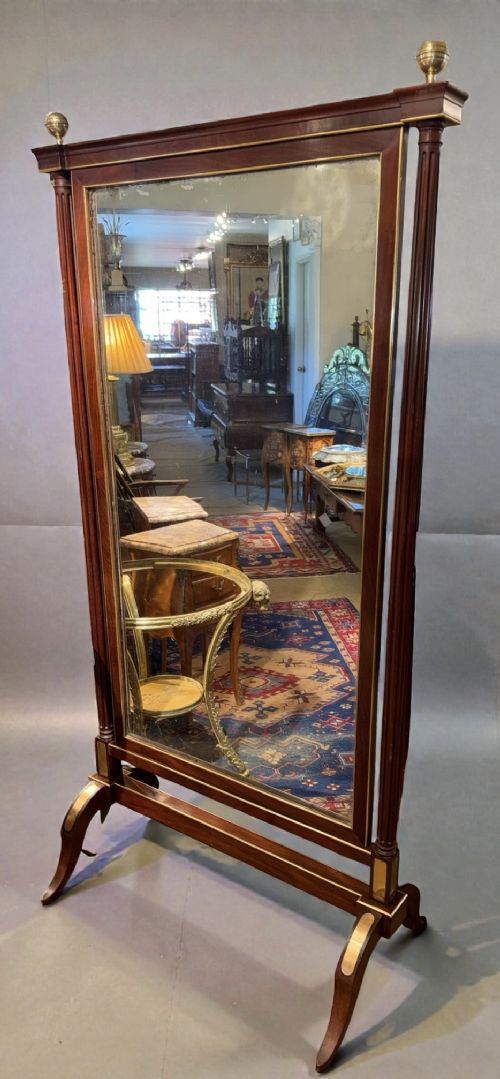
Giltwood and painted finishes define the decorative outer layers, while silvered glass provides the reflective surface within the architectural column framing. Mahogany and burr walnut also appear as primary cabinet timbers for dressing mirrors and freestanding pieces.
Materials recorded across the inventory include mahogany, burr walnut, kingwood, brass, marble, and painted gesso over wood.
What varies in quality
The precision of the carved wood ornamentation and the depth of the gesso mouldings distinguish finer examples from simpler production. Original gilding and carefully preserved painted surfaces retain greater integrity than later overpainting.
The quality of the mirror glass itself and the joinery of the heavy column frames determine the overall presence and durability of the piece. Substantial proportions combined with well-defined classical columns separate standard mirrors from more ambitious works.
The Antique French Column Mirror Glossary
- Column
- A vertical structural element of round or square section comprising a base, shaft, and capital. In these mirrors, columns flank the glass plate to provide architectural framing.
- Gesso
- A plaster mixture applied to wood frames to create a smooth surface for gilding or painting. Artisans mould low-relief decorations directly into this ground layer.
- Giltwood
- Wood that has been covered with a thin layer of gold leaf or gold powder. This finish adds luminosity and highlights the carved details of the frame.
- Overmantel mirror
- A large horizontal or vertical glass designed to hang specifically above a fireplace mantel. These pieces often incorporate architectural column supports.
- Pier mirror
- A tall glass made to fit the wall space between windows. They frequently stand above matching console tables.
- Vernis Martin
- A type of simulated Japanese lacquer developed in France. It appears on related cabinetwork associated with these periods.
Antique French Column Mirror: Frequently Asked Questions
How do I hang a heavy column mirror safely?
These substantial carved frames require secure fixings into structural wall studs or masonry using heavy-duty brackets. Weight distribution must be calculated carefully across the wooden backing.
Professional installation is recommended for large overmantel mirrors to support the combined weight of the timber, gesso, and glass safely.
Where should I place an antique french column mirror?
Placing the mirror above a fireplace mantel or a console table follows historical placement traditions. These positions maximise natural light and anchor the vertical proportions of the room.
They also function effectively on main reception walls where the architectural columns can frame sightlines across the interior.
How do I identify the period of the frame?
Nineteenth-century pieces often display Empire or Neoclassical styling through formal column structures and specific paint or gilt finishes. Examining the construction of the wooden backing and the type of glass helps confirm the age.
Earlier examples from the eighteenth century show different joinery techniques and hand-carved details compared to later nineteenth-century interpretations.
Can I clean the original glass and painted surface?
Original mirror glass benefits from gentle dusting and careful cleaning with a soft cloth to preserve the silvering underneath. Moisture should be kept away from the edges where the backing has aged.
Painted and gilt column frames require dry dusting only, avoiding chemical solvents that might lift the historic gesso or surface layers.