

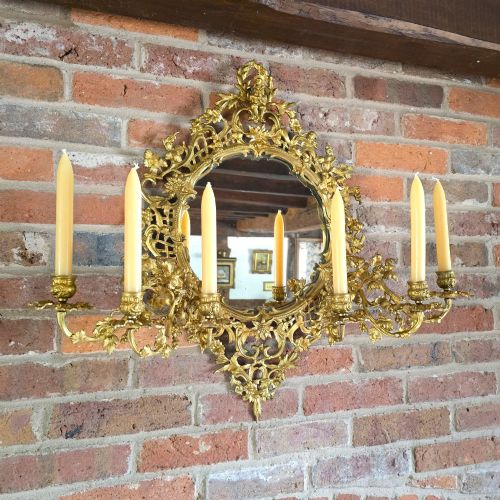
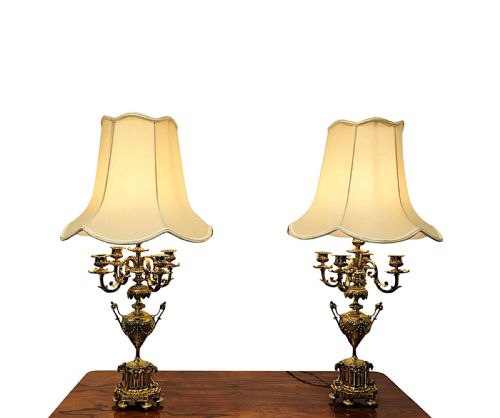
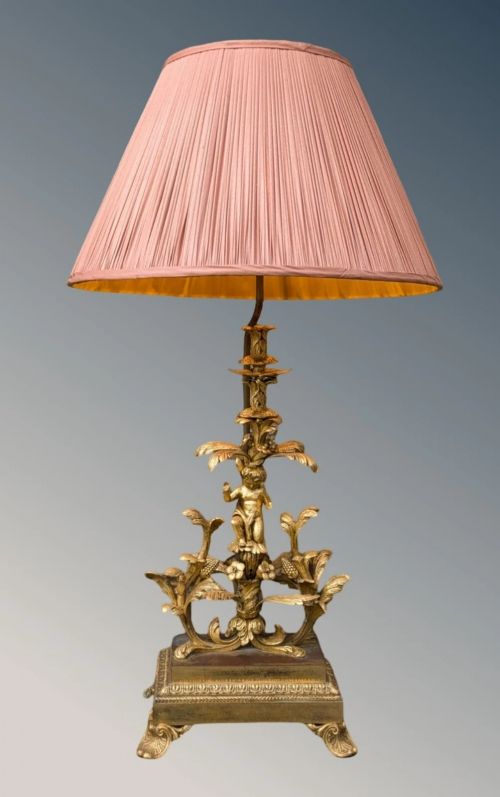
Antique French Candelabrum
These antique french candelabrum pieces bring sculptural presence and historic illumination to a room, combining cast metalwork with classical or organic design.
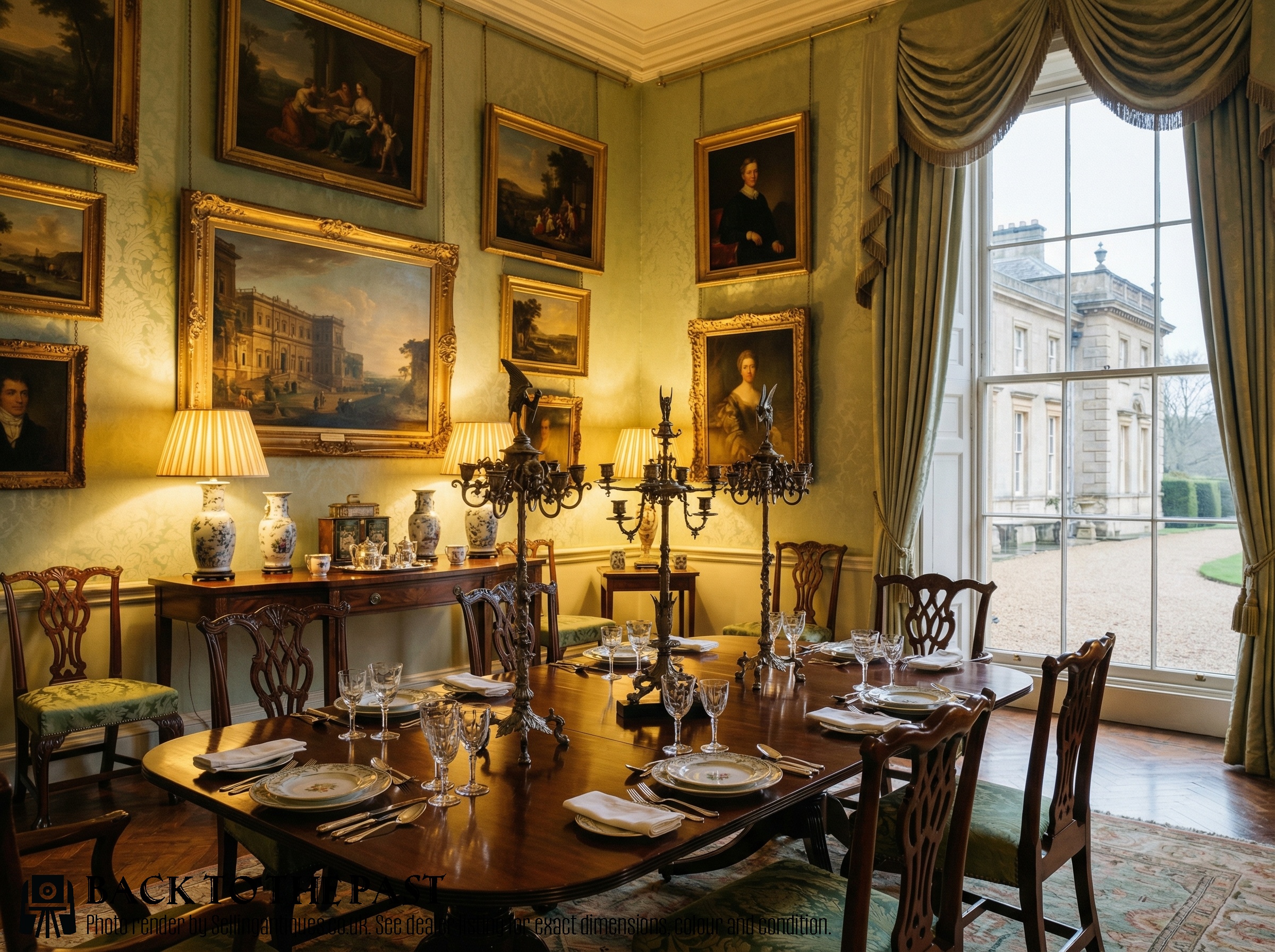
What antique french candelabrum pieces are
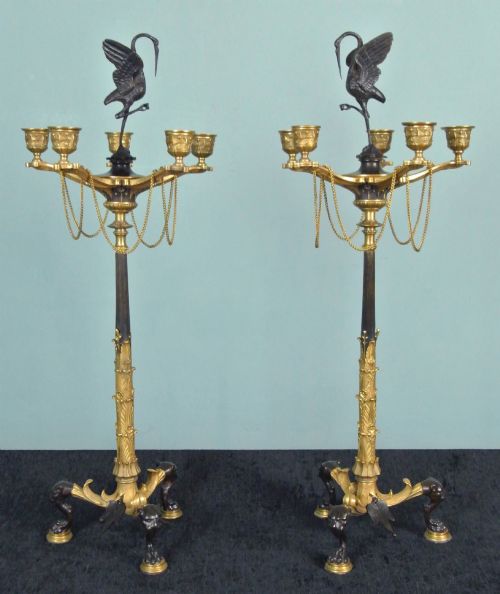
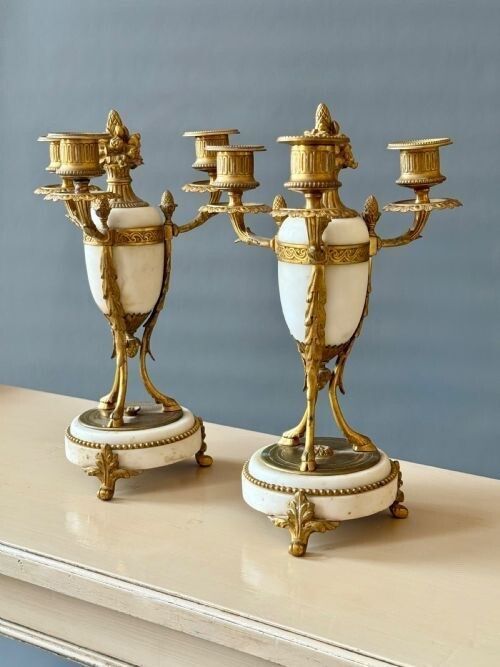
An antique french candelabrum stands as a multi-branched lighting fixture designed for domestic splendour, most frequently encountered here as matched pairs from the nineteenth century. These items manifest in distinct stylistic vocabularies ranging from formal classical revivals to organic floral asymmetry.
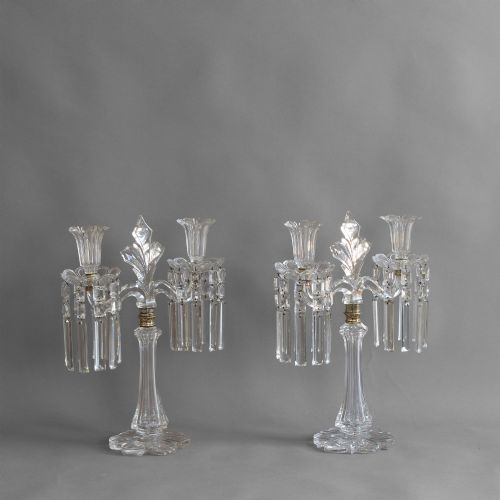
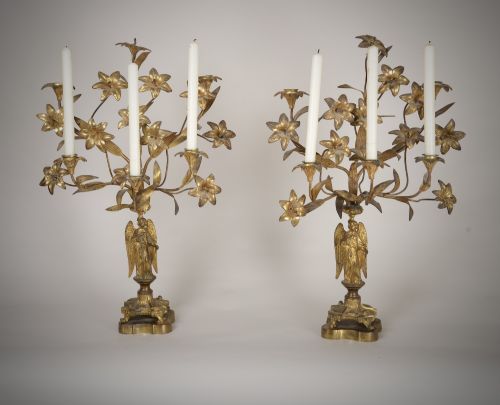
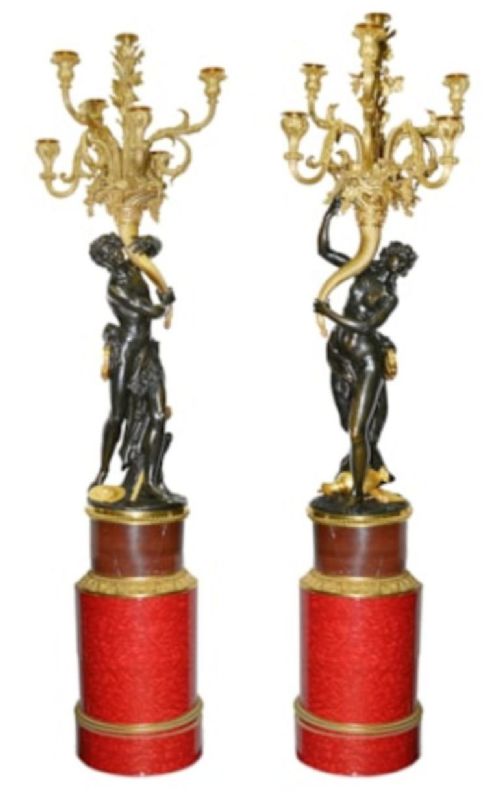
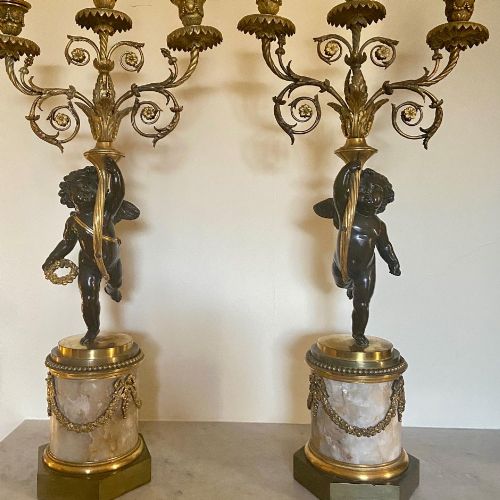
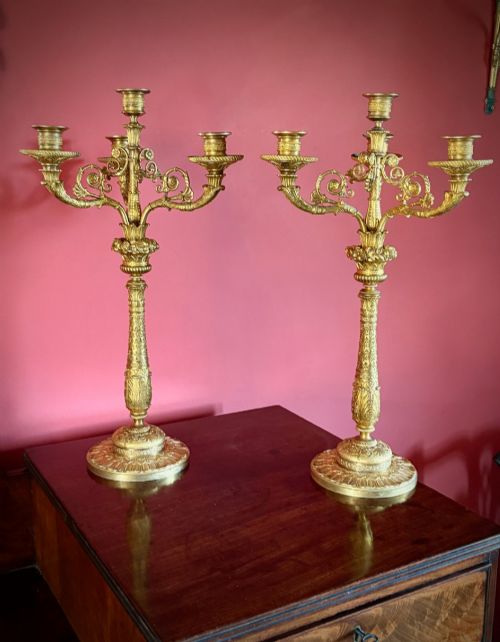
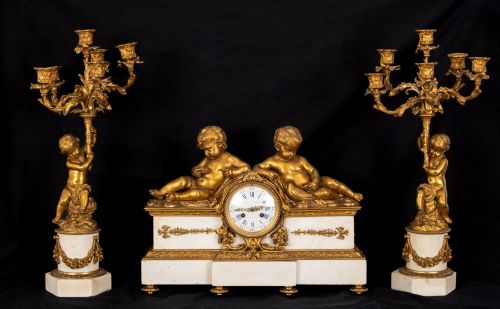
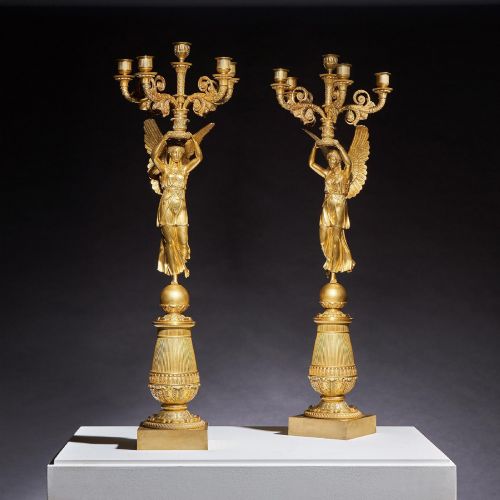
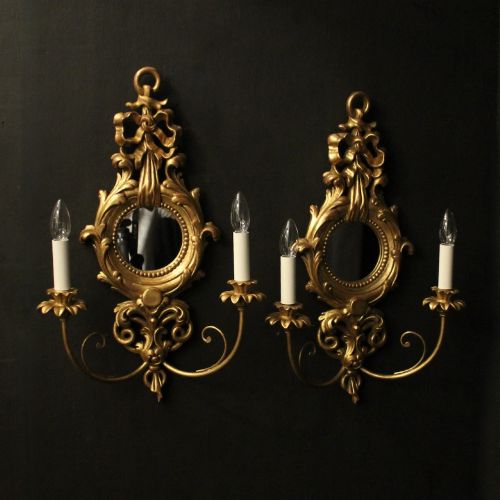
The physical forms on this page span several characteristic silhouettes, including multi-branch candelabra with three to five lights, figural supports featuring cherubs, and architectural columns raised on marble bases. Makers drew inspiration from earlier artistic movements, creating pieces that reflect French Empire grandeur, Rococo revival curves, and Art Nouveau fluidity.
Originating predominantly from French workshops during the nineteenth century, particularly around eighteen-eighty, these items utilise durable metallic foundations combined with decorative mineral elements. Buyers encounter variations in branch count, height, and sculptural detail that define their visual impact within a traditional interior scheme.
How they were made
Foundries constructed these objects using bronze casting techniques, producing intricate components that were subsequently chased and finished by hand. Gilding and ormolu applications provided rich surface metallic sheens, whilst patinated bronze introduced contrasting dark tones to highlight sculptural depth.
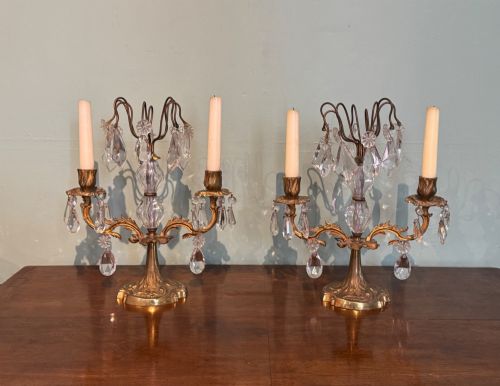
Makers combined metalwork with natural materials such as rouge marble for plinths and bases, anchoring the heavier upper structures. Crystal and glass elements appear alongside silver metal in later nineteenth-century designs, reflecting evolving manufacturing capabilities and aesthetic preferences.
Retail Price Guide 2026
Typical UK retail prices for french candelabrum, calculated from the Sellingantiques database of over a million retail prices indexed since 2003. This retail price guide relies exclusively on Sellingantiques data; no external sources or auction records are used, so the figures do not describe the wider market.
Materials appearing across these items include cast bronze, ormolu, patinated bronze, rouge marble, silver metal, crystal, and glass.
What varies in quality
The choice of secondary materials also dictates the grade of the piece, where solid rouge marble bases and heavy cast bronze arms distinguish higher-tier workshop output from lighter commercial alternatives.
Barbedienne·Pierre Philippe Thomire·Auguste Cain·Clodion
The Antique French Candelabrum Glossary
- Ormolu
- Finely ground high-carat gold applied to a bronze base using a mercury amalgamation technique, creating a durable golden surface.
- Patinated bronze
- Bronze treated with chemical solutions to produce a darkened surface finish, often contrasted against brighter gilded elements.
- Rouge marble
- A deep red ornamental limestone with white and grey veins, frequently utilised for heavy architectural bases.
- French Empire
- A neoclassical design style spanning the early nineteenth century, characterised by military motifs, classical symmetry, and severe dignity.
- Art Nouveau
- An artistic movement of the late nineteenth century favouring asymmetric natural forms, plant tendrils, and flowing curves.
Frequently Asked Questions
What is an antique french candelabrum used for?
These decorative fixtures were originally designed to hold multiple candles for interior illumination during dining and formal gatherings.
Today, they serve primarily as sculptural centrepieces on mantelpieces, sideboards, or console tables within period interiors.
How do I date a french candelabrum?
Dating relies on identifying the stylistic markers of the period, such as the rigid symmetry of the Empire style versus the flowing asymmetry of Art Nouveau.
Material combinations, such as the pairing of bronze with rouge marble or the inclusion of specific foundry marks, also help narrow the timeframe.
Are these candelabra usually found in pairs?
The listings on this page consist entirely of pairs or matched sets, which were traditionally manufactured to balance fireplace mantels and grand furniture.
Finding them as matched pairs preserves their intended symmetry and decorative value for interior display.
How should I clean bronze and ormolu?
Maintenance requires gentle dusting with a soft, dry cloth to prevent the accumulation of dirt within the intricate chased recesses.
Harsh chemical polishes must be avoided to protect the original historical patina and the delicate gold surface of ormolu.