



Antique French Buffet Table
These antique french buffet table pieces bring formal dining and serving history into domestic rooms through robust timber and stone.
Antique French Buffet Table
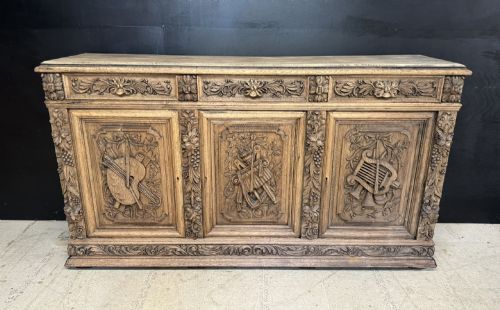
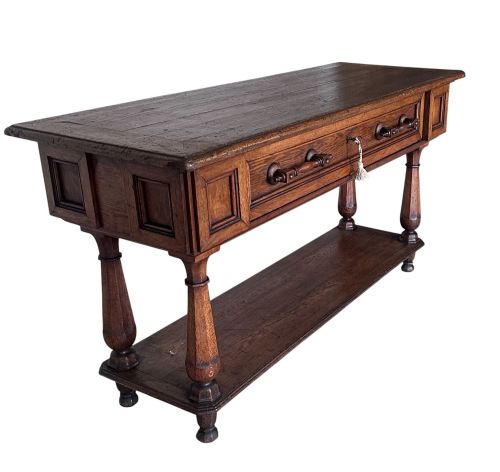
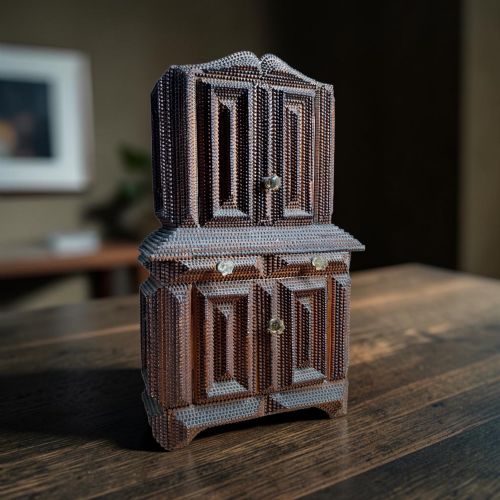
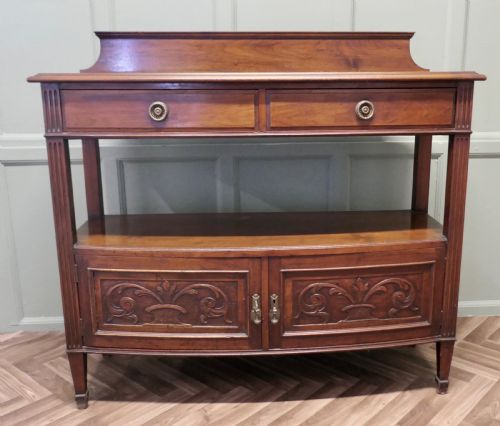
An antique french buffet table combines storage and serving surfaces, appearing in styles from simple provincial timber to elaborate revival court designs. Buyers searching this phrase meet substantial serving tables, sideboards, and dresser bases built for dining rooms and large kitchens.
The pieces on this page span the nineteenth century and early twentieth century, incorporating walnut, oak, and marble into forms influenced by Louis periods, Empire, and provincial folk traditions. Many examples balance practical cupboards with decorative tops designed for display.
Serving tables and buffet cabinets emerge in configurations with drawers, marble tops, and carved doors. The selection ranges from rustic harvest tables to grand architectural sideboards reflecting regional French workshops.
How They Were Made
Cabinetmakers constructed these frames using dense hardwoods like walnut and oak, often topped with polished marble slabs for durable food and drink preparation. Joinery relies on traditional hand-cut joints rather than modern fasteners.
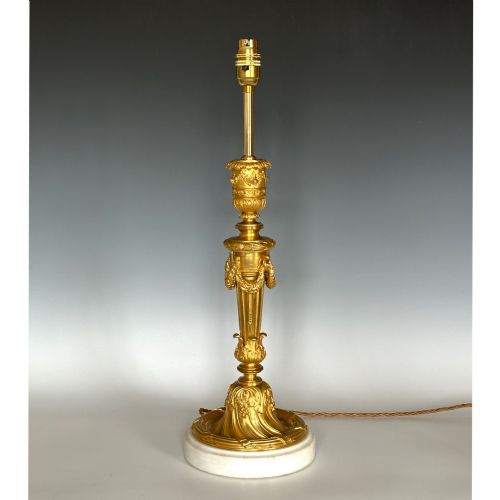
Decorative detailing incorporates cast bronze ormolu mounts, carved foliage, and giltwood highlights applied to drawer fronts and corners. Surfaces receive traditional wax or polish finishes that age with a deep lustre.
Listings feature pieces from the eighteenth, nineteenth, and early twentieth centuries, constructed in walnut, oak, and marble.
What Varies in Quality
The standard of carving and the crispness of applied ormolu mounts separate standard production from exceptional work. Superior pieces display deeply undercut foliage and finely chased bronze details rather than soft, mass-produced casts.
The integrity of the timber and the originality of the marble top dictate the standing of a piece. Hand-selected grain patterns and matching stone slabs indicate higher workshops origin.
KRIEGER of Paris·Jean-Démosthène Dugourc
The Antique French Buffet Table Glossary
- Ormolu
- Gilded bronze mounts applied to furniture and lighting. This technique adds metallic contrast and decorative richness to timber surfaces.
- Commode
- A low chest of drawers or cabinet with doors. French examples often feature marble tops and sophisticated veneer work.
- Dresser base
- A sturdy lower cabinet used for storage and serving. These pieces typically include multiple drawers above enclosed cupboard space.
- Serving table
- A long table designed for food presentation during meals. They frequently feature stone tops for practical utility.
- Provincial
- Furniture made in regional areas outside Paris. These objects often display simpler lines and local timber selections.
Antique French Buffet Table: Frequently Asked Questions
How were antique French buffets used?
These pieces served as practical storage for dining linen, cutlery, and serving dishes in grand houses. The top surface provided extra room for laying out food before it reached the dining table.
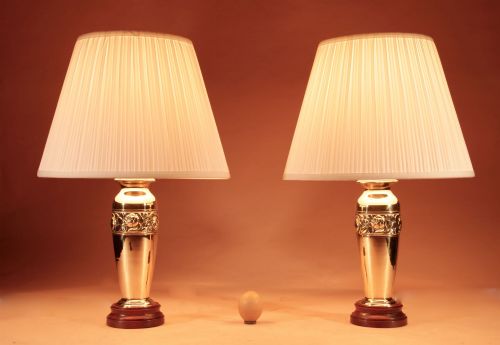
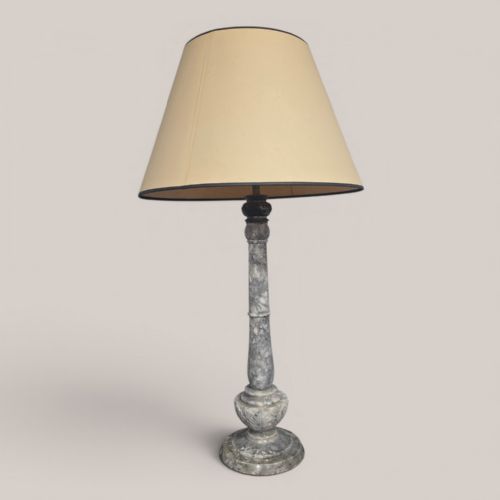
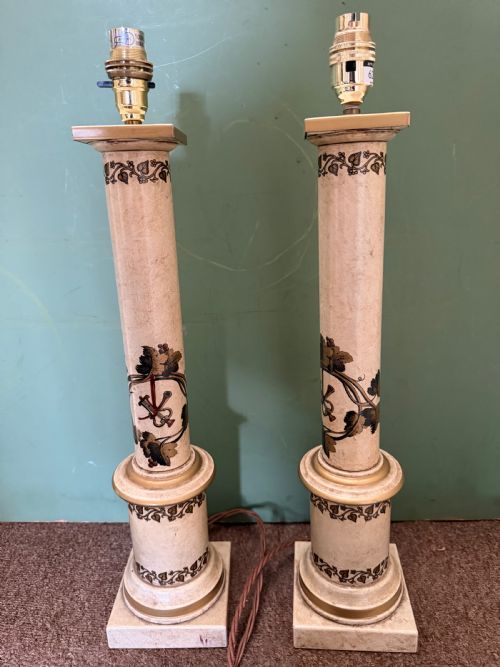
In many households, they also functioned as display areas for silver, ceramics, and decorative lamps during quieter hours between meals.
What timber is most common?
Walnut and oak appear most frequently across these serving tables and buffet cabinets. Walnut provided a rich canvas for detailed carving and polished finishes.
Oak was chosen for its exceptional structural strength, particularly in earlier provincial and rustic pieces built for heavy daily use.
How do I identify a Louis style?
Louis XV pieces typically feature curved cabriole legs, asymmetrical floral carving, and flowing lines. They emphasise natural, organic forms across the woodwork and mounts.
Louis XVI and Empire styles shift toward symmetry, straight fluted legs, architectural columns, and classical geometric proportions inspired by antiquity.
Are marble tops original?
Many serving tables and sideboards feature fitted marble slabs designed to handle wet serving dishes and heavy use. These stones were selected to match the overall weight and period of the cabinet.
Inspecting the underside reveals the fitting and age markings that connect the stone top securely to the wooden base below.