




French Carved Server Table
A french carved server table brings substance and rich timber grain to a dining room or hall, offering both surface display and practical storage.
French Carved Server Table
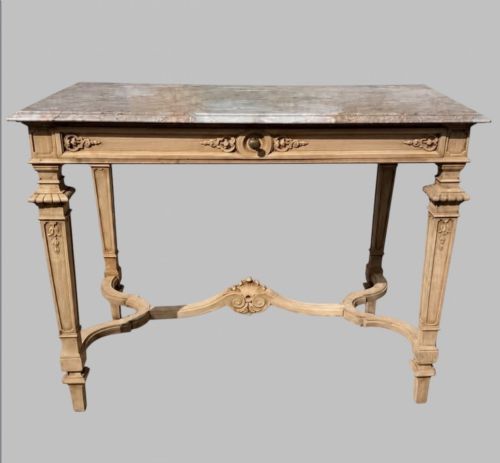
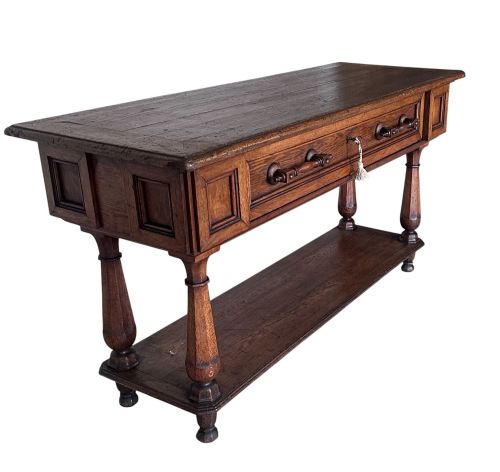
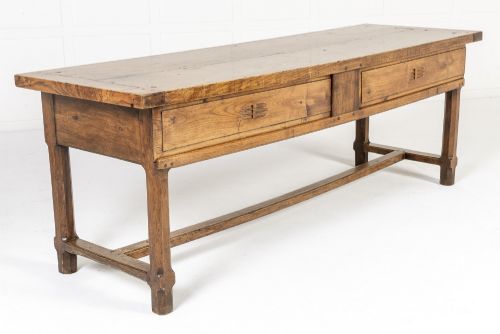
A french carved server table encompasses diverse forms including oak sideboards, marble-topped side tables, and walnut buffets designed for serving and display. These pieces originate across the seventeenth, eighteenth, and nineteenth centuries, spanning regional provincial work and revival styles.
The selection here leans heavily towards nineteenth-century examples alongside significant eighteenth-century walnut and oak pieces. Buyers frequently encounter console tables, serving tables, and fitted buffets bearing regional French characteristics.
Makers and workshops of the period produced these servers in native timbers, incorporating drawers, marble tops, and detailed relief carving. Each item reflects the domestic utility and decorative tastes of its specific century.
How they were made
Cabinetmakers constructed these servers using solid timbers such as oak, walnut, cherrywood, and mahogany, often pairing wooden frames with fitted marble tops. Construction relied on traditional joinery methods suited to heavy daily use in dining rooms and halls.
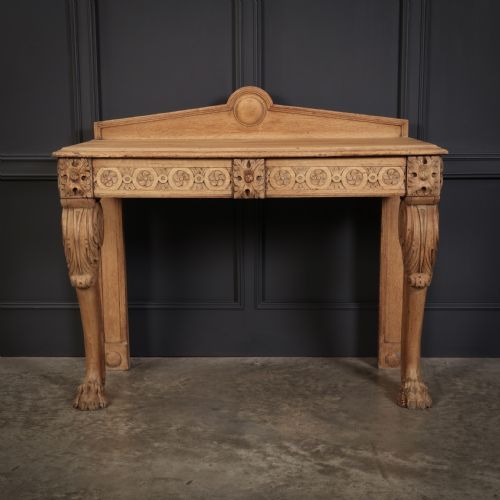
Surface ornamentation involved hand-carving directly into the wood, ranging from bold Baroque motifs to restrained Louis revival patterns. Selected pieces also feature painted finishes or bleached treatments that alter the natural tone of the timber.
French Carved Server Table Retail Price Guide 2026
Typical asking prices for french carved server table among the pieces listed under this phrase on Sellingantiques today, from the lower quarter to the upper quarter. They describe what is for sale here now, not the wider market.
Materials range from traditional timber and brass to decorative marble tops and painted finishes across various console and buffet forms.
What varies in quality
Quality in these servers rests upon the crispness of the hand-carving and the selection of dense, well-figured timber like walnut or quarter-sawn oak. Superior examples display harmonious proportions and integrated structural elements rather than superficial decoration.
The presence of original fittings, such as brass hardware and intact marble tops, distinguishes finer survivals from altered pieces. Mastery in joinery ensures doors, drawers, and metamorphic mechanisms operate with precision.
KRIEGER of Paris
The French Carved Server Table Glossary
- Console table
- A table designed to stand against a wall, frequently secured to it with brackets, acting as a surface for display.
- Chiffonier
- A tall sideboard or cabinet featuring drawers and shelving, developed during the nineteenth century for dining and drawing rooms.
- Metamorphic table
- An adjustable piece of furniture designed to transform between multiple forms, such as a table and a serving surface.
- Bleached oak
- Timber treated to lighten its natural colour, producing a pale finish popular in nineteenth-century decorative schemes.
- Baroque
- An ornate design style characterised by dramatic curves, deep relief carving, and rich ornamentation dating from the seventeenth century onwards.
French Carved Server Table: Frequently Asked Questions
What is a french carved server table used for?
These tables function as serving surfaces during meals, offering space to lay out dishes, silverware, and glassware. In everyday use, they act as sideboards or console tables for displaying decorative objects.
Their substantial tops and built-in drawers provide practical storage within dining rooms, hallways, and reception spaces.
How do I distinguish eighteenth and nineteenth-century pieces?
Eighteenth-century examples often exhibit hand-cut joinery, native walnut timbers, and regional carving styles tied to specific French provinces. Nineteenth-century pieces frequently embrace revival aesthetics like Louis XVI or Renaissance styles.
Examining the backboards, interior drawer construction, and tool marks helps clarify the period of manufacture.
Where should I place a server table?
A server table fits naturally against a dining room wall to assist with hosting and serving meals. They also serve well in wide hallways or living spaces as focal points for lamps and ornaments.
Consider the depth of the piece and clearance space for drawers and doors when selecting a room.
Are marble tops original to these tables?
Many nineteenth-century buffets and side tables incorporate fitted marble slabs designed to handle hot dishes and moisture. These stone surfaces were integrated by the workshop during initial construction.
Checking the fit against the wooden frame indicates whether the top belongs to the original design.