


Antique Fox Hunt Print
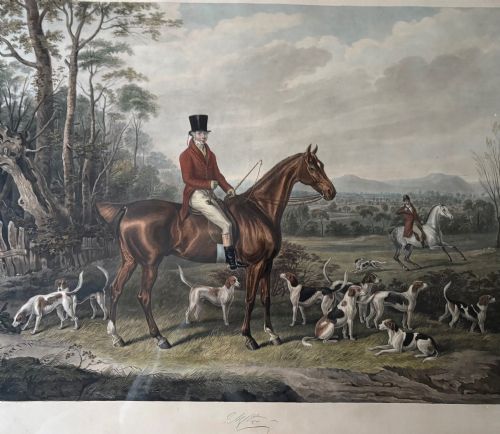
An antique fox hunt print captures the momentum and pageantry of the chase, bringing vigorous nineteenth and twentieth-century field sports directly to the wall.
Antique Fox Hunt Print
An antique fox hunt print represents a dynamic category within British sporting art, recording the hounds, riders, and landscapes of the shires. When seeking an antique fox hunt print, buyers encounter framed engravings, hand-coloured plates, and lithographs spanning the Victorian and Edwardian eras. These works often arrive framed in wood or gilt settings, ready to hang in libraries, halls, or studies.
The material record shows these images produced across the nineteenth and twentieth centuries, frequently associated with notable sporting artists and master engravers. Sets depicting famous meets such as the Quorn, Belvoir, and Cottesmore appear alongside individual studies of riders and hounds. Such pieces reflect the enduring popularity of equestrian pursuits in British visual culture.
How they were made
The physical objects rely on traditional printmaking techniques applied to paper, with many examples enhanced by hand-colouring in watercolour or ink. Publishers utilised copper plates for fine engraved lines before workers added pigment by hand to jackets, horses, and foliage. Subsequent framing typically involved wood moulding, including gilt or Hogarth styles, protecting the paper beneath glass.
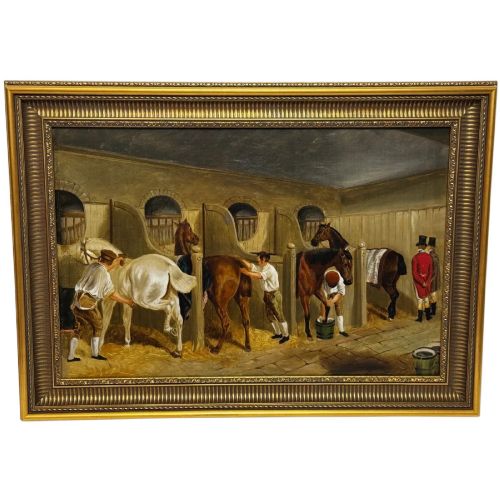
Beyond printed editions, the broader category includes original watercolours and oil paintings on canvas that share identical sporting subjects. These works demonstrate the interplay between original brushwork and mass-produced reproductive prints during the nineteenth and twentieth centuries. Each format required careful mounting to preserve the paper and medium from moisture and light.
One enthusiastic artist signed his work with a small sketch of a bit and bridle alongside his name.
What varies in quality
Quality in these works rests upon the crispness of the impression, the skill of the original draughtsman, and the delicacy of any hand-colouring. Strong prints retain fine details in the horses' musculature and the expressions of the hounds without blurring or ink pooling. The precision of the plate mark and the vibrancy of the remaining pigments distinguish superior impressions from faded or heavy-handed later printings.
The preservation of the paper support and the integrity of the period framing further influence the standing of an individual piece. Works that retain their original mounts, glass, and timber frames offer a more complete historical artefact than those stripped of their context. Master artists and renowned engravers consistently produce work with superior compositional balance and narrative clarity.
Charles Faulkner·Snaffles·H. Alken·Charles Hunt·Francis Calcroft Turner·J F Herring·Frank Algernon Stewart·George Morland·E Bell·Landeker and Brown
The Antique Fox Hunt Print Glossary
- Aquatint
- A printmaking technique that produces tonal areas resembling watercolour washes through acid biting on a copper plate. This method allowed publishers to create subtle atmospheric effects behind the etched lines of horse and rider.
- Engraving
- A method of cutting design lines directly into a metal plate using a sharp tool called a burin. The resulting incisions hold the ink that transfers to paper under high pressure.
- Chromolithograph
- A multicoloured print produced through the sequential application of different lithographic stones. This technique enabled the faithful reproduction of rich colour without requiring manual painting by hand.
- Hand-coloured
- A print finished with watercolour or ink applied by brush after the initial impression left the press. This practice added individual character and brightness to mass-produced sporting scenes.
- Hogarth frame
- A distinctive wooden picture frame featuring a stepped, ogee profile often finished with dark lines or mottled decoration. These frames frequently house nineteenth-century works on paper.
Antique Fox Hunt Print: Frequently Asked Questions
What is an antique fox hunt print?
An antique fox hunt print is a nineteenth or early twentieth-century depiction of horseback riders, hounds, and countryside chases. These works range from hand-coloured engravings to original lithographs published during the Victorian and Edwardian periods.
They serve as historical records of British sporting art, often framed in wood or gilt mouldings. Collectors prize them for their energetic composition and documentation of traditional equestrian culture.
Who are the notable artists?
Prominent figures in this field include Charles Johnson Payne, known as Snaffles, whose distinctive prints and watercolours capture the humour and movement of the hunting field. Other notable names include H. Alken, J F Herring, and Francis Calcroft Turner.
Publishers and engravers such as Charles Hunt and E Bell also played a major role in translating original paintings into widely distributed prints.
How should I frame and display them?
These works look best displayed away from direct sunlight to prevent the fading of paper and watercolour pigments. Utilising UV-protective glass helps preserve the integrity of nineteenth-century paper supports.
Many pieces arrive in period wood or gilt frames that complement their age and subject matter. Keeping them in stable, low-humidity environments ensures the paper remains flat and secure.
Are these prints hand-coloured?
Many nineteenth-century examples feature hand-applied watercolour or ink over an engraved or aquatint base. Colourists enhanced the riders' pink coats, horses, and landscapes by hand before publication.
Later twentieth-century works, such as chromolithographs, achieved multicoloured results directly through the printing press without manual brushwork.