





Antique Forest Scene Oil
These antique forest scene oil works capture centuries of woodland views in traditional pigments.
Antique Forest Scene Oil
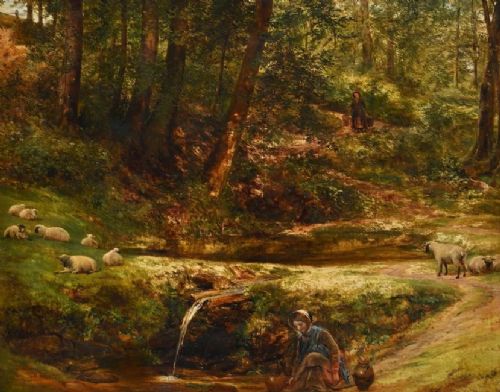
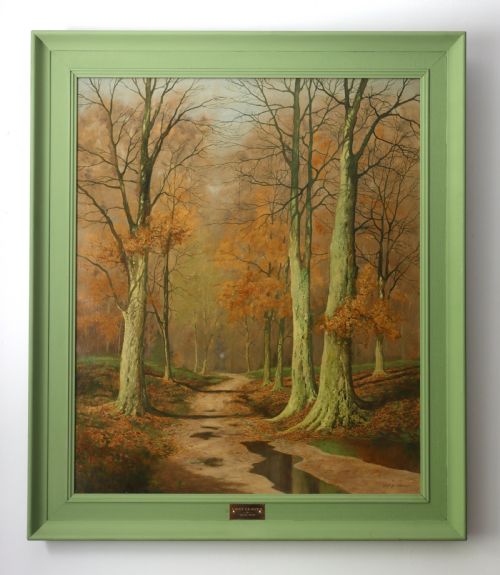
An antique forest scene oil depicts woodland views, trees and rural landscapes rendered in oil paint across canvas and wood panels. These works emerge predominantly from the nineteenth and twentieth centuries, spanning periods from the eighteenth century to the mid-twentieth century. Buyers encounter Victorian realisms, Edwardian compositions and mid-century impressionism when exploring this category.
The subjects range from tranquil woodland paths and sunlit clearings to autumn river valleys and winter snow scenes, occasionally featuring cattle, sheep drovers or solitary figures. Such paintings derive from British, Dutch and French schools, reflecting diverse regional interpretations of natural terrain.
Materials and construction
Artists painted these works using oil paint applied to woven canvas supports or solid wood panels. Canvases frequently sit within gilt or gold leaf frames that complement the painted compositions.
Makers utilised traditional brushwork techniques, ranging from detailed nineteenth-century realism to looser mid-century impressionistic strokes, capturing light through layered pigments.
Listings feature works executed on canvas and wood panel across the eighteenth, nineteenth and twentieth centuries.
Assessing quality in forest scene oils
Quality rests upon the artist's handling of light, depth and natural detail within the woodland canopy. Finer examples display confident brushwork that creates convincing atmospheric effects, particularly in sunset or luminous summer scenes.
The condition of both the oil paint surface and its supporting canvas or wood panel dictates preservation. Original frames utilising gold leaf also influence the overall integrity of the piece.
William H Myers·Thomas W Lascelles·Richard Redgrave·David Watts·James Proudfoot·Jan Evert Morel·J McIntyre·Augustus William Enness·Walter Emsley·William Mellor·Sam Bough·Carl Milton Jensen·Joseph Thors
The Antique Forest Scene Oil Glossary
- Canvas
- A heavy woven fabric stretched across a wooden frame to serve as a support for oil painting. It provides a flexible yet durable surface for layered pigments.
- Wood Panel
- A rigid wooden board utilised as a painting support instead of canvas. Artists frequently employed panels for smaller landscape works during the nineteenth century.
- Gilt
- A thin application of gold leaf or gold-coloured paint applied to frames and decorative surfaces. It enhances the visual boundary of traditional oil paintings.
- Impressionism
- A style of painting that focuses on capturing the immediate visual impression of a scene, particularly shifting light. Mid-century examples utilise loose brushstrokes rather than tight academic detail.
- Realism
- An artistic approach dedicated to representing subject matter truthfully without artificiality. Nineteenth-century realists meticulously documented woodland foliage, rivers and figures.
Antique Forest Scene Oil: Frequently Asked Questions
What periods do these forest paintings cover?
The works span from the eighteenth century through the Victorian and Edwardian eras into the mid-twentieth century. Artists recorded woodland scenes across these evolving artistic movements.
Most pieces date from the nineteenth and early twentieth centuries, reflecting traditional landscape painting traditions in Britain and Europe.
What surfaces were used for these paintings?
Artists painted primarily on stretched canvas or solid wood panels. These traditional supports held oil paint effectively over generations.
Canvas works often feature contemporary gilt or gold leaf frames, while panel paintings offer a rigid, compact surface.
Are figures common in these woodland scenes?
Many forest paintings include subtle figures such as travellers, shepherds with sheep, or cattle drovers. These elements add a sense of scale to the natural landscape.
Other compositions focus entirely on the trees, rivers, and changing light without human presence.
How should I hang an antique oil painting?
Hang paintings away from direct sunlight and fluctuating heat sources to protect the canvas and oil pigments. Stable indoor environments preserve both the artwork and its frame.
Ensure wall fixtures securely support the weight of the canvas and its original wooden frame.