
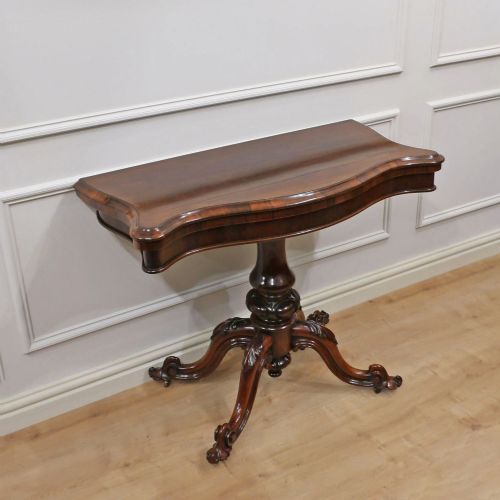
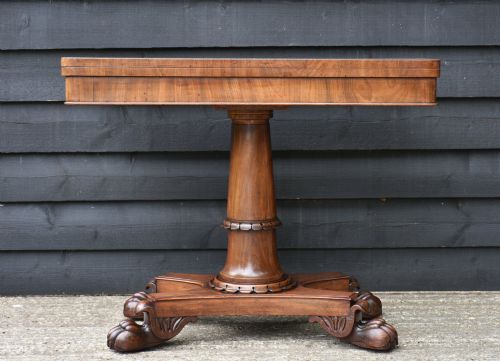
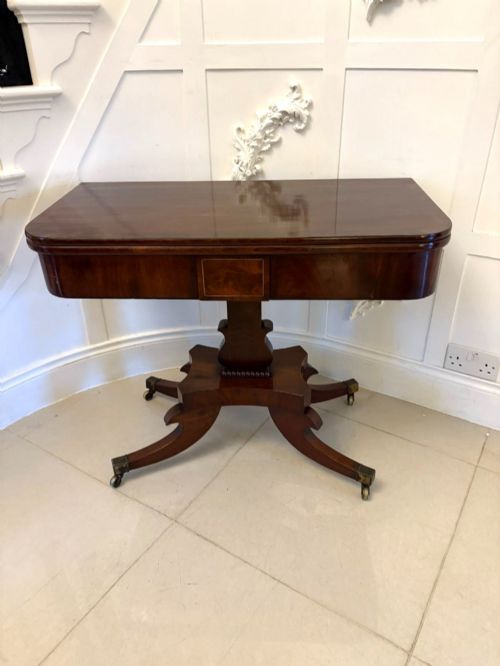
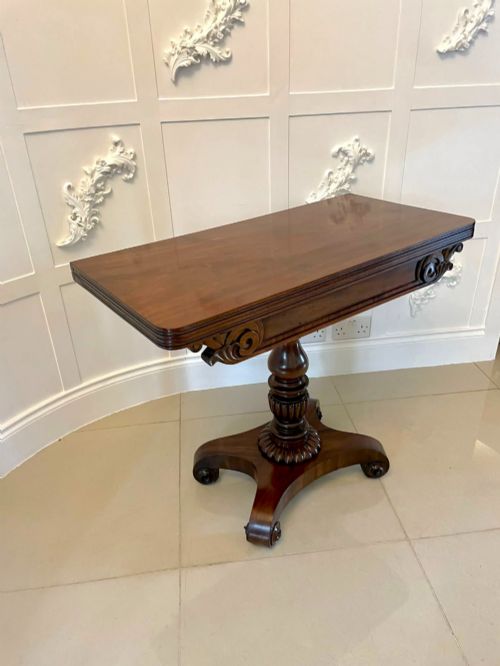
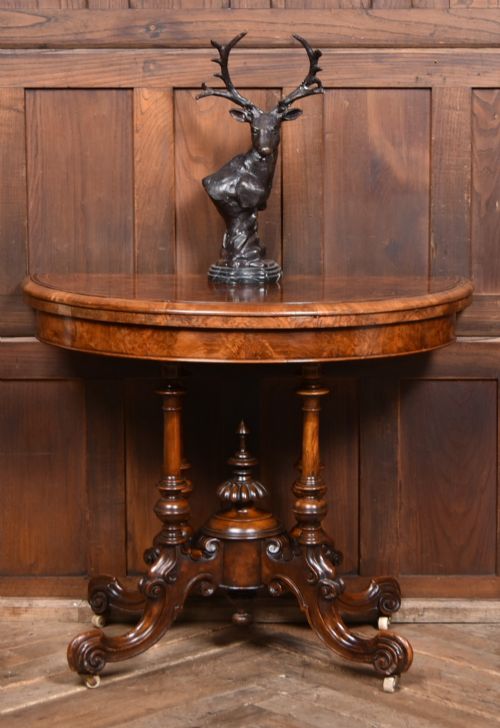
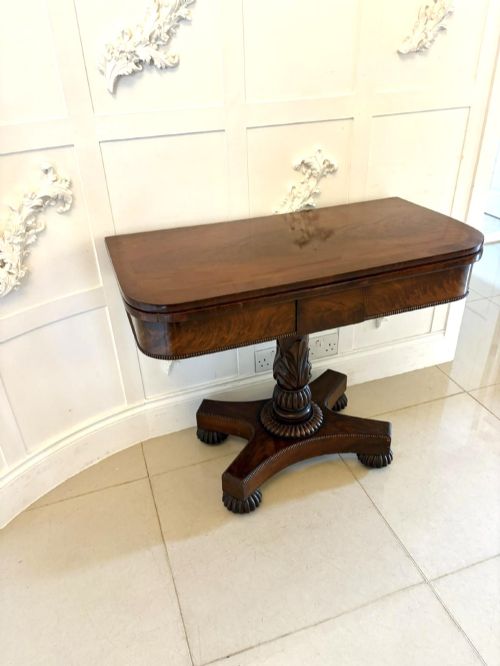
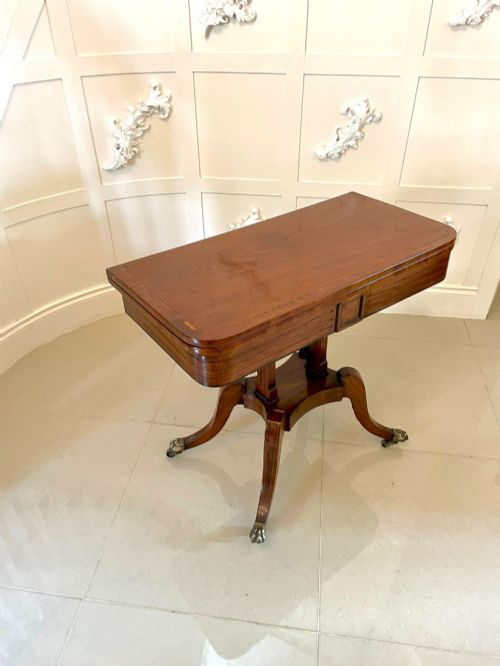
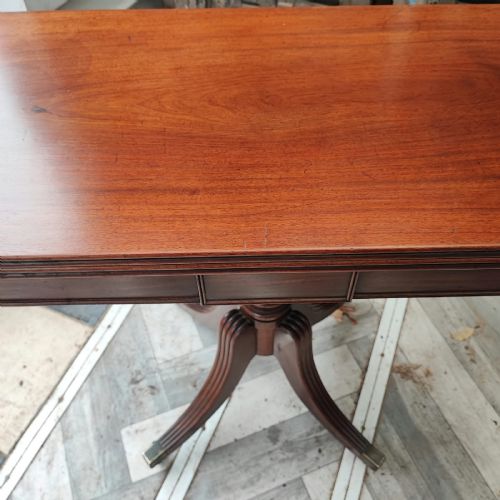

Antique Folded Top Table
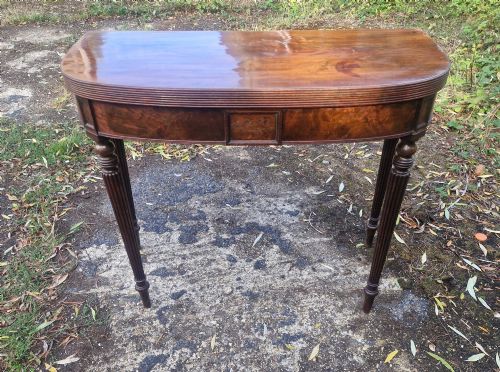
An antique folded top table offers ingenious surface expansion, transforming from a compact console to a generous tea or card surface.
Antique Folded Top Table
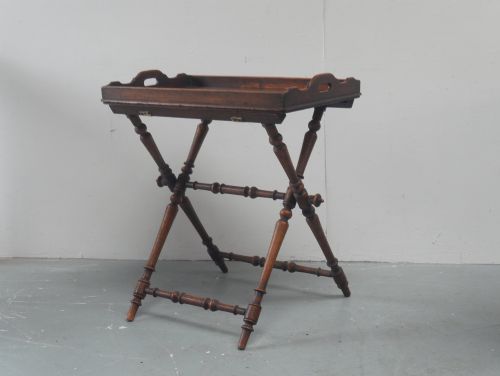
An antique folded top table is a dual-purpose piece designed to adapt its surface area through a pivoting, hinged, or swivel mechanism. When you search for an antique folded top table, you encounter diverse forms created for dining, reading, or leisure.
The selections span Georgian, Regency, William IV, and Victorian periods, alongside Edwardian examples. Card tables, tea tables, and games tables dominate the offerings.
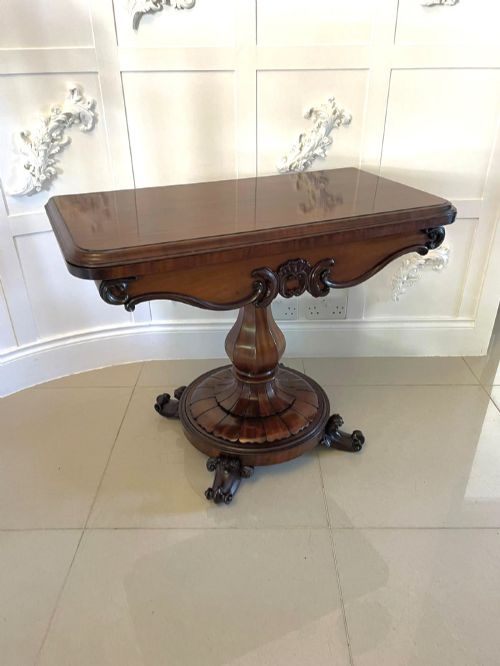
Mahogany and rosewood appear frequently among the listings, often enriched by walnut, satinwood, and oak timbers.
How they were made
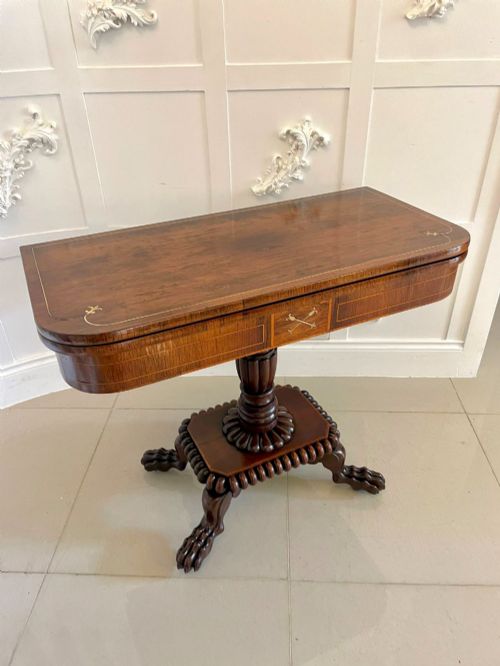
Cabinet makers utilised dense primary timbers like mahogany and rosewood, frequently applying burr walnut, satinwood, and yew veneers to create striking figured surfaces. Crossbanding and delicate wood inlay further ornamented the tops and friezes.
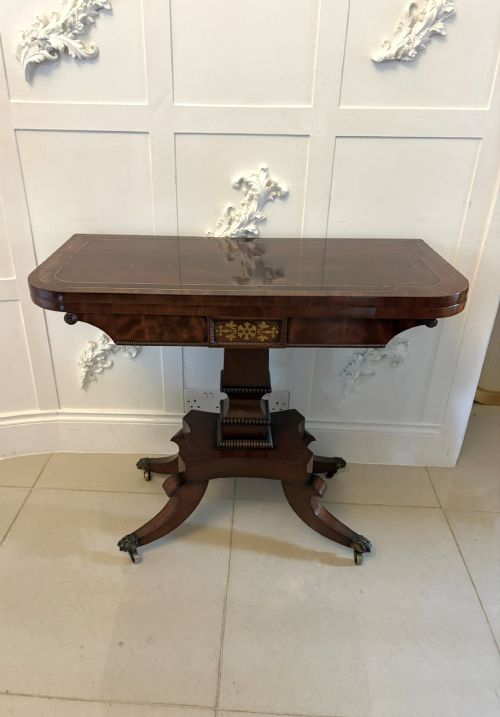
Metalwork played a structural and decorative role, with brass inlay tracing geometric lines and cast brass or ormolu mounts supporting swivel or fold-over mechanisms.
What varies in quality
The superiority of an antique folded top table rests in the selection of timber figure, such as highly prized flame mahogany or richly grained burr walnut. Finer examples display meticulous precision in the matching of veneer grains across the fold.
Construction integrity within the pivoting mechanism and the crispness of carved details, brass inlay, or marquetry define the upper tier of the range.
The Antique Folded Top Table Glossary
- Fold-over
- A hinged table top design that opens out to double the available surface area. This mechanism often conceals a storage well beneath.
- Swivel top
- A table construction where the upper leaf rotates on a pivot to support the open leaf. It allows the top to lock securely in its extended position.
- Crossbanding
- A decorative border of veneer laid with the grain running perpendicular to the central panel. It frames the primary timber of the table top.
- Marquetry
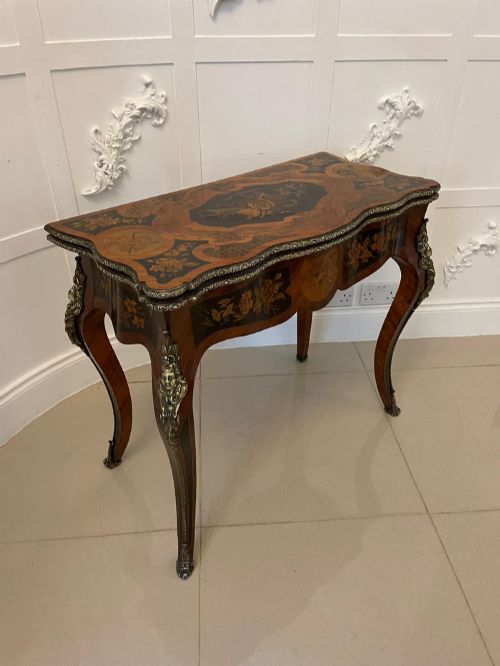
- Elaborate decorative patterns formed by the insertion of different coloured woods and veneers into a solid background. This technique appears on French revival pieces.
- Ormolu
- Gilded bronze mounts applied to furniture for decorative enrichment. These metallic accents are typical of mid-nineteenth century works.
Antique Folded Top Table: Frequently Asked Questions
What is an antique folded top table used for?
These tables served primarily as dual-purpose furniture for domestic entertaining, functioning as compact side or console surfaces against a wall. When opened, they provided adequate space for serving tea, playing cards, or writing letters.
In modern interiors, they continue to serve this versatile function in living rooms or hallways where surface space needs to expand on occasion.
How do I tell a card table from a tea table?
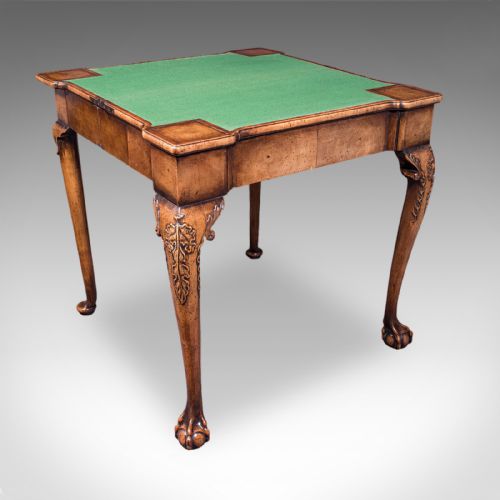
Card tables often feature a baize or felt-lined interior surface designed for card games, sometimes incorporating small corner indents for counters or candles. Tea tables typically present a polished polished wood interior intended for displaying porcelain and serving beverages.
Many listings combine these classifications because makers produced versatile surfaces that accommodated both social pastimes.
What woods were used for these tables?
Mahogany and rosewood form the majority of the surviving examples, prized for their strength and rich natural colour. Walnut, burr walnut, and satinwood also appear frequently, often utilised for decorative veneers and crossbanding.
Earlier pieces favour oak or mahogany, while later nineteenth-century examples introduce exotic woods and marquetry inlay.
How do I care for a wood fold-over top?
Protect the polished wooden surfaces from direct sunlight and excessive moisture by using coasters and mats. Regular dusting with a soft, dry cloth preserves the finish without requiring heavy polishes.
Take care when operating the hinge or swivel mechanism to ensure the weight is supported evenly during transformation.