





Antique Flush Set Ring
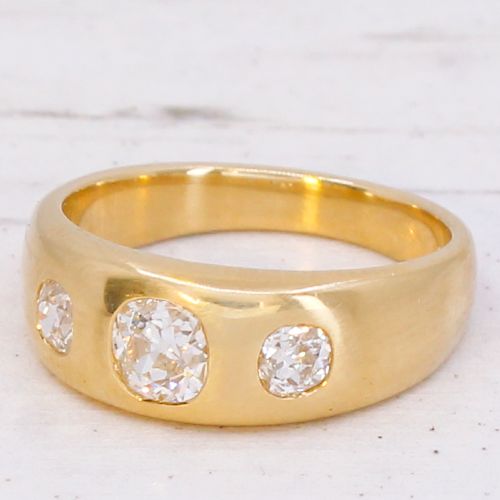
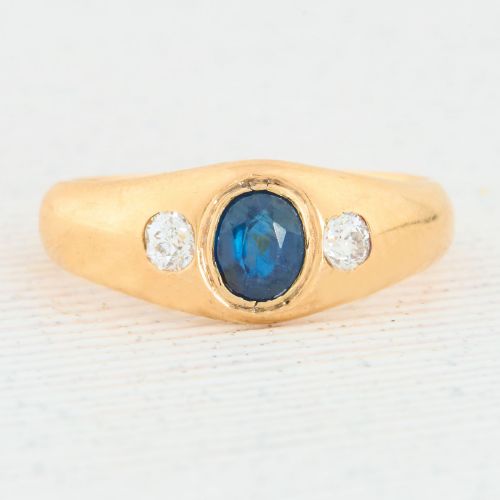
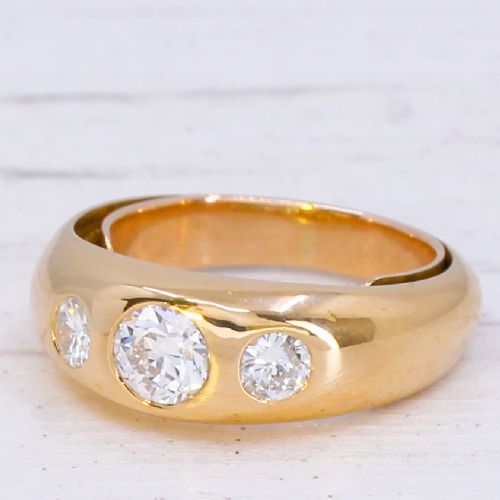
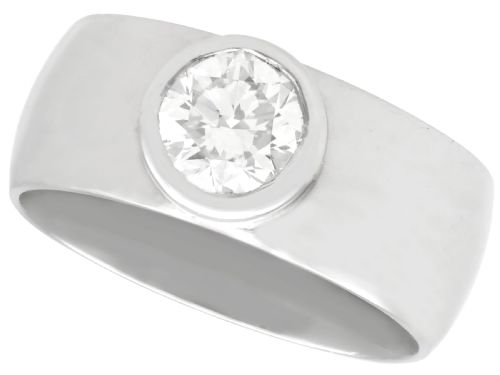
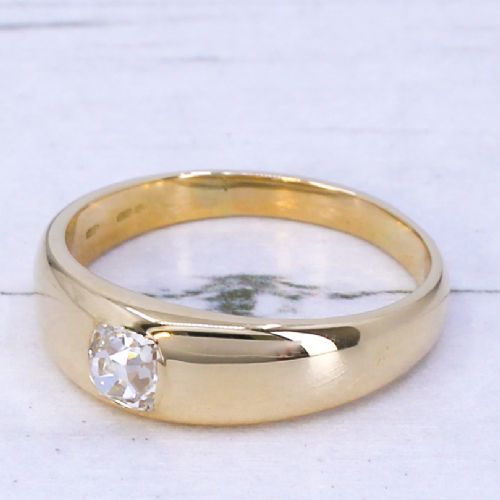
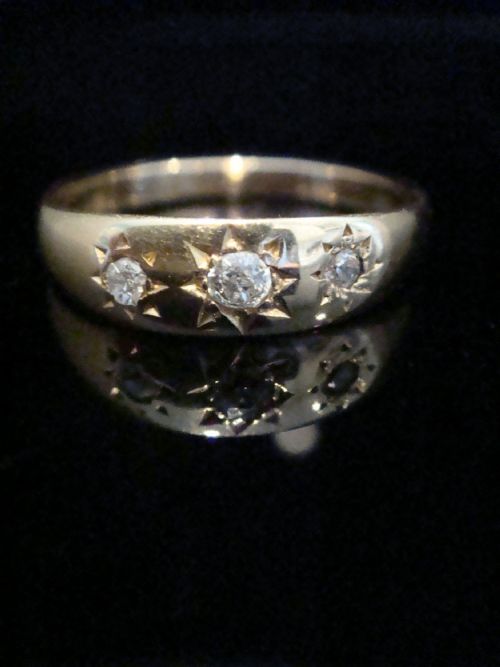
An antique flush set ring sits flat within the metal band, offering a smooth profile that catches the light through starburst motifs.
Antique Flush Set Ring
When you search for an antique flush set ring, you encounter pieces designed to sit level with the metal surface, frequently referred to as gypsy rings or starburst bands in the listings. These low-profile designs span the Victorian and Edwardian eras, alongside mid-twentieth-century examples, bringing robust daily wear to the finger.
Gold forms the primary body of these rings, rendered in eighteen-carat yellow gold, fifteen-carat yellow gold, and traditional gold standards. Gemstones such as diamonds, sapphires, rubies, and turquoise are embedded directly into the metal band, often accented with hand-engraved starburst or celestial patterns radiating outward from the stones.

Materials and construction methods
Goldsmiths utilised yellow gold alloys, casting or forging sturdy bands capable of securing stones flush with the exterior surface. The metal surrounding the gem was then pushed or burnished over the girdle to hold it firmly in place without traditional tall claws.
Cutters employed old cut diamonds alongside rubies and sapphires, inserting them individually or in multi-stone trilogy and five-stone arrangements. Craftsmen finished the surrounding gold with engraved star motifs, belcher settings, or ornate bands to accentuate the flush-set stones.
Celestial starbursts let you carry your own pocket-sized night sky wherever you wander.
Factors determining quality
The precision of the flush setting dictates the overall craftsmanship, where metal meets stone seamlessly without gaps or excess pressure marks. Superior examples display crisp, deep hand-engraving in the starburst patterns that retain their sharp edges over decades of wear.
Stone selection elevates a piece, particularly when matching old cut diamonds or vibrant natural sapphires and rubies within the band. Heavier gold gauges and higher carat weights, such as eighteen-carat yellow gold, provide structural integrity that distinguishes finer workshops.
The Antique Flush Set Ring Glossary
- Flush set
- A gemstone setting where the table of the stone sits level with or slightly below the surrounding metal surface. This technique protects the girdle of the stone.
- Gypsy ring
- A ring style featuring a thick band that tapers toward the back, with stones embedded flush into the upper portion. Popular throughout the Victorian and Edwardian periods.
- Old cut
- A vintage diamond cutting style characterised by a small table, high crown, and large open culet. These stones display softer, chunkier facets than modern brilliant cuts.
- Starburst
- An engraved pattern radiating outward from a flush-set gemstone to resemble a twinkling star. This decorative technique is prevalent on nineteenth-century bands.
- Trilogy ring
- A ring set with three gemstones representing past, present, and future. In these listings, they appear arranged flush across the golden band.
Antique Flush Set Ring: Frequently Asked Questions
Are flush set rings suitable for daily wear?
The recessed stone placement protects the girdle and pavilion from knocks, making these bands exceptionally practical for everyday use.
Heavier yellow gold construction further ensures the ring withstands continuous wear without compromising the security of the gems.
How do I tell Victorian from Edwardian rings?
Victorian examples often feature heavier gold bands with deep starburst engravings and rubies, sapphires, or turquoise alongside diamonds.
Edwardian pieces tend toward lighter, ornate interpretations with a strong emphasis on old cut diamonds in targeted celestial arrangements.
What is a belcher ring?
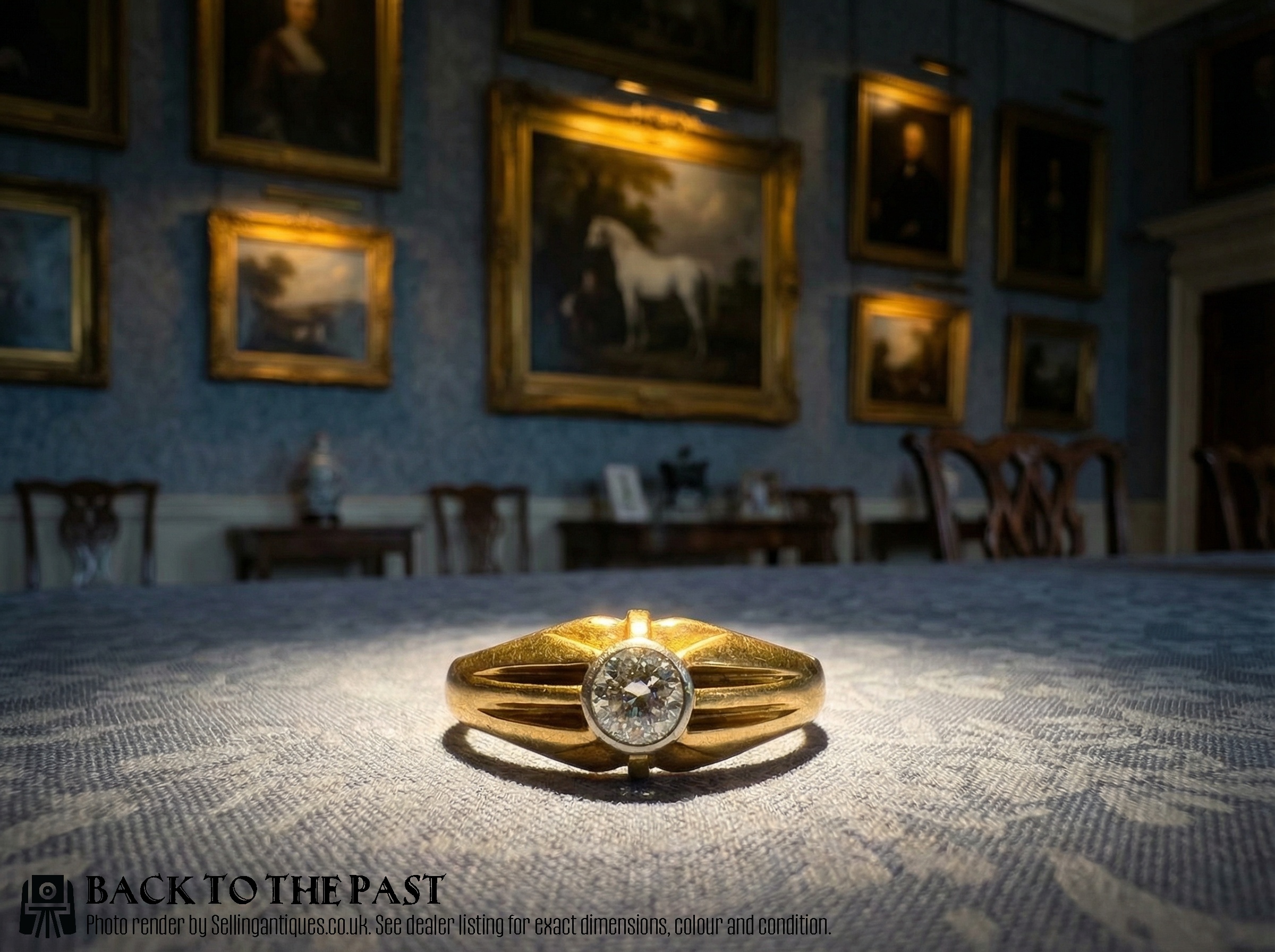
A belcher ring utilises a specific rounded prong or flush mounting style popularised in the nineteenth and twentieth centuries.
The design showcases the stone securely within a raised or embedded collet of thick yellow gold.
Can these rings be resized easily?
Resizing depends largely on the amount of solid gold in the back of the shank and the proximity of the flush-set stones.
A skilled jeweller can usually alter the band while preserving the structural integrity of the engraved shoulders.