


Antique Flow Blue
Antique flow blue brings characteristic bleeding cobalt pottery into the home, offering deep indigo decoration that merges with the white ceramic body during firing.
Antique Flow Blue
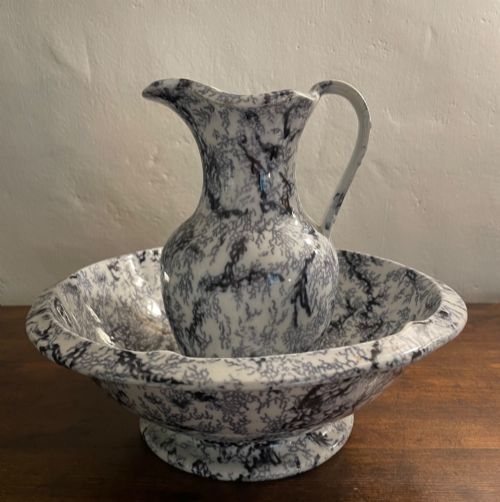
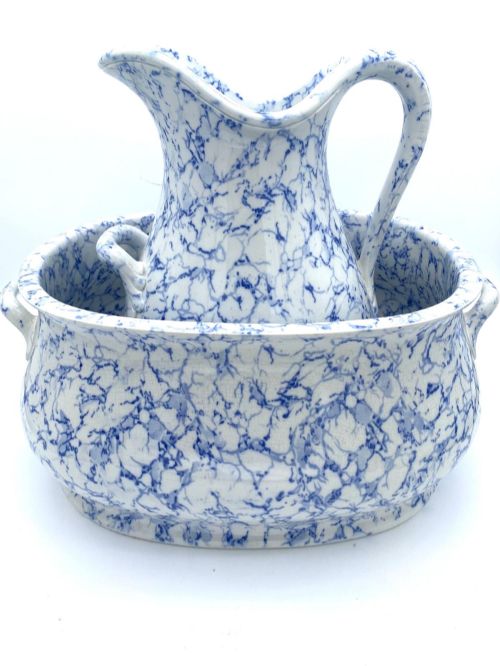
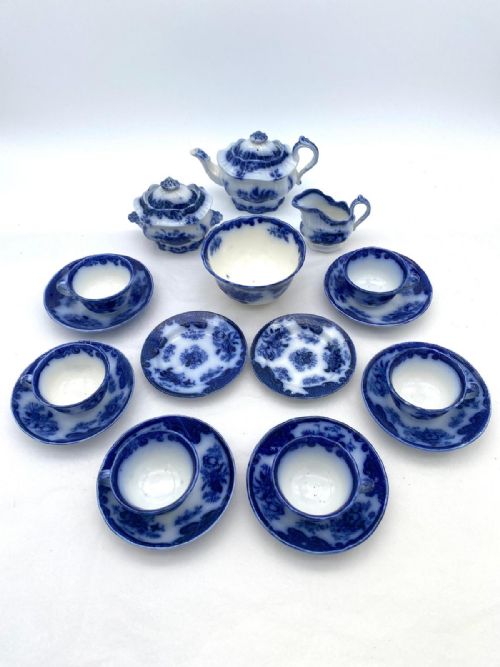
When you search for antique flow blue, you encounter nineteenth-century earthenware and ceramic vessels defined by intentional cobalt bleeding during the kiln process. The aesthetic ranges from early Victorian kitchen and toilet sets to delicate child's tea services and decorative bowls.
Most examples date across the Victorian and Edwardian eras, spanning from the early nineteenth century up to nineteen hundred. You will frequently find pitchers, jugs, wash sets, and large serving platters bearing characteristic blurred cobalt patterns.
Materials and production methods
Potters produced these pieces using earthenware and glazed ceramic bodies decorated with cobalt glaze applied under the top layer. During the firing process, lime or chloride vapour was introduced into the kiln to cause the blue pigment to bleed outwards into the white glaze.
Certain decorative iterations incorporate touches of gold leaf or silver plate hardware to accent the glazed ceramic surface. This chemical diffusion creates the signature blurred halo effect that distinguishes the style from standard blue and white pottery.
Form variations on this site range from miniature tea services and biscuit barrels to large wash sets and meat platters.
Assessing craftsmanship and design
Quality in these ceramics depends upon the control of the cobalt bleed and the crispness of the transfer-printed design beneath the haze. Superior pieces balance the smoky, blurred edges with clean lines in the underlying pattern rather than a muddy wash.
The sophistication of the form also dictates the standing of a piece, moving from utilitarian kitchen vessels to finely potted child's services and large, heavily decorated footbaths. Maker attribution and the integration of supplemental materials like silver plate elevate particular items.
Minton·Copeland·Doulton Burslem·Doulton Lambeth·Moorcroft Macintyre·Ridgway
The Antique Flow Blue Glossary
- Flow blue
- A nineteenth-century ceramic transfer-printing technique where cobalt pigment purposefully bleeds into the surrounding glaze during kiln firing. This creates a soft, hazy aesthetic unique to the period.
- Transfer printing
- A method of applying pre-printed paper designs onto ceramic biscuits using copper plates before glazing and firing. It allowed intricate patterns to be mass-produced across tableware.
- Earthenware
- A porous pottery body fired at lower temperatures than porcelain, commonly utilised for nineteenth-century domestic wares and wash sets. It requires an impermeable glaze to hold liquids.
- Cobalt glaze
- The deep blue metallic oxide pigment utilised under the glaze layer to achieve the characteristic rich indigo colour of the pottery. It reacts strongly to kiln vapours.
- Biscuit barrel
- A covered ceramic container used in Victorian dining rooms to store dry biscuits and crackers. They often feature metal lids and swing handles.
Antique Flow Blue: Frequently Asked Questions
What causes the blue colour to blur?
The blurring results from lime or ammonia gas deliberately introduced into the kiln atmosphere during the firing process. This chemical vapour causes the cobalt oxide pigment to volatilize and bleed outwards into the surrounding white glaze.
Potters could control this diffusion to varying degrees, resulting in pieces with sharp underlying transfer prints surrounded by a soft, smoky haze.
How do I date these ceramics?
Dating relies on maker marks stamped or printed on the base, stylistic clues like Aesthetic Movement or Rococo Revival motifs, and the technological evolution of the ceramic body. Early nineteenth-century pieces often display heavier earthenware bodies and hand-applied details.
Later Victorian and Edwardian examples incorporate refined glazes and machinery-assisted transfer prints alongside registry marks that pinpoint exact production years.
Can I use these items daily?
While these ceramics were originally created for functional dining and washing tasks, age and historic crazing make modern daily use inadvisable. Hand washing preserves the delicate glaze and any applied gold leaf from detergent damage.
Displaying them as decorative bowls, pitchers, or wall brackets allows you to appreciate the nineteenth-century craftsmanship safely.