


Antique Floral Porcelain Ewer
An antique floral porcelain ewer brings hand-painted botanical charm and classical shape to a mantel or sideboard.
Antique Floral Porcelain Ewer
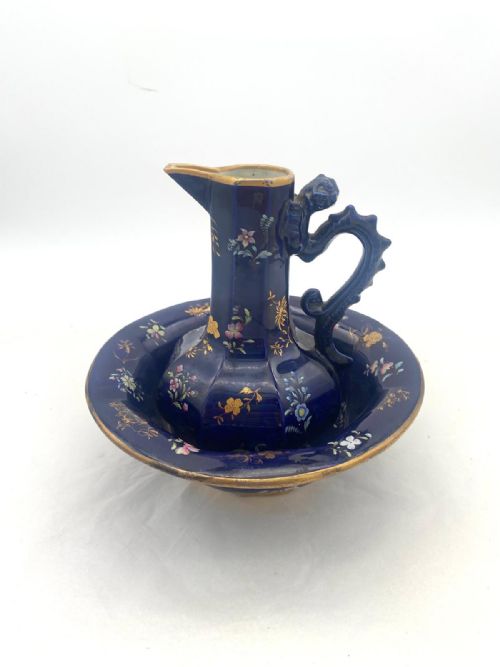
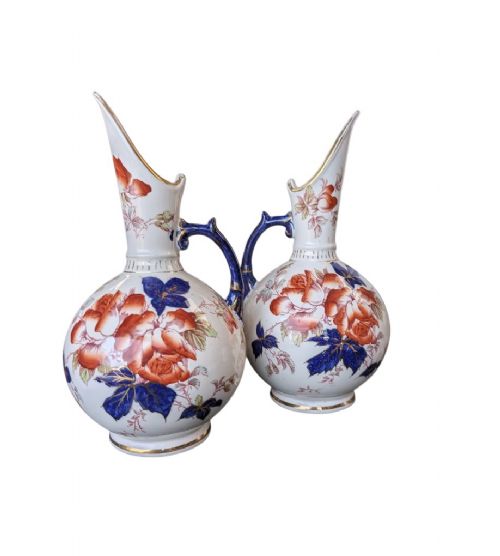
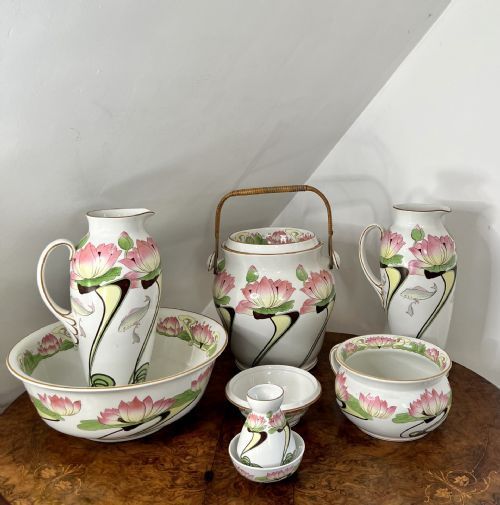
An antique floral porcelain ewer is a decorative vessel modelled on ancient water pitchers, finished with floral decoration and ceramic glaze. These objects range from cabinet pieces and wine ewers to larger wash sets and pitcher pairs.
The pieces appearing here include works from the Georgian and Victorian eras, alongside productions from the early twentieth century. Royal Worcester examples feature prominently, often displaying blush ivory surfaces and hand-painted floral motifs.
Buyers also encounter English porcelain and earthenware works from makers such as Minton, Coalport, Rockingham, and Doulton Burslem. Forms span from classical pedestals and low Chelsea shapes to Japanese Imari and Persian influenced designs.
How they were made
Potters shaped these vessels using porcelain, ceramic, earthenware, and ironstone, applying glaze to seal the body before decoration. Many pieces received hand-painted botanical details, flower encrustations, or enamel work.
Gilding, gold leaf, and gilt accents were frequently applied to handles, rims, and panels to highlight the modelled contours of the ware. Kiln firing fixed the colours and metallic leaf to the ceramic surface.
Listings feature porcelain, earthenware, and ceramic bodies decorated with enamel, gold leaf, and hand-painted floral glazes across the Victorian and Georgian periods.
What varies in quality
Quality rests in the crispness of the porcelain modelling and the execution of the hand-painted floral decoration. Pieces with finely detailed botanical panels and carefully applied gilding sit at the upper end of the scale.
The reputation of the pottery and the complexity of the form, such as pedestal ewers or dolphin-handled cream jugs, also influence the standing of the piece. Well-preserved enamel work and intact flower encrustations demonstrate superior craftsmanship.
Royal Worcester·Masons Ironstone·John Rose Coalport·Rockingham Porcelain·Minton·Doulton Burslem
The Antique Floral Porcelain Ewer Glossary
- Ewer
- A large jug with a wide spout and a looped handle, traditionally used for holding water or wine. In antique ceramics, these vessels served primarily decorative functions or formed part of large wash sets.
- Blush ivory
- A soft, creamy ceramic ground developed by Royal Worcester that mimics the warm tone of ivory. It provided a matte surface suited for delicate hand-painted floral decoration.
- Gilding
- The application of gold leaf or gold paint to ceramic surfaces. It accentuates handles, rims, and panel borders on nineteenth-century porcelain.
- Imari
- A style of ceramic decoration featuring rich iron red, underglaze blue, and gold. It derives from Japanese export wares and influenced Western porcelain makers.
- Pedestal ewer
- A pitcher raised upon a distinct foot or base. This form elevates the vessel and often incorporates elaborate scroll handles and moulded floral details.
Antique Floral Porcelain Ewer: Frequently Asked Questions
What is an antique floral porcelain ewer used for?
These vessels were originally designed for serving liquids or as part of bedroom wash sets, though many nineteenth-century examples served purely decorative purposes.
Today, collectors display them as mantel ornaments, cabinet pieces, or centrepieces alongside matching basins and vases.
How do I date a Royal Worcester ewer?
Dating relies on factory factory marks, impressed ciphers, and date codes stamped on the underside of the ceramic base. Puce marks and specific pattern names like Empress or Harper also help pinpoint the production period.
Stylistic shifts, such as the transition from Victorian rococo revival forms to blush ivory finishes, provide further chronological clues.
Are these ewers made of porcelain or earthenware?
Makers utilised a variety of ceramic materials including fine porcelain, bone china, earthenware, and ironstone. The choice of body depended on the factory and the intended function of the vessel.
Some robust bathroom sets utilised earthenware, while cabinet ewers and scent bottles favoured refined porcelain bodies.