




Antique Floral Glass Panel
These antique floral glass panel pieces bring rich colour and botanical detail into a room through leaded glazing and reverse-painted mirrors.
Antique Floral Glass Panel
An antique floral glass panel takes several distinct forms across this selection, appearing most frequently as leaded glass windows, wall mirrors, and fire screens. These works incorporate botanical subjects, floral designs, and painted details within glass and wooden frames.
The objects span multiple periods, stretching from the nineteenth century into the mid-twentieth century. Pieces from the Victorian, Edwardian, and Art Nouveau eras sit alongside Regency and mid-century examples, reflecting shifting interior tastes.
Makers and designers utilise varying techniques such as stained glass, leaded construction, reverse painting, and etching. Domestic and architectural settings accommodated these panels as windows, overmantels, and fireside reflectors.
Materials and Construction
Makers combined glass, lead, and timber to construct these panels and their accompanying frames. Leaded glazing holds individual pieces of glass together, while brass and giltwood provide structural support and decorative borders for mirrors and screens.
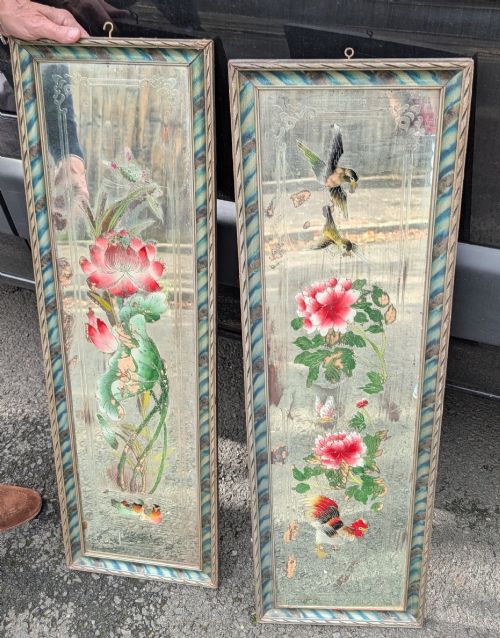
Artisans applied paint directly to glass surfaces, utilising tempera or enamel techniques alongside etching to create floral motifs, swags, and bullseyes. Wooden elements in walnut, ebonised timber, and giltwood complement the glazed components.
Several windows include amber bullseyes, originally formed from the centre of blown glass discs to catch the afternoon sun.
Judging Quality
The fineness of the hand-painted floral detail and the complexity of the leaded glass configuration determine the visual strength of a panel. Superior examples display careful shading in the botanical motifs and integration of bullseyes or etched sections.
The material integrity of the frame, whether brass-framed, ebonised, or giltwood, supports the glass securely and complements the aesthetic style of the period. Original frames and balanced proportions distinguish finer examples from standard production.
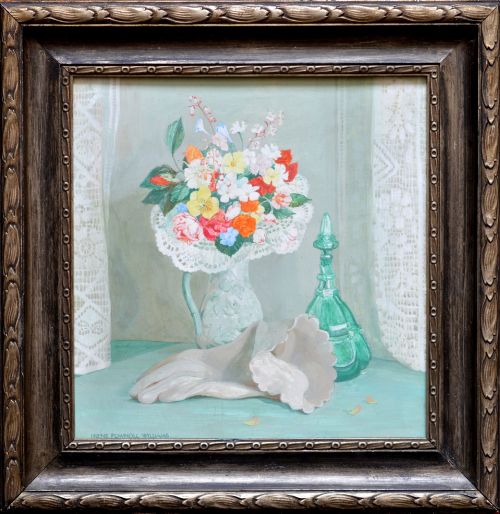
Sir Edward Burne-Jones·Irene Christobelle Pownoll Williams
The Antique Floral Glass Panel Glossary
- Leaded glass
- A window or panel constructed from small pieces of glass held within lead cames. This technique allows for intricate geometric and botanical designs.
- Reverse painted
- A method where the artist applies paint to the back of the glass so the image is viewed through the front. This creates a glossy finish and protects the pigment.
- Bullseye
- A small roundel of glass formed during the blowing process, often featuring a central pontil mark. These are incorporated into windows to catch and refract light.
- Fire screen
- A movable barrier placed in front of a fireplace when not in use. Many incorporate glass panels or painted screens to reflect the warmth and light of the room.
- Overmantel mirror
- A large mirror designed to hang directly above a mantelpiece. They often feature painted panels or elaborate frames spanning the width of the fireplace.
Antique Floral Glass Panel: Frequently Asked Questions
Where were these glass panels originally placed?
These panels served architectural and decorative roles within domestic interiors. Windows were fitted into exterior walls or interior partitions to filter light, while mirrors and fire screens occupied reception rooms.
Their placement depended on the specific object type, with overmantels anchoring the main hearth and stained glass windows illuminating hallways or principal rooms.
How do I care for antique glass?
Maintenance requires gentle cleaning methods that protect both the glass surface and the surrounding lead or paintwork. Soft, dry cloths remove dust without disturbing fragile pigments.
Moisture and abrasive cleaners can damage painted details and corrode lead cames over time. Professional conservation is recommended for panels with structural instability.
What defines the Art Nouveau style here?
Art Nouveau examples incorporate fluid, organic lines inspired by natural forms. These pieces often feature sinuous floral patterns integrated into the glass design.
The style emerged around the turn of the twentieth century, shifting away from rigid Victorian symmetry toward dynamic botanical compositions.
How do I distinguish Victorian panels?
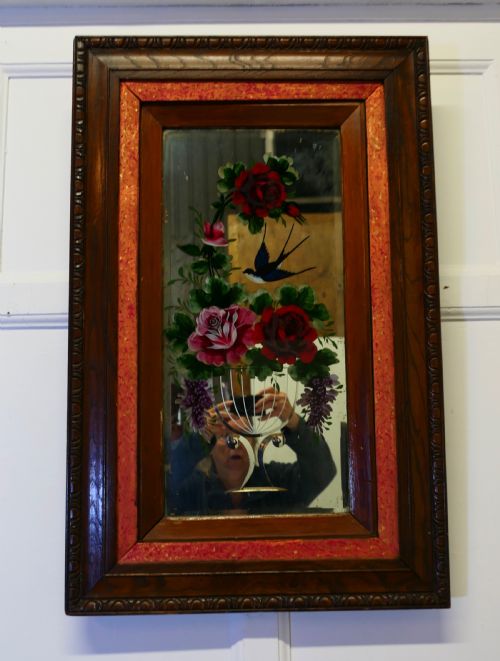
Victorian panels frequently display dense botanical decoration, including roses and painted swags. They often appear within ebonised or heavily moulded frames.
The craftsmanship reflects the period's industrial capabilities combined with hand-painted artistry, spanning both domestic mirrors and architectural stained glass.