


Antique Floral Bureau
An antique floral bureau brings together practical workspace and elaborate surface decoration across centuries of cabinet making.
Antique Floral Bureau
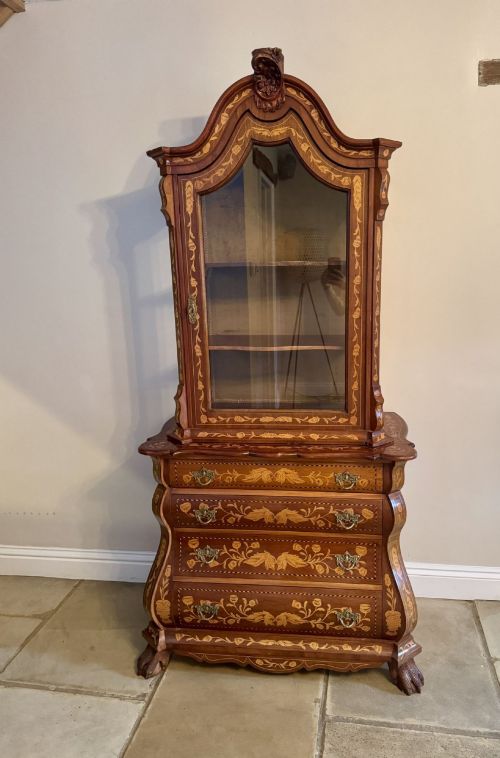
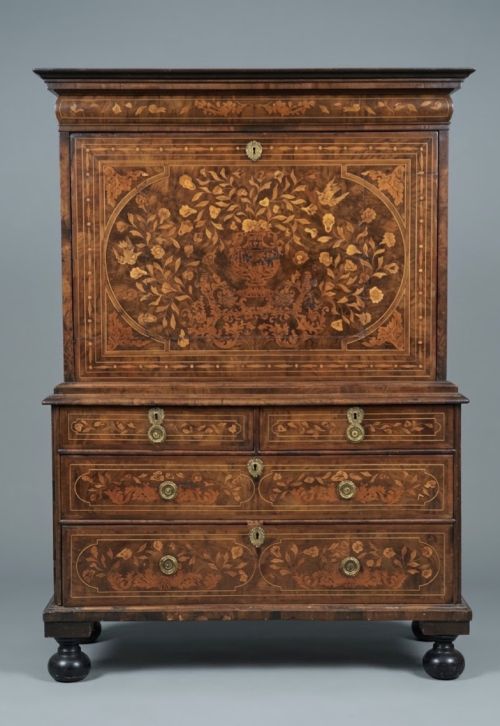
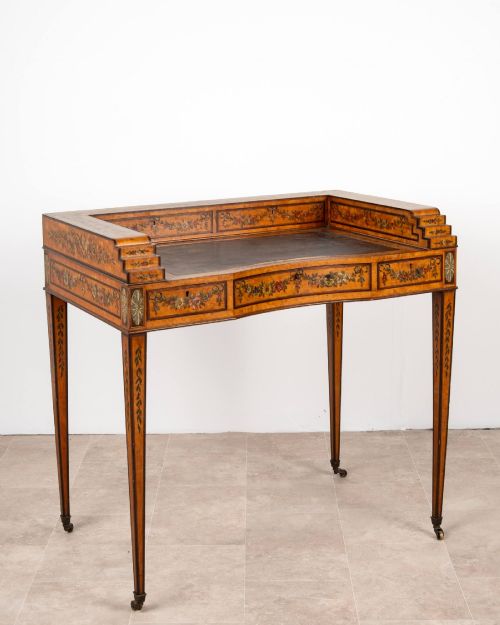
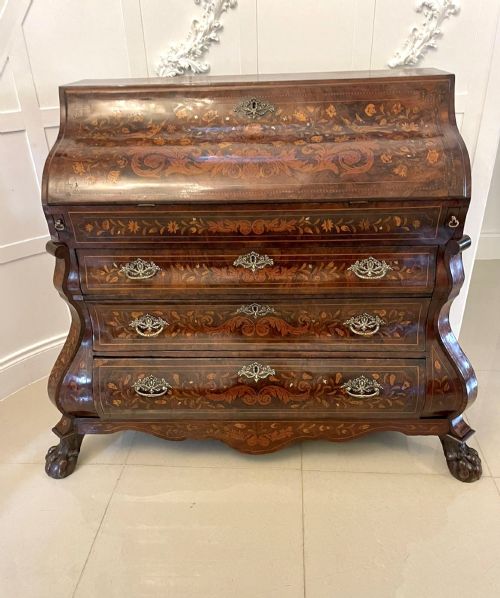
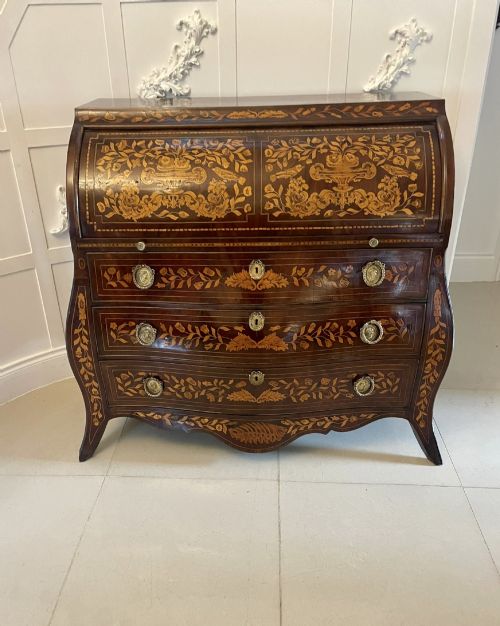
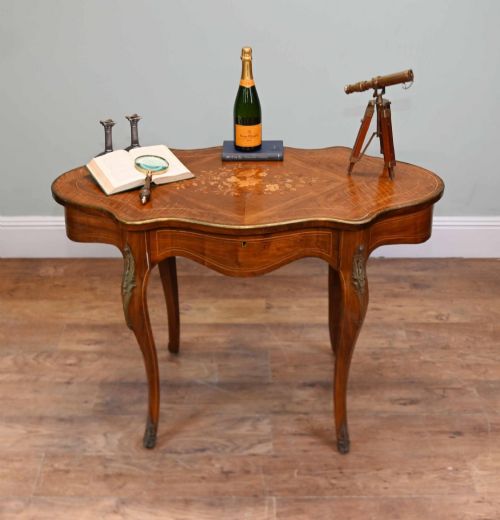
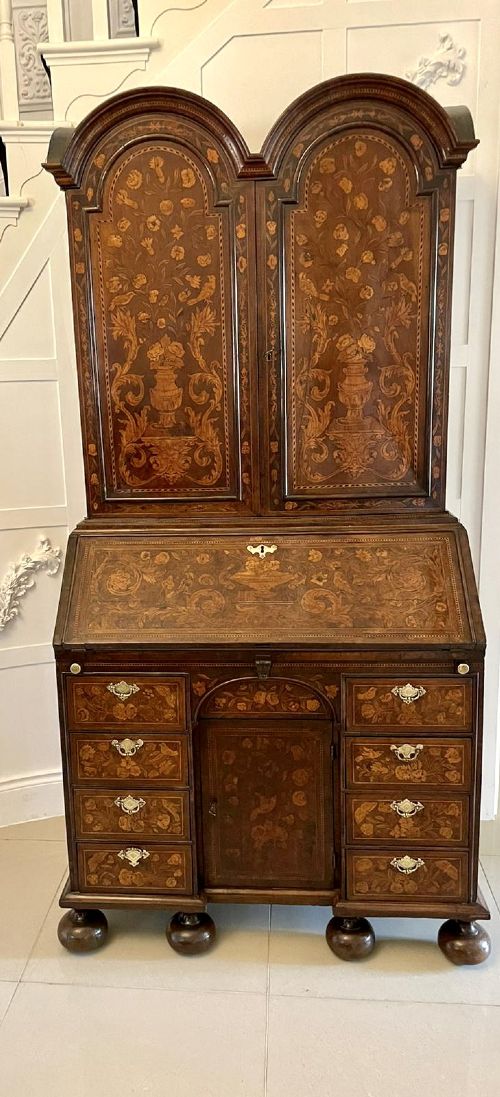
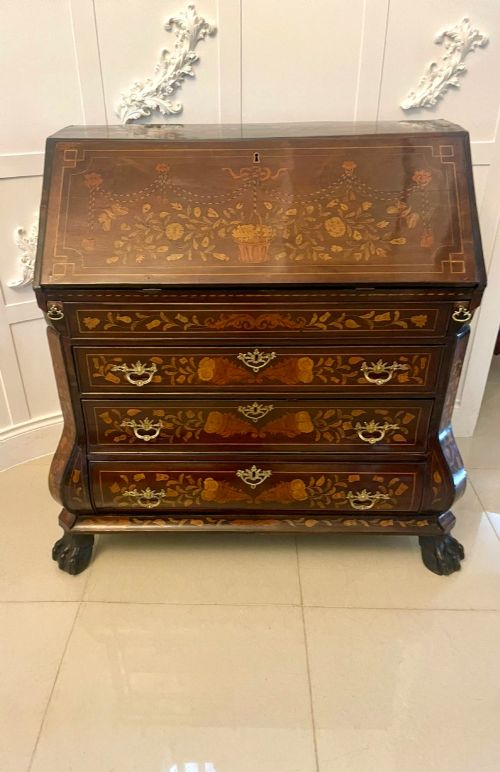
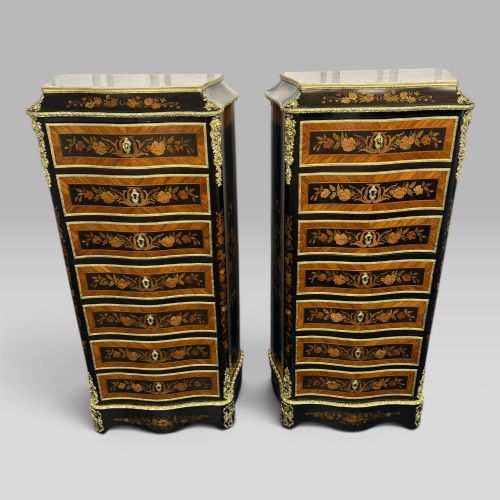
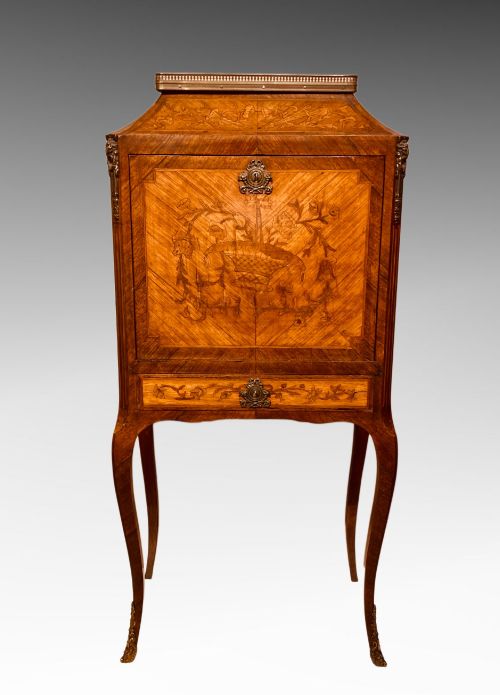
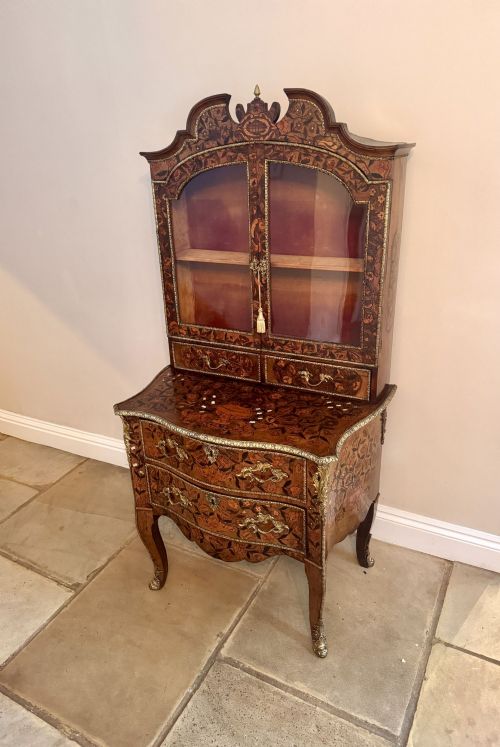
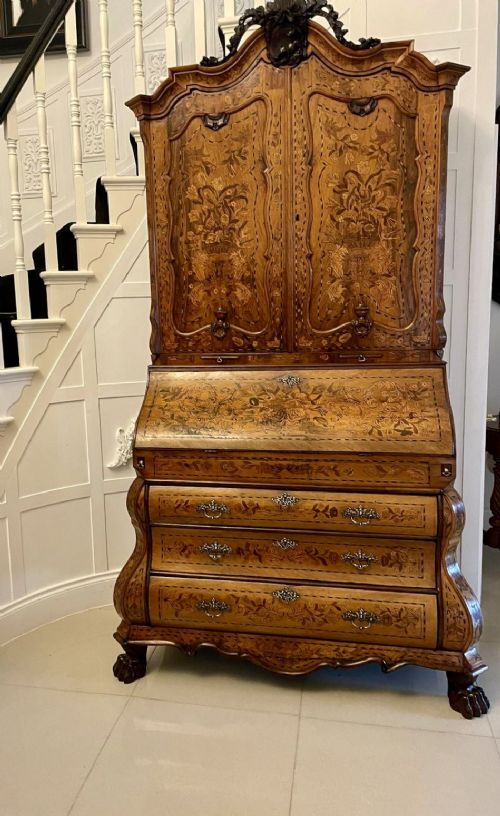
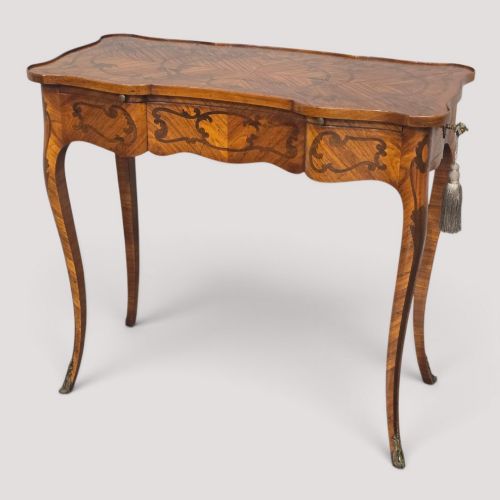
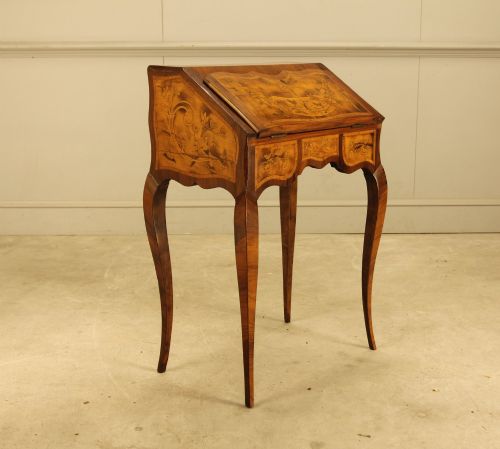
An antique floral bureau primarily appears on this page as an eighteenth or nineteenth-century writing desk featuring detailed inlaid floral motifs. These pieces range from upright slant-front desks and monumental bureau bookcases to refined French writing tables and compact cylinder bureaux.
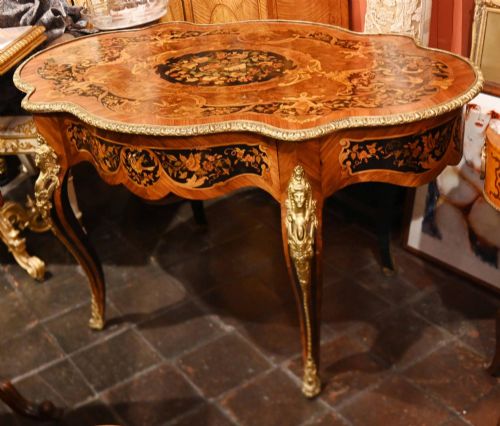
Makers working in Dutch, French, and English workshops produced these desks during periods spanning the William and Mary era through to Edwardian times. The Dutch pieces frequently employ a dramatic bombe silhouette, while French examples lean towards Louis XV styling and elaborate marquetry patterns.
Buyers encounter walnut, mahogany, and satinwood carcases decorated with floral marquetry in various timbers. The internal configuration typically includes fitted drawers and pigeonholes concealed beneath a sloping or sliding writing flap.
Materials and Construction
Cabinet makers constructed the foundational carcase from structural timbers like walnut or mahogany, often selecting burr walnut veneers for rich natural figuring. Onto these surfaces, artisans applied intricate floral marquetry using contrasting woods to depict botanical details with realistic shading.
Brass handles, escutcheons, and cast ormolu mounts complete the hardware on many French and Dutch examples. Surface decoration sometimes incorporates hand-painted elements on satinwood grounds, particularly in later Edwardian pieces.
Antique Floral Bureau Retail Price Guide 2026
Typical asking prices for floral bureau among the pieces listed under this phrase on Sellingantiques today, from the lower quarter to the upper quarter. They describe what is for sale here now, not the wider market.
Cabinet makers occasionally hid secret compartments behind false drawer backs within the interior pigeonholes.
Judging Quality
The precision and complexity of the floral marquetry dictate much of the visual standard, with superior pieces showing subtle tonal shading within individual petals and leaves. Finer desks maintain crisp junctions where the inlay meets the surrounding timber without excessive filler.
Structural integrity of the fall front or cylinder mechanism separates better survivals from lesser ones, alongside the preservation of original brasswork and interior fittings. The quality of the underlying carcase timber, such as heavily figured burr walnut rather than plain grain, marks the upper tier of production.
The Antique Floral Bureau Glossary
- Marquetry
- Decorative veneer work arranged in pictorial patterns or floral motifs across a furniture surface. This technique requires cutting contrasting thin wood sections to fit together precisely.
- Bombe
- A swelling, outwardly curved contour characteristic of certain eighteenth-century Dutch and French furniture forms. This bulbous shaping demands advanced woodworking skill to veneer successfully.
- Bureau bookcase
- A dual-purpose piece combining a sloping writing desk below with shelving or cabinet doors above. These tall constructions often feature double-dome cresting or glazed upper panels.
- Ormolu
- Gilded bronze used for decorative mounts, feet, and keyhole surrounds on fine cabinet work. The application involves coating cast bronze with a gold amalgam.
- Escritoire
- A writing cabinet or desk, frequently featuring a drop-front writing surface concealing internal compartments. The term often describes French or continental workspace furniture.
Antique Floral Bureau: Frequently Asked Questions
How do I clean an antique floral bureau?
Dust the surface regularly with a soft, dry cloth to prevent dirt accumulation in the marquetry joints. Avoid modern chemical polishes that can degrade historical wood finishes.
Apply a microcrystalline wax periodically to nourish the timber and protect the delicate veneer. Keep the desk away from direct sunlight and heat sources to prevent the wood from drying and warping.
Are these desks suitable for daily writing use?
Many examples remain robust enough for regular writing, provided you treat the fall front or writing flap with care. The internal drawers and compartments offer practical storage for modern stationery.
Consider placing a protective blotter on the writing surface to prevent ink stains and surface scratches on antique wood. Ensure the support arms or Brackets for the drop-front are engaged properly before applying downward pressure.
What is the difference between a bureau and a bureau bookcase?
A standard bureau consists of a base cabinet with a sloping writing flap that encloses small drawers and pigeonholes. These lower units stand independently on bracket feet or short legs.
A bureau bookcase adds an upper section containing shelves behind cabinet doors, creating a much taller piece of furniture. This upper storage housing is built to match the exact timber and decorative marquetry of the lower desk.
How can I tell a Dutch bureau from a French one?
Dutch examples frequently display a pronounced bombe profile and dense floral marquetry executed in walnut. The overall aesthetic leans toward robust proportions and substantial structural presence.
French desks often incorporate Louis XV styling with cabriole legs, delicate ormolu mounts, and lighter satinwood or kingwood veneers. The marquetry panels on French pieces tend to feature asymmetrical floral arrangements and refined serpentine outlines.