
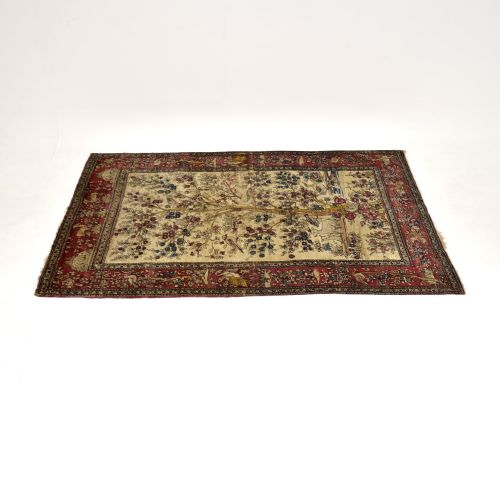
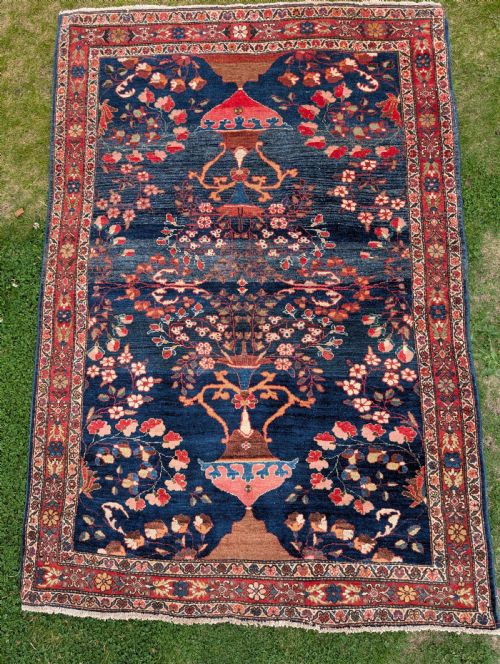
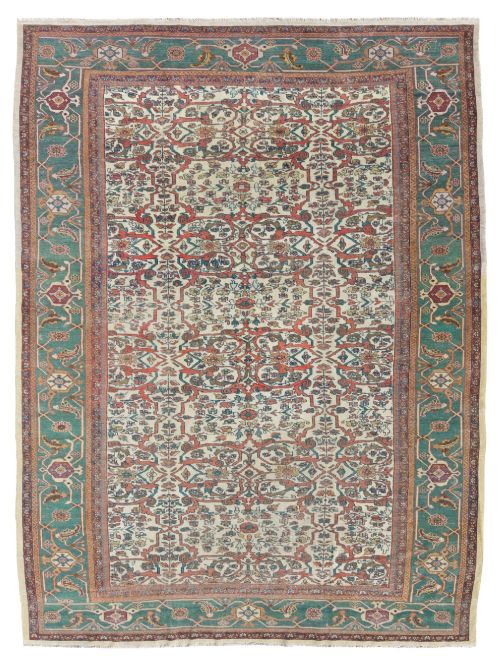
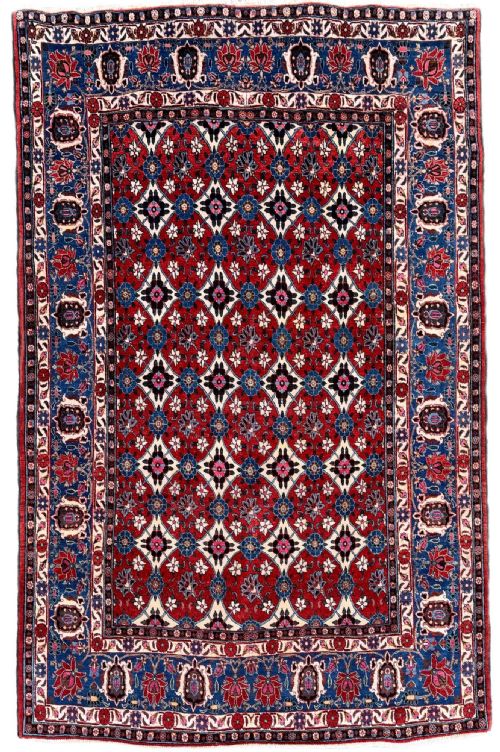
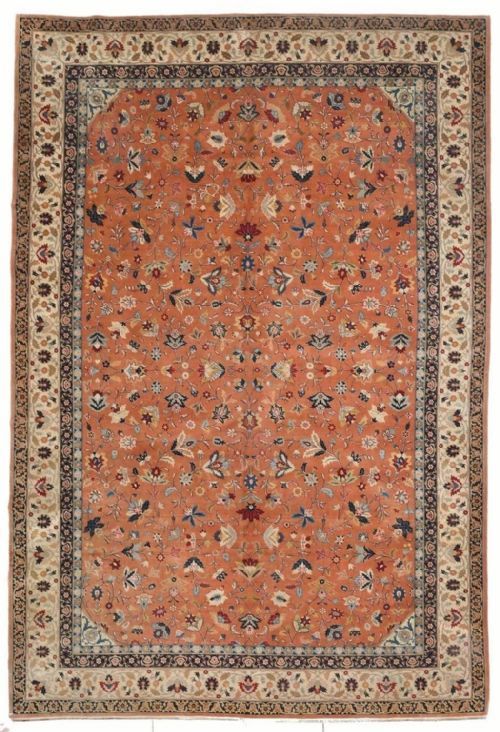
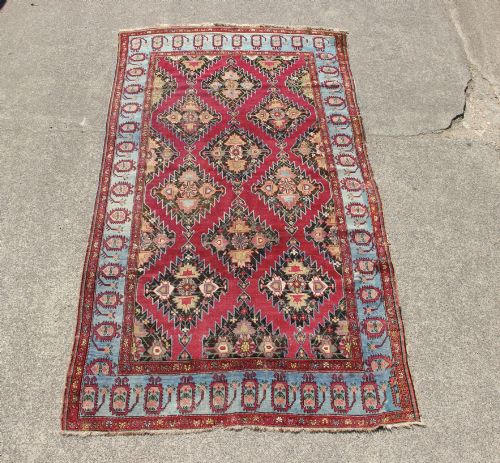
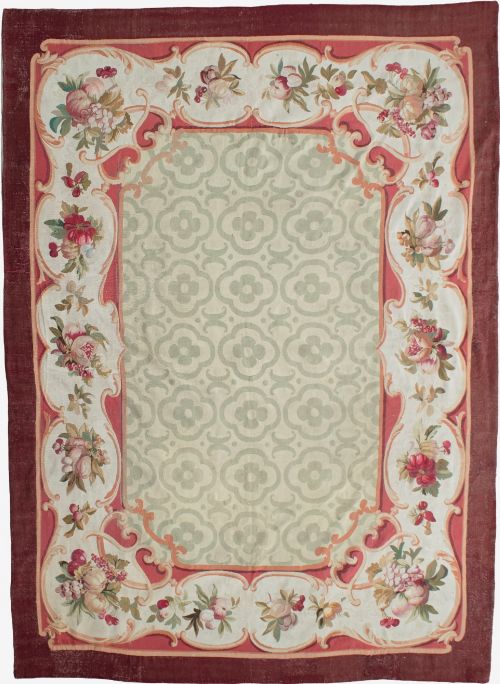

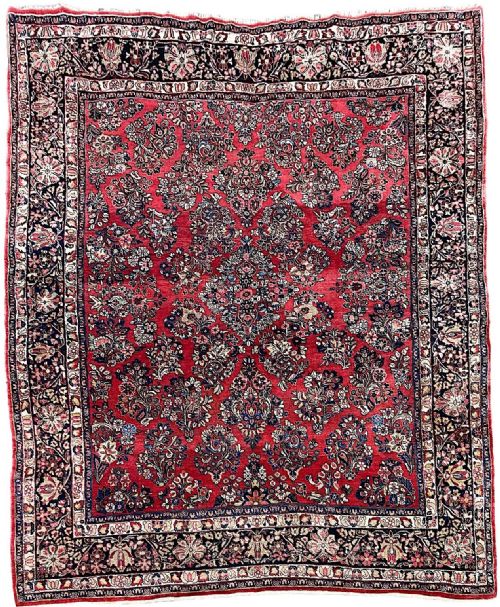
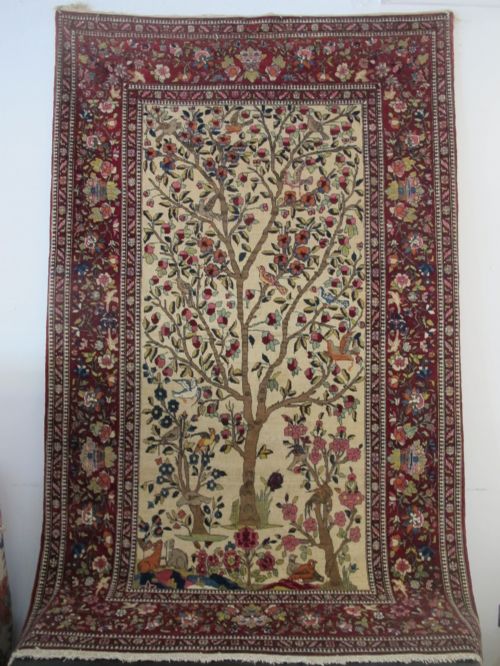


Antique Floral Border Rug
An antique floral border rug brings enduring pattern and texture to a room, grounding your floor space in centuries of textile tradition.
Antique Floral Border Rug
An antique floral border rug brings together centuries of weaving heritage, featuring botanical motifs that frame central fields of geometric or medallion designs. When searching for an antique floral border rug, you will most frequently encounter Persian regional works, alongside Ottoman, French, Chinese, and Caucasian examples. These textiles range from compact area rugs and prayer rugs to large room-sized carpets.
The material foundation typically combines wool, cotton, and occasionally silk or metallic thread, shaped through various hand-knotted and woven techniques. Dating from the mid-nineteenth century through the early twentieth century, these pieces reflect the specific aesthetic preferences of their origin regions. Surviving formats include full carpets, runners, saddle covers, and embroidered fragments.
Materials and construction methods
Weavers constructed these textiles primarily using wool for the pile, prized for its natural resilience and capacity to hold rich dye colours over decades of use. Cotton frequently formed the warp and weft foundations, providing structural stability and crisp definition to the intricate border patterns. Silk and metallic threads appear in select pieces to highlight specific details within the design.
The making process relied entirely on hand-knotting or flat-weaving techniques passed down through generations within specific weaving centres and nomadic communities. Natural dyestuffs derived from plants and minerals produced the varied colour palettes seen across the different regional workshops.
Listings feature wool, cotton, silk, and metallic thread across periods spanning from the mid-nineteenth century to the 1930s.
Distinguishing quality across examples
Knot density and structural tightness set finer regional pieces apart from heavier utility carpets, influencing how crisply the botanical border motifs are rendered. The complexity of the dye work and the subtlety of colour graduation also separate standard productions from masterworks originating in renowned weaving towns.
The integrity of the foundation threads and the uniformity of the pile determine the overall resilience of the textile. Pieces that retain their original edge finishes and balanced proportions demonstrate superior craftsmanship from their period of origin.
The Antique Floral Border Rug Glossary
- Pile
- The vertical or slanted yarn standing up from the foundation that forms the usable surface of the rug. It is created by knotting wool, silk, or cotton around the warp threads.
- Warp
- The stationary vertical threads stretched on the loom before weaving begins. The weft and knots are built upon this foundational grid.
- Weft
- The horizontal threads passed alternately over and under the warp threads to bind the knots in place. Together with the warp, it forms the structural backing.
- Kilim
- A flat-woven carpet or rug produced without a pile by tightly interweaving warp and weft strands. This technique creates a smooth, reversible textile with distinct geometric patterns.
- Medallion
- A central ornamental motif placed in the middle of the rug field. It often mirrors the decorative elements found within the surrounding floral borders.
Antique Floral Border Rug: Frequently Asked Questions
How do I clean an old rug?
Surface dust should be gently removed using a soft brush attachment on a vacuum without a beating bar. Professional textile cleaning is necessary for deep washing to prevent dye migration and fibre damage.
Water saturation must be carefully controlled during any maintenance to protect the cotton and wool foundations from rotting. Specialist care preserves the structural integrity of the weave over time.
Can I place these on heated floors?
Natural fibres tolerate moderate ambient warmth, but direct contact with high heat sources can dry out the natural oils in wool and silk. Using a breathable, high-quality rug underlay helps insulate the textile against thermal shock.
Underlays also prevent the rug from sliding on hard flooring and reduce friction between the fibres and the floorboards. This simple precaution extends the working life of the backing materials.
How are different regional styles identified?
Attribution relies on examining the specific border motifs, colour palettes, and knotting structures characteristic of particular towns or nomadic groups. Persian regions like Tabriz, Heriz, and Kashan each developed distinct drawing styles and floral arrangements.
Comparing the weave density and foundation materials helps narrow down the geographical origin. Regional weaving traditions remained remarkably consistent within specific decades.
What is the best way to arrange furniture on them?
Placing furniture so that only the front legs rest on the border helps anchor the textile within the room arrangement. Alternatively, floating smaller rugs entirely in open floor spaces showcases the central field and floral borders without obstruction.
Heavy furniture legs should ideally use protective cups to distribute weight evenly across the pile. This prevents permanent crushing of the wool fibres in high-traffic interior schemes.