
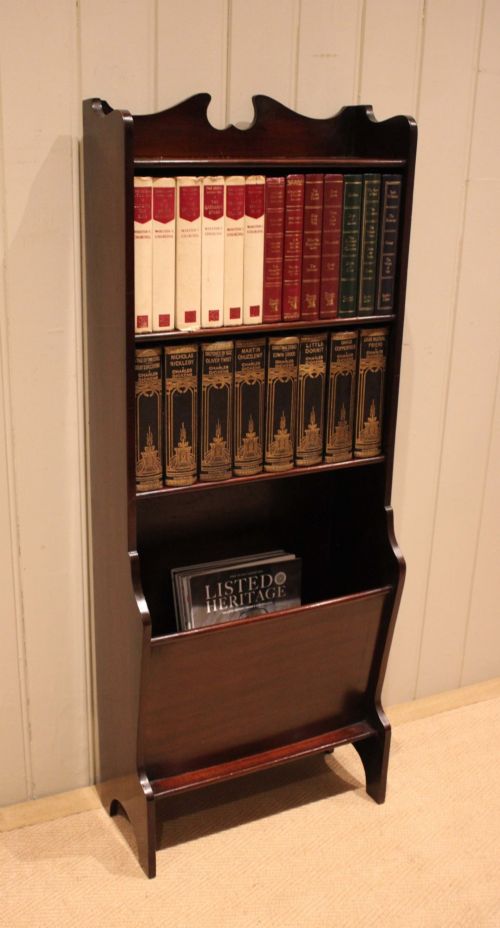
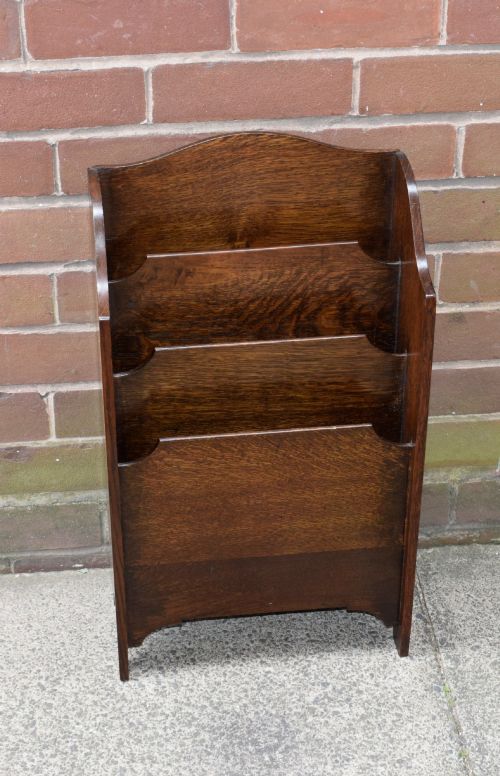
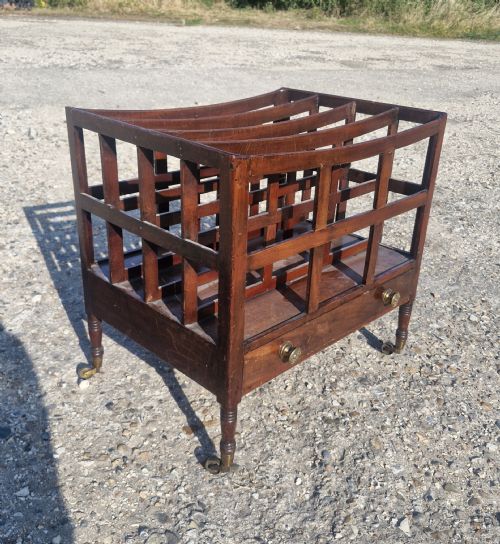


Antique Floor Magazine Rack
An antique floor magazine rack stands ready to hold periodicals and papers with the warmth of aged timber and polished metal.
Antique Floor Magazine Rack
When you search for an antique floor magazine rack, you encounter a practical household accessory designed to keep reading materials tidy in a study, library or drawing room. The selection spans the Victorian and Edwardian periods, stretching from the late nineteenth century into the early decades of the twentieth.
The forms vary beyond simple troughs to include canterburys, revolving stands, folio stands and music stands that double as paper holders. Mahogany and oak dominate the timber examples, whilst bamboo, rattan and brass introduce lighter or more reflective textures to the room.
Most pieces align with revival aesthetics such as Georgian Revival and Regency, alongside the distinctive handcrafted character of the Arts and Crafts movement. You also find Black Forest carvings and painted wood finishes among the diverse stylistic interpretations.
Materials and construction
Cabinetmakers utilised solid timbers such as mahogany and oak, often selecting Cuban mahogany for its rich grain and deep colour. Joinery methods of the period ensured sturdy construction capable of bearing heavy volumes and stacked papers.
Metalwork plays a prominent structural role, particularly in revolving stands that combine brass uprights and fittings with wooden shelves. Bamboo and rattan introduce flexible natural materials shaped into intricate frames for lighter Canterbury designs.
Carving and painting add decorative surface detail to specific examples, from the elaborate foliage of Black Forest music stands to the crisp lines of Edwardian painted library stands.
Several stands double as music holders, ready to drop a symphony and pick up the morning broadsheet without missing a beat.
Quality and execution
The distinction between standard domestic items and superior examples lies in the selection of timber and the crispness of the joinery. Figured mahogany and quartersawn oak indicate a higher grade of manufacture from workshops that prioritised both durability and visual appeal.
Metal components dictate quality in revolving designs, where smooth rotation depends on well-engineered brass mechanisms rather than loose or stiff hardware. Finely carved details and balanced proportions separate ambitious workshop pieces from simpler utility items.
The Antique Floor Magazine Rack Glossary
- Canterbury
- A low, freestanding stand with partitioned sections for holding sheet music, folios or periodicals, usually fitted with carrying handles and small legs.
- Folio stand
- An adjustable wooden frame designed to hold large books, prints and maps upright or at a sloping angle for viewing.
- Revolving bookcase
- A freestanding tiered stand mounted on a pivoting base that turns easily to grant access to books from every side.
- Black Forest
- A nineteenth-century style of deeply carved wooden decorative objects originating from the mountainous region of central Europe, often featuring natural motifs.
- Arts and Crafts
- A design movement valuing honest construction, visible hand craftsmanship and simple forms over ornate industrial ornamentation.
Antique Floor Magazine Rack: Frequently Asked Questions
Where should I place a floor magazine rack?
These pieces fit naturally beside an armchair in a study, library or sitting room where newspapers and periodicals collect during daily reading.
Revolving stands work well near the centre of a room or between seating areas because they allow access from multiple angles without needing repositioning.
How do I care for mahogany and oak stands?
Dust the timber regularly with a soft, dry cloth to prevent surface grime from accumulating in the grain and carved recesses.
Apply a traditional beeswax polish occasionally to nourish the wood and maintain a gentle sheen without building up thick, sticky layers.
Can these racks hold modern magazines?
Most antique floor magazine racks and canterburys accommodate standard contemporary periodicals, though oversized publications may overhang the partitions.
Stands with open troughs or adjustable folio frames offer more flexibility for varied publication sizes than rigid, narrow wooden dividers.
How do I distinguish Victorian from Edwardian pieces?
Victorian examples often display heavier proportions, darker timber finishes and deeper carving associated with nineteenth-century revival styles.
Edwardian designs tend to favour lighter oak construction, simpler lines and painted finishes that reflect the brighter domestic interiors of the early twentieth century.