


Carved Wooden Music Holder
A carved wooden music holder organises scores and folios with upright divisions and occasional drawers, bringing timber grain to the floor.
Carved Wooden Music Holder
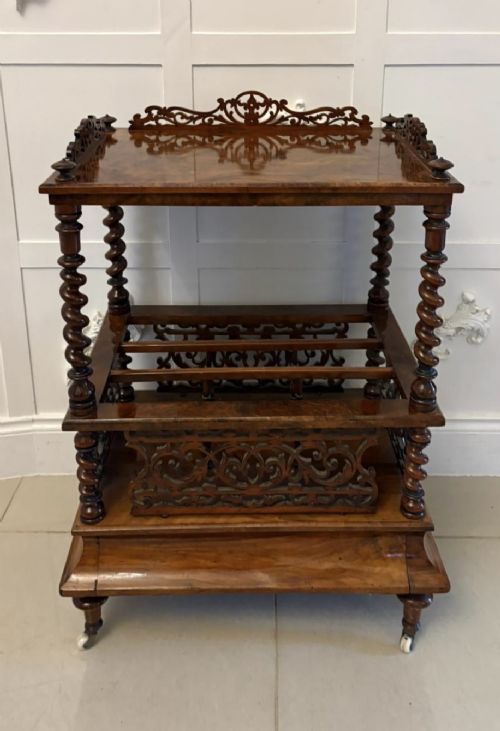
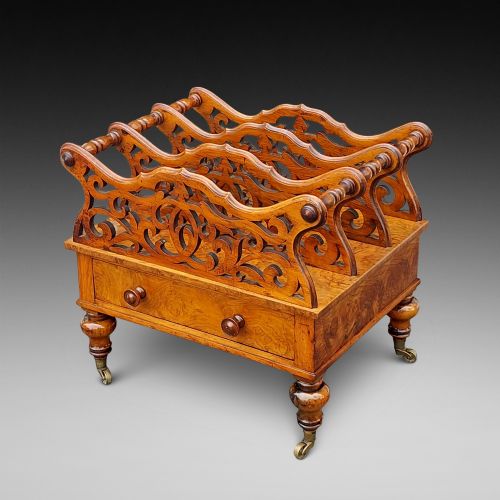
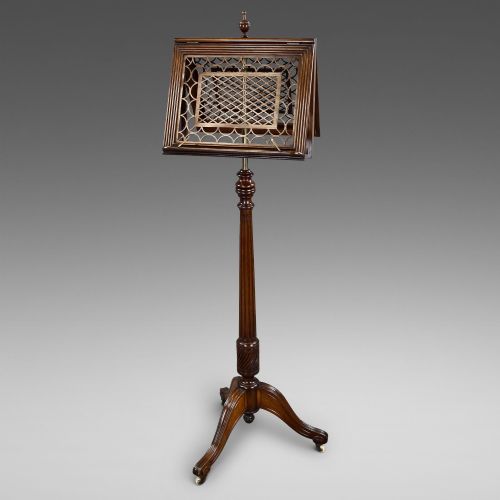
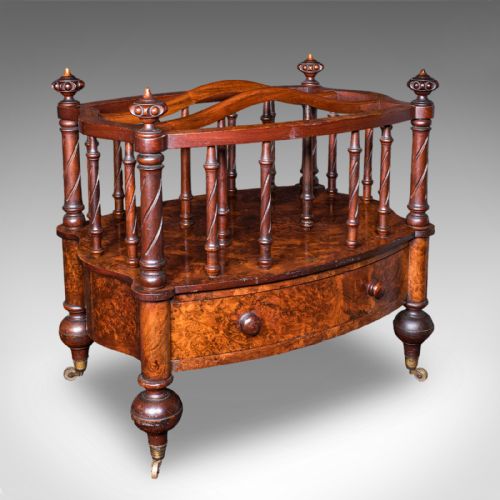
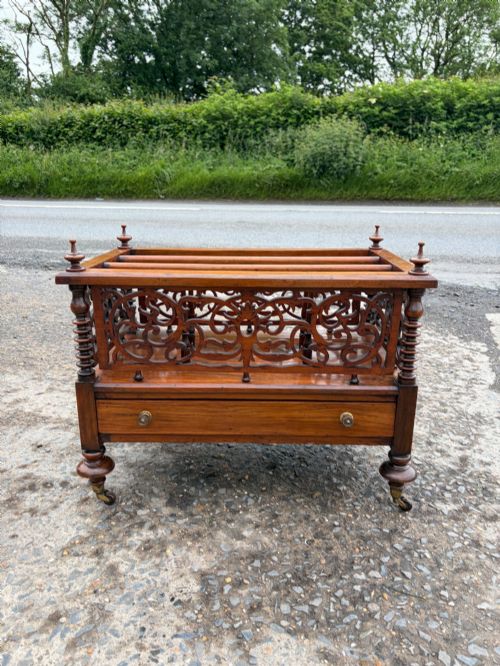
A carved wooden music holder encompasses items designed for sorting sheets, books, and folios, frequently appearing as a Canterbury or a music stand on this page. These pieces date across the nineteenth century, taking forms such as freestanding racks with pierced scroll divisions, tripod lecterns, and low compartments fitted with small drawers. Victorian and Regency examples dominate the selection, showing how domestic spaces accommodated sheet music and periodicals.
The Canterbury serves as the most frequent form encountered here, usually constructed with slatted or pierced divisions above a low drawer and small castors. Alongside these, duet stands and portfolio racks appear in varied woods, designed to hold folios upright or tilt them for performance. Makers built these objects to sit beside pianos or within sitting rooms, combining functional storage with decorative carving.
Materials and construction
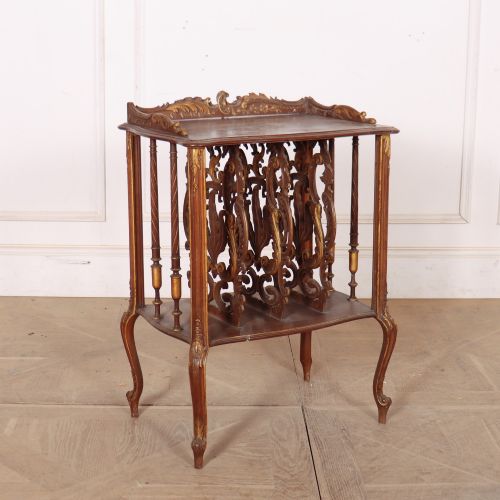
Makers utilised dense timbers like mahogany, rosewood, walnut, and burr walnut, often selecting figured grains to decorate flat surfaces and turned supports. Cabinetmakers shaped these woods into pierced fretwork, lyre forms, and serpentine partitions, sometimes incorporating brass fittings or ceramic castors. In specific Black Forest and Gothic Revival examples, craftsmen applied deep hand carving directly to the solid timber.
Joinery techniques combined pegged frames, dovetailed drawers, and turned spindle galleries to sustain the weight of heavy paper collections. Stands relied on robust tripod bases or slender pillar supports to maintain stability while holding open folios. Surface finishes enhanced the natural tone of the grain through polishing rather than heavy pigment.
Listings span the nineteenth century, concentrating heavily on Victorian and Regency periods with materials such as mahogany, rosewood, and burr walnut.
Variations in quality
Quality rests upon the selection of timber and the precision of the joinery within the partitions and drawer linings. Fine pieces exhibit carefully matched burr veneers, crisply carved foliate details, and well-proportioned fretwork that remains rigid under pressure. Lesser examples rely on plain timber with simpler turned spindles and minimal detailing.
The integration of functional elements such as smooth-running drawers, stable brass castors, and robust hinges distinguishes superior workshop production. Attention to detail on unseen components, including secondary woods and interior drawer construction, separates standard domestic furniture from pieces commissioned for country houses.
Gillows of Lancaster
The Carved Wooden Music Holder Glossary
- Canterbury
- A low stand with upright divisions used originally for sheet music and folios, frequently featuring a drawer below. These pieces often sit on small castors for mobility around a drawing room.
- Duet stand
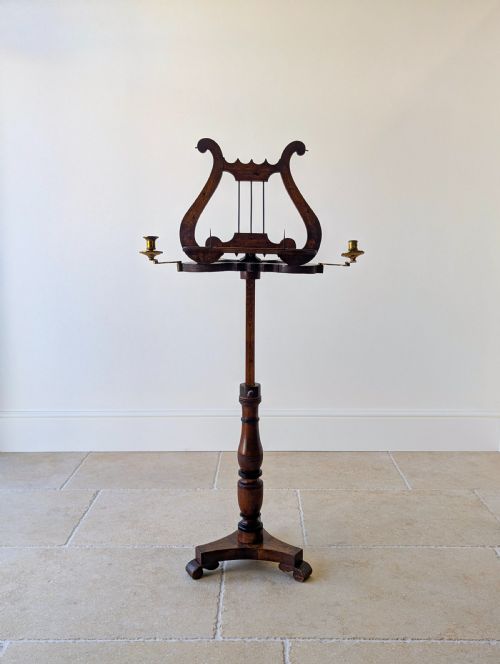
- A music stand designed to hold two scores simultaneously for shared performance. They commonly feature adjustable reading desks mounted on pillar and tripod bases.
- Burr walnut
- A veneer sliced from the woody growths on walnut trees, prized for its swirling knot patterns. Cabinetmakers applied it to tabletops and panel fronts for decorative effect.
- Lyre-form
- A decorative motif shaped like an ancient stringed instrument, often utilised in the upright supports of music stands. This classical shape appeared frequently during the Regency and William IV periods.
- Fretwork
- Thin wood pierced with decorative patterns through sawing, used on the divisions of music holders. It lightened the visual weight of the partitions while keeping papers secure.
Carved Wooden Music Holder: Frequently Asked Questions
What is the difference between a Canterbury and a music stand?
A Canterbury is a low compartmented rack intended for storing sheets and folios on the floor, often fitted with a drawer and castors. A music stand places the reading surface at standing or sitting height, supported by a pillar and tripod base for performance.
While Canterburys keep scores tidily enclosed in vertical partitions, music stands support an open book or portfolio at an angle. Both served similar domestic functions in nineteenth-century music rooms but occupied different footprints within the interior.
How do I distinguish Regency from Victorian pieces?
Regency music holders typically display classical restraint, utilising mahogany or rosewood with brass inlay, sabre legs, and architectural lines. Victorian examples tend to be heavier in proportion, favouring burr walnut, elaborate fretwork, and rich foliate carvings.
Cabinetmakers of the Regency period leaned towards clean geometric forms influenced by classical antiquity. By the Victorian era, styles shifted towards Revival aesthetics and more exuberant surface ornamentation.
What timbers were used for these holders?
Makers relied on durable hardwoods including mahogany, rosewood, walnut, and oak, alongside decorative veneers like burr walnut. Rarer timbers such as Gonçalo Alves and satinwood also appear in specific Regency and Victorian examples.
These woods were chosen for their ability to take a fine polished finish and support structural fretwork without warping. Darker exotic timbers predominated during the earlier decades, while figured walnut gained popularity later in the nineteenth century.
How were these pieces used in period homes?
Music holders stood beside pianos, harps, and reading chairs to keep sheet music, newspapers, and portfolios organised and accessible. Their compartmented designs allowed performers to sort scores by composer or instrument.
In drawing rooms and country houses, they doubled as occasional tables or display surfaces for decorative objects. The inclusion of castors enabled servants or residents to move the stands easily around the room as needed.