



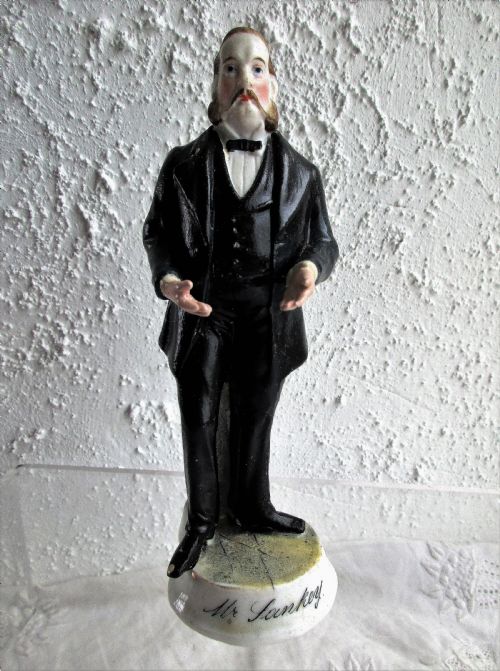

Antique Flatback Pottery
These antique flatback pottery figures are nineteenth-century Staffordshire ornaments designed to decorate mantelpieces with portraits, animals, and historical scenes.
Antique Flatback Pottery
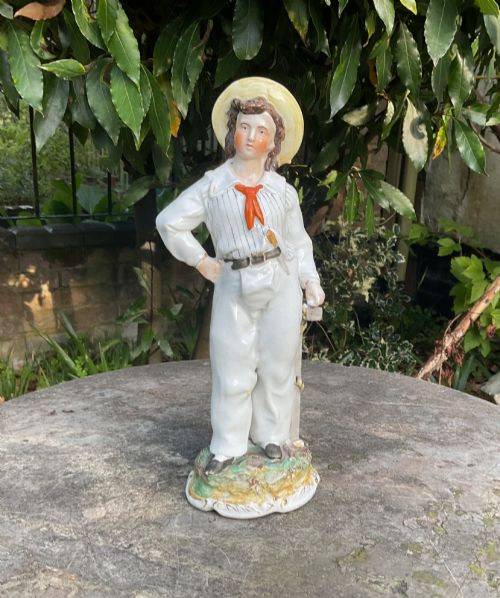
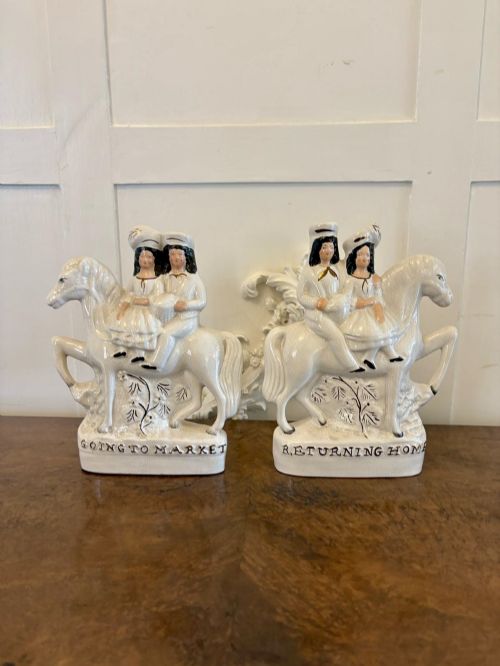
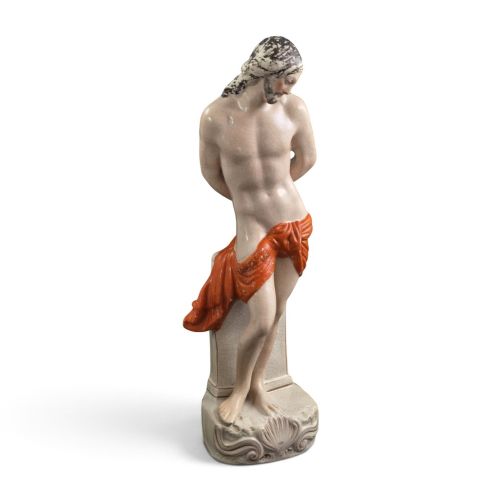
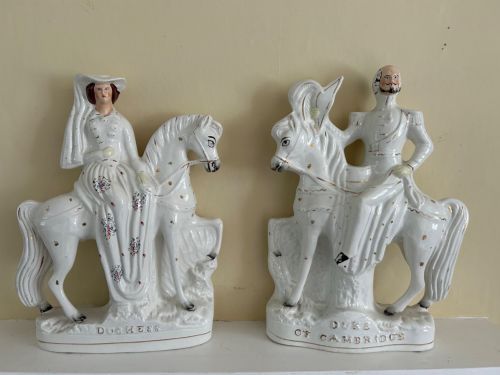
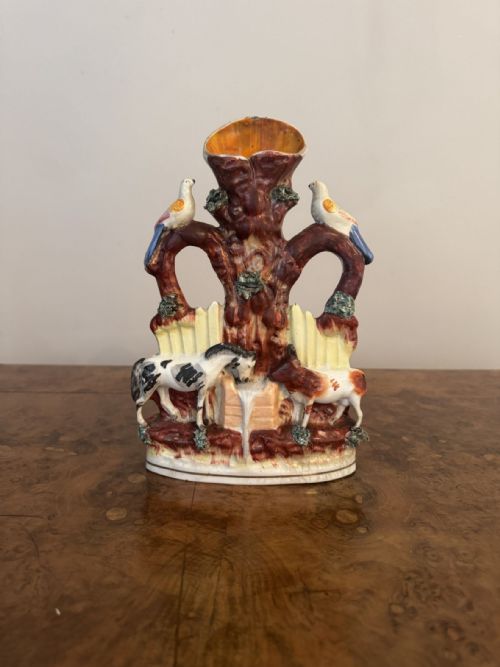
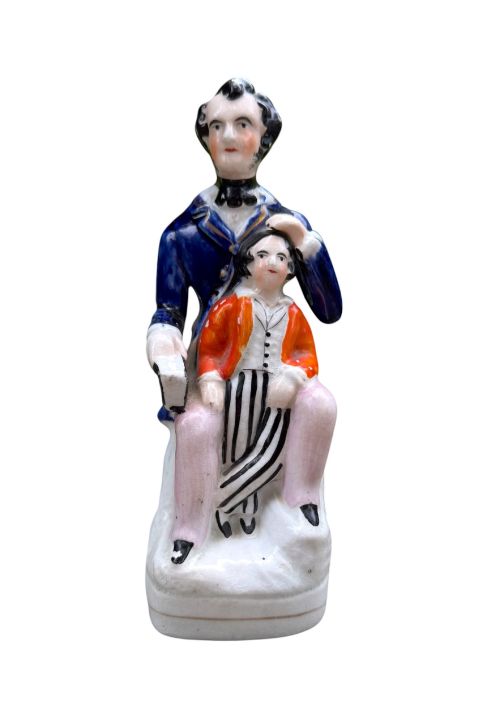
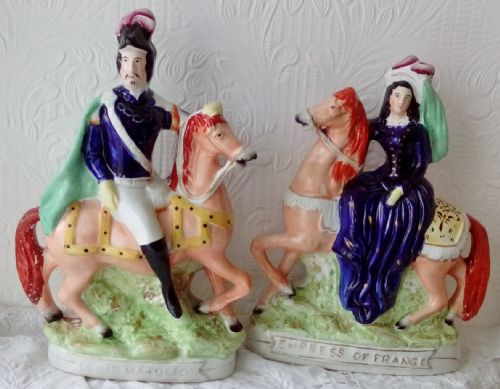
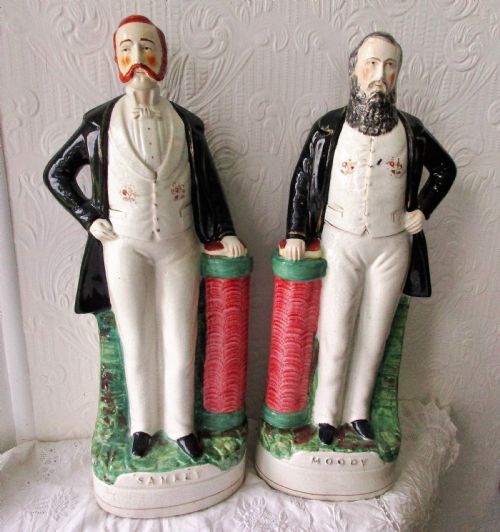
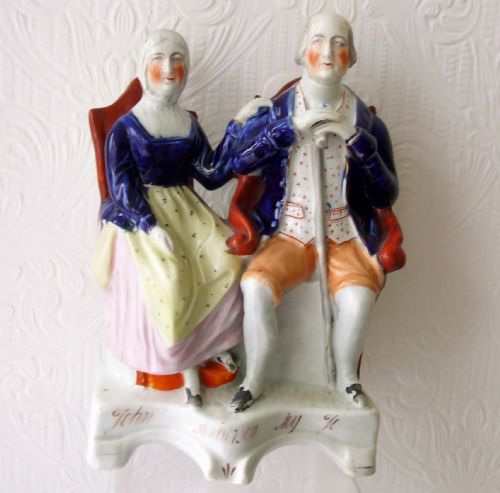
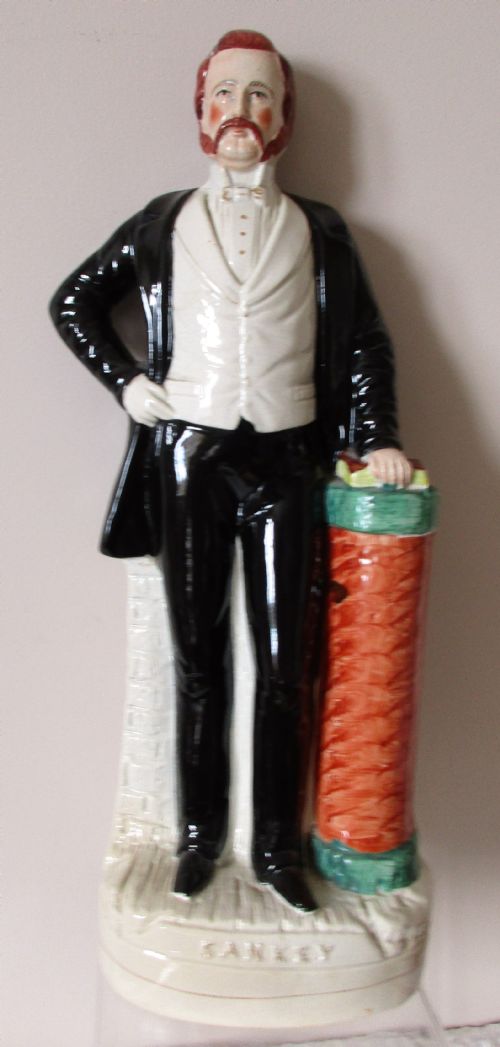
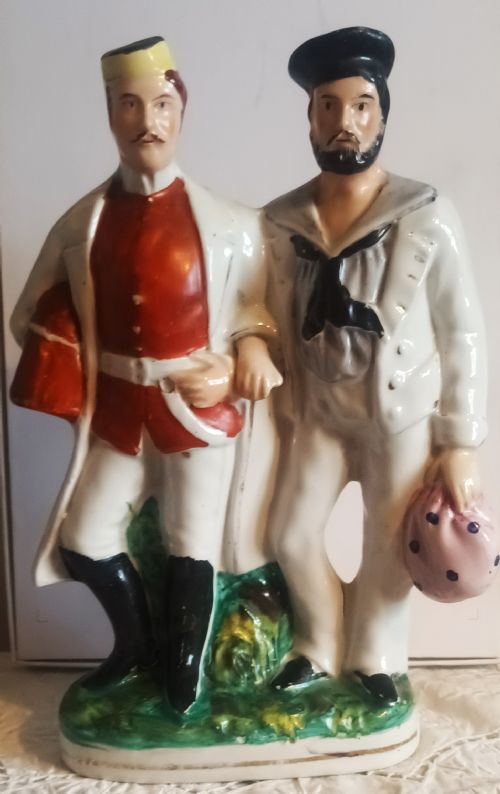
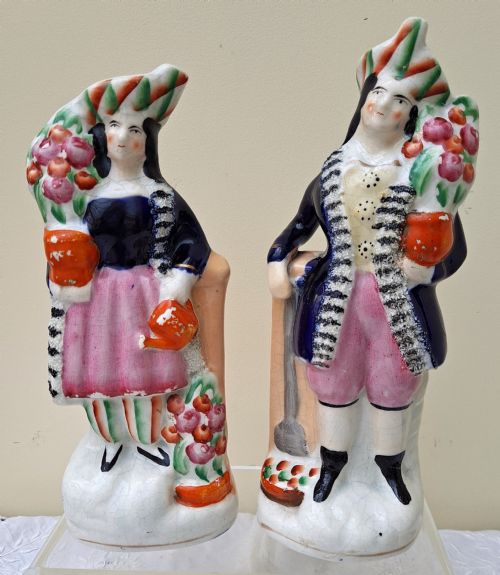
When you search for antique flatback pottery, you find Victorian earthenware figures made primarily to stand on shelves and mantelpieces where only the front mattered. The most common examples on this page are Staffordshire figures, ranging from royal portrait groups and military heroes to pastoral couples, cottages, and animal spill vases.
The subjects span historical events, theatrical personalities, and domestic scenes, capturing popular culture of the nineteenth century. Makers modelled these pieces to be viewed from the front, leaving the flat or semi-flat backs unglazed or minimally finished.
Figurines and pairs dominate the selections, alongside functional spill vases and watch holders modelled as castles or animals. These ceramics serve as direct records of Victorian public interest, commemorating everything from the Crimean War to local folklore.
How they were made
Potters shaped these earthenware figures using press moulds, joining front and back halves before applying lead glaze and enamel paint. Artisans finished the pieces with hand-painting and touches of gilt, giving each ceramic figure its individual character.
The materials rely on earthenware and ceramic bodies coated in glossy lead glazes that catch the light on a mantelpiece. Enamel colours and gilding were added over the glaze, sometimes requiring a second low-temperature firing to fix the palette.
Antique Flatback Pottery Retail Price Guide 2026
Typical asking prices for flatback pottery among the pieces listed under this phrase on Sellingantiques today, from the lower quarter to the upper quarter. They describe what is for sale here now, not the wider market.
Victorian mantelpieces gained lively character from these flatbacks, where Queen Victoria shared shelf space with performing dogs and dramatic castle spill vases.
What varies in quality
Larger or more complex compositions, such as equestrian groups and multi-figure royal portraits, require greater skill in the kiln to prevent warping. The distinction between standard output and superior pieces lies in the precision of the modelling and the vibrancy of the remaining enamel.
The Antique Flatback Pottery Glossary
- Flatback
- A figure moulded with a detailed front and a flat or hollow unadorned back designed to sit flush against a wall.
- Spill vase
- A hollow ceramic cylinder incorporated into a figure to hold wooden matches or tapers for lighting fires and pipes.
- Earthenware
- A porous pottery body fired at lower temperatures, requiring a glaze to achieve impermeability.
- Enamel paint
- Coloured glass powder suspended in a medium, applied over the fired glaze to provide bright surface decoration.
Antique Flatback Pottery: Frequently Asked Questions
What is antique flatback pottery?
These pieces are nineteenth-century earthenware ornaments made in Staffordshire with flat backs for mantelpiece display.
They depict royalty, military leaders, animals, and cottages, serving as popular decoration in Victorian homes.
How were flatback figures displayed?
Makers designed these ceramics with flat backs so they could sit securely on narrow mantelpieces or shelves.
They were meant to be seen entirely from the front, often arranged in pairs or balanced groupings.
What subjects do these figures show?
The subjects cover Victorian life comprehensively, including royal portraits, military campaigns, theatrical acts, and temperance themes.
Animals, country couples, and architectural spill vases like castles also appear frequently across the listings.
How do I identify Victorian pieces?
Victorian dating relies on the earthenware body, lead glaze, and subject matter tied to nineteenth-century historical events.
Stylistic markers include hand-painted enamel colours, gilt highlights, and characteristic Staffordshire moulding techniques.