
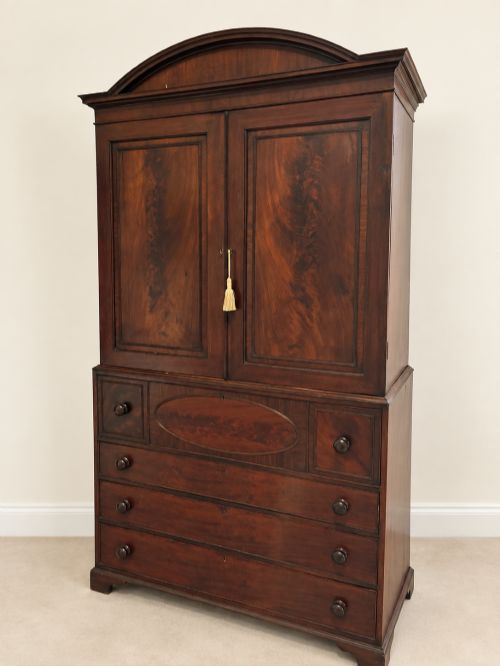
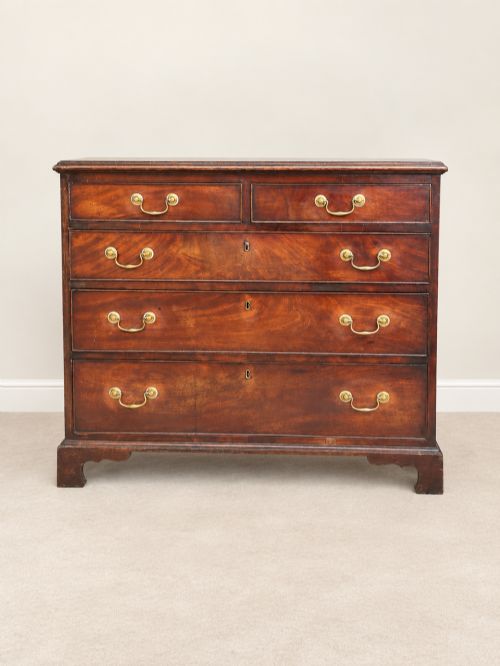
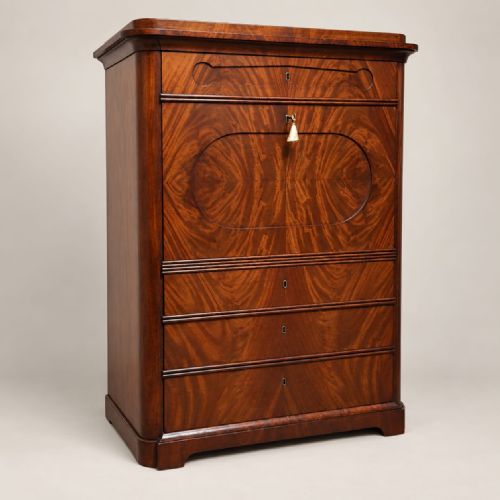
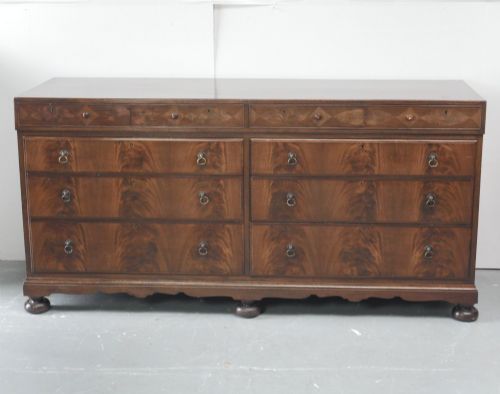

Antique Flamed Mahogany Drawers
These antique flamed mahogany drawers combine rich timber figuring with functional storage, offering a striking focal point for traditional and modern rooms alike.
Antique Flamed Mahogany Drawers
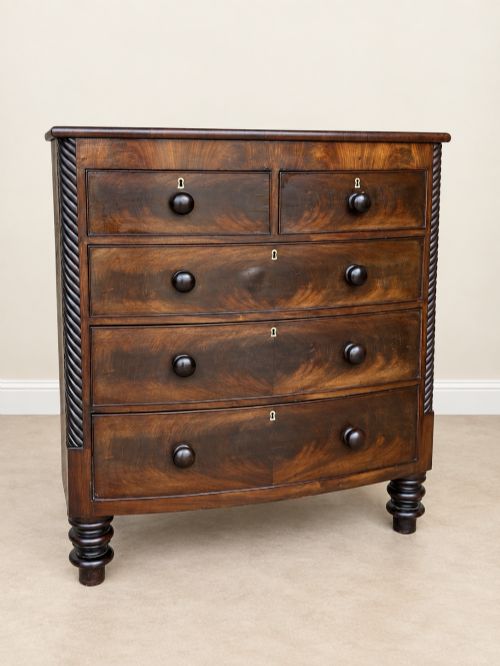
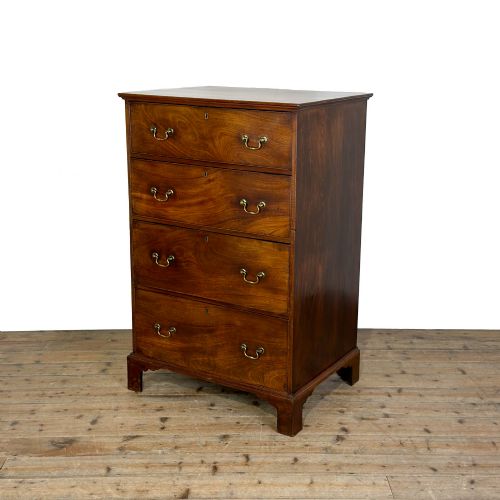
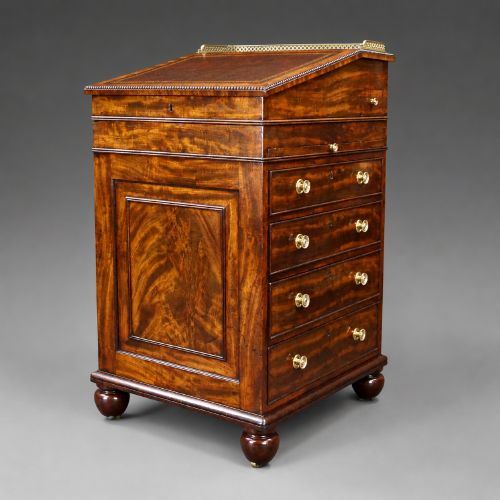
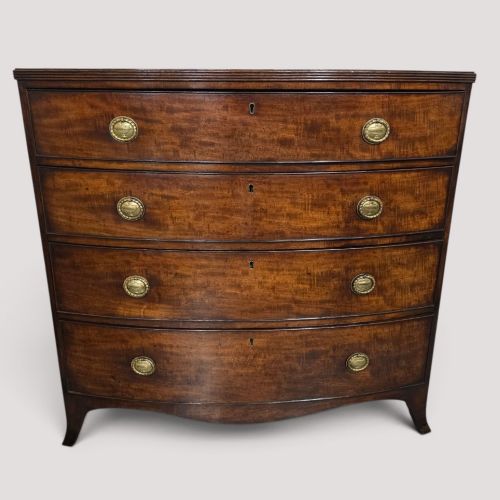
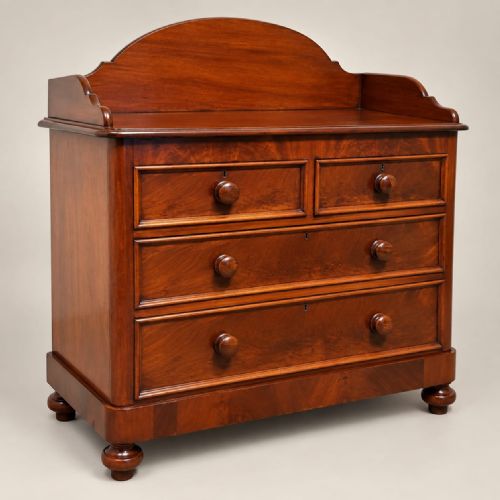
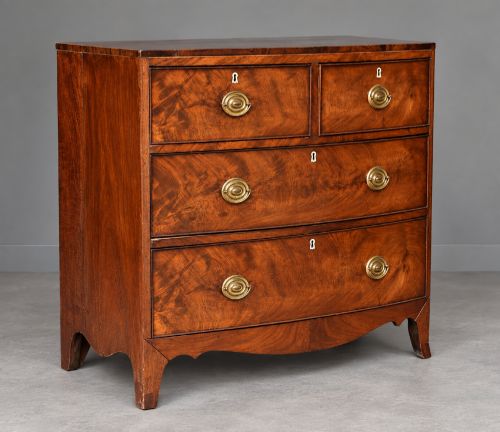
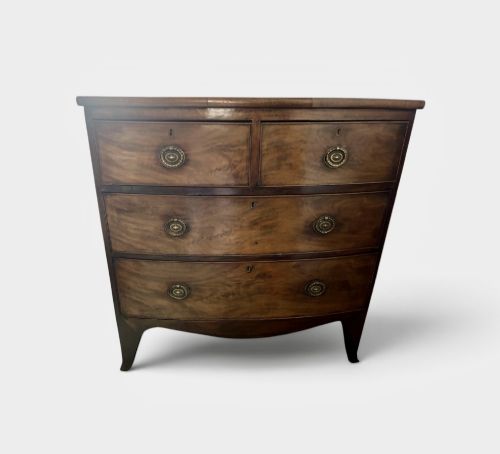
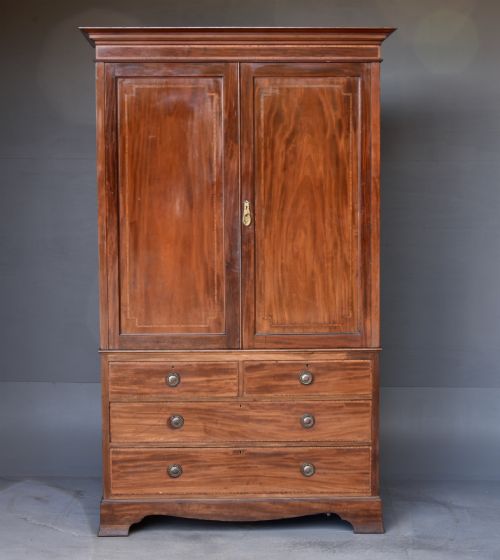
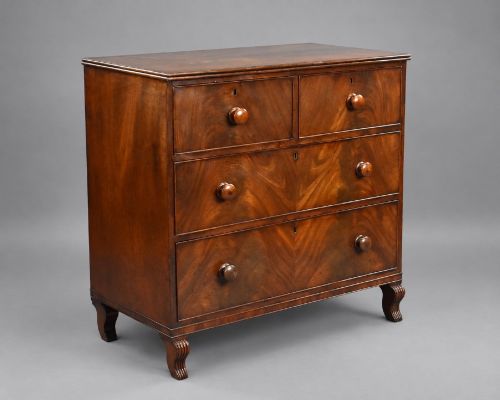
When searching for antique flamed mahogany drawers, buyers encounter a variety of forms spanning the Georgian, Regency, Victorian, and Edwardian periods. Chests of drawers dominate the selection, ranging from bow-fronted designs to grand Scotch chests and tallboys.
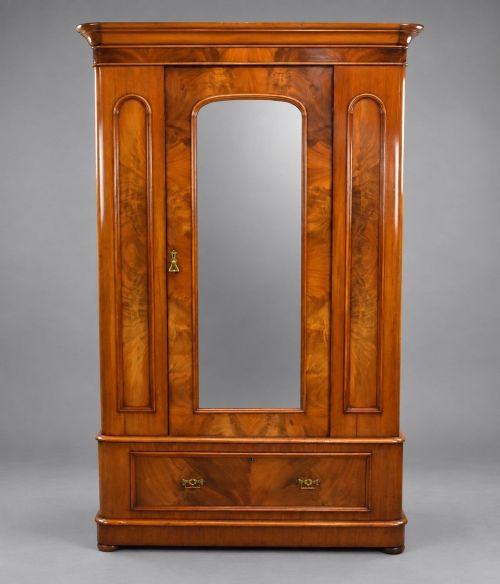
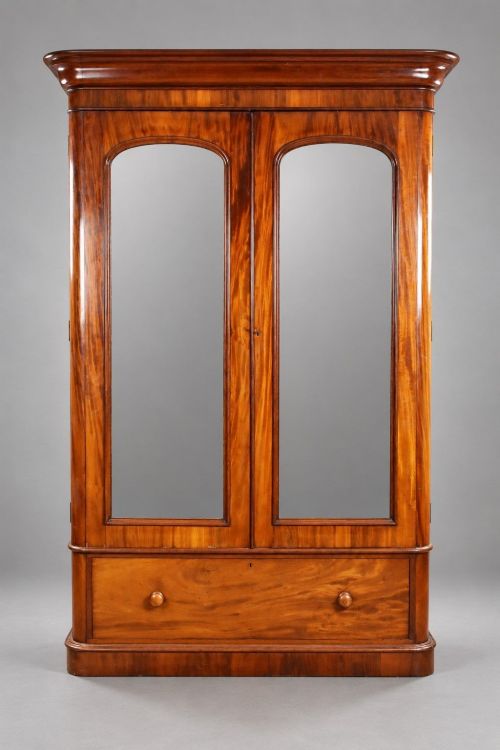
Makers also applied this figured timber to specialised items such as bedside tables, wardrobes, sideboards, dressing tables, and writing desks. Pieces frequently incorporate secondary woods like oak alongside the primary mahogany veneers.
How They Were Made
Cabinetmakers utilised flame mahogany veneer applied over solid underlying timbers to create dramatic, swirling grain patterns on drawer fronts and surfaces. Brass hardware, including handles and escutcheons, frequently complements the deep reddish-brown tones of the wood.
Construction techniques often involved solid oak for drawer linings and internal frames, ensuring structural stability. Selected pieces also integrated contrasting satinwood stringing or marble tops to enhance the visual design.
Gentlemen's wardrobes included specialised internal sliding trays designed to keep folded neckwear crisp before the invention of the modern ironing board.
What Varies in Quality
The intensity and symmetry of the wood figuring largely dictate the visual impact of each piece, with expertly matched flame patterns achieving a more cohesive appearance. Superior examples display meticulous attention to proportion, particularly in curved bow-front or serpentine outlines.
The integrity of the veneer work and the preservation of original brass fittings significantly influence the overall standard. High-grade construction is evident in smooth drawer operations and robust secondary framing timbers.
Gillows·Whytock & Reid·Maples & Co
The Antique Flamed Mahogany Drawers Glossary
- Flame Mahogany
- A veneer cut from the branch forks of the mahogany tree, displaying a distinctive, flickering flame-like grain pattern. This timber was highly prized for principal display surfaces on case furniture.
- Bow Front
- A convex curved cabinet front popular during the Georgian and Regency eras. This shape softens the profile of a chest of drawers.
- Serpentine
- A cabinet front featuring a gently undulating contour with a convex centre flanked by concave curves. It requires advanced woodworking skill to veneer successfully.
- Tallboy
- A tall storage unit comprising one chest of drawers stacked upon another, or a wardrobe configuration. These pieces maximise vertical storage capacity in bedrooms.
- Scotch Chest
- A large chest of drawers originating from Scotland, frequently featuring a deep top drawer over multiple smaller drawers and vigorous wood figuring.
Antique Flamed Mahogany Drawers: Frequently Asked Questions
How do I care for antique mahogany furniture?
Keep wooden surfaces away from direct sunlight and radiators to prevent the timber and veneer from drying out or splitting. Apply a quality beeswax polish periodically to maintain the natural lustre of the finish.
Avoid using modern liquid sprays containing silicone, which can penetrate porous old finishes and damage the wood over time. A soft, dry cloth is sufficient for routine dusting.
What is the difference between a tallboy and a chest on chest?
A chest on chest consists of two distinct cabinet sections stacked vertically, typically combining a smaller upper chest with a larger lower base. This form provides substantial drawer space while maintaining formal proportions.
In contrast, a tallboy often refers to a single tall standing chest of drawers, though historical regional variations in terminology sometimes overlap between the two designs.
How can I date a mahogany chest of drawers?
Examine the construction methods of the drawer boxes, noting whether dovetails are hand-cut and irregular, which generally indicates an 18th or early 19th-century origin. Secondary woods like oak inside the piece also offer clues regarding the period of manufacture.
Stylistic markers such as bracket feet, ogee bracket feet, or turned knob handles align with specific eras from Georgian to Victorian times.
Where should I place a bow front chest?
Bow front chests serve well in bedrooms as primary storage or in hallways where the curved profile softens narrow walkways. Their finished backs and refined proportions also allow them to sit flush against living room walls.
Ensure the placement protects the protruding central section from heavy household traffic or accidental bumps that could chip the delicate edge veneers.