


Mahogany 2 Over 3
When searching for mahogany 2 over 3, a buyer encounters traditional case furniture structured with two smaller upper drawers above three larger lower ones.
Mahogany 2 Over 3
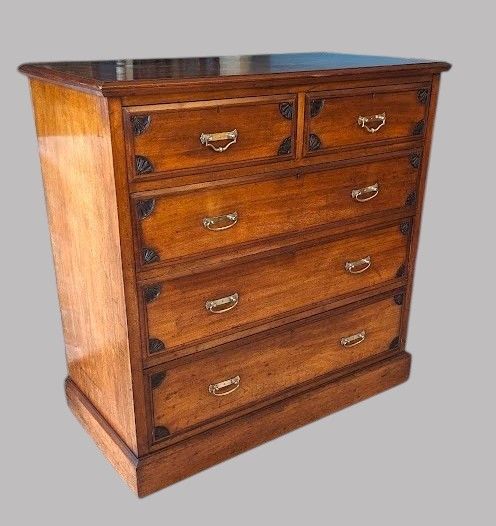
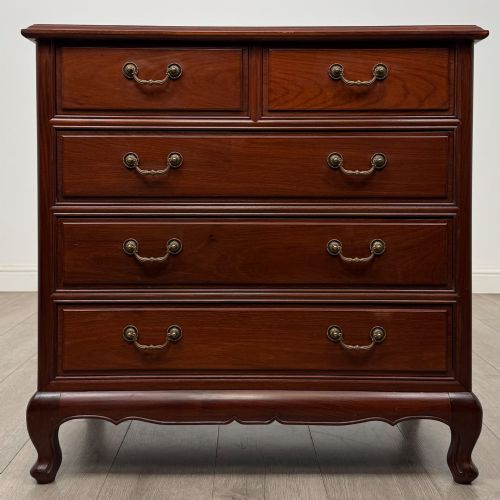
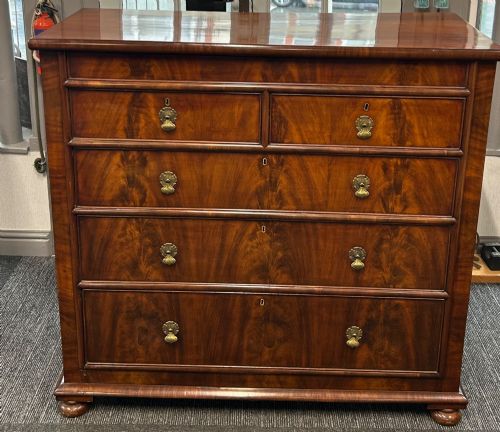
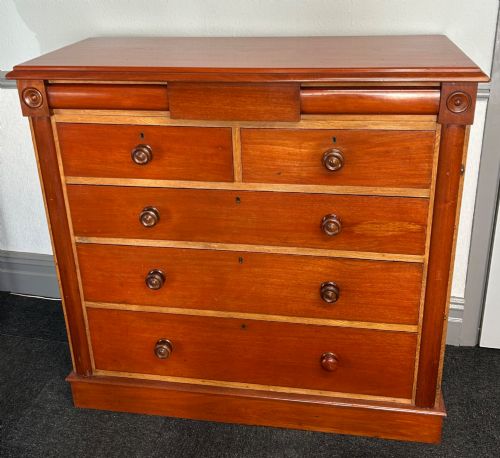
A search for mahogany 2 over 3 leads primarily to chests of drawers spanning the Georgian, Regency, and Victorian periods. These storage pieces feature a balanced facade where a pair of compact top drawers sits directly above a trio of graduated full-width drawers.
Makers designed these chests in both straight fronts and bow fronts, occasionally incorporating crossbanding or stringing in satinwood and boxwood. The proportion offers generous storage capacity while maintaining a manageable footprint within a domestic bedroom or hallway.
Materials and Construction
Cabinetmakers utilised solid mahogany alongside flame mahogany veneer to create rich figure and depth on the primary surfaces. Secondary structural elements commonly incorporate oak or general hardwoods.
Hardware details typically involve brass drop handles or knobs, while drawer construction relies on traditional dovetailed joints. Inlays of satinwood and boxwood frequently accent the borders of drawer fronts and tabletops.
A clockmaker named William Long recorded time with brass hands.
Markers of Distinction
The choice of timber grain defines much of the visual appeal, with highly figured flame mahogany commanding greater interest than plain stock. Crisp execution of inlay work and the retention of original brass hardware elevate individual examples.
Secondary wood selection and structural integrity within the drawer linings indicate the standard of workshop production. Surface finishing that displays natural depth and patina rather than heavy restoration preserves the integrity of the piece.
J Moorcroft·Johnstone & Jeanes·William Long
The Mahogany 2 Over 3 Glossary
- Flame mahogany
- A veneer cut from timber where the grain creates a distinctive flame-like pattern. This figured wood appears frequently on drawer fronts and tabletops.
- Bow front
- A convex curved cabinet front that projects outward in the centre. This shape softens the rectilinear profile of a chest of drawers.
- Crossbanding
- A strip of veneer applied across the grain of the primary surface to form a decorative border. Cabinetmakers often used contrasting timbers like satinwood for this purpose.
- Dovetail
- A joint formed by interlocking wedge-shaped fingers used to secure drawer corners. Hand-cut dovetails indicate traditional period construction.
- Stringing
- Thin inlaid lines of contrasting wood used to outline panels and drawer edges. Boxwood and satinwood provide the pale contrast against dark mahogany.
Mahogany 2 Over 3: Frequently Asked Questions
What does 2 over 3 mean?
The phrase describes the internal arrangement of drawers within a chest, specifically two half-width drawers placed side by side above three full-width drawers below.
This proportion provides convenient compartmentalisation for smaller items at the top and deeper storage capacity in the lower section.
Which woods are used?
Pieces are constructed predominantly from mahogany, often utilising figured veneers such as flame mahogany across the primary display surfaces. Secondary timbers like oak appear in structural elements and drawer linings.
Contrasting woods including satinwood and boxwood are employed for decorative stringing and inlaid borders.
How do I date a chest?
Dating relies on observing construction methods, handle styles, timber choice, and overall architectural proportions. Georgian examples often display straighter lines and hand-cut dovetails, while Victorian pieces may feature bolder bow fronts and different handle turnings.
Comparing the secondary woods and secondary framing techniques provides further clues regarding the era of manufacture.
Where should I place one?
These chests suit bedrooms, landings, and living rooms where surface display space and concealed storage are both required. Their balanced proportions allow them to sit comfortably against walls without dominating smaller interior layouts.
The flat top surface accommodates lamps, mirrors, or decorative objects while keeping everyday items organised within the drawers.