


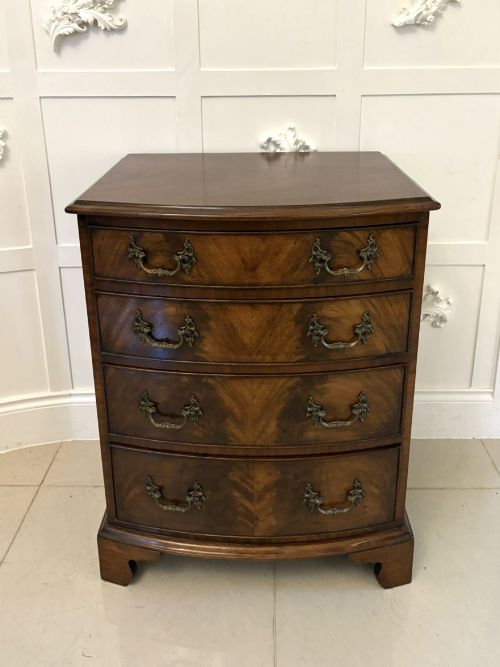
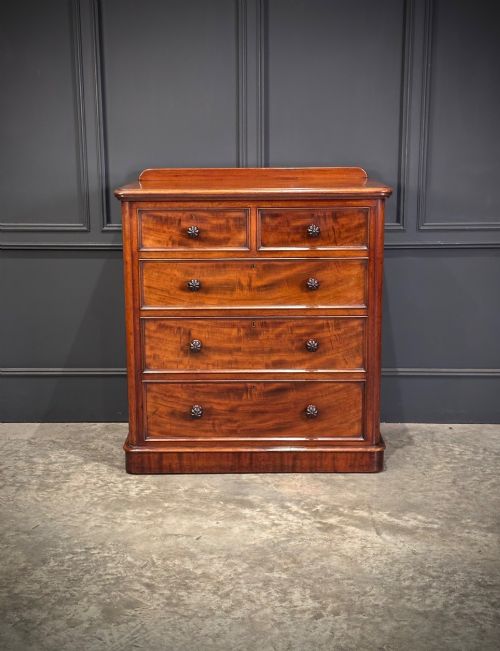
Antique Flame Mahogany Chest
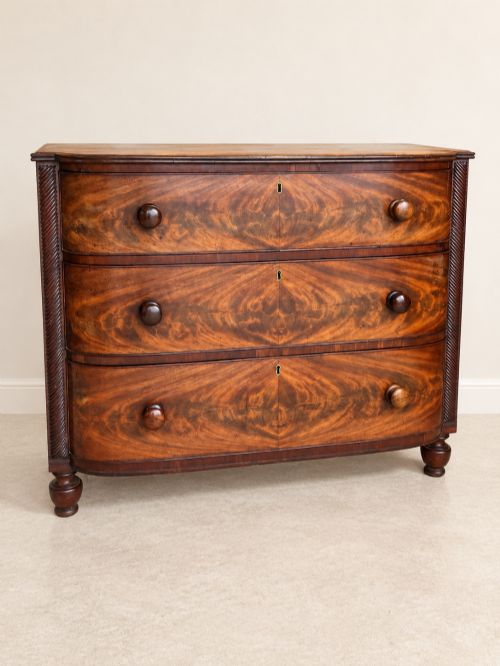
An antique flame mahogany chest brings striking grain movement and rich depth into a room, offering practical storage with distinct period character.
What an antique flame mahogany chest is
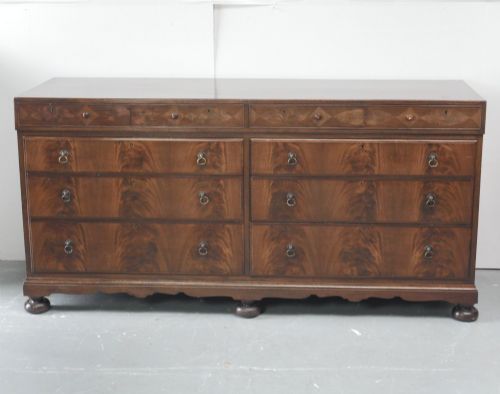
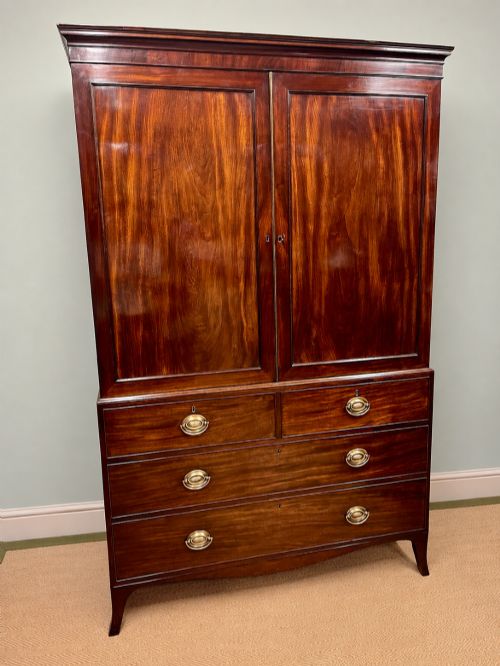
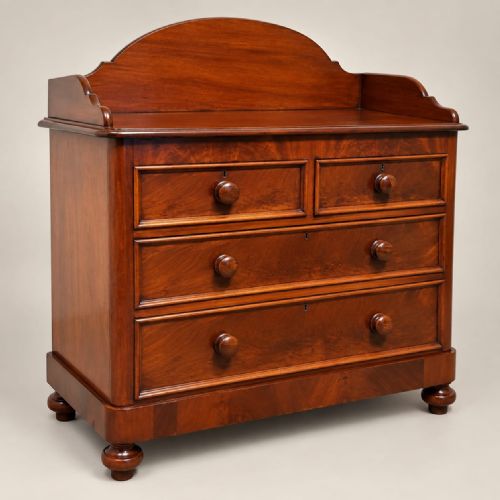
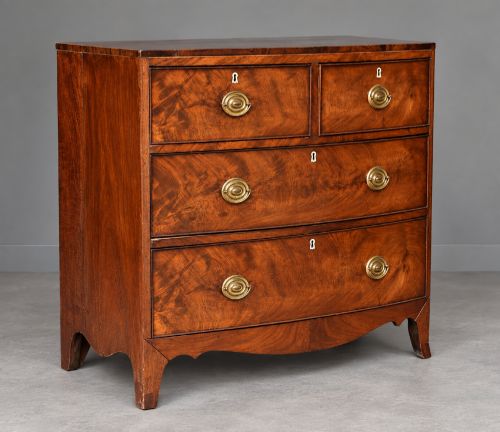
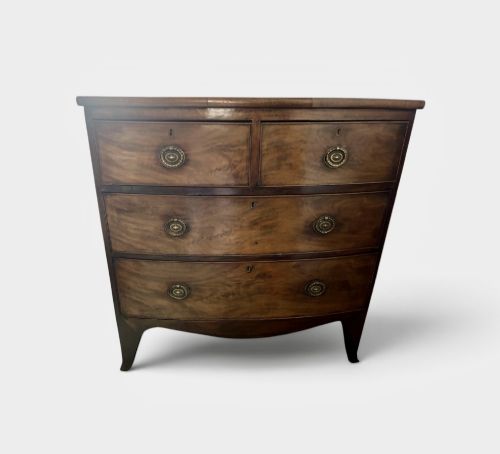
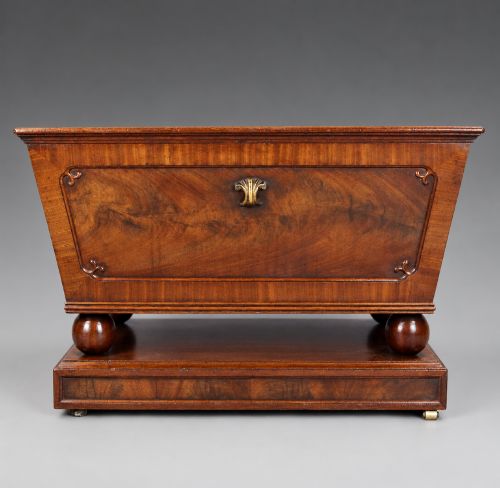
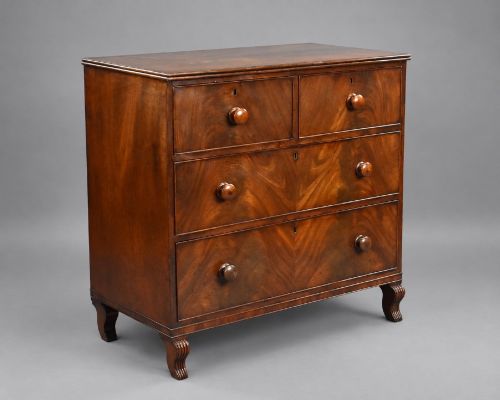
When you search for an antique flame mahogany chest, you encounter practical storage pieces built across the Georgian, Regency, Victorian, and Edwardian periods, as well as the early twentieth century. These include straight-fronted chests, large Scottish chests with multiple drawers, compact bedside cabinets, commodes with marble tops, and tall chest-on-chest forms.
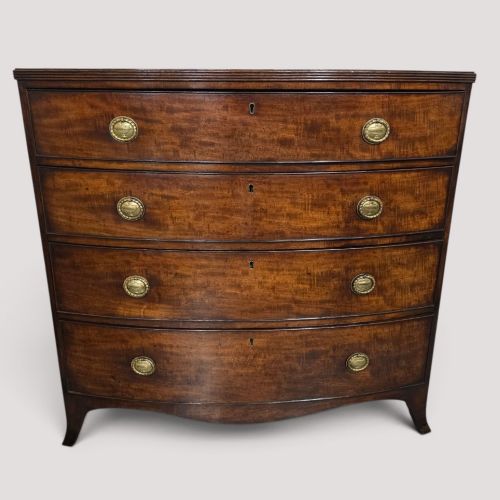
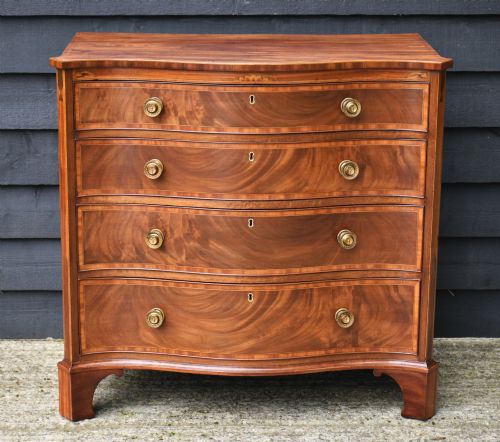
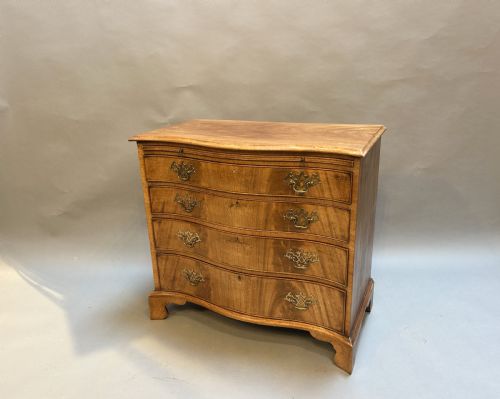
The Victorian examples and substantial Scottish formats appear most frequently on this page, often showing deep drawer configurations and bold turned legs. Alongside these, you find bow-fronted and serpentine shapes that curve gently outward or inward, adding sophisticated movement to the classic rectangular silhouette.
Makers and craftsmen utilised native and exotic timbers to construct these storage items, frequently lining the interior compartments with secondary woods such as oak or pine. The resulting furniture ranges from modest provincial pieces to grand scale proportions designed for principal bedrooms.
How they were made
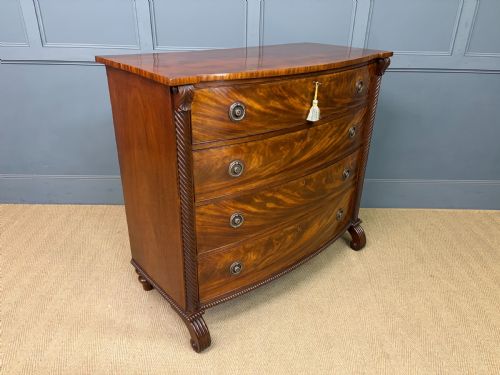
Cabinet makers applied thin veneers of figured mahogany over solid secondary carcase timbers, slicing the timber from the point where the branch meets the trunk to create the characteristic flame or feather pattern. This demanding technique required precise hand-laying to match the grain across drawer fronts and create symmetrical, fiery visual effects.
Structural elements incorporated solid mahogany, oak, and pine for framing, drawer linings, and internal partitions to ensure stability over decades of use. Brass hardware, turned wooden knobs, mother of pearl accents, and inset marble slabs in French commodes completed the construction.
Retail Price Guide 2026
Typical UK retail prices for flame mahogany chest, calculated from the Sellingantiques database of over a million retail prices indexed since 2003. This retail price guide relies exclusively on Sellingantiques data; no external sources or auction records are used, so the figures do not describe the wider market.
The listings on this site span the 18th, 19th, and early 20th centuries, covering Georgian, Victorian, Regency, and French Empire styles.
What varies in quality
The visual strength of the grain patterning dictates much of the distinction between standard and exceptional pieces, with tightly swirled flame veneers commanding greater presence. Master craftsmen matched these fiery swirls meticulously across multiple drawers, whereas lesser examples display disjointed or interrupted patterns.
Construction methods and secondary woods also separate the grades of furniture. Deeper drawer depth, solid mahogany or oak linings, and integrated structural details like bobbin turnings or fine bracket feet indicate higher workshop standards.
The Antique Flame Mahogany Chest Glossary
- Flame mahogany
- A veneer cut from the fork of a mahogany tree that creates a distinctive, feather-like flame pattern. This decorative surface defines the aesthetic appeal of these chests.
- Bow front
- A cabinet front that curves outward in a convex shape. This style softens the rigid geometry typical of standard storage furniture.
- Serpentine front
- A front configuration featuring a central convex curve flanked by concave sections, or vice versa. It demands advanced cabinet-making skill to execute successfully.
- Scotch chest
- A tall chest originating from Scotland, often featuring a deep top drawer over multiple graduated tiers and bold turned feet. They provide substantial vertical storage capacity.
- Commode
- A low chest of drawers, frequently referencing French pieces topped with marble such as Verde Alpi or grey stone. These items often served dressing or formal parlour functions.
Frequently Asked Questions
How do I style an antique flame mahogany chest?
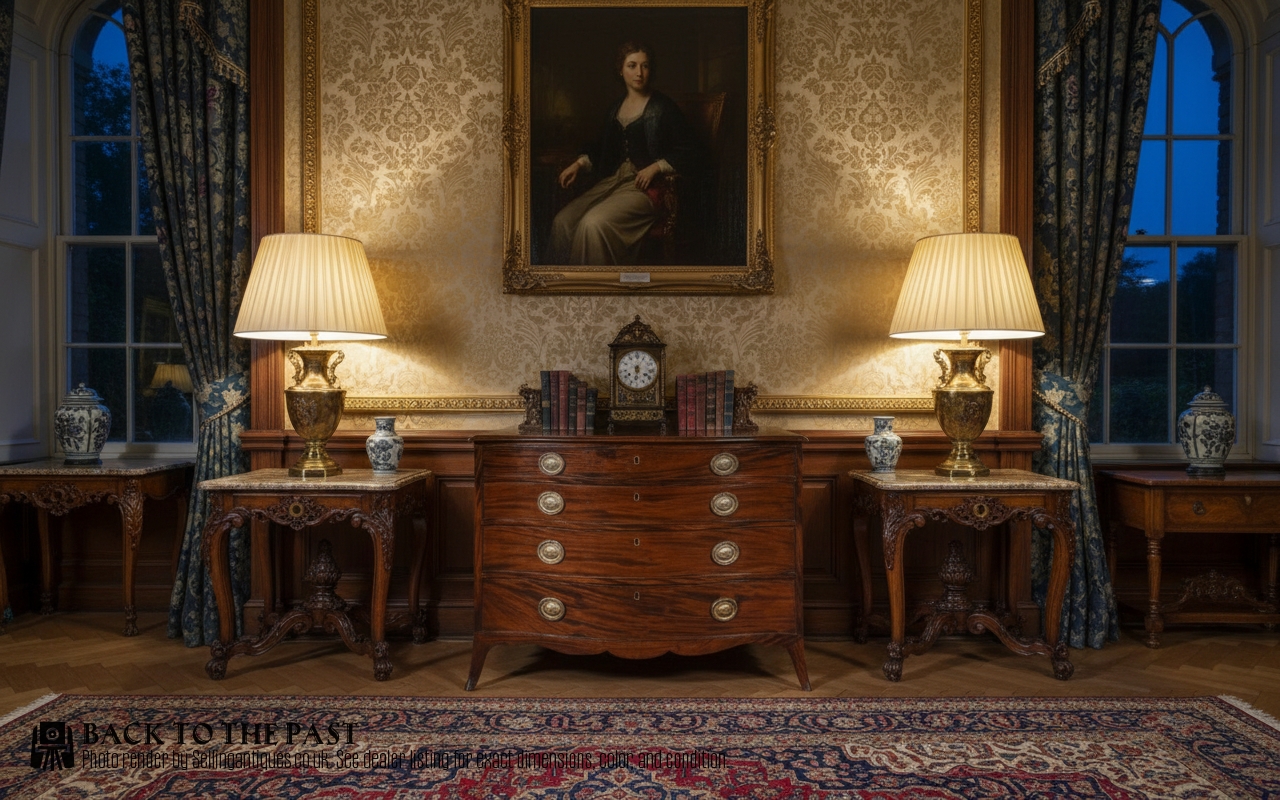
Place the chest against a neutral wall to let the dramatic grain pattern become the focal point of the room. Keep surface accessories minimal so the natural timber movement remains prominent.
Pair the piece with complementary wood tones or contrasting modern textures to balance the deep reddish-brown hues. These chests function effectively in bedrooms, hallways, or living spaces as storage and display surfaces.
What is the difference between Georgian and Victorian chests?
Georgian chests generally display restrained proportions, fine bracket or ogee feet, and subtle stringing inlay. Their construction focuses on understated elegance and balanced rectangular or bow-fronted lines.
Victorian chests frequently scale up in size, particularly Scottish variants, incorporating bolder turned wooden knobs, bobbin turnings, and deeper drawer arrangements. The wood figure on Victorian pieces tends toward high-contrast flame grain.
How do I care for flame mahogany veneer?
Keep the wood away from direct sunlight and heat sources to prevent the thin veneer from drying, splitting, or fading. Maintain a stable indoor humidity level.
Dust the surface gently with a dry, soft cloth and avoid modern silicone polishes that build up residue. Traditional wax applied sparingly helps nourish the timber and preserves the natural sheen.
Are marble top commodes different from standard chests?
French commodes often feature heavy marble tops in shades like grey or Verde Alpi, adding weight and a cool tactile contrast to the warm wood below. These surfaces were practical for washing or placement of heavy decorative objects.
Standard chests rely entirely on wooden tops finished with polish or veneer matching the carcase. The inclusion of marble typically points to continental European workshops from the nineteenth century.