

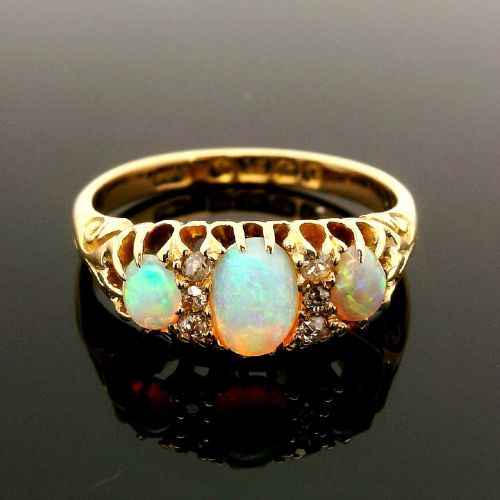
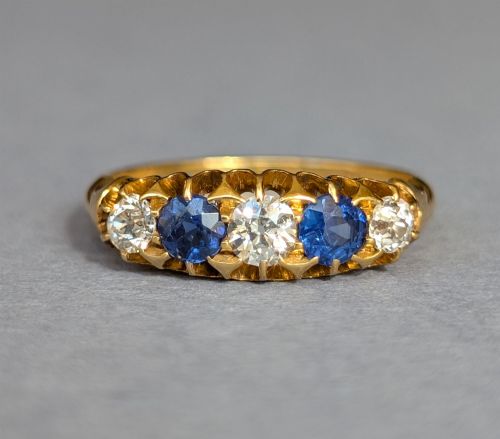
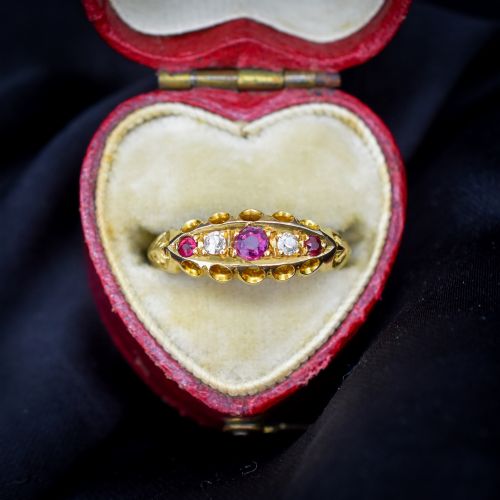
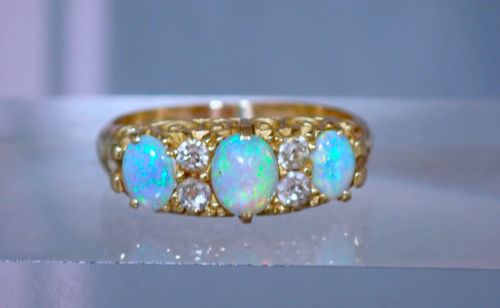
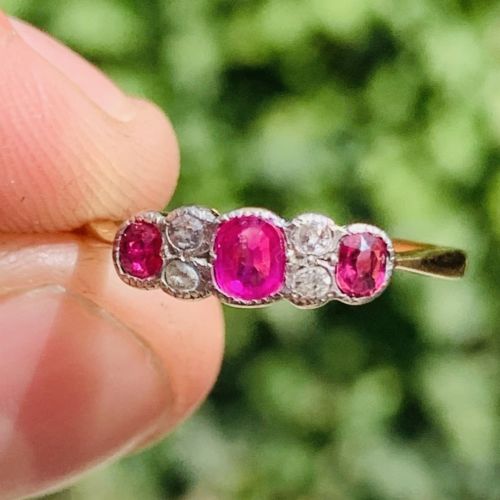
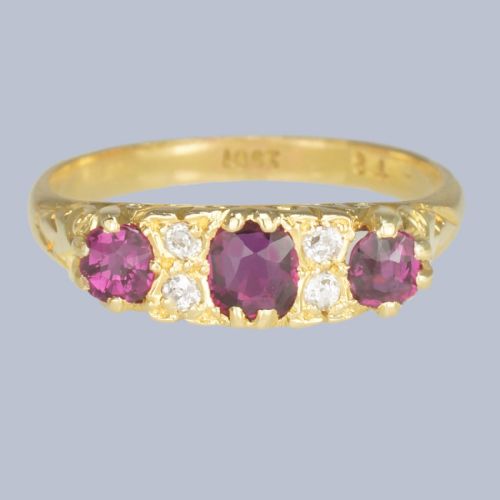
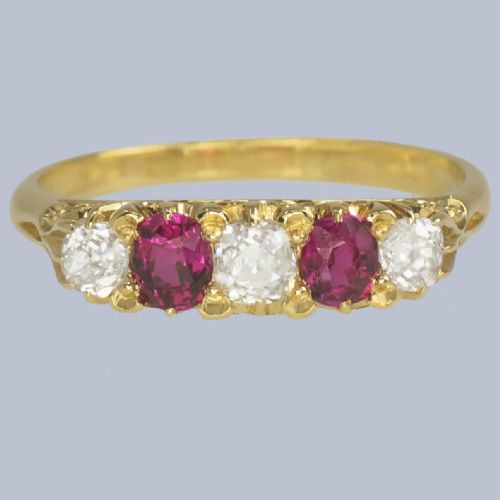
Antique Five Stone Jewellery
Antique five stone jewellery brings together consecutive gems along a finger, most often set as rings in yellow gold through Victorian and Edwardian decades.
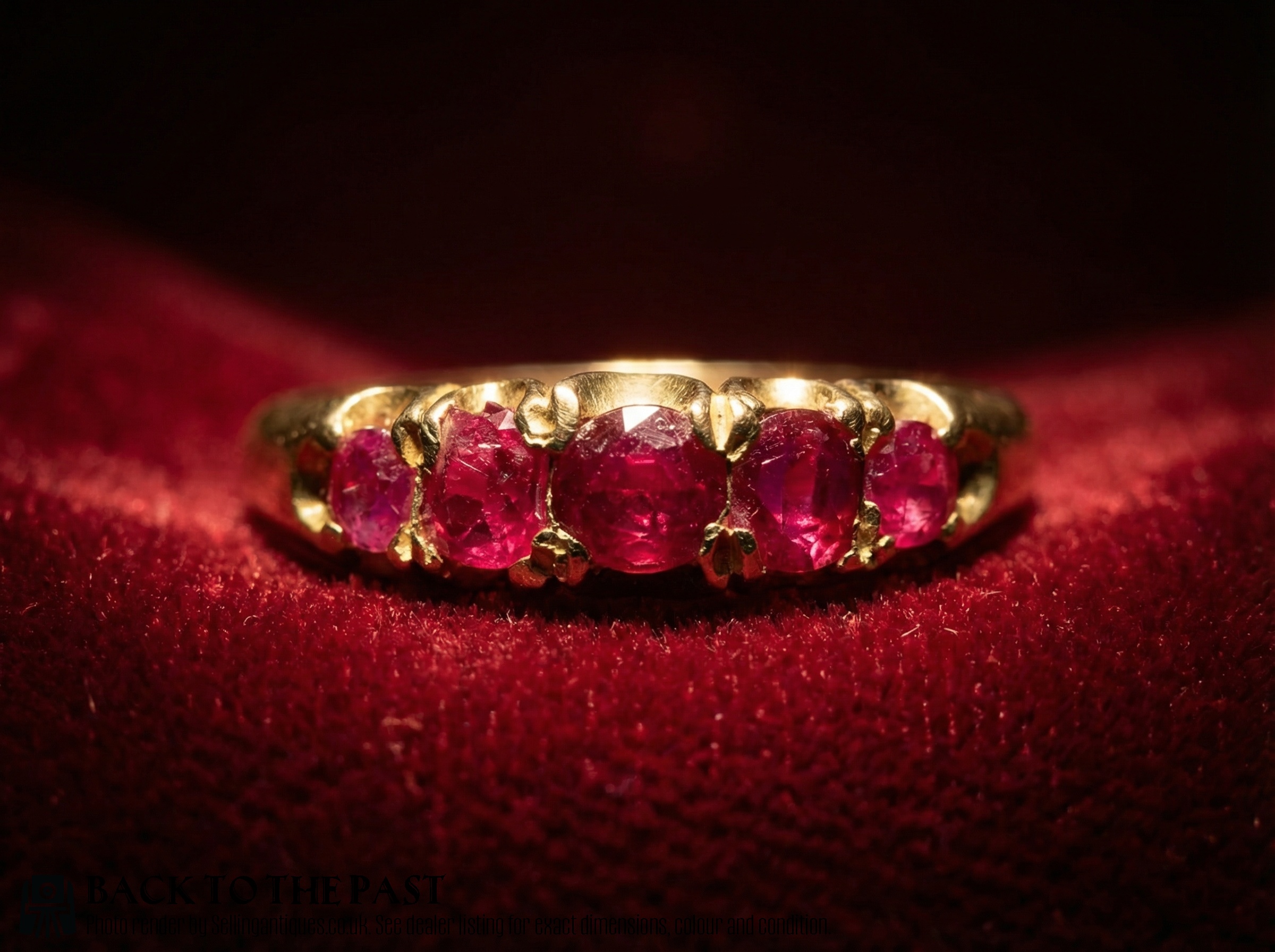
Antique Five Stone Jewellery
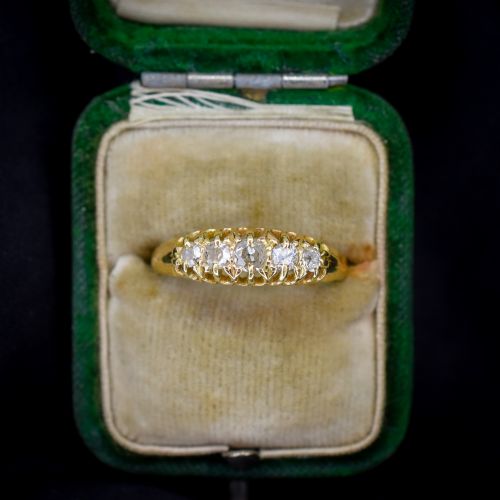
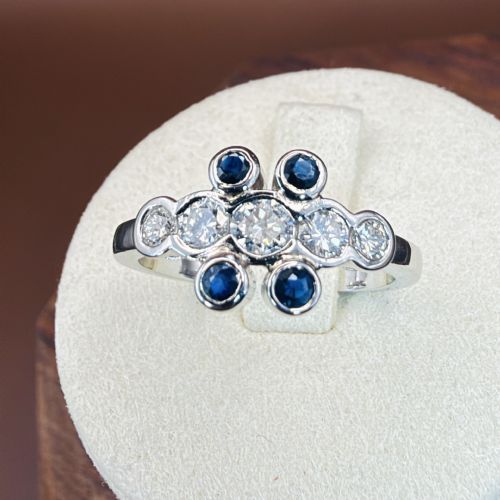
Antique five stone jewellery comprises rings configured with a sequence of five gems arranged in a row across the finger. The selection spans Victorian, Edwardian, and later vintage periods, reflecting changing gemstone preferences through time.
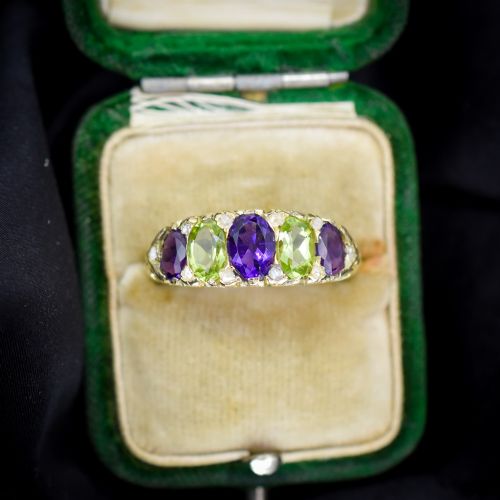
Pieces range from traditional diamond bands to Suffragette rings pairing amethyst, peridot, and diamond. The variety reflects workshops producing stones in graduating or uniform sizes across the band.
Materials and construction methods
Gold forms the primary metal ground, predominantly 18ct yellow gold alongside white gold and platinum variants. Stones are secured in claw settings, boat mounts, or gypsy settings that flush into the metal band.
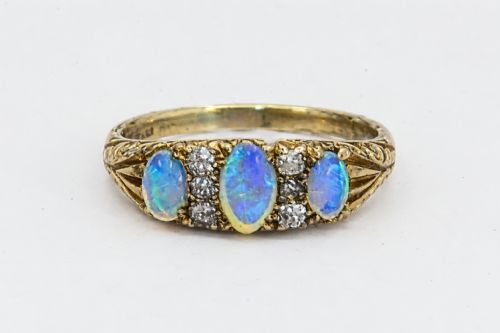
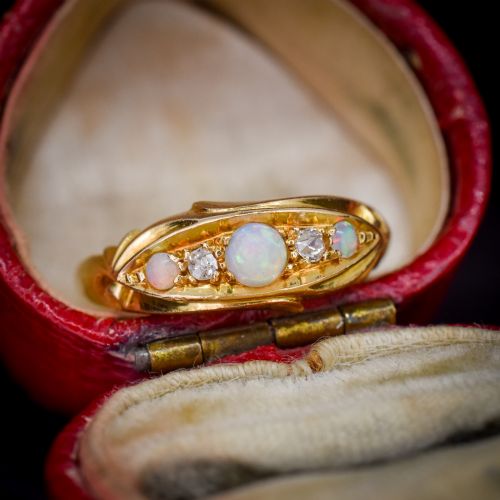
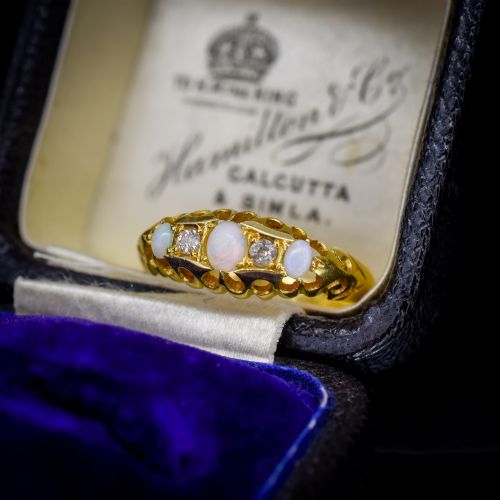
Gem cutting relies on period techniques such as old cut diamonds, old mine cuts, and rose-cut diamonds alongside cabochon opals and turquoise. Metal components often bear hallmarks indicating assay offices in cities like Chester and Birmingham.
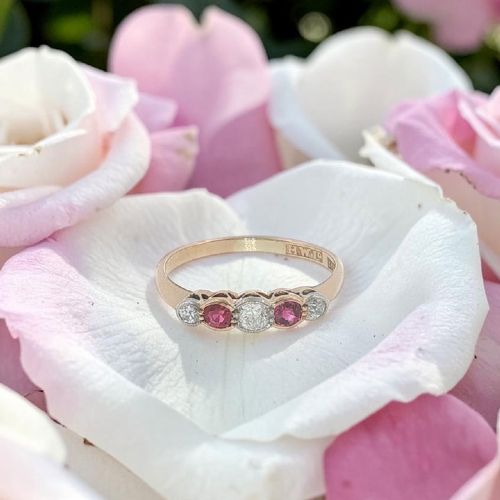
Listings feature 18ct gold prominently alongside platinum, pairing diamonds with rubies, sapphires, opals, and turquoise across Victorian and Edwardian eras.
What distinguishes the quality
Quality rests on the uniformity and matching of the five stones, whether graduating in size or perfectly calibrated across the top of the ring. Stone selection ranges from bright old cut diamonds and vivid Burmese rubies to softer opals and turquoise.
The integrity of the metalwork, from delicate scrollwork on boat rings to solid patterned bands, defines the standard of the piece. Hallmarks and clear maker or town marks add provenance to the construction.
The Antique Five Stone Jewellery Glossary
- Boat ring
- A ring setting shaped like the hull of a boat, curving upward toward the centre to display a row of gems.
- Old cut diamond
- A diamond cut by hand before modern machinery, featuring a smaller table and larger culet that catches candlelight.
- Gypsy set
- A setting where stones are flush-mounted directly into the heavy gold band rather than held in raised claws.
- Half hoop
- A ring design where stones span the upper half of the band in a continuous horizontal line.
- Cabochon
- A gemstone polished to a smooth, rounded dome rather than faceted with flat planes.
Antique Five Stone Jewellery: Frequently Asked Questions
How do I wear an antique five stone ring daily?
These rings suit everyday wear provided the setting remains secure and the stones match the demands of daily activity. Softer gems like opal or turquoise require extra care compared to diamonds or rubies.
Pairing the ring with a plain band prevents rubbing between settings. Regular checks by a jeweller ensure the claws hold each stone firmly in place.
What periods do these rings come from?
The pieces span from the late nineteenth century through the Edwardian era and into mid-twentieth century vintage periods. Victorian and Edwardian examples often feature yellow gold boat mounts.
Later pieces from the mid-century introduce white gold or platinum settings. Hallmarks stamped inside the band help confirm the exact period and origin of manufacture.
Can I resize a five stone antique ring?
Resizing depends on the design of the band and how the stones are distributed across the finger. Rings with stones stretching far down the shoulders require careful work by an experienced specialist.
Plain gold shanks at the back of the band allow a jeweller to add or remove metal easily. Consulting a specialist ensures the structural integrity of the setting remains undamaged.
What is a Suffragette five stone ring?
A Suffragette ring incorporates the colours green, white, and violet to represent the movement for women's suffrage. These typically feature combinations of peridot, diamond, and amethyst.
Finding these stones together in a historic setting links the piece directly to the early twentieth century. The layout follows the standard five stone row configuration.