


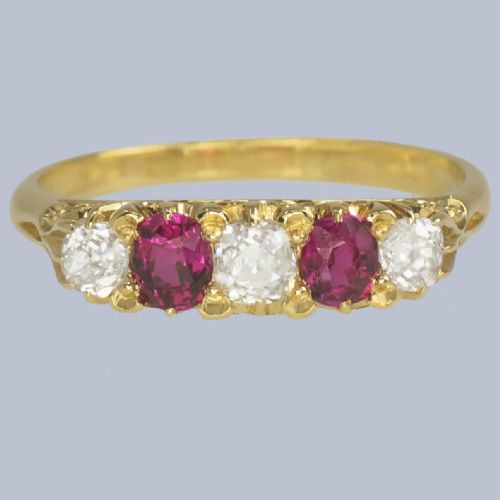
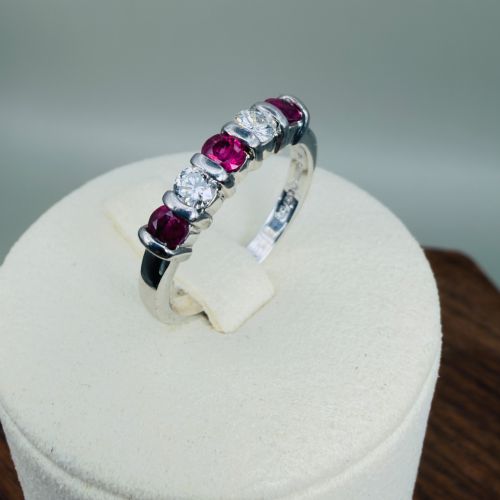
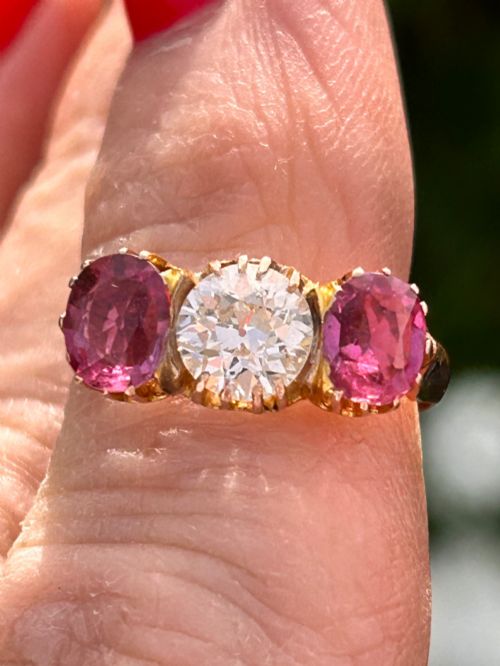
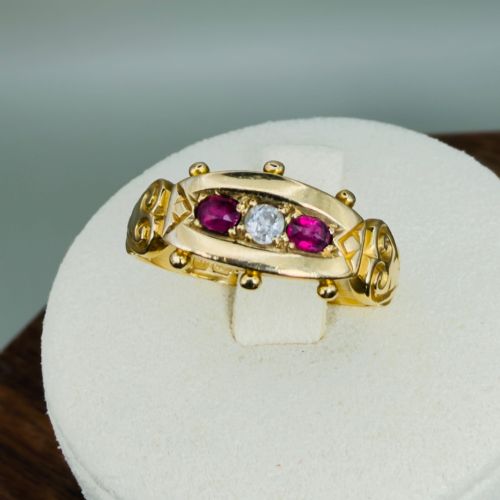
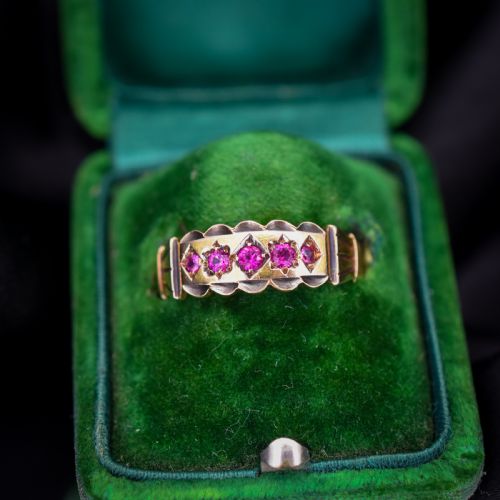
Gold Ruby Band
A gold ruby band combines rich red stones with durable yellow or white gold, offering a classic choice for everyday wear.
Gold Ruby Band
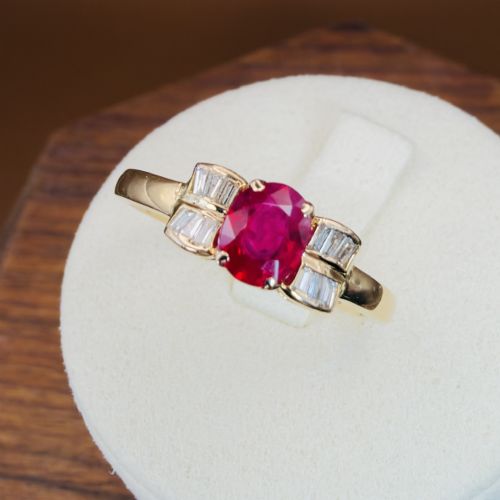
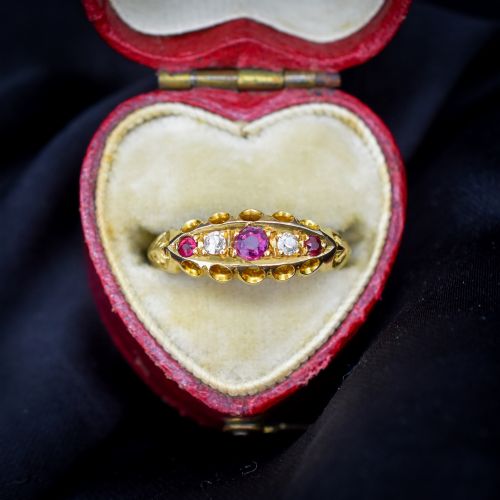
A gold ruby band encompasses antique, vintage and mid-century rings designed to sit flat on the finger or rise in traditional cluster, starburst and multi-stone arrangements. These pieces emerge from periods spanning the late nineteenth century through the mid-twentieth century, including Victorian, Edwardian, Art Deco and 1950s eras.
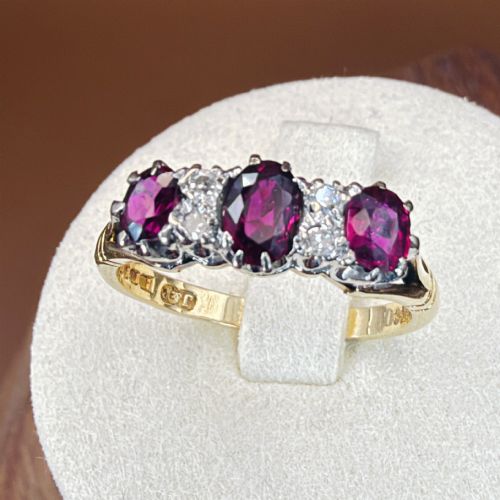
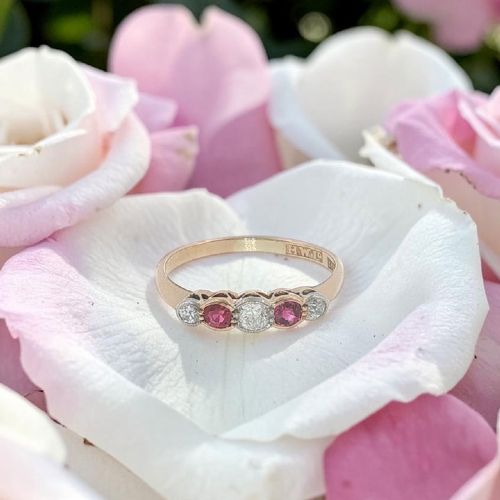
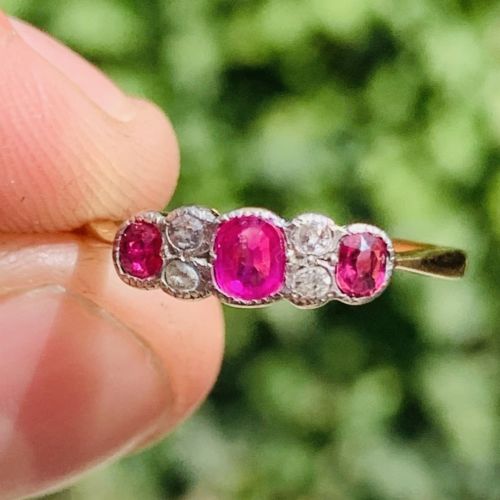
The most common formats on this page are low-profile band rings and multi-stone settings incorporating rubies alongside diamonds or pearls. Makers often set these gems into yellow gold, white gold or platinum mountings, frequently bearing hallmarks from British assay offices such as Chester and Birmingham.
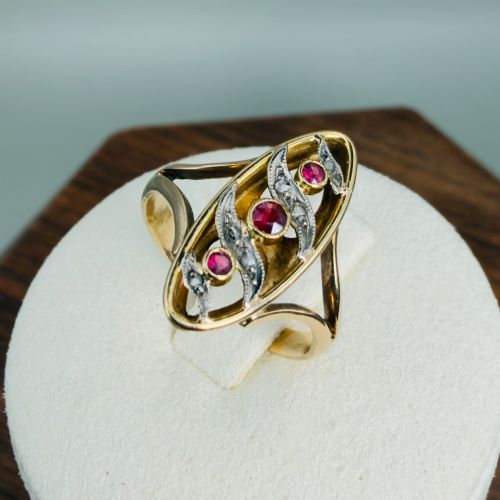
Buyers encounter variations ranging from simple patterned gold bands to elaborate navette, boat and trilogy configurations. Each piece reflects the dominant jewellery styles of its decade of origin, from nineteenth-century gypsy settings to mid-century modernist lattice designs.
Materials and construction
Goldsmiths constructed these rings primarily using 18ct gold, alongside examples in 15ct, 9ct and platinum settings. Stones such as natural rubies, old cut diamonds, rose cut diamonds and pearls were secured using star settings, flush gypsy mountings or claw settings.
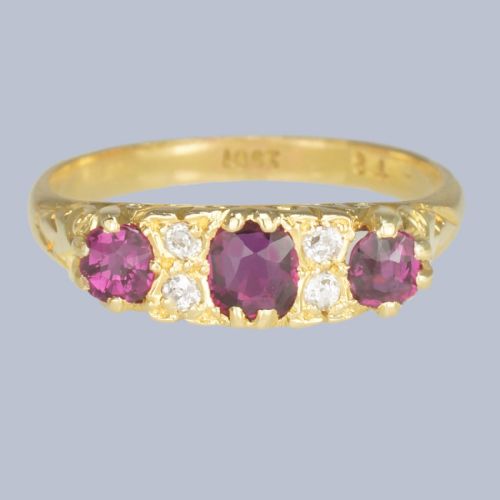
Workshops utilised traditional hand-fabrication and casting techniques, often incorporating detailed chasing, engraving or patterned bands. Hallmark stamps pressed into the interior shank record the metal purity, assay office and date of manufacture.
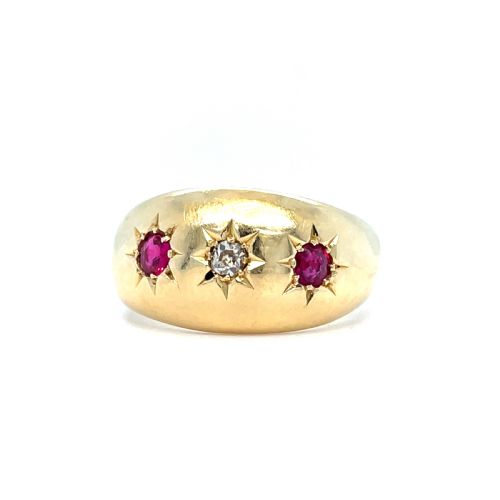
Certain Victorian gypsy bands feature secret starburst engravings designed to make the smallest rubies catch the flicker of candlelight.
Assessing quality and craftsmanship
Quality in a gold ruby band depends on the clarity and depth of colour within the rubies, alongside the cut and brilliance of accompanying diamonds. Finer examples display well-matched stones securely flush-set or claw-set into substantial metal shanks.
The precision of hand-engraving, the integrity of original hallmarks and the weight of the gold mounting distinguish superior pieces from standard production. Preservation of the original setting without modern re-tipping or shank replacement adds to the integrity of older items.
The Gold Ruby Band Glossary
- Gypsy ring
- A style where the stones are flush-set directly into the thick metal band, sloping down smoothly to the finger.
- Starburst
- A geometric engraving pattern radiating outwards from a central stone to resemble a star, common in late Victorian designs.
- Navette
- A boat-shaped ring setting that tapers to points at either end, sitting lengthwise along the finger.
- Trilogy
- A three-stone ring arrangement typically representing the past, present and future, often pairing a ruby centre with diamond shoulders.
- Old cut
- A hand-faceted diamond cut predating modern brilliant standards, featuring a smaller table and a higher crown.
Gold Ruby Band: Frequently Asked Questions
How do I care for my gold ruby band?
Clean your ring using warm soapy water and a soft brush, avoiding harsh chemical dips that might damage softer gems like pearls. Store antique pieces separately to prevent the harder diamonds from scratching the gold or rubies.
Have settings checked periodically by a jeweller to ensure the claws or flush mounts remain tight, particularly on older Edwardian and Victorian rings.
Are these rings suitable for daily wear?
Gold ruby bands set in robust 18ct gold handle regular daily wear well, especially lower-profile gypsy or band styles that catch less on clothing. Thinner bands or Edwardian pieces with delicate claw settings require slightly more care during heavy manual tasks.
Consider the mounting depth and stone security when selecting a ring intended for continuous, everyday use.
How can I date my ring?
British rings often feature clear hallmarks stamped inside the shank, including assay office symbols and date letters that pinpoint the exact year of manufacture. Stylistic cues such as starburst engravings, navette shapes or platinum top settings also indicate specific periods like the Victorian or Art Deco eras.
Compare the gemstone cuts and mounting techniques against known historical periods when official assay marks are absent or rubbed.
What is the difference between a band and a cluster?
A band ring maintains a uniform or gently tapering hoop width around the finger, often featuring flush-set stones integrated straight into the metal. A cluster ring centres a primary gemstone within a gathered grouping of smaller surrounding stones, creating a wider profile.
Both forms utilise similar materials but present entirely different silhouettes on the hand.