
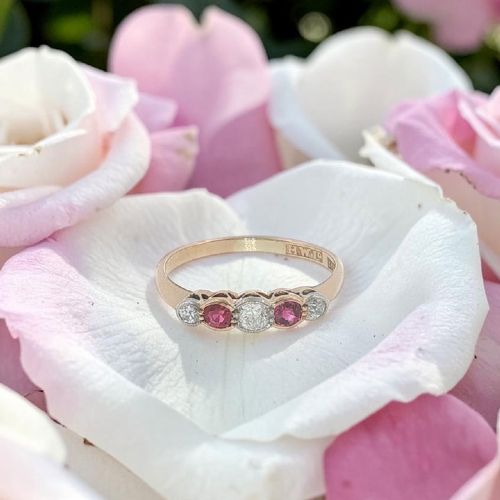


Carved Gallery Ruby Ring
A carved gallery ruby ring brings rich crimson colour and intricate metalwork together on the hand, offering distinct historical character.
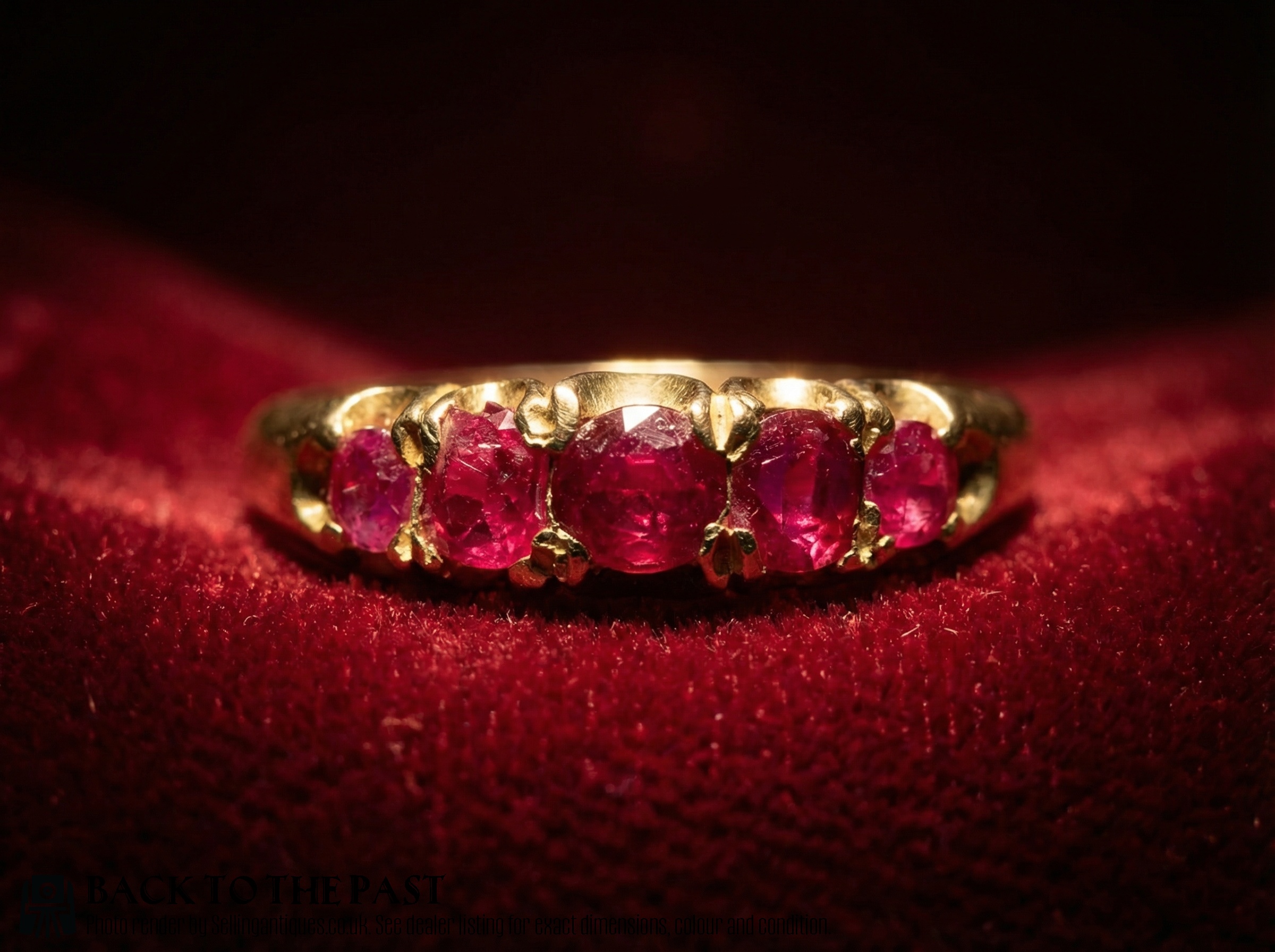
What a carved gallery ruby ring is
A carved gallery ruby ring centres upon vibrant rubies paired with supporting diamonds set in precious gold bands. These pieces span the Victorian, Edwardian, and Art Deco periods, showcasing evolving design sensibilities from 1900 to 1930.
Five stone ring configurations dominate the selection, aligning with traditional settings where graduated rubies alternate or sit alongside sparkling old cut diamonds. Buyers searching for a carved gallery ruby ring will mostly encounter these refined multi-stone arrangements set in yellow gold or eighteen-carat gold.
The distinct architectural framework beneath the main stones defines the carved gallery aspect, providing an ornate profile when viewed from the side. Each era contributes its own stylistic touch, from late nineteenth-century ornamentation to the geometric crispness of the nineteen-thirties.
How they were made
Goldsmiths worked primarily with eighteen-carat gold and yellow gold to forge the durable bands and intricate settings required for these rings. Metal was meticulously pierced, filed, and chased to create the signature pierced galleries beneath the gemstones.
Gemstones such as natural rubies and old cut diamonds were secured by hand using traditional claw or flush settings. Artisans balanced structural integrity with delicate ornamentation, ensuring the stones received adequate light through the open gallery work.
Retail Price Guide 2026
Typical UK retail prices for carved gallery ruby ring, calculated from the Sellingantiques database of over a million retail prices indexed since 2003. This retail price guide relies exclusively on Sellingantiques data; no external sources or auction records are used, so the figures do not describe the wider market.
Goldsmiths carved hidden galleries into rings so finely that even the wearer's palm gets a secret view of lace-like gold.
What varies in quality
The refinement of the under-gallery piercing and the crispness of the metalwork distinguish superior examples from simpler production. Master jewellers achieved a lighter, more balanced profile that maintained structural strength while maximising gemstone brilliance.
Gemstone selection dictates the upper tier of quality, particularly the saturation and natural origin of the rubies paired with well-proportioned old cut diamonds. Better examples maintain harmonious stone sizing and precise claw alignment that preserves the integrity of the setting.
The Carved Gallery Ruby Ring Glossary
- Old cut
- A vintage diamond cutting style characterised by a small table, high crown, and open culet. These stones display a softer, chunkier sparkle under candlelight compared to modern brilliant cuts.
- Five stone ring
- A setting style featuring a row of five graduated gemstones stretching across the top of the finger. This layout was immensely popular across the Victorian and Edwardian eras.
- Natural ruby
- A genuine corundum gemstone formed in the earth without synthetic laboratory intervention. These stones display rich red hues shaped by chromium traces.
Frequently Asked Questions
What periods do these rings come from?
The pieces span the Victorian, Edwardian, and Art Deco eras, dating roughly from 1900 through to 1930.
Each period imparts distinct stylistic cues to the gold settings and gemstone arrangements.
What metals are typically used?
Goldsmiths constructed these pieces using gold, yellow gold, and eighteen-carat gold.
The higher carat yellow gold provides both the necessary warmth and malleability for detailed gallery carving.
How do old cut diamonds differ?
Old cut diamonds feature hand-faceted designs with deeper pavilions and smaller tables than modern stones.
They produce a distinctive, warmer glow that complements antique gold settings.
What is a five stone ring?
A five stone ring arranges a sequence of primary gemstones across the top of the band, often flanked by smaller accent stones.
This configuration was a staple design choice for ruby and diamond cluster jewellery.