


1930s Ruby Dress Ring
A 1930s ruby dress ring brings together vibrant red stones and geometric platinum or gold settings that define Art Deco jewellery.
1930s Ruby Dress Ring
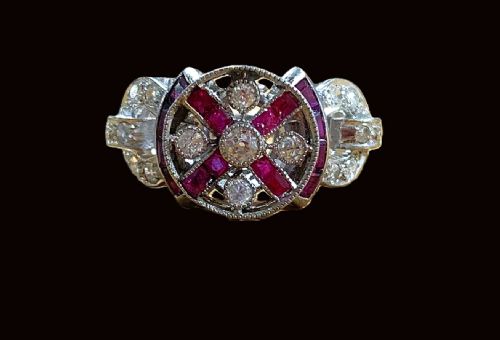
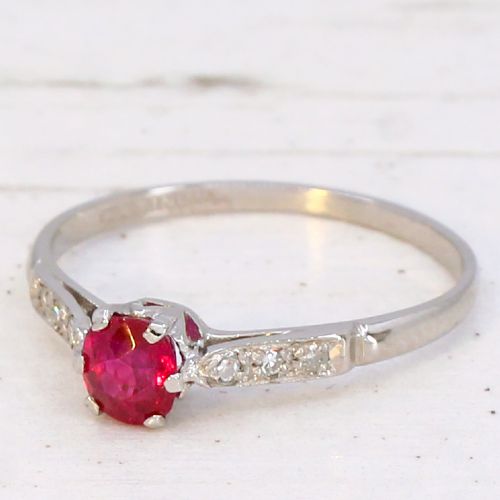
A 1930s ruby dress ring is a statement jewel defined by the geometric geometry and streamlined aesthetic of the Art Deco period. These pieces showcase vivid red rubies often accented by sparkling diamonds in cluster, three stone, and five stone configurations.
How they were made
Makers of a 1930s ruby dress ring utilised precious metals such as platinum and 18ct gold, including white gold and yellow gold variants, to provide a secure and contrasting framework for the stones. Platinum offered strength for delicate settings, while gold added warmth to cluster designs.
Goldsmiths set natural rubies alongside brilliant cut diamonds, securing them meticulously within the metalwork to highlight the deep red hues of the centre stones. These techniques allowed for intricate geometric patterns that remain characteristic of the period.
Current listings feature pieces exclusively from the 1920 and 1930 periods, executed in platinum, 18ct yellow gold, and 18ct white gold.
What varies in quality
The standard of a 1930s ruby dress ring depends heavily on the origin and visual characteristics of the ruby itself, with natural untreated stones from sources like Mogok holding particular distinction. The saturation and clarity of the red stone dictate much of the overall impact.
Execution of the surrounding diamond work and the preservation of the metal settings also separate individual examples. Superior pieces display precise stone matching and robust construction in the platinum or 18ct gold bands.
The 1930s Ruby Dress Ring Glossary
- Art Deco
- A design style spanning the 1920s and 1930s characterised by sleek lines, geometric shapes, and modern materials. This aesthetic heavily influences the structure of these rings.
- Cluster ring
- A ring design featuring a central gemstone surrounded by a cluster of smaller stones, typically diamonds framing a ruby. This arrangement maximises visual presence on the hand.
- Unheated
- A term describing a gemstone that has not undergone thermal enhancement to improve colour or clarity. Natural unheated rubies are particularly prized by collectors.
- Carat
- The unit of weight used for measuring precious gemstones and diamonds. Higher carat weights generally correspond to larger stone sizes in these rings.
1930s Ruby Dress Ring: Frequently Asked Questions
Are these rings suitable for daily wear?
A 1930s ruby dress ring requires thoughtful care due to its age and delicate claw or bezel settings. While rubies possess strong natural hardness, the antique gold and platinum mountings benefit from gentle handling during everyday activities.
Owners should remove such jewellery before engaging in strenuous tasks or housework to protect the delicate diamond accents and metalwork from accidental impact.
How do I identify an Art Deco ring?
Art Deco rings present distinct geometric symmetry, sharp angles, and stylized motifs rather than the flowing floral curves of earlier Edwardian or Victorian pieces. Settings often utilise platinum to create intricate, lace-like frameworks around the central stones.
The integration of calibrated rubies and contrasting diamond borders further signals the architectural influence typical of design from this specific decade.
What does a cluster setting look like?
A cluster setting arranges a prominent central ruby tightly encircled by a halo of smaller diamonds. This configuration creates a striking contrast between the deep red stone and the brilliant white sparkle surrounding it.
Such layouts were exceptionally popular during the 1930s as a method to maximise the visual impact and perceived size of the primary gemstone on the finger.
What is a Burmese ruby?
A Burmese ruby originates from the Mogok region in Myanmar, historically renowned for producing stones with a deeply saturated red colour often described as pigeon's blood. These specific rubies are frequently cited for their distinct fluorescent quality under ultraviolet light.
Their exceptional natural colouration makes them highly sought after by collectors seeking authentic period gems from the 1930s.