



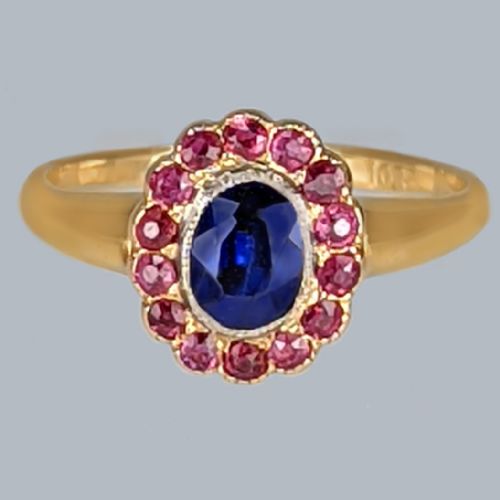


Edwardian Gold Gem Ring
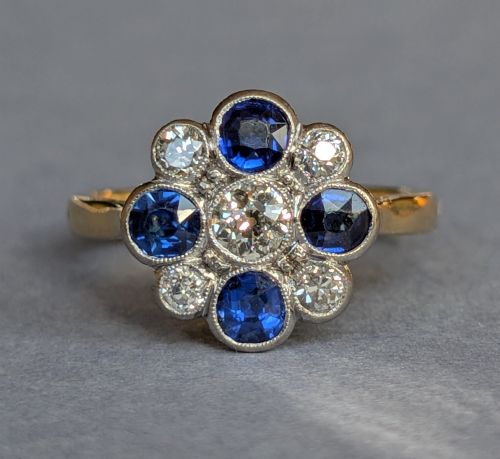
An edwardian gold gem ring carries the fine proportion and delicate cluster work typical of the early twentieth century.
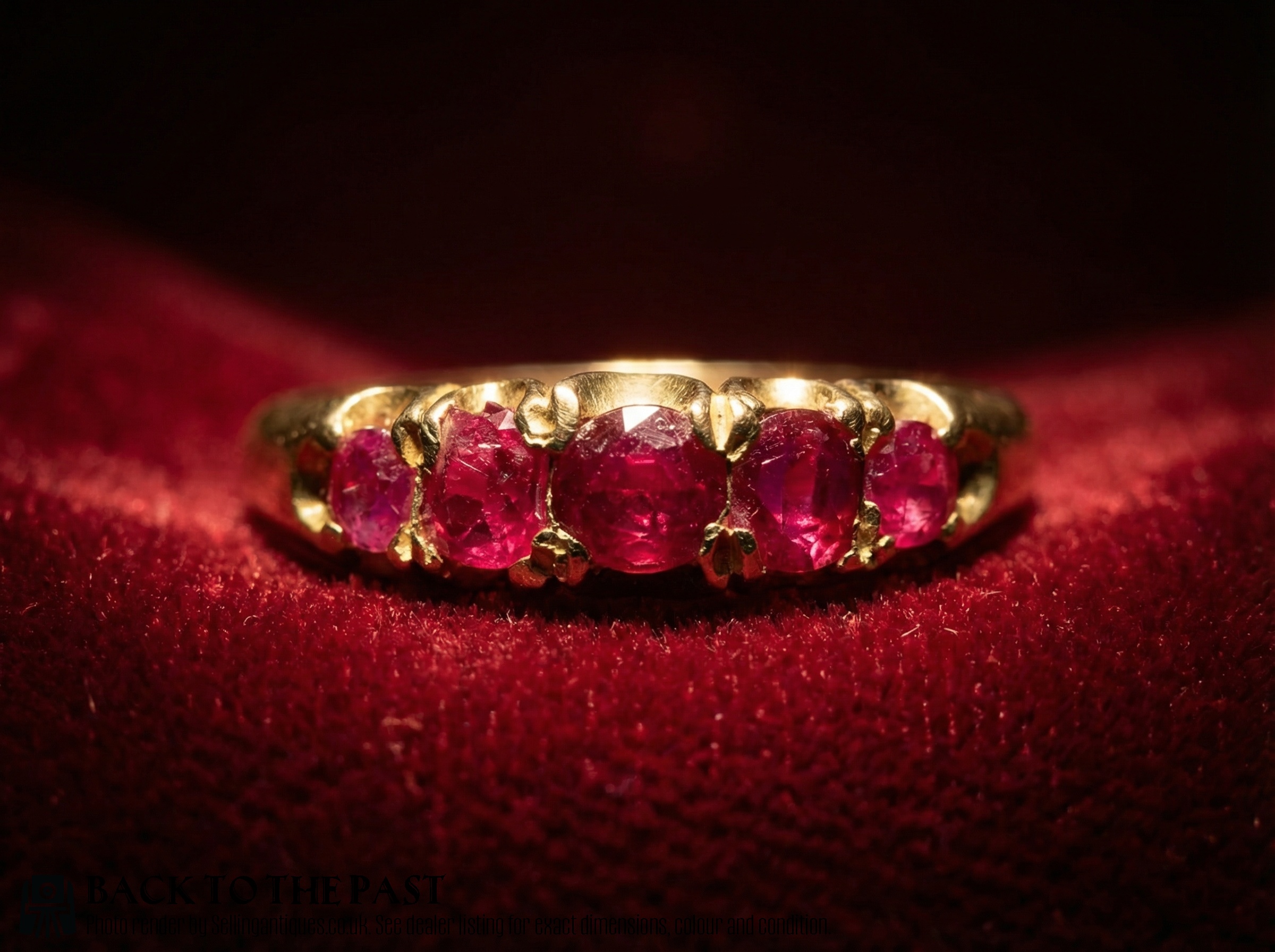
Edwardian Gold Gem Ring
An edwardian gold gem ring is a piece of antique jewellery typically formed around the turn of the twentieth century, aligning with the Edwardian period as well as adjacent Victorian and Art Deco eras. These pieces centre on precious stones such as diamonds, sapphires, rubies, and emeralds set into yellow gold, white gold, or platinum.
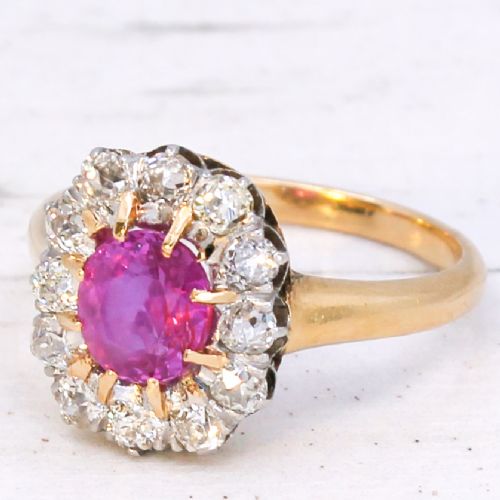
The most common forms found here include cluster configurations, multi-stone rings, and traditional diamond solitaires. Many examples combine gold with platinum settings to highlight the brightness of old-cut diamonds.
Makers of the period utilised various cluster and gypsy styles to showcase coloured gems alongside diamonds, creating balanced proportions suited to everyday wear.
What varies in quality
Quality in these rings is determined by the natural origin and saturation of the central gemstones, such as unheated Burmese sapphires or high-clarity emeralds. The precision of the setting work, particularly hand-formed millegrain edges and the symmetry of cluster layouts, separates standard production from finer output.
The integrity of the original shank and the minimal wear on delicate gold or platinum claws also define a superior specimen. Pieces accompanied by independent gemological reports confirming untreated stones command closer attention from collectors.
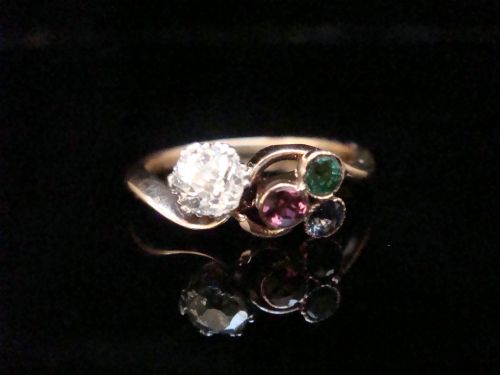
Double snake rings from the era intertwine two gem-set serpents, symbolising eternal love with a delightfully unexpected bite.
The Edwardian Gold Gem Ring Glossary
- Old-cut diamond
- A diamond cut by hand before modern machinery, typically featuring a smaller table, higher crown, and a noticeable culet at the base.
- Millegrain
- A decorative technique involving a row of tiny metal beads along the edge of a setting, common in Edwardian and Art Deco jewellery.
- Gypsy ring
- A style where stones are flush-set directly into a heavy tapered gold band, popular in the late nineteenth and early twentieth centuries.
- Trilogy ring
- A ring featuring three main stones, traditionally symbolising the past, present, and future.
- Cluster ring
- A design featuring a central gemstone surrounded by a halo of smaller stones, often diamonds.
Edwardian Gold Gem Ring: Frequently Asked Questions
How do I care for an antique gold ring?
Antique rings require gentle cleaning with warm soapy water and a soft brush rather than harsh ultrasonic cleaners. Regular checks by a jeweller ensure the vintage claws holding the gems remain secure.
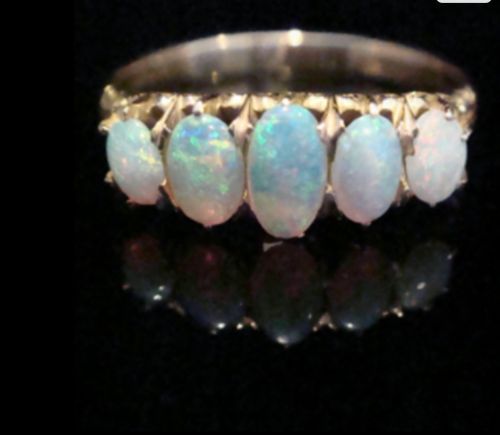
Avoid wearing fragile gem rings during manual work or swimming to protect softer stones like opal and emerald from impact and chemicals.
Can these rings be resized easily?
Many gold and platinum rings from this era can be resized by a skilled jeweller, though patterned bands or full gemstone eternity channels require careful handling. The presence of delicate shoulders or hallmarks dictates how much adjustment is possible.
Consult an expert who understands antique settings to preserve the structural integrity of the shank and any surrounding engraving.
What defines the Edwardian style?
Edwardian jewellery is characterised by light, airy motifs, garland styles, and an extensive use of platinum paired with yellow gold. The aesthetic favours delicate openwork and the prominent display of diamonds alongside coloured gemstones.
This period moved away from heavy Victorian designs towards graceful, feminine shapes that emphasised luminosity and fine craftsmanship.
How can I tell the period of a ring?
Dating relies on a combination of hallmarks, metal choices, cutting styles for the gemstones, and overall manufacturing techniques. Platinum-topped gold settings and specific cut styles like old mine cuts often point directly to the Edwardian era.
Assay office marks and date letters stamped inside the band provide definitive clues to the exact year and location of manufacture.