


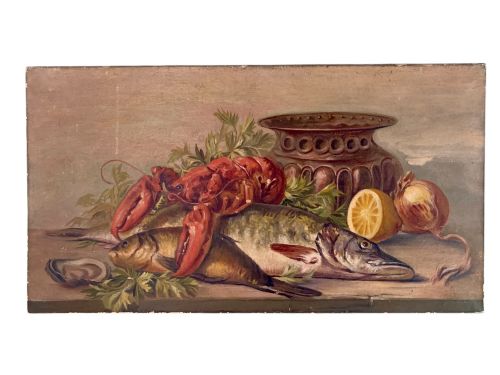
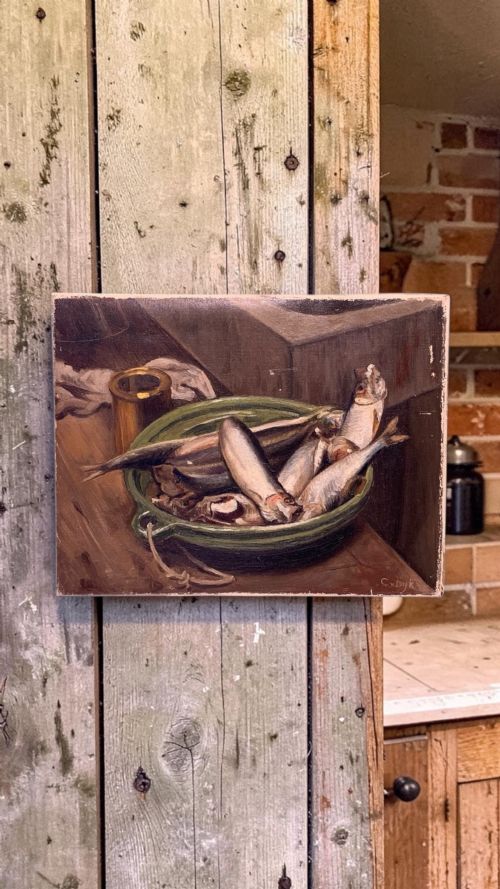
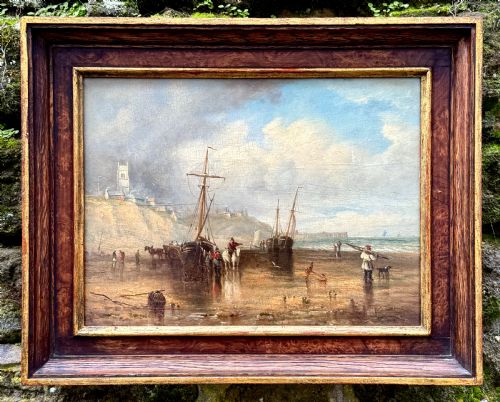
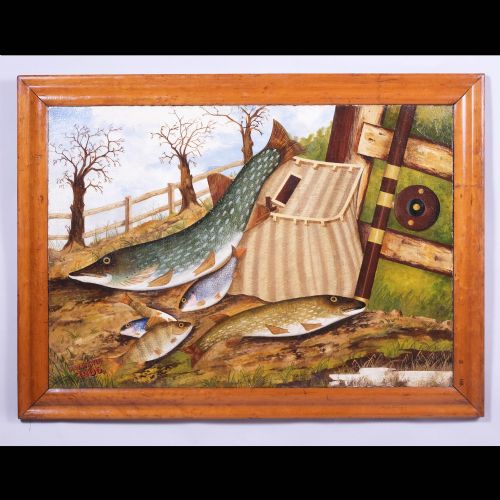

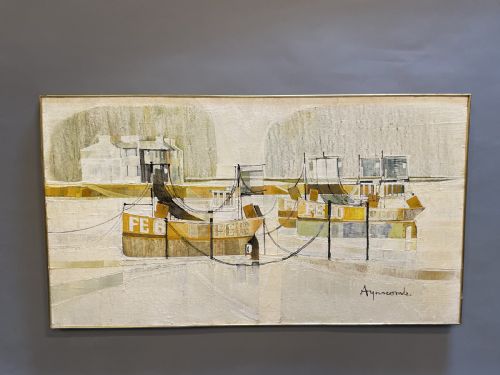


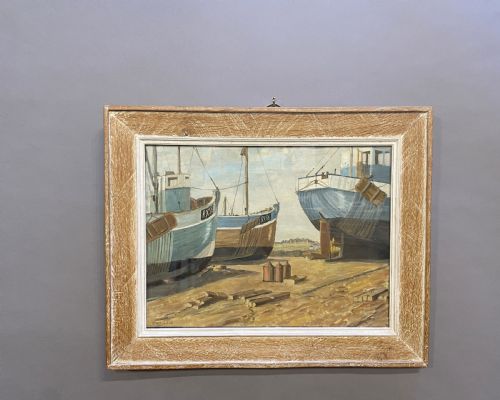
Antique Fishing Oil Painting
These antique fishing oil painting works capture maritime labour and tranquil river scenes across centuries of canvas and panel.
Antique Fishing Oil Painting
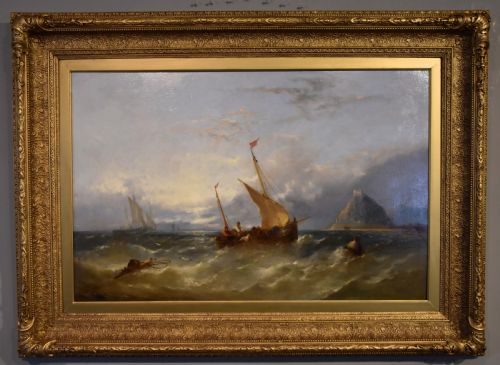
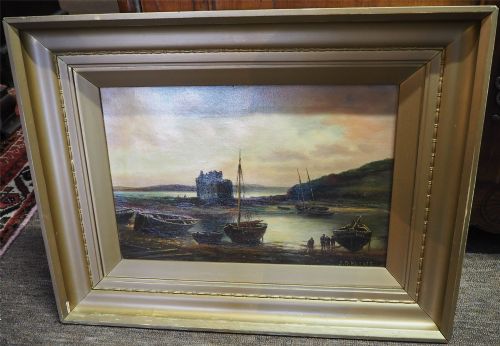
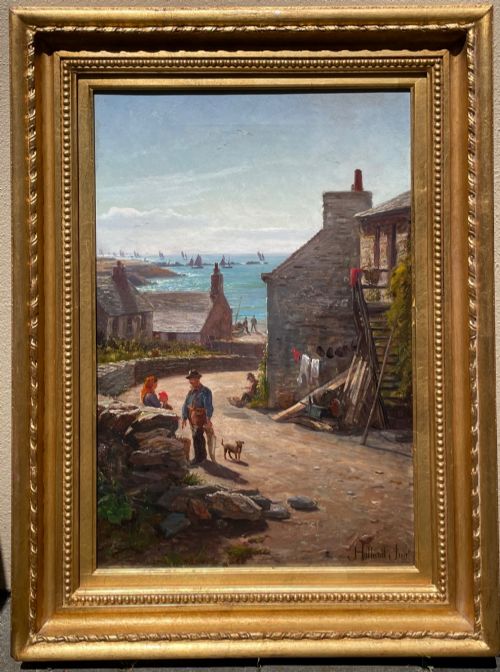
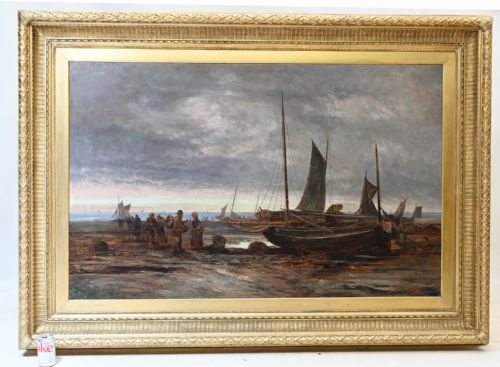
An antique fishing oil painting depicts coastal vessels, harbour scenes, and solitary anglers along rivers. These works range from Victorian maritime canvases to Edwardian river landscapes.
The subjects divide broadly into two categories: coastal views featuring working fishing boats and inland genre scenes showing anglers by water. Coastal depictions often record specific British and French ports.
Works on this page span the 18th, 19th, and early 20th centuries. Painters of this genre worked within British and European artistic traditions, including impressionism and realism.
How They Were Made
Artists applied oil paint to prepared canvas, wood panel, or card supports. These varied grounds received layers of pigment to build atmospheric light and water textures.
Many surviving works retain their period giltwood frames, which complement the maritime and landscape subjects. Panel paintings utilise wooden supports, whilst larger compositions employ stretched canvas.
Monks and putti occasionally trade contemplation for angling in unexpected Victorian maritime and river scenes.
What Varies in Quality
Quality rests in the handling of light, water movement, and atmospheric depth. Superior works capture atmospheric conditions and marine architecture with distinct precision.
The articulation of human figures and vessel rigging distinguishes accomplished compositions from standard workshop output. Hand-carved giltwood framing also indicates the original status of the painting.
Thomas Creswick·William Henry Williamson·Florence Adelina Hess·John Holland·Charles Napier Hemy·Sir David Murray·Gustave De Bréanski·Pieter Cornelis Dommersen·James Kyd·George SHAW·T.S. Wallis·George Gregory·George Morland·Frank Hyde·Sam Bough·Paul H Ellis·Owen Bowen
The Antique Fishing Oil Painting Glossary
- Canvas
- A heavy woven fabric stretched across a wooden frame to serve as a painting surface. It provides texture and flexibility for oil pigments.
- Panel
- A flat piece of wood or card used as a rigid support for oil paint. Panel paintings frequently date to earlier periods or smaller cabinet works.
- Giltwood
- Wood carved and coated with a thin layer of gold leaf. Period frames in giltwood enhance the visual depth of marine oil paintings.
- Seascape
- A work of art depicting the sea, coastal views, and maritime vessels. These compositions often record working fishing fleets and harbours.
- Impressionism
- An art style focusing on light and spontaneous brushwork rather than rigid detail. British and French practitioners applied this method to coastal scenes.
Antique Fishing Oil Painting: Frequently Asked Questions
What periods do these paintings come from?
The works span from the 18th century through the Victorian era and into the mid-20th century. Most examples date from the 19th and early 20th centuries.
Styles shift from traditional academic marine art to British impressionism and post-impressionist interpretations of coastal ports.
How were these paintings framed?
Many retain their original giltwood or wooden frames. These frames often feature decorative moulding suited to the period.
Original framing helps preserve the historical context and protects the edges of the canvas or panel.
Where were these fishing scenes painted?
Subjects record locations around British coasts, Cornish harbours, Scottish estuaries, and French ports like Concarneau. Inland scenes depict rivers and waterfalls across the countryside.
Artists frequently travelled to working fishing communities to capture authentic maritime daily life.
Are these works signed by artists?
Several pieces feature signatures, monograms, or attribution to known painters and regional schools. Other works remain from unidentified British or European schools.
Signatures provide direct attribution to named artists active during the Victorian and Edwardian periods.