

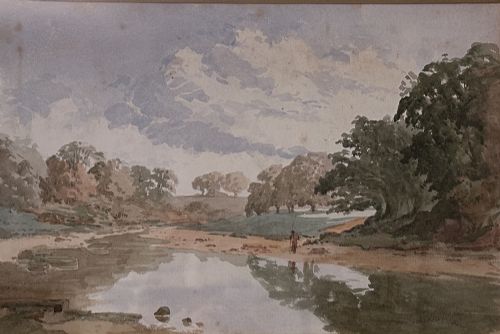


Antique Angler Oil Painting
An antique angler oil painting captures quiet riversides and focused fishermen, bringing Victorian pastoral calm straight into a modern room.
Antique Angler Oil Painting
When searching for an antique angler oil painting, collectors encounter works depicting fishermen along riverbanks, lakes, and country waters. These pieces span from the early nineteenth century through the mid-twentieth century, capturing sporting scenes and pastoral landscapes.
The most common examples on this page date from the nineteenth century and the Victorian era. These works often show figures preparing tackle, waiting for a bite, or displaying their catch beside rural waterways.
Makers and artists range from named academic painters to unsigned English school practitioners and folk artists. Formats vary from standard canvases to wood panels, frequently housed in period gilt wood frames with gesso detail.
Materials and construction
The physical works rely principally on oil paint applied to canvas or wood panel supports. Artists utilised traditional pigments to build up layered pastoral scenes, river landscapes, and detailed portraits of fishermen.
Frames are constructed from wood and finished with gesso and gilt wood or gilded wood surfaces. These period frames provide the structural border and decorative presentation customary for nineteenth and twentieth-century fine art.
Antique Angler Oil Painting Retail Price Guide 2026
Typical asking prices for angler oil painting among the pieces listed under this phrase on Sellingantiques today, from the lower quarter to the upper quarter. They describe what is for sale here now, not the wider market.
Materials recorded across the inventory include oil paint, canvas, wood panels, gesso, and gilt wood frames.
Assessing quality
Quality rests in the handling of light, atmosphere, and human anatomy within the landscape. Works by established royal academicians or documented painters demonstrate superior brushwork and compositional balance compared to anonymous folk art pieces.
The condition and period integrity of the surrounding gilt wood frame also influence the overall standard of the piece. Original canvas tension and stable oil paint layers distinguish better-preserved works from those requiring extensive restoration.
Alfred Augustus Glendening Jnr·Phyllis Morgans·Paul H Ellis·John Arthur Lomax·Sonia Mervyn·Peter de Wint·John Horace Hooper
The Antique Angler Oil Painting Glossary
- Oil on Canvas
- Pigment mixed with drying oil applied to a stretched woven fabric support. This combination forms the primary medium for the majority of these fine art paintings.
- Gilt Wood Frame
- A wooden picture surround covered with a thin layer of gold leaf or metallic gilding. These frames often feature decorative moulded corners.
- Gesso
- A plaster-like mixture applied to wood frames to create a smooth surface for gilding. It allows for intricate relief ornamentation.
- Wood Panel
- A rigid wooden support used instead of canvas for painting. Early nineteenth-century examples occasionally employ this denser substrate.
- Genre Painting
- Artwork depicting scenes from ordinary life, such as a man preparing fishing tackle. These pieces focus on everyday human activities rather than grand historical narratives.
Antique Angler Oil Painting: Frequently Asked Questions
What periods do these paintings cover?
The available selection spans from the early nineteenth century through the mid-twentieth century, including Victorian and Edwardian examples.
Specific dates on record range from an 1804 wood panel up to mid-century impressionist works from the nineteen fifties.
Are all the paintings signed by artists?
Many works bear the signatures of known painters or are attributed to specific English school artists and named practitioners. Other examples remain entirely unsigned by the original hand.
Both signed academic pieces and unsigned folk art works appear within the available selection.
What surfaces were used for these artworks?
Artists painted primarily on traditional woven canvas stretched over wooden frames. Earlier nineteenth-century examples occasionally utilise rigid wood panels as a substrate.
Both canvas and panel works frequently retain their period gilt wood and gesso frames.
How do I care for an oil painting?
Keep the artwork away from direct sunlight, excessive moisture, and rapid temperature fluctuations to protect the oil paint and canvas. Dust the surface gently with a soft, dry brush without applying pressure.
Leave deeper cleaning and varnish maintenance to professional conservators rather than attempting home treatments.