

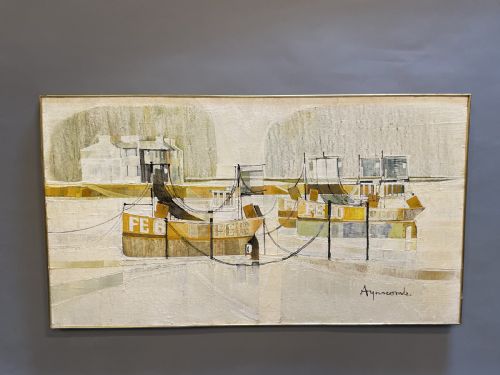


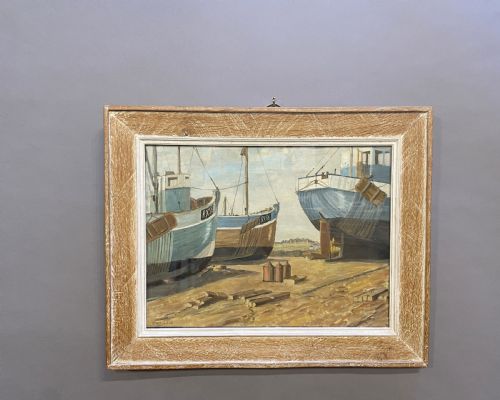


Antique Fishing Boat Oil
An antique fishing boat oil captures the weathered resilience of maritime labour on canvas, bringing coastal history directly into a room.
Antique Fishing Boat Oil
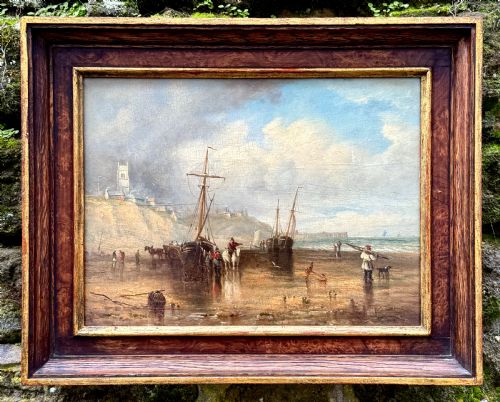
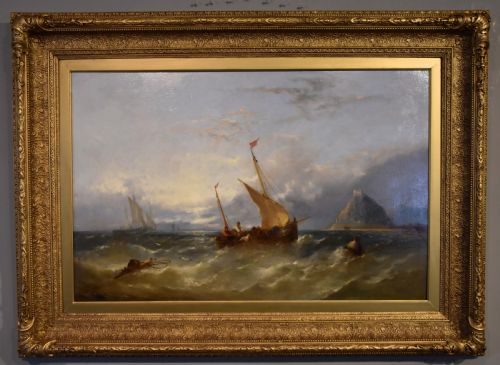
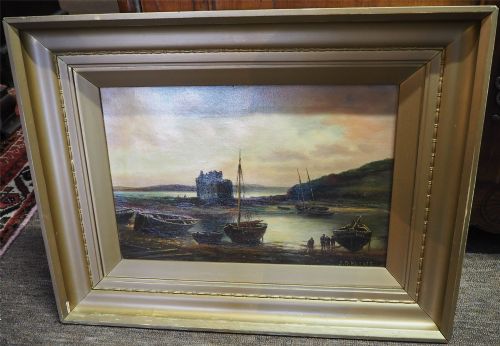
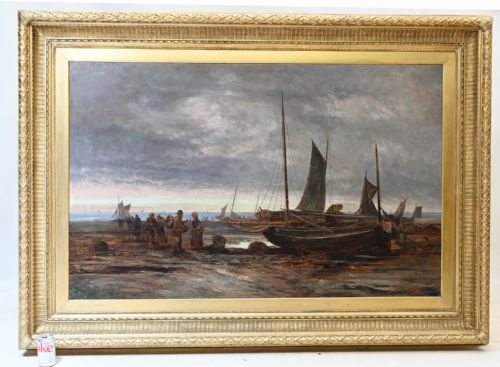
An antique fishing boat oil depicts maritime scenes ranging from calm harbour moorings to choppy seas and coastal approaches. These paintings record working vessels, local shorelines, and coastal communities through the lens of nineteenth and early twentieth-century artists.
The works appearing here frequently display British, Dutch, and French coastal locations such as Cornwall, Yorkshire, and continental ports. Canvases vary from intimate panel studies to massive gallery pieces featuring vessels making way under sail or returning to shelter.
What Varies in Quality
Quality rests upon the artist's ability to render light, atmosphere, and the convincing movement of water against timber hulls. Stronger works demonstrate confident brushwork and accurate anatomical detail in the rigging and structure of the fishing craft.
Provenance and signature attribution elevate certain canvases, alongside the preservation of the original paint layer and support. Pieces retaining their period gilt wood frames often show greater overall integrity than those re-framed later.
Listings feature works executed in oil on canvas, wood panel, and card, spanning the Georgian, Victorian, and post-impressionist periods.
Thomas Creswick·William Henry Williamson·Charles Napier Hemy·Gustave De Bréanski·Pieter Cornelis Dommersen·George Gregory·George Morland·Sam Bough·George Henry Knight·Owen Bowen·Hendrik Yan Wolter·Henri Ottman·William Edward Webb·Hubert Thornley·Alec Caruthers Gould·John Berney Crome·E K Redmore·William Broome·Emil Ekman·Nicholas Percy Fox·Thomas Rose Miles·Bernard Benedict Hemy·William Daniel Penny
The Antique Fishing Boat Oil Glossary
- Oil on Canvas
- A traditional painting method utilising pigments suspended in drying oils spread across a woven fabric support. This combination allows for rich blending and textured impasto effects.
- Gilt Wood
- Timber carved and surfaced with a thin layer of gold leaf or metal powder. It forms the decorative protective border around many period paintings.
- Marine Art
- A genre dedicated to depictions of the sea, ships, and coastal views. It encompasses historical naval battles, port scenes, and working fishing vessels.
- Impasto
- Paint applied thickly to a canvas or panel so that it stands out from the surface. This technique adds tactile relief and catches real light across waves and clouds.
- Wood Panel
- A rigid wooden support used by artists before canvas gained widespread dominance. Panels offer a smooth, stable ground for detailed brushwork.
Antique Fishing Boat Oil: Frequently Asked Questions
What periods do these paintings date from?
The available works span primarily from the eighteenth century through the nineteenth century and into the mid-twentieth century. Victorian examples and early twentieth-century British and continental school pieces appear frequently.
Specific dates are often recorded through artist signatures, exhibition records, or period framing styles. Earlier Georgian works sit alongside post-impressionist interpretations of harbour life.
Where were these coastal scenes painted?
Artists painted locations along the British coastline, including Cornwall, Yorkshire, Kent, and Scotland. Dutch and French fishing ports also feature prominently in nineteenth-century maritime art.
Painters often worked plein air along shores and harbour walls to capture accurate atmospheric conditions of working boats.
How should I hang an oil painting?
Select a wall with stable humidity away from direct sunlight and heat sources to protect the canvas and oil paint. Ensure the wall fixings match the substantial weight of the timber and gilt frame.
Allow adequate space around larger pieces so the composition and heavy framing can be viewed clearly without visual crowding.
How do I identify the artist?
Look for signatures, monograms, or inscriptions located near the lower corners of the canvas or on the reverse panel. Old exhibition labels and framing stamps frequently provide clues to provenance.
Stylistic elements such as brushwork technique and regional subject matter also help link unsigned works to specific schools or painters.