
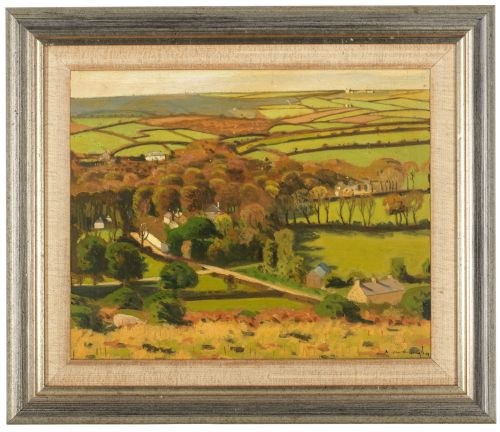


Canvas Oil Painting Cornwall
These canvas oil painting cornwall works capture coastal life and rugged shores, offering an authentic slice of maritime heritage for your walls.
Canvas Oil Painting Cornwall
A canvas oil painting cornwall brings the dramatic light and maritime atmosphere of the south-west coast directly into your interior. These works span from Victorian landscapes to mid-century modernism, reflecting the enduring appeal of the region to generations of artists.
You are most likely to encounter harbour scenes, coastal views, and maritime passages on canvas or board, framed in wood or giltwood. The selection ranges from nineteenth-century topographical views to twentieth-century St Ives School compositions.
Works depicting local landmarks such as St Ives, Polperro, and Mevagissey feature frequently. Painters often focused on the interplay of water, sky, and stone unique to the Cornish peninsula.
What varies in quality
Quality rests in the handling of light, atmosphere, and brushwork rather than subject matter alone. The strongest pieces demonstrate a confident command of tone and perspective that brings the coastal air to life.
The integration of the original frame also influences the overall character of the piece. Period frames that suit the scale and palette of the canvas elevate the presentation considerably.
Several artists painted the very tide turning in Mevagissey Harbour, perhaps rushing home before the tea got cold.
Robert Morson Hughes·Denis Mitchell·Edward Matthew Elliott·Charles Napier Hemy·Gyrth Russell·George Turland Goosey·William Pitt·Joseph Farquharson·William Lambert Bell·Jack R Mould·Hendrik Yan Wolter·William Edward Webb·JOHN HOLLAND Senior
The Canvas Oil Painting Cornwall Glossary
- St Ives School
- An association of artists based in Cornwall who developed significant modernist and impressionist approaches to landscape and abstraction. Their work defined much of twentieth-century British coastal art.
- Giltwood frame
- A wooden picture frame covered in a thin layer of gold leaf or gilt preparation. These frames often accompany traditional and Victorian oil paintings.
- Oil on canvas
- Pigment suspended in a drying oil applied to stretched woven fabric. This combination provides a resilient and textured surface favoured by artists for centuries.
- Post-Impressionism
- An art movement that followed impressionism, focusing on emotional response and symbolic expression through colour and brushwork. Cornwall attracted many practitioners of this style.
Canvas Oil Painting Cornwall: Frequently Asked Questions
How do I date a Cornish oil painting?
Dating relies on stylistic evidence, artist signatures, and the construction methods of the canvas and stretcher. Victorian and Edwardian works often feature heavier gilt frames and traditional realism, while twentieth-century pieces lean towards impressionist or modernist handling.
Examine the back of the canvas or board for maker stamps, labels, or inscriptions written by the artist. These details frequently record titles, dates, or exhibition history that clarify the period.
Where should I hang these paintings?
These coastal subjects suit spaces with natural light, complementing both traditional interiors and modern rooms. Placing them away from direct sunlight protects the oil pigments and the wooden frame over time.
Consider the scale of the wall and the surrounding furniture when selecting a position. Larger harbour scenes require enough distance for proper viewing, whereas intimate studies work well in smaller rooms or hallways.
What is the St Ives School?
The St Ives School refers to the community of artists who lived and worked in the Cornish coastal town, transforming it into a major hub for British art. They were drawn by the exceptional light and rugged landscape.
Artists associated with this movement explored various styles, from early realist marine scenes to later abstraction and mid-century modernism. Their presence shaped the artistic identity of Cornwall throughout the twentieth century.
How do I care for an oil painting?
Keep the painting in a stable environment with moderate humidity and temperature to prevent the canvas from slackening or the wood from warping. Avoid using liquid cleaners on the painted surface.
Dust the canvas and frame gently with a soft, dry brush or feather duster as needed. For conservation work or deeper cleaning, consult a professional art restorer rather than attempting treatment at home.