
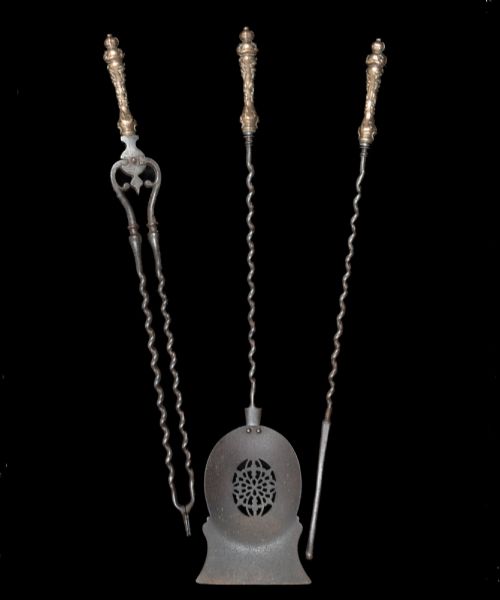
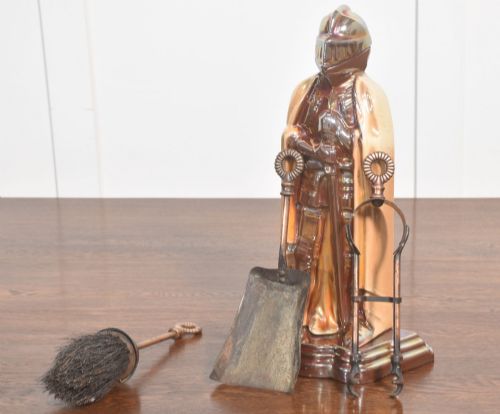
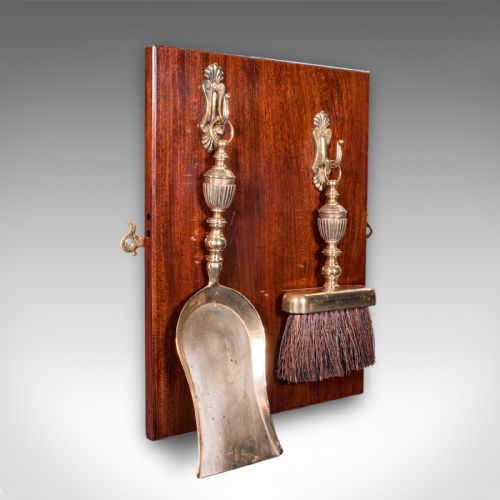
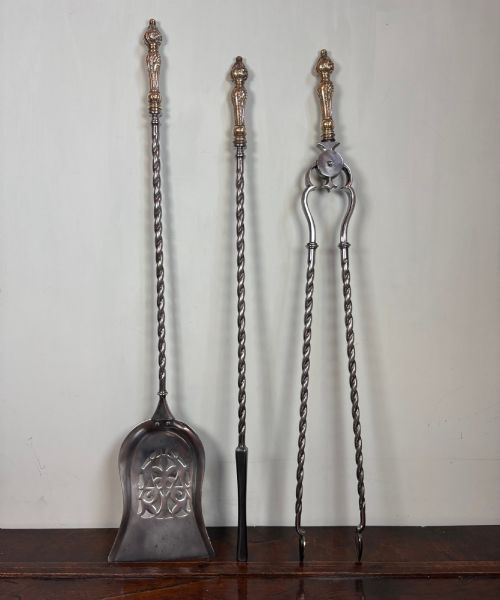
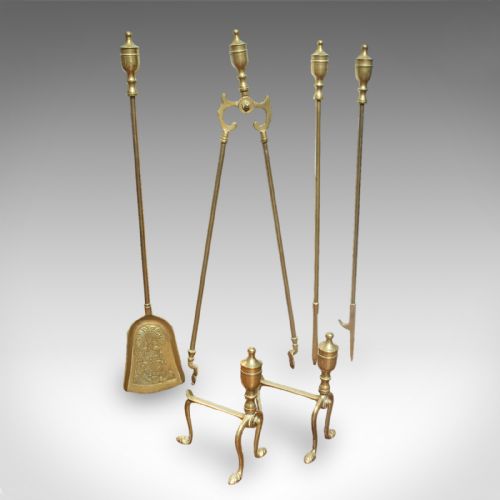


Antique Fireplace Companion Set
These antique fireplace companion set examples bring practical grace to a hearth, offering coordinated tools built to last generations.
What an antique fireplace companion set is
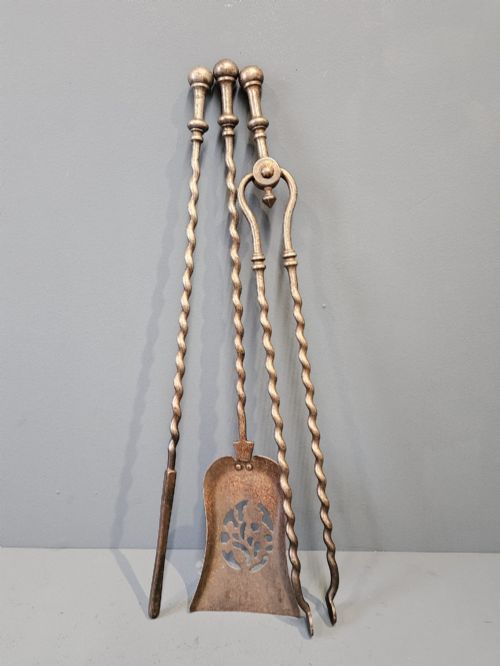
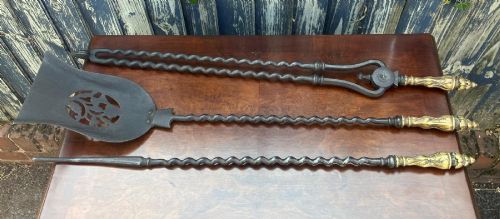
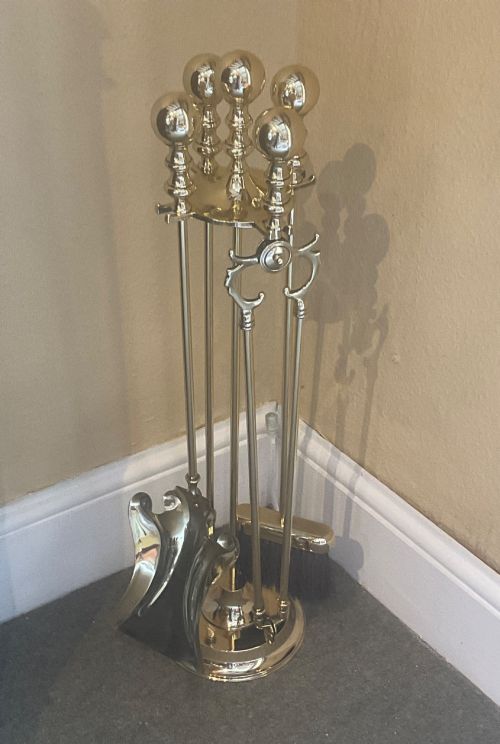
An antique fireplace companion set comprises coordinated tools and accessories designed to tend a working hearth with practical efficiency. When exploring this category, a buyer encounters matching sets of pokers, tongs, and shovels, often housed together on a dedicated stand or resting neatly against the fender.
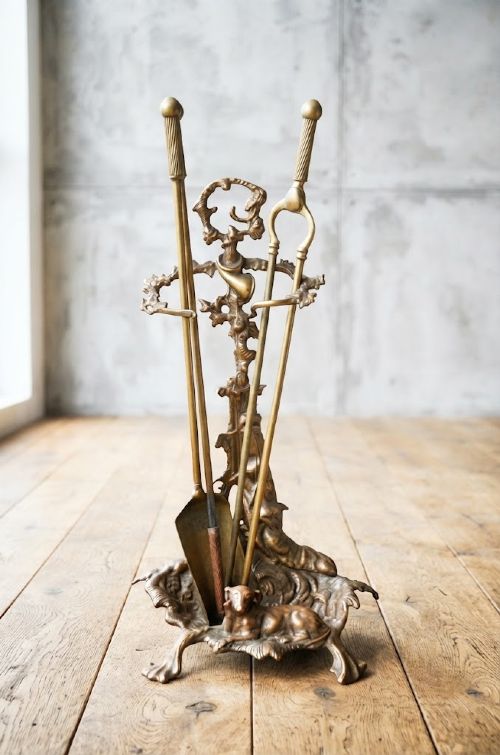
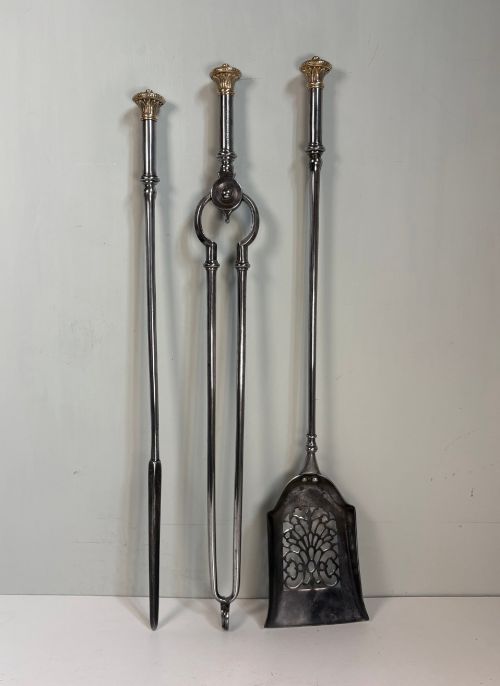
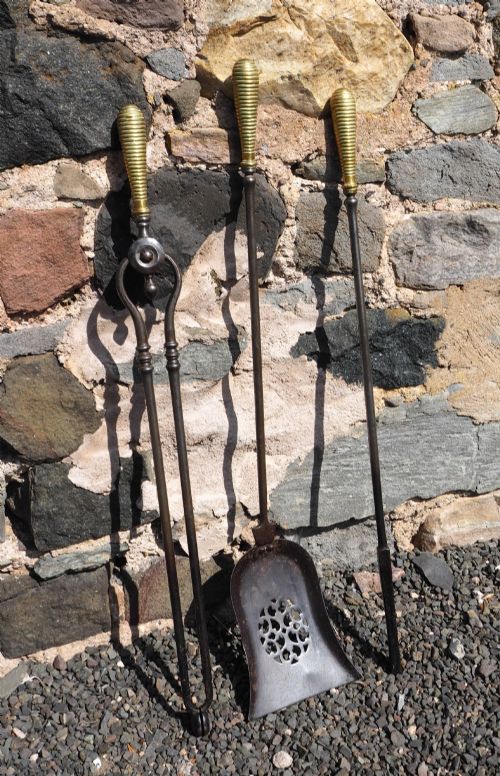
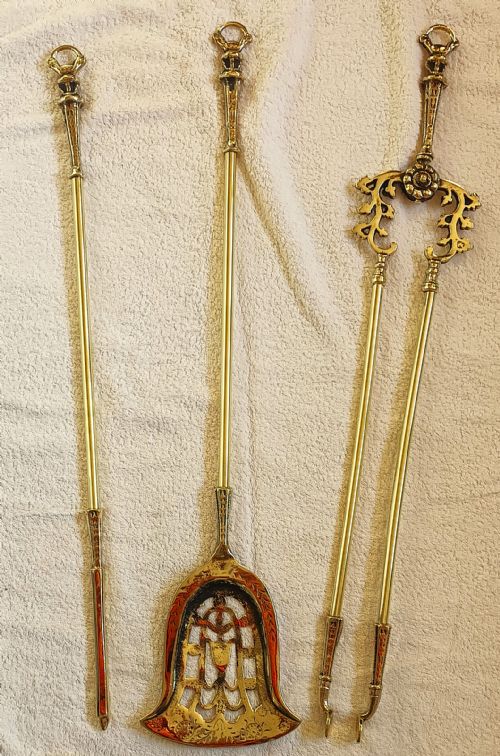
The pieces listed span Victorian, Edwardian, and early twentieth century periods, reflecting the shifting domestic tastes of British homes. Common forms include robust nineteenth century steel groups alongside ornate brass configurations from later decades.
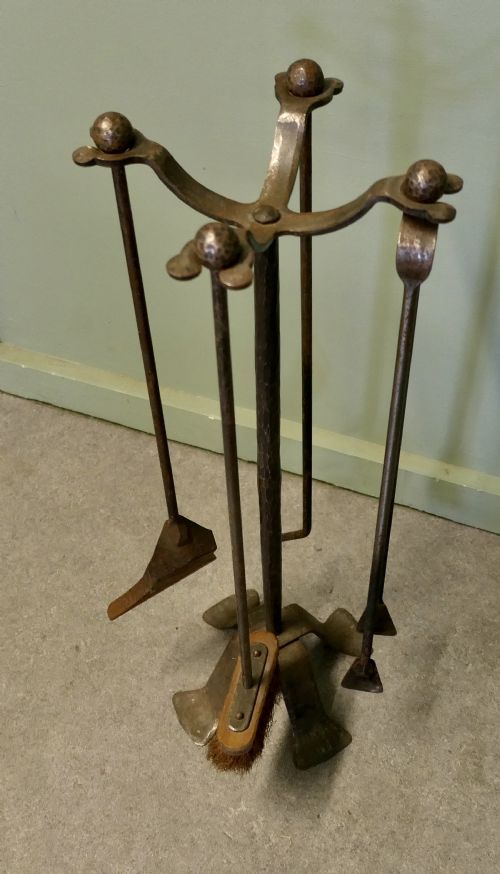
Makers produced these sets in various stylistic veins, ranging from utilitarian Arts and Crafts ideals to elaborate Rococo Revival flourishes. This variety ensures collectors can find an arrangement that complements both period grates and modern interior spaces.
Materials and construction
Craftsmen forged these utilitarian objects from durable metals such as cast iron, steel, and brass, ensuring they withstood intense hearth heat. Steel and cast iron provided the rigid strength required for heavy pokers and fire irons, while brass offered a bright decorative finish.
Surfaces frequently combined mixed metals, pairing blackened steel shafts with polished brass handles or gilt metal highlights. Such dual-material construction balanced functional resilience with visual elegance around the fireplace.
Retail Price Guide 2026
Typical UK retail prices for fireplace companion set, calculated from the Sellingantiques database of over a million retail prices indexed since 2003. This retail price guide relies exclusively on Sellingantiques data; no external sources or auction records are used, so the figures do not describe the wider market.
Judging quality in a companion set
Quality reveals itself in the weight and integrity of the metalwork, distinguishing robust forged pieces from lighter decorative alternatives. Superior sets maintain structural balance across every tool, ensuring handles feel substantial and comfortable in the hand during regular use.
Artistic execution further separates standard domestic items from finer examples, particularly in the hand-hammered textures of Arts and Crafts pieces or the crisp casting of Rococo Revival scrollwork. Cohesiveness across the entire group, where all implements share matching detail and finish, denotes superior workshop production.
The Antique Fireplace Companion Set Glossary
- Companion set
- A coordinated group of tools designed to tend an open fire, usually comprising a poker, tongs, shovel, and sometimes a brush. These implements are often displayed together on a matching stand.
- Fire irons
- The individual poker, shovel, and tongs used for managing fuel and ash in an open grate. They form the core working elements of any hearth arrangement.
- Arts and Crafts
- A design movement prioritising honest materials, visible construction, and hand-wrought simplicity over mass-produced ornamentation. Sets from this tradition often feature hammered steel surfaces.
- Rococo Revival
- A nineteenth-century decorative style characterised by exuberant C-scrolls, asymmetrical plant motifs, and shell forms. Companion sets in this mode display cast brass ornamentation with flowing botanical lines.
Frequently Asked Questions
What tools come in a set?
Standard sets typically include a poker for adjusting logs, a shovel for clearing ash, and tongs for handling fuel safely.
Many arrangements also incorporate a companion stand or specific hanging bracket to keep the implements organised beside the hearth.
How do I date a set?
Dating relies on identifying stylistic markers, manufacturing techniques, and the specific metals utilised in the handles and shafts.
Victorian and Edwardian examples often display distinct design revivals, ranging from ornate Rococo brass to austere Arts and Crafts steel.
Can I use these tools daily?
Most nineteenth-century and early twentieth-century ironmongery was built for heavy domestic service and handles regular use with ease.
Solid steel and brass construction ensures these implements remain robust functional items rather than purely decorative room ornaments.
How do I clean brass tools?
Gentle wiping with a soft cloth preserves the historic patina without stripping the character accumulated over generations of hearth use.
Avoid harsh abrasive compounds that can wear down delicate cast details on handles and decorative mounts.