
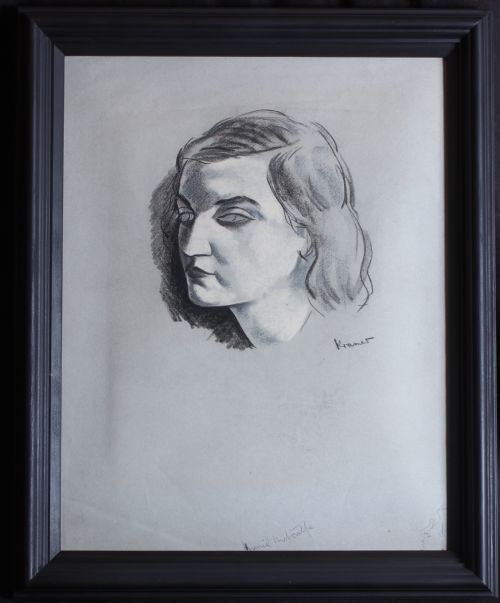
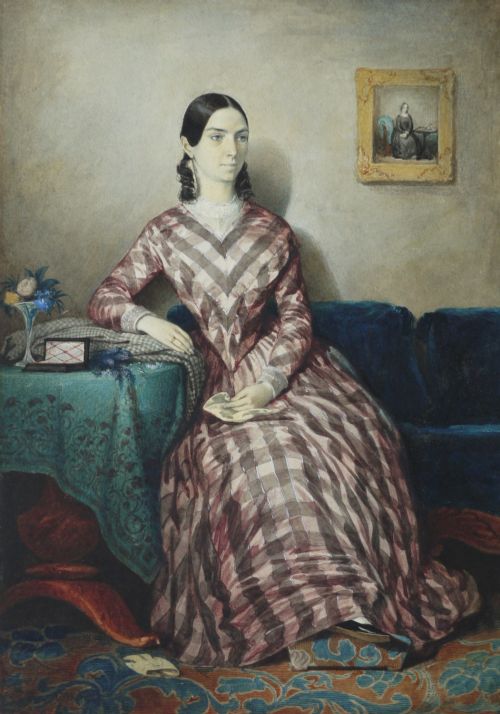
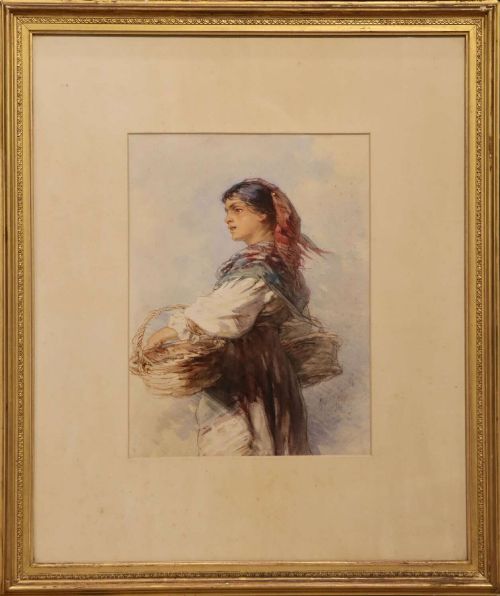
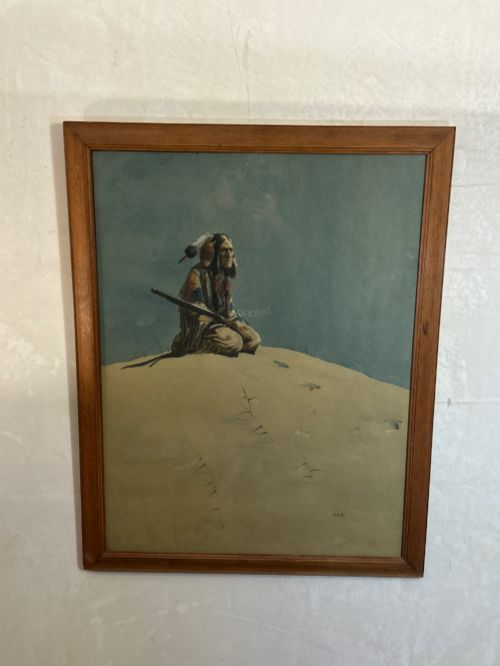
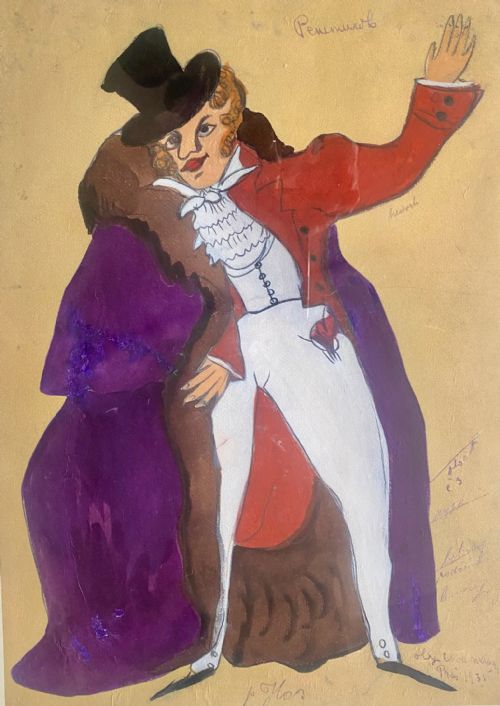


Antique Figurative Watercolour Portrait
These antique figurative watercolour portrait works capture individual presence on paper through pigment and ink.
Antique Figurative Watercolour Portrait
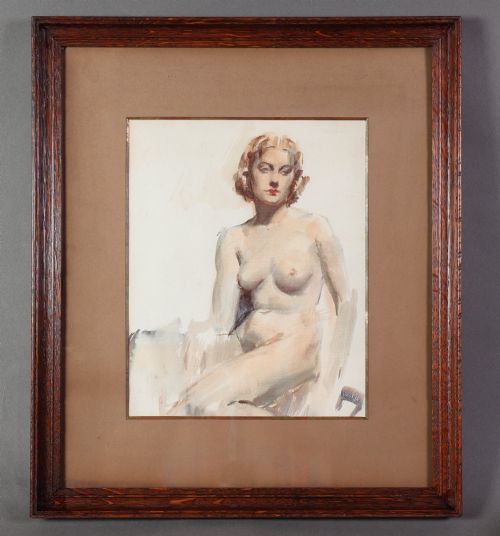
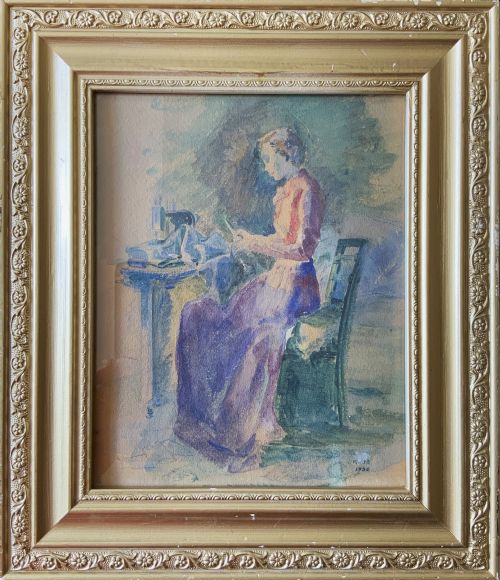
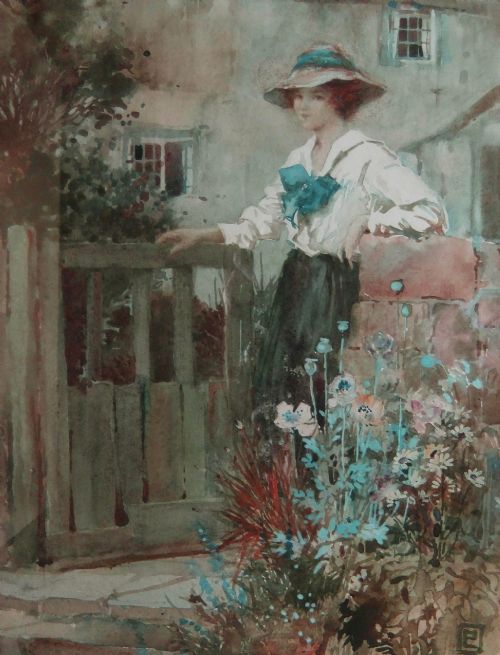
An antique figurative watercolour portrait focuses on human subjects, ranging from Victorian children and Italian peasants to Edwardian illustrators' sitters. The pieces here span the nineteenth century and the early twentieth century, taking the form of framed wall art and paintings on paper.
You will encounter works from specific regional movements, including British Impressionism, Pre-Raphaelite circles, and Scottish and Irish schools. Subjects appear in domestic interiors, pastoral settings, or as standalone studies of character executed by listed artists.
The selection includes single sheets and pairs, often preserved behind glass in period wood frames. Whether depicting a gypsy girl, a pianist, or a shepherdess, these works rely on watercolour pigment and ink applied to paper supports.
Materials and technique
Protection came from glass glazing set within wood frames, which preserved the delicate paper surfaces from atmospheric moisture and handling. Many surviving examples retain their nineteenth-century or early twentieth-century framing materials.
Listings feature paper supports, wood frames, and glass glazing dating from the Victorian era through the early twentieth century.
Judging quality in watercolour portraits
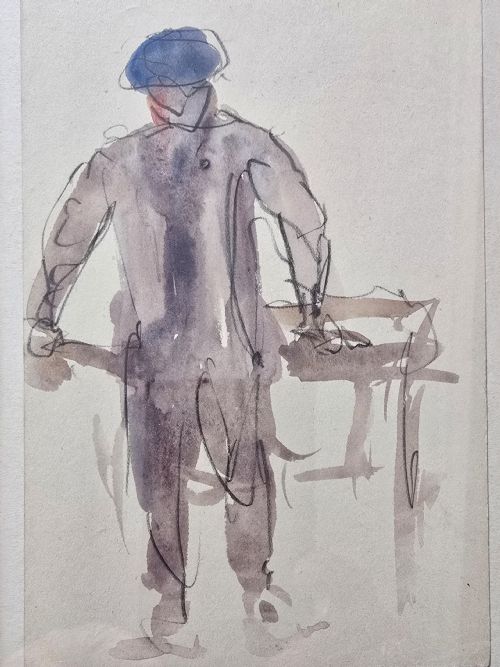
Quality rests on the draughtsmanship beneath the pigment, where confident ink or pencil lines support the transparency of the watercolour wash. Skilled artists achieved depth and expression in the subject's gaze with minimal brushstrokes.
The condition of the paper and the vibrancy of the pigments separate standard decorative pieces from finer works by established artists. Tonal retention and the absence of heavy fading indicate how well the portrait was protected behind glass over the decades.
Guido Bach·John Hassall·Percy Lancaster·Michael Healy·Philip Richard Morris·Henry E Hobson·Robert Eadie·Augustus Jules Bouvier·Roland Batchelor·Leonardo Morello·Linnie Watt·Takashi Nakayama·Frederick Thomas Baynes·William Powell Frith·Fred Morgan·Karl Feiertag·William Lee Hankey·K B Curtis
The Antique Figurative Watercolour Portrait Glossary
- Watercolour
- A paint consisting of pigment suspended in a water-based solution. It produces transparent washes that allow the white of the paper to reflect light back through the colour.
- Pre-Raphaelite Movement
- An association of artists founded in the nineteenth century aiming to emulate the detailed observation and bright colours of Italian art before Raphael. Works from this circle often feature intense pigment and literary or pastoral subjects.
- Genre painting
- A category of art depicting scenes from everyday life, such as interior gatherings or domestic tasks. These works focus on ordinary people rather than historical or mythological subjects.
- Triptych
- A piece of artwork divided into three sections or panels. In paper works, this usually means three distinct sheets mounted and framed together as a single composition.
- Lithograph
- A printmaking method based on the incompatibility of oil and water. Some nineteenth-century works combine lithographic printing with hand-applied watercolour tinting.
Antique Figurative Watercolour Portrait: Frequently Asked Questions
How should I hang a watercolour portrait?
Watercolours are sensitive to direct sunlight, which can fade the pigments over time. Hang your framed portrait on an interior wall away from bright windows.
Ensure the room maintains a stable humidity level to protect both the paper support and the wood frame.
Are these portraits signed by the artists?
Many of the works carry the artist's signature or monogram, often inscribed in ink or pencil near the edge of the composition. Attribution may also rely on historical documentation, labels on the reverse of the frame, or inclusion in period exhibition records.
Unsigned works are frequently attributed to specific regional schools based on technique and style.
What is the difference between a portrait and a genre painting?
A portrait specifically records the likeness and identity of a defined individual, often commissioned or created as a direct study of a sitter. Genre paintings depict anonymous figures engaged in daily activities, telling a visual story rather than serving as a formal record of a person.
Both forms appear frequently within nineteenth-century watercolour collections.
How do I date a nineteenth-century watercolour?
Dating relies on stylistic clues within the subject's dress and hairstyle, as well as the artist's known working dates. The framing materials, backing boards, and any remaining gallery labels on the back of the piece also provide chronological evidence.
Watermark analysis of the paper can sometimes narrow the date of manufacture further.