
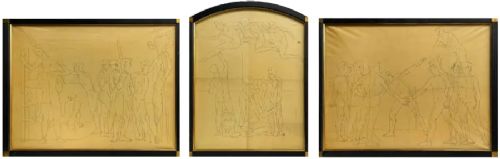
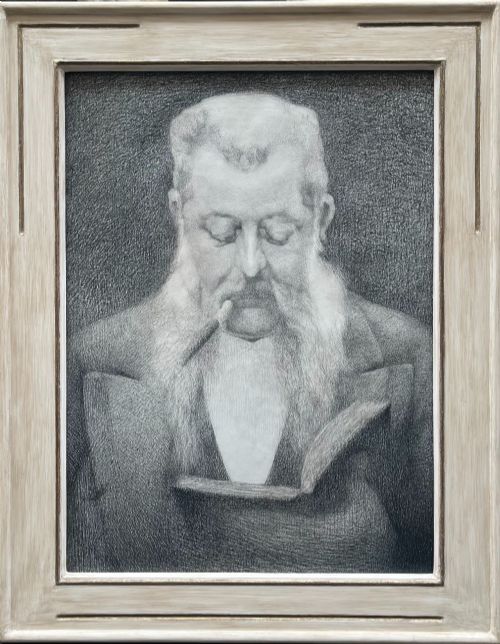
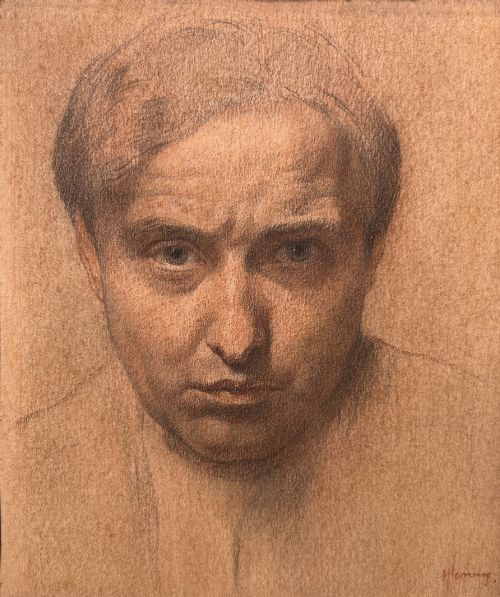


Antique Figurative Pencil Drawing
An antique figurative pencil drawing captures human character through the subtle interplay of graphite and paper, offering an intimate glimpse into past lives.
Antique Figurative Pencil Drawing
An antique figurative pencil drawing brings human subjects into focus through the direct application of graphite, charcoal, or chalk onto paper. These works range from informal studio studies to finished portraits created across the nineteenth and early twentieth centuries.
Buyers encountering this category will find examples stretching from mid-nineteenth-century academic realism to avant-garde twentieth-century movements. The selection encompasses portraits of individuals, genre scenes, and preparatory studies executed by diverse European hands.
How they were made
Artists relied primarily on graphite, charcoal, chalk, and red chalk applied directly to paper supports, occasionally combining media with watercolour washes. These fundamental drawing materials allowed practitioners to build tone, line, and shadow with immediate precision.
Finished works frequently received protective glazing and wooden framing to preserve the delicate pigment surfaces from atmospheric damage. The physical construction often involves original nineteenth-century mounts and frames that reflect the period of creation.
The selection includes academic realism, symbolist works, and cubist experiments originating from British, French, and Spanish artistic circles.
What varies in quality
Quality rests upon the sureness of the draftsmanship and the psychological depth achieved by the artist in rendering the human figure. Masterful handling of line and tonal gradation elevates a working study into a compelling piece of fine art.
The significance of the provenance and the clarity of attribution also separate standard studio pieces from important works by recognised academic or avant-garde artists. Preservation of the paper surface without excessive fading or foxing further distinguishes superior examples.
Herbert Johnson Harvey·Demetrios Galanis·Robert Richard Scanlan·Theobald Chartran·Cecil CP Lawson
The Antique Figurative Pencil Drawing Glossary
- Graphite
- A form of crystalline carbon used in pencils, producing grey or black marks that vary in hardness and depth.
- Charcoal
- A lightweight carbonaceous material made by slowly burning wood, used to create deep black lines and broad, smudged shadows.
- Deux crayon
- A drawing technique utilising two coloured chalks or pencils, typically black and red, to create contrast and tonal warmth.
- Symbolist
- An artistic movement of the late nineteenth century that favored spiritual and metaphorical imagery over strict representation.
- Provenance
- The documented history of ownership of an artwork, establishing its authenticity and chain of custody.
Antique Figurative Pencil Drawing: Frequently Asked Questions
How do I care for a pencil drawing?
Keep works away from direct sunlight and high humidity to prevent the paper from yellowing and the graphite from degrading.
Ensure framing is secure and uses acid-free materials to protect the delicate surface over time.
Are these drawings original works?
Yes, the pieces listed are original hand-drawn artworks rather than mass-produced prints or mechanical reproductions.
Each drawing shows the distinct touch of the artist's hand through individual lines and shading.
How can I date an old drawing?
Dating relies on stylistic evidence, artist signatures, inscriptions, and the physical characteristics of the paper and framing materials.
Nineteenth-century works often display specific academic techniques and watermarks distinct from later twentieth-century pieces.
What is a studio drawing?
A studio drawing is typically a preparatory study or life sketch created by an artist during practice or as part of a larger composition.
These pieces offer a raw look into the artist's working method without the polish of a final exhibition piece.