


Brown Wash Paper Drawing
A brown wash paper drawing brings tonal depth and fluid line to any wall, capturing figures and landscapes through monochrome ink.
Brown Wash Paper Drawing
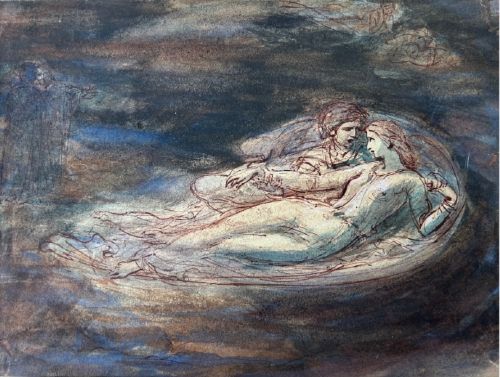
A brown wash paper drawing relies on diluted ink or watercolour applied across paper to build shadow and form. Examples here span the Georgian and Victorian eras up to mid-twentieth century works, moving from detailed battle scenes to expressive portraits.
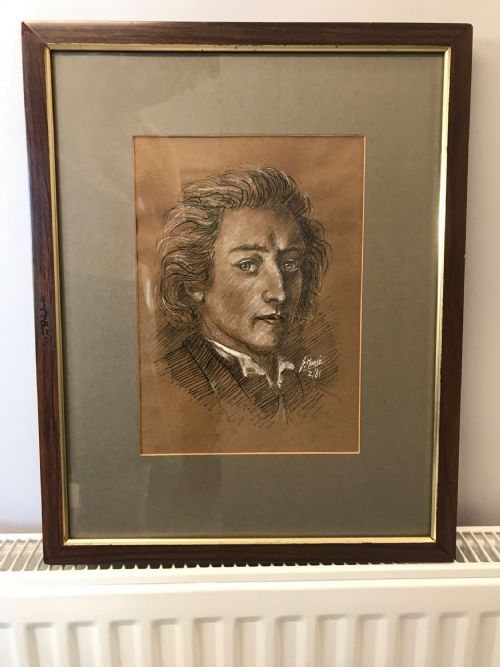
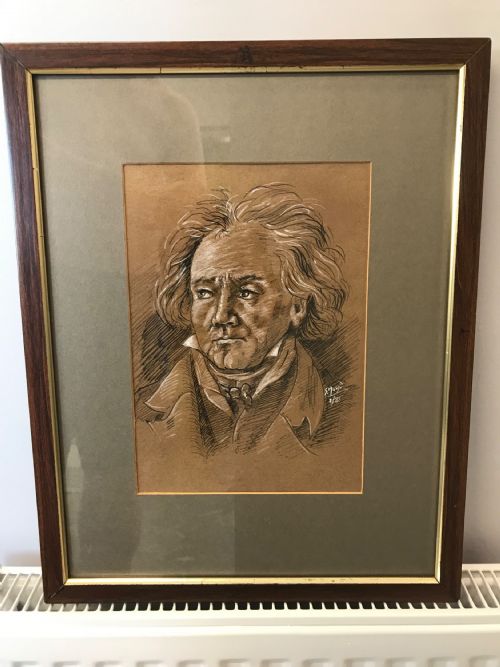
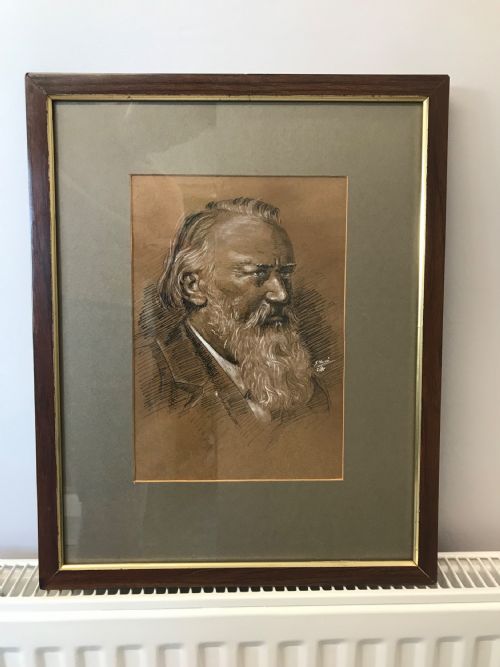
Portraits of composers and literary figures sit alongside landscape studies and narrative sketches. Most pieces arrive framed under glass, preserving the delicate paper and soluble media from atmospheric damage.
How they were made
Artists laid down iron gall or sepia ink using fine nibs for the initial line work before applying fluid washes of diluted pigment. Gouache highlights often provide contrast against the warm sepia or brown tones of the ink.
The choice of paper stock dictates how the wash absorbs the pigment, while wooden frames protect the fragile surfaces. These works depend on restraint, using the natural tone of the paper as a highlight alongside applied bodycolour.
Several composers stare intently from their frames, proving that nineteenth-century musicians spent considerable time posing for ink.
What varies in quality
Control of the wash determines the success of a drawing, separating confident tonal graduation from heavy, stagnant pooling. The precision of the underlying pen work reveals the draughtsman's surety of hand.
Paper condition dictates longevity, with evenly toned sheets outperforming those suffering from acid migration or excessive foxing. Strong provenance and identifiable signatures elevate historical portraits and landscape studies.
Robert Richard Scanlan·Theobald Chartran·Fred Lawson·Thomas Lound
The Brown Wash Paper Drawing Glossary
- Wash
- A thin layer of diluted ink, watercolour or sepia applied to paper to create smooth tonal gradients and shadows.
- Gouache
- An opaque watercolour paint containing a binding agent that provides bright highlights against dark ink washes.
- Foxing
- Small brownish spots caused by chemical reactions in the paper over time, often accelerated by damp storage conditions.
- Sepia ink
- A dark brown pigment traditionally derived from the ink sac of the cuttlefish, widely used for historical drawings.
Brown Wash Paper Drawing: Frequently Asked Questions
How should I hang a paper drawing?
Keep drawings away from direct sunlight to prevent the brown wash and ink from fading over time.
Ensure the room maintains stable humidity to protect the antique paper from buckling inside the frame.
What is the difference between wash and watercolour?
A wash uses a single monochrome pigment diluted in water to create tones of light and dark.
Watercolour employs a full spectrum of hues, whereas wash focuses purely on tonal line and shadow.
Are these drawings original works?
Every piece recorded here is a unique hand-drawn original created directly on paper by the artist.
None of these listings represent modern reproductions or mechanical prints.
How do I identify a Victorian drawing?
Victorian works often feature romantic subject matter, such as narrative sketches or rural genre scenes.
Paper watermarked from the nineteenth century and framing styles typical of the period help confirm the date.