
Antique Figural Ceramic
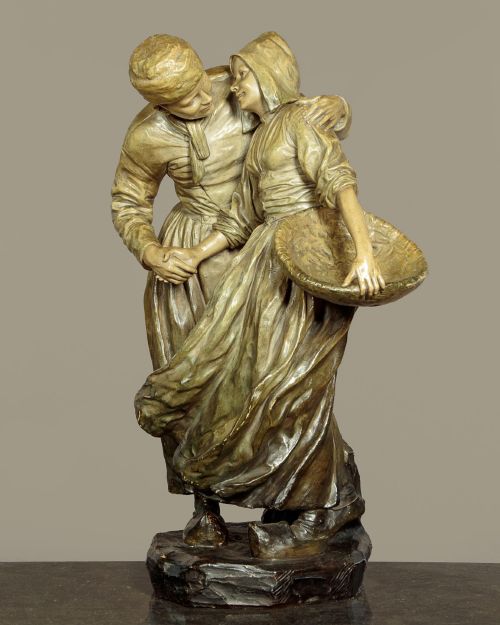
These antique figural ceramic pieces span centuries of sculptural pottery and porcelain, offering characterful human and animal forms for interior display.
Antique Figural Ceramic
When searching for antique figural ceramic pieces, collectors encounter an international selection of sculptural pottery and porcelain objects, ranging from utilitarian vessels to purely decorative figures.
The inventory on this page draws heavily from nineteenth-century production, alongside eighteenth-century works and later twentieth-century examples up to the Art Deco period.
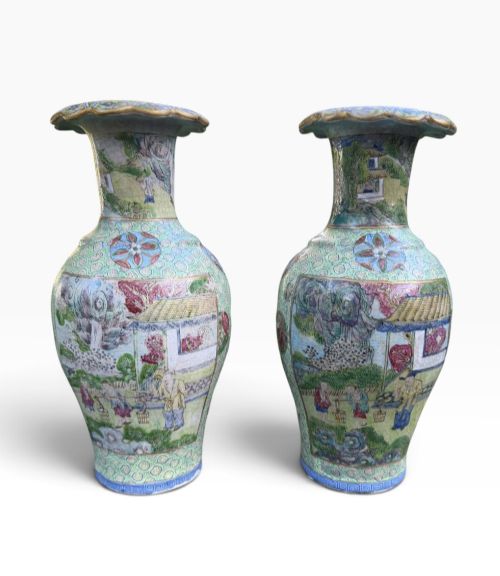
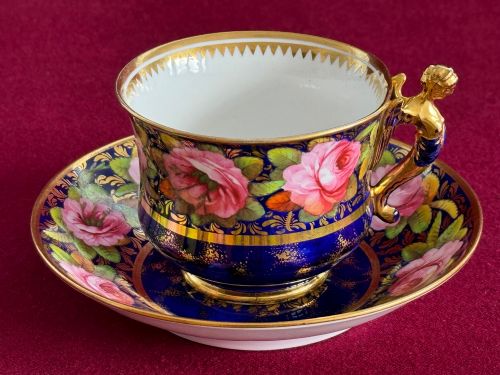
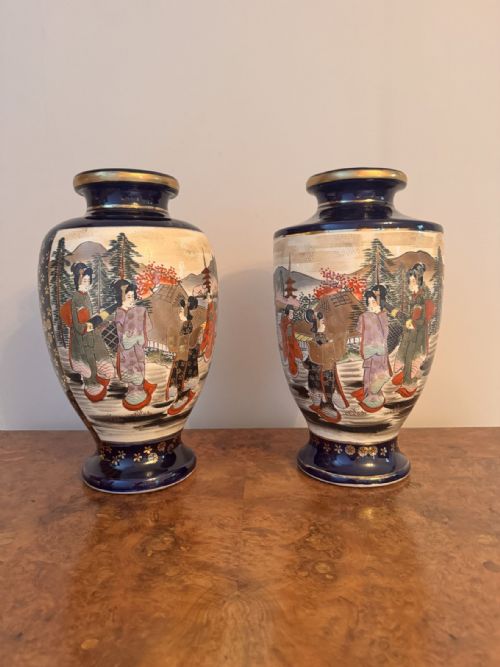
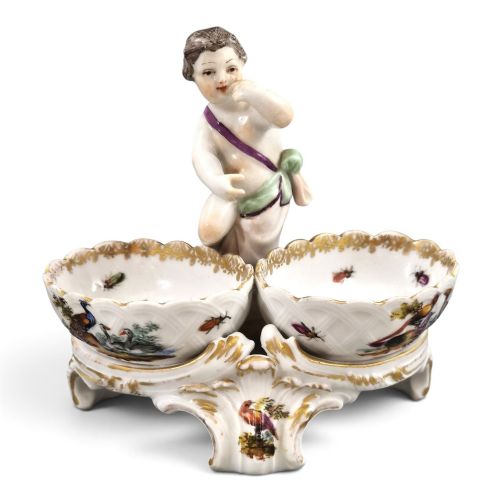
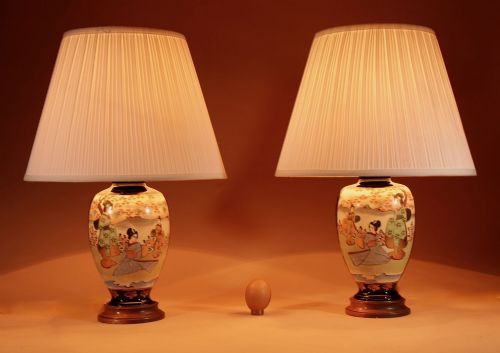
Common functional and display forms include vases, candlesticks, table lamps, tobacco jars, salt cellars, inkwells, teacups, and large figural planters.
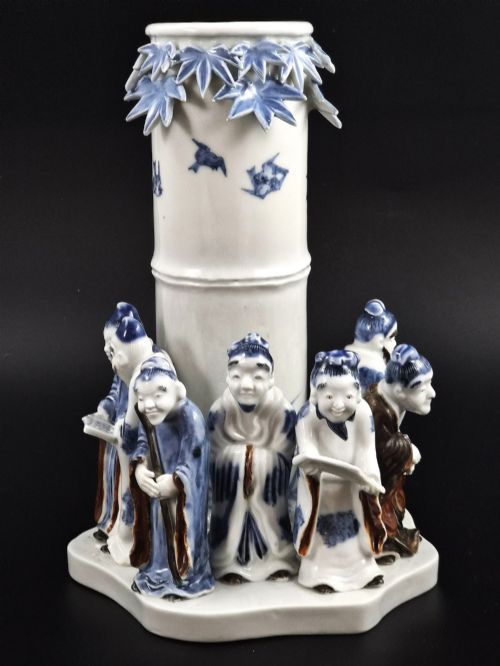
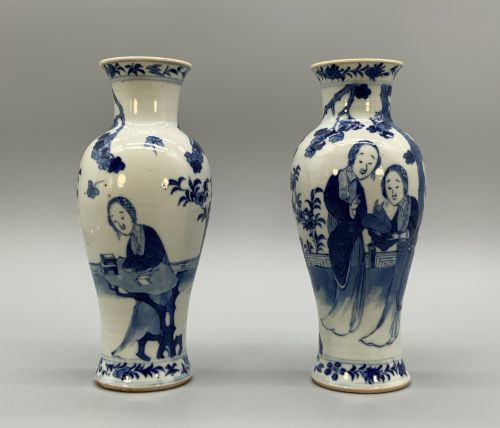
Origins span widely across European factories in England, France, Germany, and Italy, alongside significant East Asian ceramic traditions from China and Japan.
Materials and Techniques
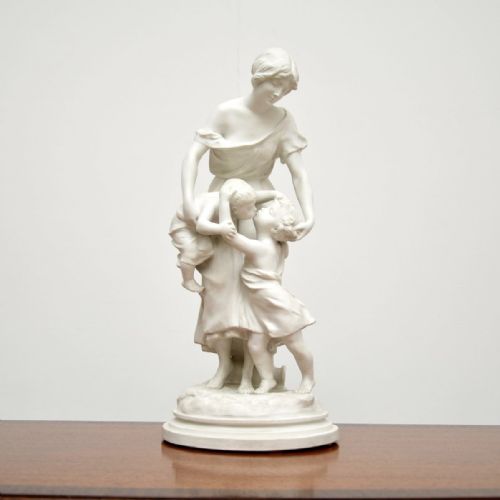
Makers shaped these items using earthenware, stoneware, terracotta, and various grades of porcelain or biscuit porcelain, often applying coloured glazes and enamel painting.
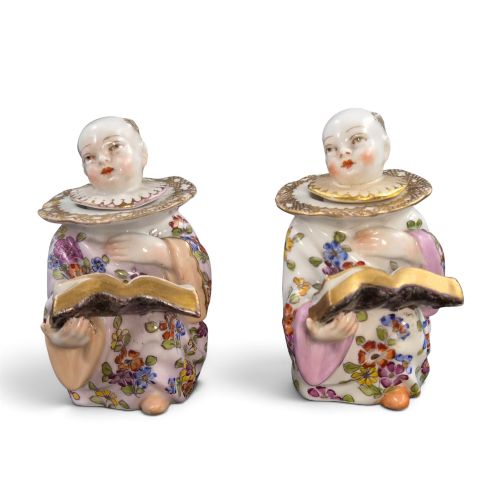
Many sculptural works incorporate hand-painted details, relief moulding, and additions such as gold leaf and gilding to highlight the contours of the figures.
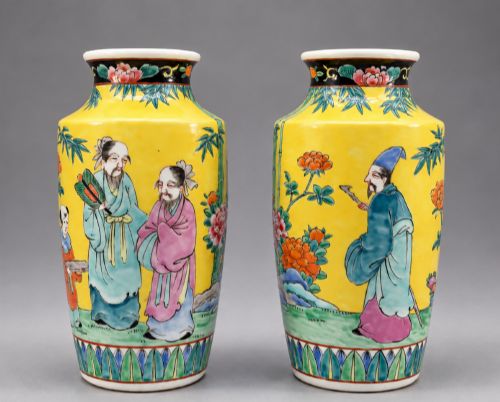
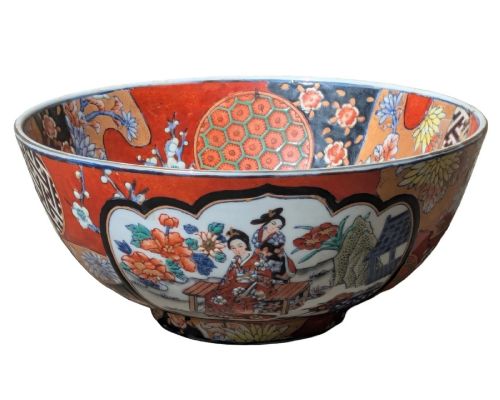
Japanese Satsuma and Imari pieces utilise specialised firing methods and dense enamel decoration, while European factories employed slip casting or hand-modelling before high-temperature glazing.
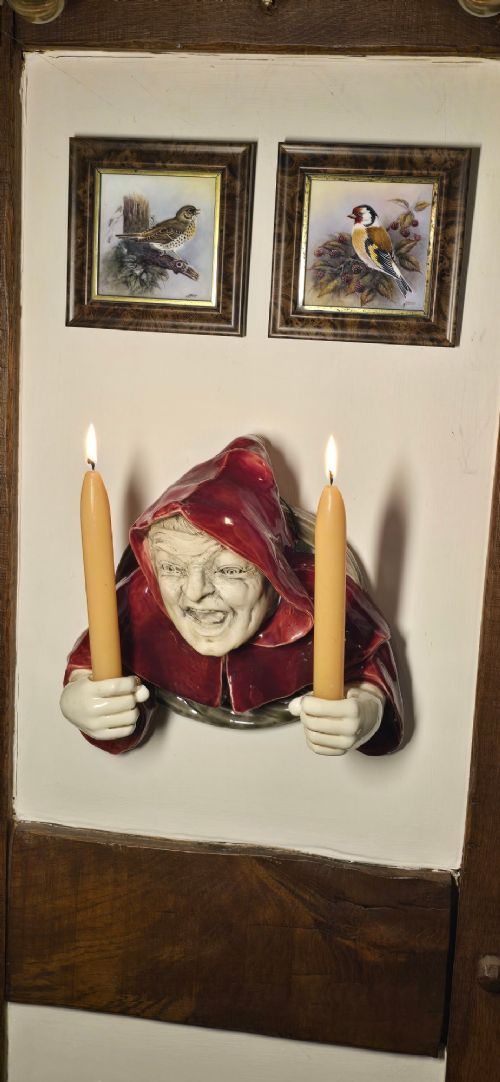
Monks holding wall-hanging candelabras and children representing matrimony share shelf space with imposing lions on Majolica planter bases.
Craftsmanship and Execution
The division between standard production and superior execution rests upon the sharpness of the moulding and the precision of the hand-painted enamels.
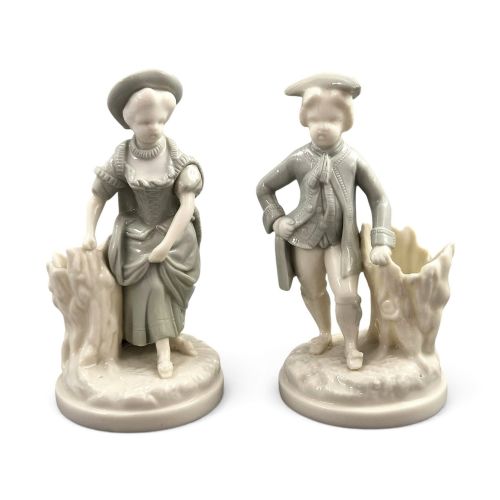
Finer examples demonstrate careful attention to facial expressions and drapery folds in the ceramic body, whereas lesser pieces show softer definition and hurried application of colour.
Luca Madrassi·Edmé Samson·Royal Worcester·KPM Berlin·Goldscheider·Volkstedt Porcelain·Meissen Porcelain
The Antique Figural Ceramic Glossary
- Biscuits
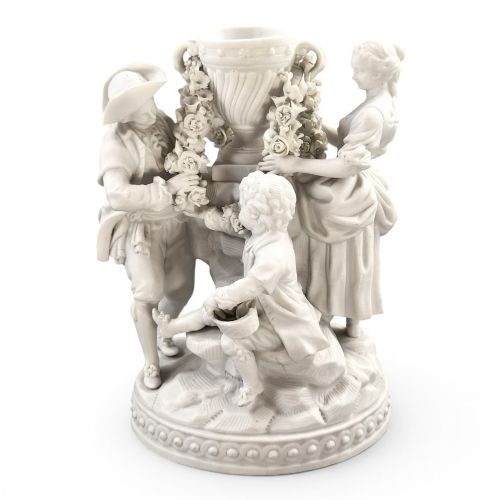
- Unglazed porcelain fired once to a matte, porous state that resembles marble. This finish highlights fine sculptural detail without the distraction of surface gloss.
- Bocage
- An applied background of ceramic leaves and branches often found behind figures on eighteenth-century candlesticks. It creates a leafy arbour effect common in English and continental porcelain.
- Majolica
- Low-fired earthenware coated with an opaque tin-lead glaze and painted with brightly coloured metallic oxides. It produces vibrant decorative surfaces popular in large planters and jardinieres.
- Toby Jug
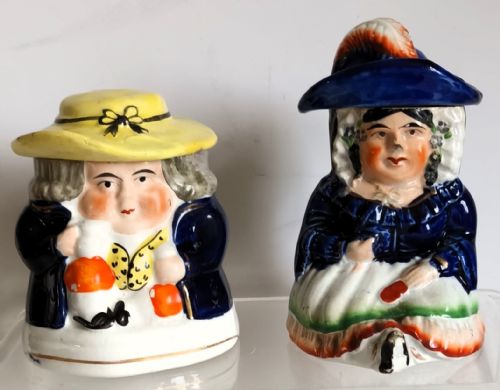
- A pottery jug modelled in the form of a stout, jovial person, usually seated and holding a mug or pipe. These traditional English vessels date back to the eighteenth century.
- Imari
- Japanese porcelain decorated in underglaze blue, iron red, and gold, named after the port of export. The style became widely imitated across European kilns.
Antique Figural Ceramic: Frequently Asked Questions
What is an antique figural ceramic?
An antique figural ceramic is a pottery or porcelain item that incorporates human, animal, or allegorical figures into its design. These range from standalone sculptural groups to functional items like candlesticks and tobacco jars.
Such objects combine practical utility with decorative artistry, reflecting the sculptural preferences and ceramic techniques of their respective periods.
How were figural ceramics used originally?
Many of these pieces served everyday domestic functions while providing visual interest to rooms. Items like inkwells, salt cellars, and teacups brought sculptural art directly to the table.
Other larger objects, such as planters, vases, and table lamps, acted as prominent decorative focal points in nineteenth-century interiors.
How do I identify the period of a ceramic piece?
Dating relies on observing stylistic markers, manufacturing techniques, and any factory marks or signatures present on the base. Comparing the modelling style to known regional outputs helps narrow the era of production.
Materials also offer clues, as specific bodies like biscuit porcelain or certain enamel palettes align closely with nineteenth-century or earlier traditions.