

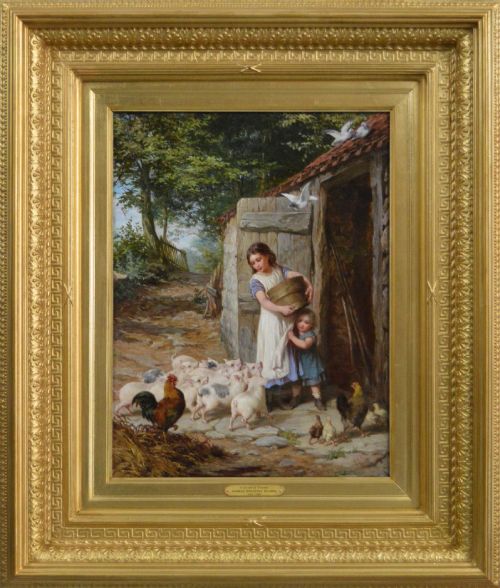
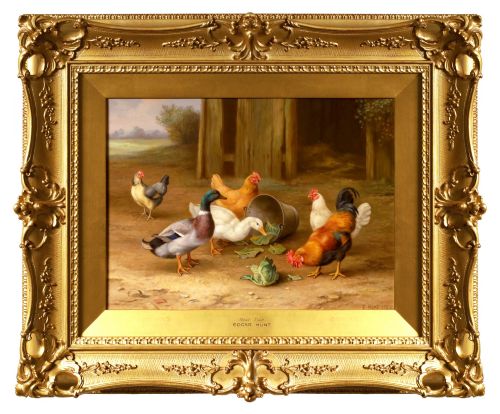
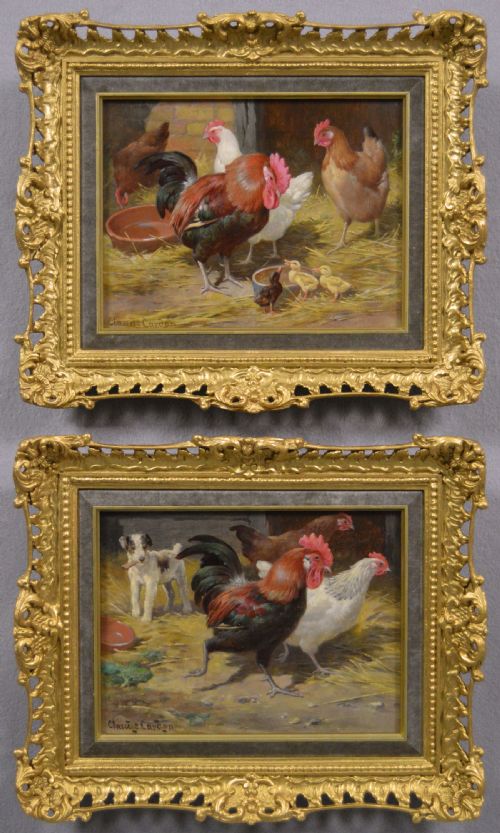


Antique Farm Animal Painting
An antique farm animal painting captures pastoral life through skilled brushwork on canvas, offering a glimpse into nineteenth-century rural scenes.
Antique Farm Animal Painting
An antique farm animal painting focuses on the livestock, poultry, and daily activity of rural agricultural estates. Buyers searching for an antique farm animal painting encounter oil on canvas works, watercolours, and occasionally decorative figures representing cattle, sheep, horses, and poultry.
The pieces appearing here date from the nineteenth century into the Edwardian era, spanning Victorian pastoralism and British animalier traditions. Most works depict quiet farmyards, cattle by streams, or detailed studies of shorthorn bulls, prize pigs, and scratching hens.
Framed artworks dominate the selection, often housed in giltwood frames featuring gesso and gold leaf details. Canvas and wood form the primary substrates for these historical oil paintings.
Materials and Construction
Artists of this period utilised oil paint on canvas or board, applying pigments to build up rich textures for animal coats and landscape backgrounds. Canvas serves as the standard support, stretched over wooden frames that occasionally bear period maker stamps.
Frames play an integral role in the presentation, constructed from wood and finished with intricate gesso mouldings and gold leaf or gilt. Watercolour paintings on paper also appear, protected behind glass within traditional wooden framing.
Listings feature nineteenth-century and Edwardian works executed in oil on canvas, oil on board, and watercolour on paper.
Distinctions in Quality
Quality rests primarily on the anatomical accuracy of the livestock, the fidelity of the landscape, and the handling of light across feathers and fur. Master painters render muscle structure, expression, and texture with precision, whereas follower works can display stiffness in form.
The preservation of the original canvas, the subtlety of the oil medium, and the integrity of the period giltwood frame elevate certain works above standard decorative pieces. Original surfaces unmarred by heavy restoration retain greater authenticity.
George Augustus Holmes·Edgar Hunt·Claude Cardon·Franz van Severdonck·John Frederick Herring Jnr·Samuel Joseph Clark·Eugene Verboeckhoven·Percival Glenfern·Pierre Emmanuel Dielmans·Thomas Sidney Cooper·George Smith RSA·Charles Hunt Jnr
The Antique Farm Animal Painting Glossary
- Animalier
- A nineteenth-century artistic tradition focusing primarily on the realistic depiction of animals. Practitioners specialised in capturing the exact physical traits of livestock and working farm beasts.
- Giltwood
- Wood that has been coated with gold leaf or a gold-coloured metallic finish. This material forms the ornate frames typical of nineteenth-century fine art paintings.
- Gesso
- A plaster-like mixture applied to wooden frames before gilding. It provides a smooth base that artisans carved into decorative patterns.
- Pastoral Realism
- An artistic style depicting rural life and agricultural scenes with high fidelity. Artists working in this mode prioritized accurate representations of farm animals and country landscapes.
- Shorthorn
- A prominent breed of British cattle frequently depicted in agricultural art. These animals symbolised agricultural prosperity and prize-winning stock during the Victorian era.
Antique Farm Animal Painting: Frequently Asked Questions
What subjects appear in these paintings?
The artworks depict farmyards, pastures, and agricultural settings populated by cattle, sheep, horses, pigs, and poultry. Figures of farmers or milkmaids occasionally accompany the animals.
Scenes range from quiet portraits of prized shorthorn bulls to bustling farmyard interactions involving ducks, chickens, and goats.
How do I date an antique painting?
Dating relies on stylistic clues, framing materials, canvas stamps, and artist signatures recorded on the work. Victorian pieces often reflect nineteenth-century realism and pastoral themes.
Examining the stretcher frames and the composition helps place the artwork within the nineteenth or early twentieth century.
Are these works painted on canvas?
Most pieces utilise oil paint on canvas stretched over a wooden frame, though some examples employ oil on board or paper.
Watercolour paintings on paper also feature in the selection, usually protected by period framing and glass.
How should I display a giltwood frame?
Giltwood frames require stable indoor humidity away from direct sunlight to protect the delicate gesso and gold leaf finish. Hanging them on sturdy interior walls ensures the weight of the wood and canvas is properly supported.
Dusting the frame gently with a soft, dry cloth maintains the surface without harming the antique gilt.