


Antique Farm Animal Art
Antique farm animal art depicts horses, cattle, sheep, and poultry in oil and watercolour, bringing rural British and European pastoral life into interiors.
Antique Farm Animal Art
Buyers seeking antique farm animal art encounter framed oil paintings, watercolours, and decorative figurines centring on livestock and domestic poultry. These works portray horses, cattle, sheep, pigs, goats, and chickens within pastoral landscapes, farmyards, and barns.
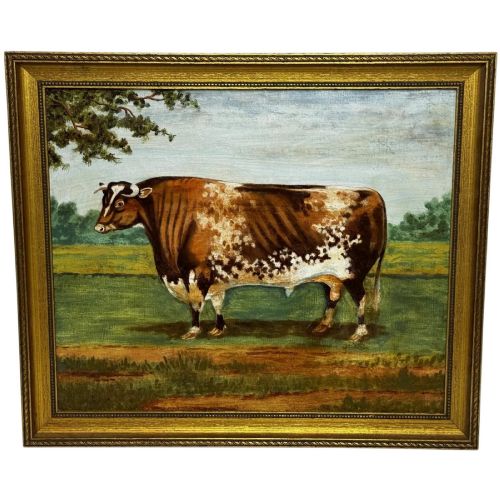
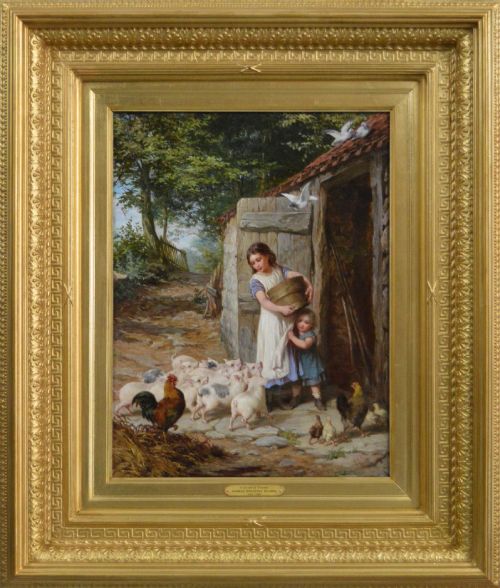
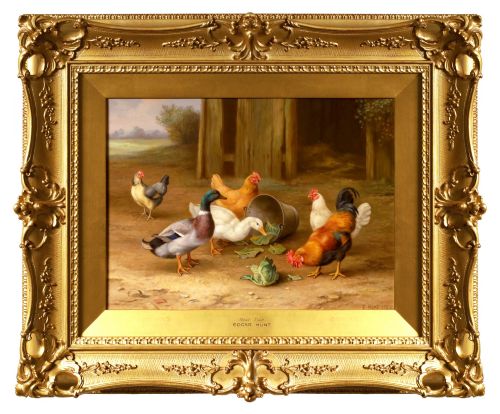
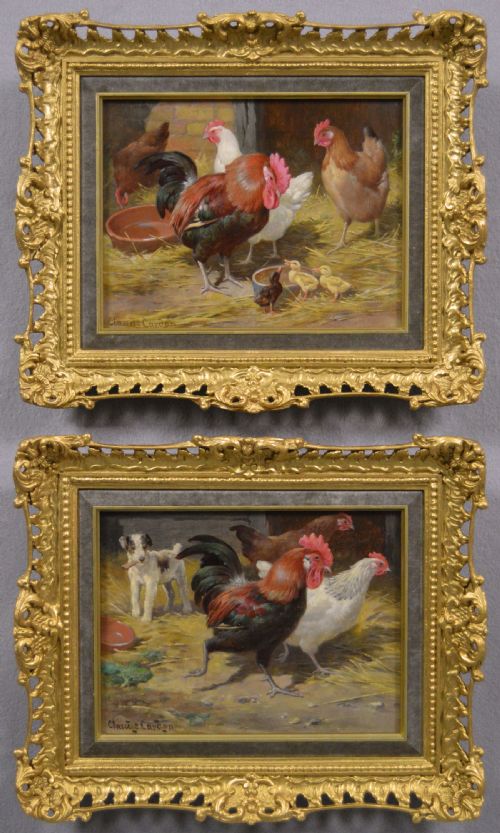
The most common pieces on this page are nineteenth-century oil paintings executed on canvas or board by British and continental European artists. Such works range from detailed portraits of prized shorthorn bulls to bustling farmyard genre scenes featuring poultry and livestock.
Domestic settings during the Victorian and Edwardian periods favoured these rural subjects to celebrate agricultural wealth and pastoral tranquillity. Painters captured the specific conformation of livestock alongside the daily routines of farmers and farm workers.
How these pieces were made
Artists applied oil paint to prepared canvas or wooden board, frequently building up the composition through multiple layers to achieve depth in animal coats and rural scenery. Many works retain their original giltwood or gesso frames, embellished with gold leaf.
Watercolour paintings on paper utilise translucent washes to depict lighter subjects such as cockerels and farm birds. Papier-mâché and carved wood form the medium for three-dimensional decorative figurines of cattle and goats.
Canvas, wood, and paper support the painted works, while gesso and gold leaf finish the frames.
What varies in quality
Anatomy and realism separate competent animal portraiture from lesser works, with superior paintings accurately rendering the musculature, bone structure, and texture of a bull, sheep, or horse. The handling of light across animal hides and barn interiors dictates the visual depth of a composition.
The integration of livestock within a wider landscape or farmyard setting demonstrates the skill of the painter, as inferior pieces often isolate figures awkwardly against static backgrounds. Original matching pairs and signed works by established nineteenth-century animaliers command closer attention from collectors.
George Augustus Holmes·Edgar Hunt·Claude Cardon·Franz van Severdonck·John Frederick Herring Jnr·Samuel Joseph Clark·Eugene Verboeckhoven·Percival Glenfern·Pierre Emmanuel Dielmans·Thomas Sidney Cooper·George Smith RSA·Louis Marie Dominique Robbe·Charles Hunt Jnr
The Antique Farm Animal Art Glossary
- Animalier
- An artist who specialises in the realistic depiction of animals. This term applies particularly to nineteenth-century painters and sculptors.
- Genre painting
- A work depicting scenes from everyday life, often including figures tending to farm animals, poultry, and cottages. These paintings tell a narrative story of rural existence.
- Giltwood
- Wood that has been treated and covered with a thin layer of gold leaf or gold paint. Frames of this material surround many nineteenth-century oil paintings.
- Gesso
- A plaster-like mixture applied to wooden frames or panels as a base for gilding and paint. It allows intricate moulded decorative details to be added to picture frames.
- Pastoral realism
- An artistic style portraying rural life and agricultural scenes with close attention to natural detail. This approach dominated nineteenth-century farm animal art.
Antique Farm Animal Art: Frequently Asked Questions
What animals appear in antique farm animal art?
Paintings and figurines depict cattle, horses, sheep, pigs, goats, ducks, and chickens in various farmyard settings.
Cattle and sheep frequently appear as individual portraits or grazing in herds, while poultry populates the foreground of cottage scenes.
How do I date an oil painting of farm animals?
Stylistic clues, framing materials, and artist signatures help establish the date of creation.
Nineteenth-century works often employ heavy giltwood gesso frames and detailed realism typical of the Victorian period.
Where were these paintings displayed originally?
Victorian households hung these pastoral artworks in dining rooms, libraries, and drawing rooms.
Rural scenes provided urban homeowners with a connection to agricultural life and the countryside.
What is the difference between an oil painting and a watercolour?
Oil paintings utilise pigment suspended in drying oil on canvas or board, creating rich textures and deep colour.
Watercolours use water-soluble pigments on paper, offering a lighter and more translucent depiction of subjects like cockerels.