



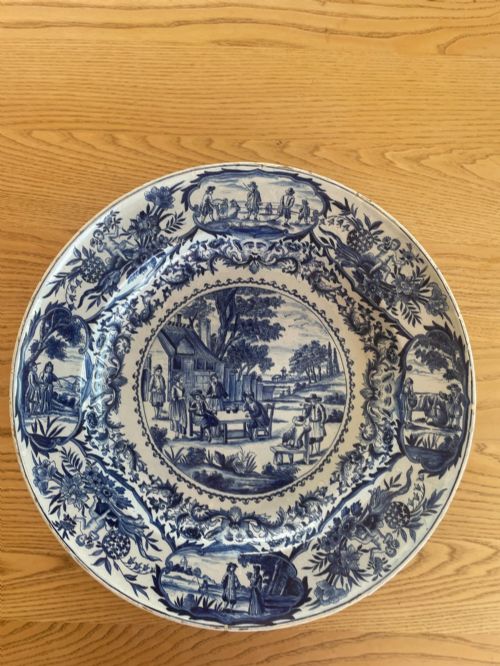


Antique Faience Platter
An antique faience platter brings hand-painted tin-glazed earthenware to a wall or table, offering centuries of European ceramic tradition.
Antique Faience Platter
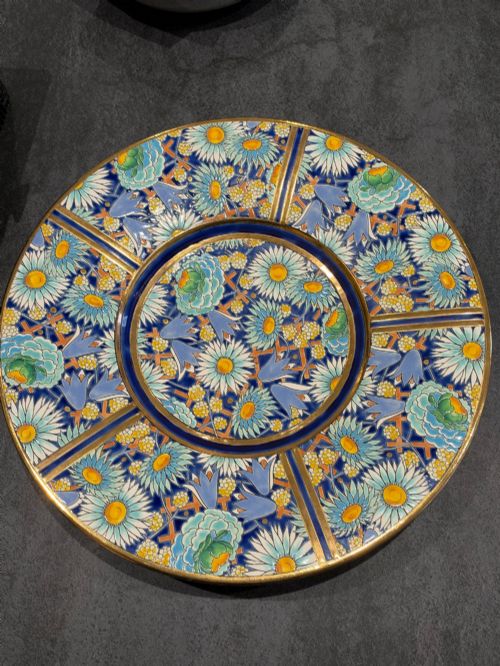
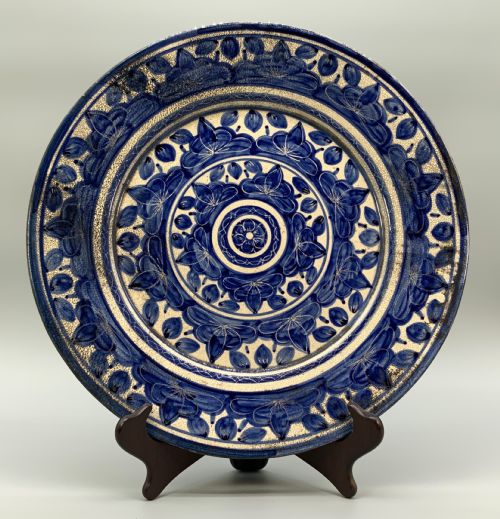
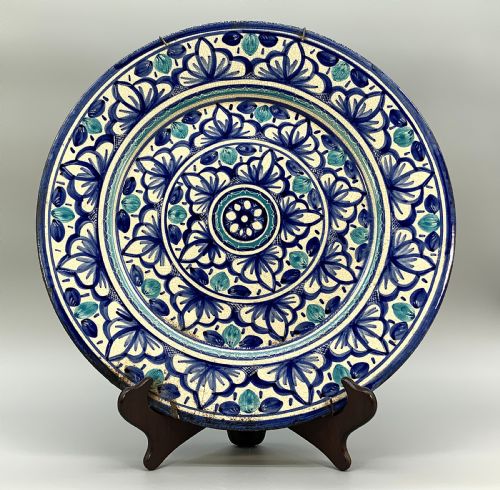
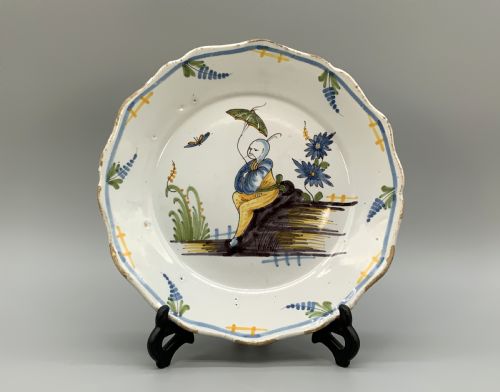
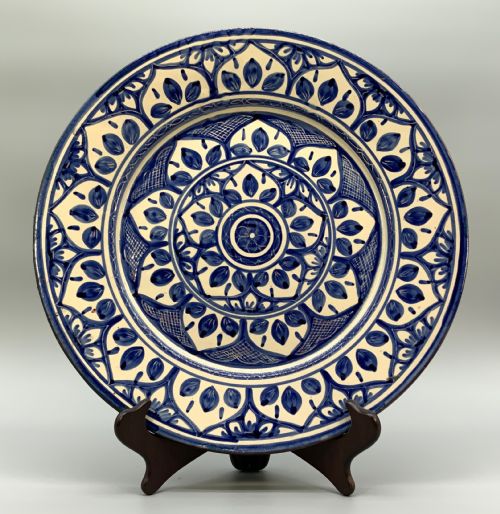
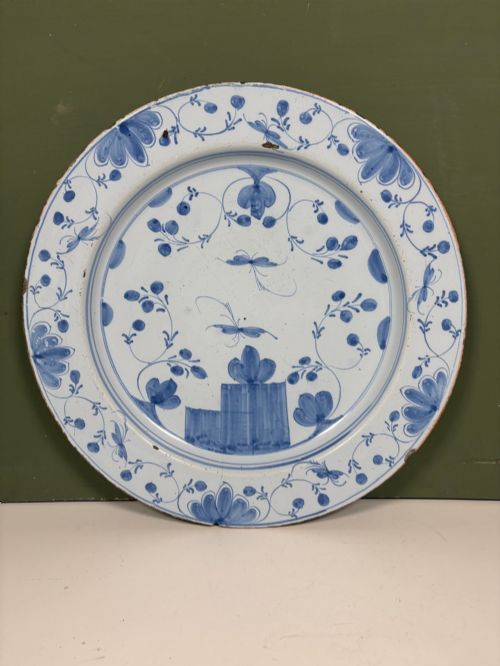
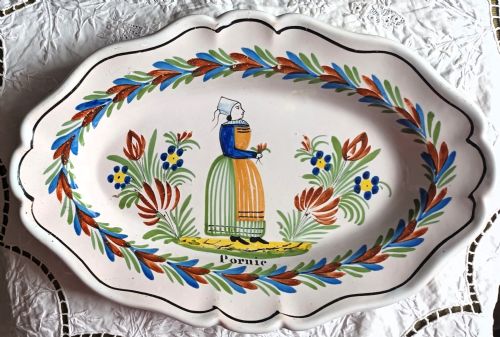
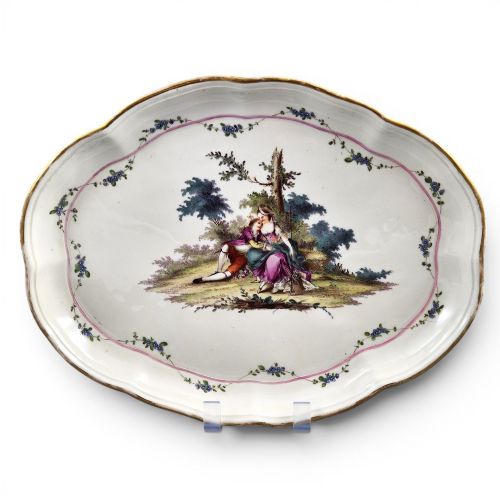
When you search for an antique faience platter, you encounter large chargers, decorative plates, and serving dishes spanning the eighteenth and nineteenth centuries. The majority of pieces on this page originate from Dutch, French, and Italian traditions, displaying rich regional styles from Dutch Delftware to Moorish Revival and Renaissance Revival.
The forms range from monumental wall chargers to substantial serving dishes and trays, reflecting both decorative display and functional dining use across different European centres. Eighteenth-century examples frequently feature classic cobalt blue designs or manganese and yellow palettes, while later nineteenth-century pieces explore polychrome storytelling and intricate Moorish patterns.
Materials and production methods
Makers shaped these platters from earthenware clay before applying an opaque tin glaze that provided a smooth, white surface for painting. Artisans then hand-painted pigments directly onto the unfired or raw glaze, utilising cobalt pigment and other mineral colours that fused during the kiln firing.
The combination of tin-glazed earthenware and high-temperature firing created the characteristic glossy finish and absorbent clay body typical of traditional European faience, delft, and maiolica production.
Antique Faience Platter Retail Price Guide 2026
Typical asking prices for faience platter among the pieces listed under this phrase on Sellingantiques today, from the lower quarter to the upper quarter. They describe what is for sale here now, not the wider market.
Several platters spent centuries safely hung on dining room walls using spring clips designed long before anyone worried about earthquake safety.
Factors of quality and execution
The distinction between standard domestic wares and masterworks rests on the ambition of the hand-painted decoration, whether depicting a complex historical scene in the manner of Italian istoriato or a delicate French Chinoiserie motif. The crispness of the cobalt pigment against the opaque white tin glaze and the control shown in brushwork reveal the skill of the painter.
Scale also influences distinction, with exceptionally large chargers requiring advanced kiln management to prevent warping during firing. Pieces carrying attributed hands from notable regional workshops or specific schools demonstrate superior artistic pedigree compared to anonymous factory output.
Joseph Gaspard Robert·Bassano pottery works
The Antique Faience Platter Glossary
- Faience
- Tin-glazed earthenware produced in France, Germany, and Spain. It shares a technical lineage with Dutch Delft and Italian maiolica.
- Charger
- A large decorative plate or serving dish intended for display on a wall or sideboard rather than everyday dining.
- Tin Glaze
- An opaque white glaze containing tin oxide applied to earthenware. It creates the characteristic canvas for painted ceramic decoration.
- Istoriato
- A style of ceramic decoration featuring narrative scenes from history, mythology, or the Bible. It gained prominence in Italian maiolica.
- Polychrome
- Decoration employing multiple colours rather than a single pigment like blue and white. It allows for vibrant floral and figurative compositions.
Antique Faience Platter: Frequently Asked Questions
How do I hang a heavy charger?
Large chargers require robust, correctly sized wire spring hangers that distribute weight evenly around the rim without putting pressure on the earthenware body.
Ensure the wall fixing secures directly into a stud or uses a rated wall anchor to support the substantial weight of an eighteenth or nineteenth-century platter safely.
Can I use these platters for food?
Historic tin-glazed earthenware possesses a porous clay body beneath the glaze and may contain historic lead or mineral contents in the glaze layers.
Modern culinary use is generally discouraged to protect the fragile glaze surfaces and historic pigments from moisture damage and staining.
How do I date a tin-glazed plate?
Dating relies on examining the characteristics of the clay body, the tone of the tin glaze, and the stylistic conventions of the painted motifs such as Chinoiserie or floral sprays.
Comparing the rim profile, footring construction, and pigment behaviour with documented examples from centres like Marseille, Delft, or Quimper provides a reliable chronological window.