




Antique Fabric Work Box
An antique fabric work box combines practical storage for needlework with refined furniture design.

Antique Fabric Work Box
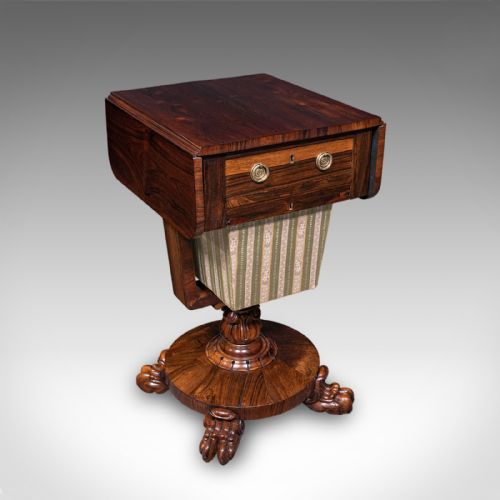
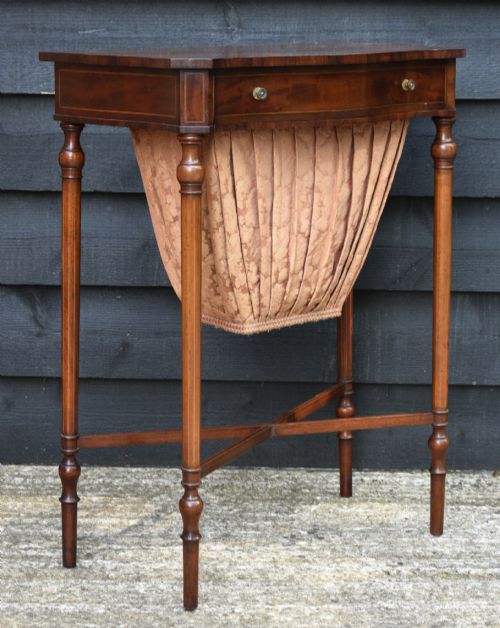
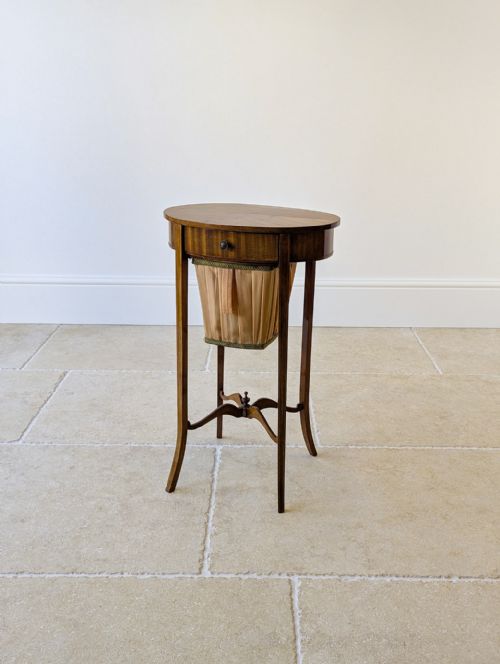
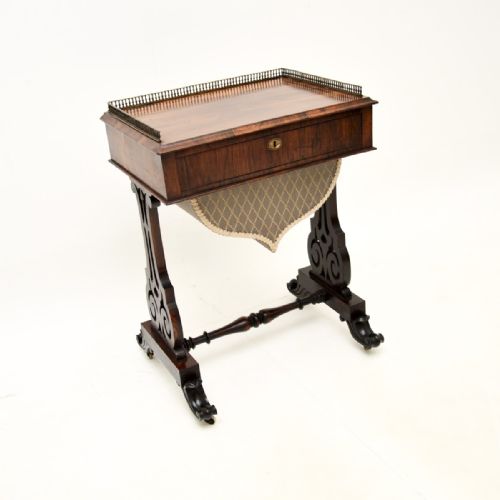
When you search for an antique fabric work box, you are looking at specialised occasional furniture designed to hold sewing gear, textiles, and crafting materials. The listings here predominantly feature freestanding sewing tables, work tables, and side tables dating from the Georgian, Regency, William IV, Victorian, and Edwardian periods.
You will most commonly encounter Victorian burr walnut and rosewood sewing tables alongside Regency and William IV mahogany examples. These items often double as lamp tables or occasional tables, housing internal compartments and sometimes fitted fabric bags or ottomans for storing needlework.
How they were made
Cabinetmakers utilised rich timber veneers such as burr walnut, rosewood, and mahogany over solid secondary woods, often incorporating intricate brass details and satinwood stringing. Selected pieces display fine Edwardian inlay work set into mahogany frames.
Structural elements include pedestal bases, lyre ends, and drop-leaf mechanisms designed to expand the surface area during crafting sessions. Internal compartments feature fitted wooden trays and delicate fabric silk linings intended to organise thread, needles, and textiles.
Listings feature items spanning the Georgian, Regency, William IV, Victorian, and Edwardian periods.
What varies in quality
The calibre of an antique fabric work box rests upon the choice of timber figures, such as highly figured burr walnut or dense rosewood, and the crispness of any inlaid decoration. Superior examples display thoughtful proportions, robust pedestals, and well-executed joinery that withstands daily use.
Interior fittings also distinguish finer specimens from standard utility pieces. Well-preserved internal compartments, original silk fabric linings, and smoothly operating drawers or drop-leaf hinges elevate the overall standard of the construction.
Gillows
The Antique Fabric Work Box Glossary
- Work table
- A piece of furniture designed with internal compartments and storage specifically for sewing, needlework, and crafting accessories. These items frequently double as side tables or lamp tables.
- Drop-leaf
- A table design featuring hinged flaps on either side that fold down to save space or lift up to extend the top surface.
- Lyre end
- A furniture support shaped in the form of an ancient Greek lyre instrument, commonly seen on Regency and Georgian pedestals.
- Burr walnut
- A highly prized timber veneer taken from the warted growths on walnut trees, prized for its swirling, decorative grain patterns.
- Serpentine
- A furniture outline characterised by a wavy line curving outward and inward, frequently observed on Edwardian needlework tables.
Antique Fabric Work Box: Frequently Asked Questions
What is an antique fabric work box used for?
These pieces served as dedicated furniture for storing sewing supplies, threads, needles, and unfinished textile projects in the home.
Today, they function well as decorative side tables or lamp tables while retaining their original compartment storage.
How do I identify a Regency work table?
Regency models often feature characteristic details like lyre-ended supports, pedestal bases, and rich mahogany or rosewood timbers dating from the early nineteenth century.
They emphasise classical proportions and clean architectural lines distinct from later Victorian ornamentation.
What materials are common in Victorian work tables?
Victorian examples frequently utilise burr walnut and rosewood veneers, sometimes paired with internal silk fabric linings and fitted wooden trays.
Solid mahogany also appears regularly among the surviving nineteenth-century inventory.
Are Edwardian work tables different?
Edwardian versions tend to feature lighter mahogany timbers, often enhanced with delicate inlaid decoration and smaller proportions.
These early twentieth-century pieces retain the traditional sewing table purpose within more slender furniture forms.